


Makgeolli soju are the two pillars of Korean drinking culture. Makgeolli is a low alcohol cloudy rice wine, while soju is a clear, higher-strength spirit; despite their differences they both pair surprisingly well with Korean food. These are usually the first drinks foreigners try in Korea, so this guide walks beginners through makgeolli soju history, flavor, food pairings and drinking etiquette in one place.
| Category | Makgeolli | Soju |
|---|---|---|
| ABV | 6-8% | 16-20% |
| Color | Cloudy milky white | Clear and transparent |
| Taste | Sweet, tangy, nutty | Clean and slightly sharp |
| Signature pairing | Pajeon, seafood jeon, kimchi jeon | Samgyeopsal, spicy stew |
| Mood | Relaxed and traditional | Lively and energetic |
| Convenience store price | KRW 2,000-3,500 | KRW 1,800-2,500 |
1) Makgeolli: From Farmers Brew to Hipster Drink
Makgeolli is a traditional Korean cloudy rice wine, brewed by fermenting rice or wheat with nuruk (a Korean fermentation starter). When perfectly fermented, the natural carbonation gives a gentle sparkle on the tongue, and the light sweetness and grain-like depth set makgeolli apart in any makgeolli soju lineup.
History and Brewing Process of Makgeolli
Makgeolli was historically called nongju (farmers liquor), a working-class drink enjoyed by farmers after a hard day in the fields. A single bowl of makgeolli at the end of the day was a real comfort, which is why it has been so deeply tied to everyday life in Korea. You can learn more about how makgeolli matches Korean food in the complete Korean food basics guide.
The brewing process itself is simpler than it sounds. Rice is combined with water and nuruk and left to ferment at a controlled temperature; yeast then breaks down sugars into alcohol. Traditionally, once fermentation is well underway, brewers separated the clear top liquid (cheongju) from the cloudy bottom (takju). Makgeolli is exactly that takju. For background on Korean traditional beverages, see the Korea Tourism Organization.
Makgeolli Taste and Food Pairing
Makgeolli sits around 6 to 8 percent ABV, with a sweet-tangy profile and a slightly chalky mouthfeel. It pairs beautifully with greasy savory pancakes such as seafood pajeon, kimchi jeon and potato jeon. The combination of pajeon and a bowl of makgeolli is so iconic in Korea that it is almost the unofficial rainy-day menu.
Recent years have brought a fusion wave: craft makgeolli, makgeolli cocktails, fruit-infused varieties and herbal or sparkling-water blends now appeal strongly to younger drinkers. For tips on actually joining a Korean drinking circle, check the complete guide to making Korean friends.
2) Soju: Korea’s Signature Distilled Spirit
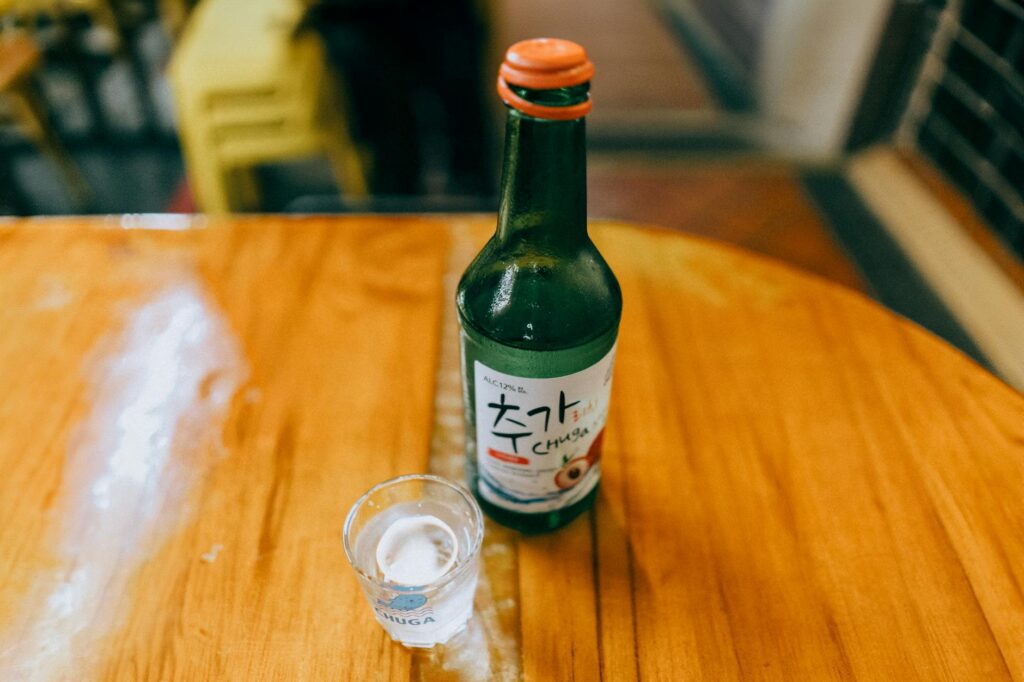
Soju is usually around 16 to 20 percent ABV, clear in color, and noticeably sharp compared to makgeolli. It is sold at every convenience store and supermarket from KRW 1,800 to 2,500 per bottle, which makes it the best-selling alcoholic beverage in Korea by volume.
Origins and Evolution of Soju
There are several theories about soju’s origin, but most historians agree the arak distillation technique arrived during exchanges with the Yuan dynasty and became localized through the Goryeo and Joseon periods. Early soju was almost entirely distilled and quite strong; the modern diluted style emerged later and turned soju into a drink anyone could enjoy.
More recently, fruit-flavored liqueur soju has become hugely popular. Strawberry, grapefruit and green-grape soju, often lowered to around 13 to 14 percent ABV, taste sweet and aromatic, attracting younger drinkers and women in particular and broadening the soju category beyond its old image.
Soju Pairing and Korean Drinking Etiquette
Soju’s clean bite cuts through fatty grilled meats like samgyeopsal, spicy stews and almost any Korean dish. To enjoy the spirit at its best, drink it in a shot glass or small tumbler, neat, and pace yourself with food on the side rather than chugging it.
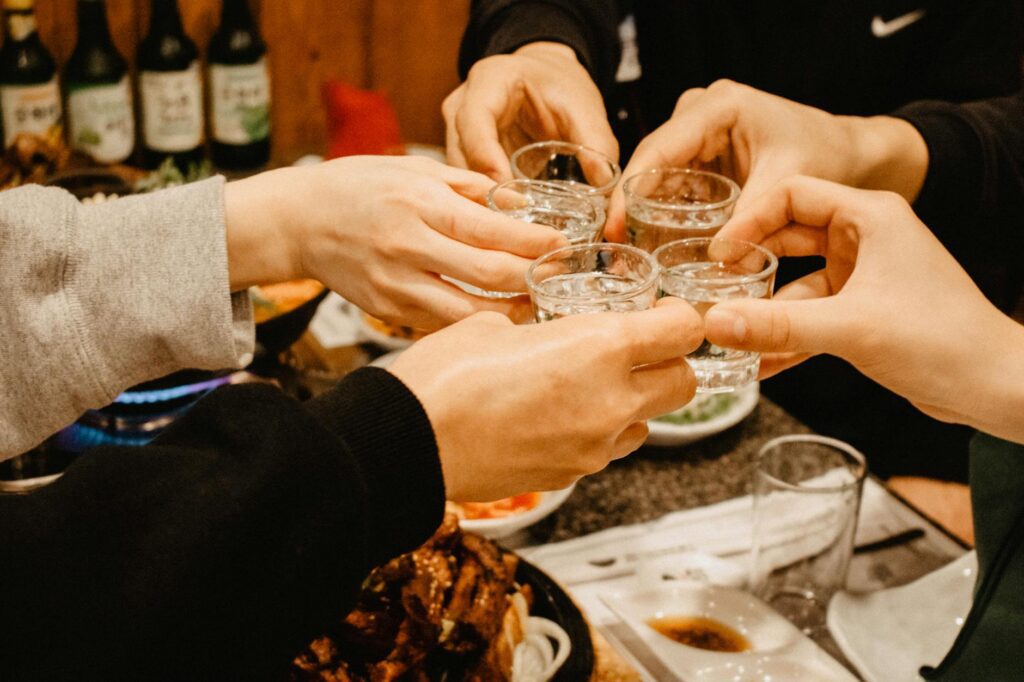
Korea also has a set of drinking-table customs worth remembering. Three rules cover most situations. First, when someone refills your empty glass, it is polite not to refuse. Second, when drinking in front of an elder, turn your head slightly away as you sip. Third, when receiving a drink, hold the glass with both hands. These apply at any makgeolli soju gathering. For broader trends in Korean alcohol culture, see the complete Korean alcohol culture and trends guide.
3) Makgeolli Soju Comparison: Which One to Pick?
Your choice between the two depends on the occasion, the food and your own preference. If you want a light, sweet drink to sip with pajeon, kimchi jeon or seafood pancakes, makgeolli is the better fit. If you prefer a cleaner, stronger spirit alongside samgyeopsal or spicy seafood, soju is the natural choice.
Both are so deeply rooted in Korean daily life that you will encounter them constantly. If you have the chance, try both and notice how their personalities differ. Makgeolli soju nights can sometimes turn into one-shot challenges or heavy drinking sessions, so know your limit and keep things enjoyable rather than overwhelming.
4) Traditional Brewery Tours and Makgeolli Soju Experiences
For a deeper dive, visit a traditional brewery. Makgeolli breweries and small-batch soju distilleries often allow visitors to watch the process and try tastings on-site. Many tour agencies and local governments also run hands-on programs where you can shape nuruk or even strain your own makgeolli.
The little stories you bring back from those visits are perfect conversation starters at your next Korean drinking table, and they give you a much richer feel for what makes Korean alcohol culture unique.
Makgeolli Soju Beginner Guide Wrap-Up
Makgeolli and soju are the twin pillars of Korean drinking culture. Each one is closely tied to Korean food, but they come from different histories, taste different and call for different drinking moments.
Makgeolli captures the cozy mood of a rainy day with pajeon; soju turns up the heat at a samgyeopsal table fueled by spice and chatter. If you visit Korea, make a point of trying makgeolli soju side by side to feel the rhythm of Korean food and social life. Sip in moderation, but when you do drink, let yourself sink into the flavor and atmosphere.
K-Name Studio: Create your perfect Korean name based on your personality and style.
What’s My K-Beauty Personal Color?
WeBring Service : Provides personalized services to foreigners living in Korea
Exclusive offer: Introducing foreign car rental in Korea, WeBring-SoCar
- Exploring Korean alcohol culture: Soju, Makgeolli, and Traditions
- Traditional Korean Kimchi Types: A Complete Guide
- Korean Cooking Class Guide: Kimchi, Bibimbap, Bulgogi Workshops in Seoul, Busan, Jeonju
Last updated: 22 September 2026
Prices, opening hours and transport schedules change with the season and the operator. Check the official channel again before you go.
WeBring operates its own Korea tour and vehicle services. The following is a promotion for that service.
Explore Korea's mountains — guides in your language
Courses, transport and seasonal tips for 30 mountains, from Bukhansan to Hallasan, available in 11 languages. Pick up essential travel Korean and find events for the global community, too.


