


A Korean Traditional Wedding experience introduces selected traditional marriage rituals; a visitor experience is not necessarily a historically accurate royal wedding. You wear a vivid hanbok, walk through rituals such as napchae, hapgeunrye, and kyobae, and take photos at the end — which is why the program is increasingly popular with foreign travelers and couples in Korea. This guide covers the historical background, the best venues, costumes, the order of the ritual, costs, and recommended photo spots, all in one place.
Historical Background of the Korean Traditional Wedding
The Korean wedding ritual developed in the Joseon era, grounded in Confucian teachings that emphasized the union of two families. Each step — napchae, sajudanja, hapgeunrye, daerye, and pyebaek — carries symbolism for blessing the marriage and wishing for descendants. The royal version sits at the peak of this tradition, with court robes and ceremonial items prepared in remarkable detail. Commoners also wore special ceremonial dress for weddings; costume rental alone does not establish an authentic royal reconstruction.
The mutual bow marks the couple’s greeting; the blue and red lanterns (cheongsa-chorong) once greeted the bride; the goose-shaped figure on the kyorye table symbolizes lifelong loyalty. To explore similar Korean cultural settings ahead of time, see the Jeonju Hanok Village hanbok itinerary. It is a photo-focused course but takes place in the same kind of background.
Where to Join a Korean Traditional Wedding Program
Even without an actual marriage, you can join a program that lets you wear royal hanbok and act out the ceremony. Foreign travelers should start with the Korea Tourism Organization site or the Korean Folk Village’s own notices to distinguish public demonstrations, visitor activities and actual wedding services.
| Venue | Highlights | Cost (approx.) | Best for |
|---|---|---|---|
| Hanbok studios near Gyeongbokgung or Changdeokgung | Palace background photos, royal robe rental | Illustrative rental/photo budget only: 30,000–100,000 KRW; request a quote | Short Seoul trips, couples |
| Korean Folk Village (Yongin) | Check current performance notices; an actual wedding is a separate service | Confirm what the current admission or separate program includes | Family travel, cultural study |
| Jeonju Hanok Village | Ceremony in a hanok setting, small groups | Illustrative budget only: 50,000–150,000 KRW; verify an actual operator and inclusions | Relaxed overnight trips |
| Specialized event companies | Full royal-style recreation | Custom quote | Wedding photos, anniversaries |
The atmosphere is much stronger when the program runs at Gyeongbokgung, Changdeokgung, or the Korean Folk Village. Some venues hand out a “Traditional Wedding Certificate” at the end, which foreign travelers love as a memento. You can search for operators on the Korea Tourism Organization website. If your Korean is limited, it is safer to pick a studio that advertises English support. You may also enjoy our guide to making Korean friends and 15 must-have apps for foreigners in Korea.

Costumes and Props
The bride wears a hwarot or wonsam — a richly embroidered hanbok with intense colors. Two red dots (yeonjigonji) are placed on her cheeks, and her head is topped with a jokduri or hwagwan to complete the royal bride look. The groom’s samogwandae consists of a samo hat, round-collared dallyeong robe, belt and boots. A king’s dragon robe is a different costume; do not equate a rental costume with documented royal wedding dress.
Props include blue and red lanterns, the wild goose figure, the kyorye table, and the gourd-shell cup. Each one tells a small story: the lanterns announce the bride’s arrival, the goose symbolizes lifelong loyalty, and the cups are used by the couple to share wine. Knowing what each piece means in advance turns the assistant’s explanation into a richer memory and a better photo.
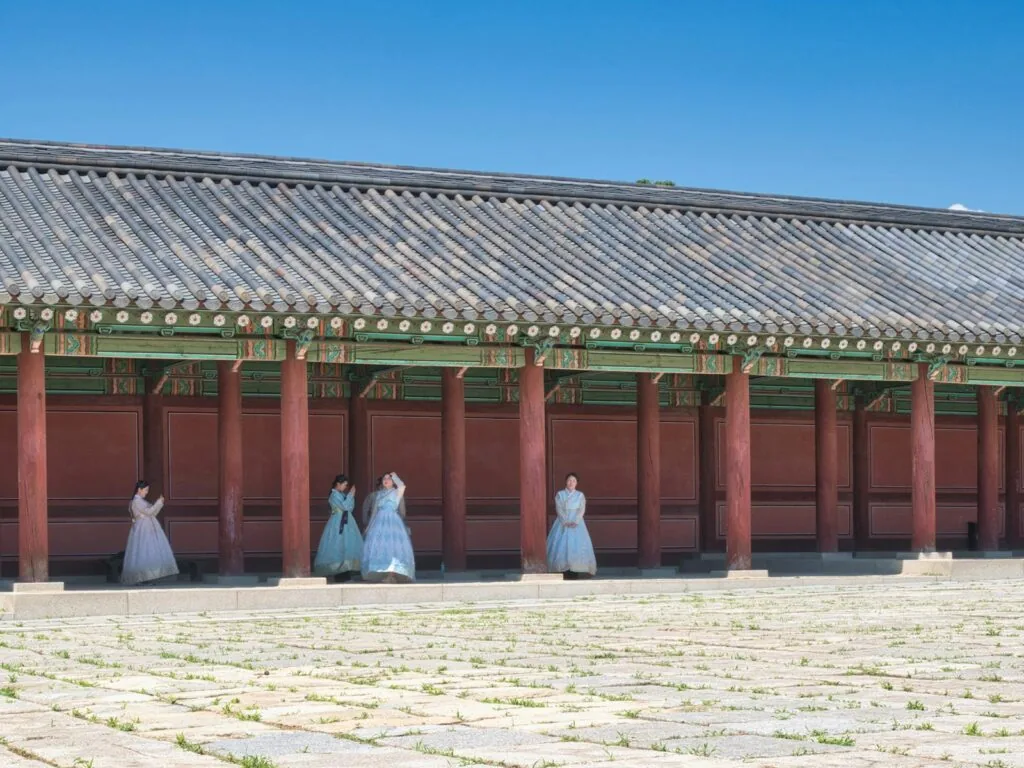
The Order of the Ritual and Fun Moments
The most memorable scene is hapgeunrye — the wine-sharing ritual, distinct from kyobaerye, the exchange of bows. Wine from a small gourd bottle is split into two cups, and each partner drinks from the other’s, sealing the bond. If you do not drink alcohol, request a non-alcoholic alternative before booking; availability is not universal.
- Jeonalrye — the groom presents a wooden goose to the bride’s family, promising lifelong devotion
- Kyobaerye — the bride and groom face each other and bow as their first greeting
- Hapgeunrye — both drink wine from a gourd-shell cup to mark their union
- Pyebaek (short form) — the couple bows to elders to close the ceremony
The host often throws in playful lines such as “Will you keep your bride smiling for the rest of your life?” or “Are you ready to embrace your husband’s flaws?” Laughter spreads through the room, and the ritual feels human rather than rigid. Foreign visitors can follow along easily if the booked program provides interpretation; confirm the language in advance.
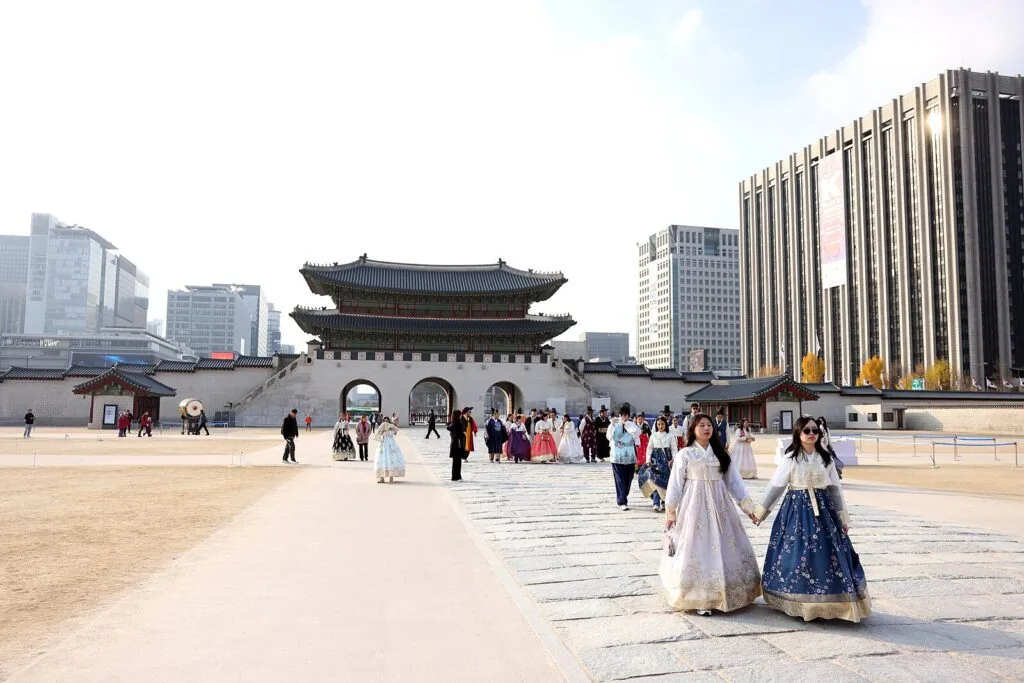
Photo Spots and Cultural Notes
After the ceremony, you keep the costumes on for a photo session. Standing as a bride and groom in front of a quiet hanok or a palace wall earns the “I feel like a prince and princess” reaction from many couples, and the photos are often shared on Instagram and other overseas social media. Recommended photo spots include:
- Geunjeongjeon courtyard at Gyeongbokgung — the best match for royal-style costumes
- Bukchon Hanok Village alleys — residential lanes; in the restricted red zone visit only 10:00–17:00 and keep noise down
- Gyeonggijeon in Jeonju Hanok Village — a historical Joseon royal site for ceremonial photos
- Huwon Secret Garden at Changdeokgung — a controlled garden visit (reservation and tour rules apply); not an unrestricted wedding-photo venue
History buffs can prepare by reading up on how robe colors varied by social class and what each item on the kyorye table represents. Knowing that the peony, lotus, and bat patterns on the hwarot stand for prosperity, fertility, and good fortune respectively makes every photo feel weightier.
The Depth of Korean Culture in This Experience
This program is an indirect way to learn about Korean history, aesthetic sense, and Confucian values. Wearing an ornate hanbok and walking through the old order of rituals to celebrate the union of two people brings a different kind of romance and joy. The more you learn about the symbolism behind each step, the more the program feels like a living culture rather than a one-off event.
For foreign travelers, it is one of the most compact ways to meet Korean culture; for Koreans, it is a chance to step into a ritual their ancestors knew well but they rarely see today. The options range from low-cost hanbok studio sessions to full royal-style recreations, so picking the right Korean traditional wedding program for your trip schedule and budget can make it the most memorable day of your time in Korea.
K-Name Studio: Create your perfect Korean name based on your personality and style.
What’s My K-Beauty Personal Color?
WeBring Service : Provides personalized services to foreigners living in Korea
Exclusive offer: Introducing foreign car rental in Korea, WeBring-SoCar
Sources checked (2026-09-08): 1, 2, 3, 4, 5.
Last updated: 16 September 2026
Prices, opening hours and transport schedules change with the season and the operator. Check the official channel again before you go.
WeBring operates its own Korea tour and vehicle services. The following is a promotion for that service.
Explore Korea's mountains — guides in your language
Courses, transport and seasonal tips for 30 mountains, from Bukhansan to Hallasan, available in 11 languages. Pick up essential travel Korean and find events for the global community, too.