
Why Seoul Underground Shopping Arcades Are a Bargain Paradise
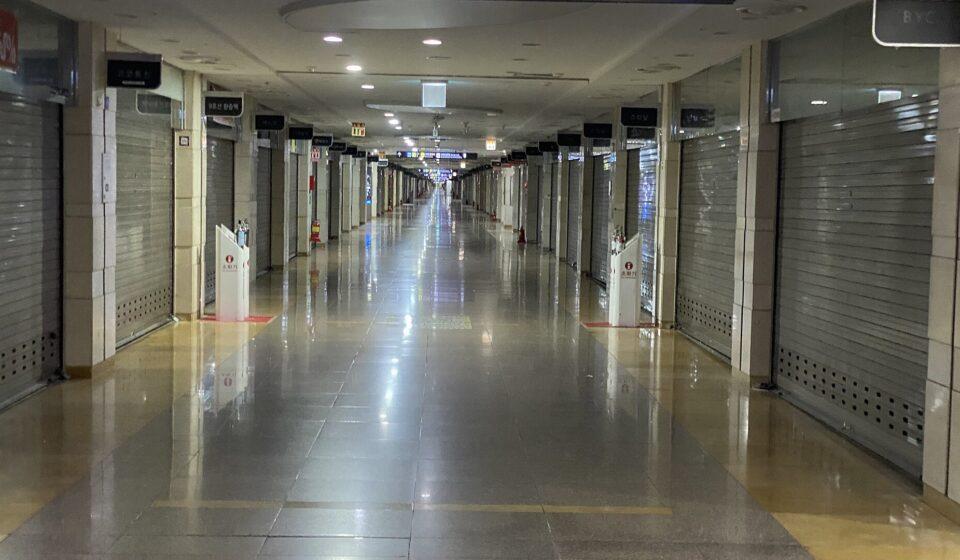
Seoul Underground Shopping arcades are bargain shopping courses where you can buy clothes, accessories, electronics, and street food along corridors connected to subway stations. Streets are not only above ground but also below, so you can walk through an entire arcade during the 5–10 minutes between subway transfers. Major transfer hubs in Myeongdong, Gangnam, Express Bus Terminal, and Yongsan host anywhere from 50 to over 600 stores, so if you plan your transfer route well, you can finish a full shopping trip on a rainy day without ever stepping above ground.
Underground arcades offer shelter from rain and outdoor temperatures, but ventilation and comfort vary. Compare the exact item’s quality and price across shops. Discounts vary by item and shop; confirm the final price before paying.
Five Seoul Underground Shopping Courses at a Glance
First-timers often get lost, so here is a quick comparison of transfer stations and strengths. One look at the table below and you can decide which underground course to visit in 30 seconds.
| Underground Course | Transfer Station | Specialty | Approx. Stores | Main Price Range |
|---|---|---|---|---|
| Express Bus Terminal Gotomall | Express Bus Terminal Stn. (Lines 3·7·9) | Women’s fashion, household goods | About 620 | KRW 10,000–30,000 |
| Gangnam Stn. Underground | Gangnam Stn. (Line 2 / Shinbundang) | Casual wear, accessories | About 230 | KRW 10,000–50,000 |
| Myeongdong–Euljiro Underground | Myeongdong / Euljiro 1·3-ga Stns. | Sundries, food court | About 300 | KRW 5,000–30,000 |
| Yongsan shopping district | Yongsan Stn. (Line 1 / Gyeongui–Jungang) | Electronics, gaming | About 200 | KRW 30,000–300,000 |
| Dongdaemun Underground Link | Dongdaemun History & Culture Park Stn. (Lines 2·4·5) | Wholesale fashion, late-night | About 150 | KRW 5,000–20,000 |
History: Seoul Underground Shopping Grew Up With the Subway
Seoul Underground Shopping arcades took off when subway lines 2, 3, and 4 opened in the late 1970s and 1980s. Small kiosks and shoe-repair corners filled the transfer corridors, and proper storefronts settled in by the late 1980s. Express Bus Terminal Underground Shopping Center, opened in 1985 with about 600 shops, set the standard for transfer-station underground markets.
Fashion, accessories and everyday goods are common reasons to visit. Store mix and visitor numbers vary by arcade; use the operator’s current store directory to choose a destination rather than unverified rent or customer-share statistics.
Course 1: Express Bus Terminal Gotomall (Goto Mall)
The largest of the Seoul Underground Shopping arcades is Gotomall at Express Bus Terminal Station. About 620 shops stretch along the transfer corridors of Lines 3, 7, and 9, and walking from one end to the other at a leisurely pace takes about 1 hour 30 minutes. Categories cover clothing, accessories, household goods, interior items, and even a flower market, so a single visit can finish all your shopping.
- Women’s fashion lane — The line near Exit 8 has blouses and skirts in the KRW 10,000–20,000 range.
- Snack corner — Tteokbokki, fish cake, and mini gimbap can fill you up for under KRW 5,000.
- Bargaining tip — Buying two or more items typically gets you a KRW 1,000–2,000 discount or a free add-on.
- Times to avoid — Saturday afternoons from 2 to 5 p.m. are crowded enough that shoulders bump in the corridors.
Check shopping hours before departure. The Seoul Facilities Corporation FAQ lists the terminal arcade at 10:00–22:00; this is not a promise of 24-hour shopping or air conditioning. Individual shops can differ.
Course 2: Myeongdong–Euljiro Underground Shopping
Myeongdong Station’s arcade and the Euljiro underground network are distinct places. Do not assume that Myeongdong Station connects underground all the way to Euljiro 4-ga. Check the operator’s map and your exact station exit; an outdoor section may be needed.
- Lunch pick — The Euljiro 1-ga underground food court serves Korean set meals for KRW 7,000–9,000.
- Souvenirs — compare licensed merchandise, materials and final prices; a fixed percentage discount is not assured.
- Wayfinding tip — Follow the colored lines (orange and green) on the corridor maps to avoid getting lost.
Course 3: Yongsan and Dongdaemun Synergy
For Yongsan electronics shopping, choose the exact building and shop first, then map the route from the station. The electronics district is not one continuous underground mall. Compare model numbers, condition, included accessories and warranty, especially for used goods.
Dongdaemun’s main draw is the wholesale market upstairs, but late-night clothing and sundry shops are tucked into the underground link as well. Walking out of Dongdaemun History & Culture Park Station through the underground arcade lets you dodge rain and snow on your way to the last train. To pair the trip with a night-view course, check the Seoul night view timing guide.
Six Things to Watch Out for at Seoul Underground Shopping Arcades
- Sense of direction — Shops look alike and corridors fork often, so use a navigation app together with a photo of the wall map.
- Payment — carry a backup payment method and request a receipt. A card merchant must not refuse a credit card or disadvantage a customer solely for paying by card. Do not treat a card surcharge as a normal bargain-shopping rule.
- Crowded hours — Skip Saturday afternoons (2–5 p.m.) and weekday rush hours (7–9 a.m. and 6–8 p.m.).
- Big luggage warning — Corridors are narrow, so leave large suitcases in coin lockers (KRW 4,000–6,000 per station).
- Summer ventilation — Areas with low ceilings can climb above 25°C, so bring a bottle of water.
- Returns — ask about fitting, exchanges and change-of-mind returns before paying. Keep the receipt and distinguish store policies from remedies for defective or misdescribed goods.
Seven Bargain Shopping Tips for Seoul Underground Shopping
The trick to buying the same design for less is to lock in your sequence — purpose, store, negotiation — before you walk in.
- Narrow what you want to a single category (e.g., “five basic cotton T-shirts”).
- Compare prices for the same design at three different shops before deciding.
- Ask whether a published promotion or bundle offer applies, and confirm the final total without accepting a card-payment penalty.
- Ask whether a bundle offer applies when buying several items.
- Compare the exact model, materials and final price of designs found on social media.
- For shoes and electronics where quality matters, check warranty and exchange terms before paying.
- Take the freebies — small extras like socks or hair ties usually come along.
Nearby Attractions to Pair With Seoul Underground Shopping
| Underground Course | Nearby stop (travel time varies) | Suggested Schedule |
|---|---|---|
| Express Bus Terminal Gotomall | Banpo Hangang Park Rainbow Fountain | 4 p.m. shopping → 7 p.m. fountain show |
| Gangnam Underground | Gangnam Stn. street performances, restaurant alley | 5 p.m. shopping → 8 p.m. show |
| Myeongdong–Euljiro Underground | Namsan Tower, Myeongdong Cathedral, Hipjiro alleys | 12 p.m. shopping → 6 p.m. night view |
| Yongsan shopping district | I’Park Mall, Yongsan Park | 2 p.m. shopping → 5 p.m. walk |
| Dongdaemun Underground Link | DDP night view, Gwangjang Market | 7 p.m. shopping → 10 p.m. night view |
Multiple exits lead out of each Seoul Underground Shopping arcade, so checking the exit number for your destination ahead of time saves a lot of wandering. To pair this with another central Seoul route, the Deoksugung & Jeongdong-gil retro walking tour is a good match.
A Slice of City Life Through Seoul Underground Shopping
Seoul Underground Shopping arcades are one of the clearest examples of how a Korean city stacks itself in three dimensions. They are not luxury malls — they are everyday markets where residents and merchants meet to find practical, affordable goods. They link directly to subway stations for easy transfers, shield you from heat, cold, rain, and snow, and even feed you with street food along the way. Tourists pick up souvenirs; residents grab daily essentials on the way home from work.
If it’s your first time, do not try to cover all of them at once. Pick one course from the table above and budget 1.5 to 2 hours. After two or three visits you will naturally settle on the shops that suit you. To plan around the wider Seoul transit network, the Korea transportation guide pairs well with this article.
Image credits
- Featured image (Gotomall): Photo by Tildin / Wikimedia Commons (CC BY-SA 4.0)
- Body image (Myeongdong street): Photo by thelearnr / Wikimedia Commons (CC BY 2.0)
- Body image (Yongsan Electronics Market): Photo from Wikimedia Commons (CC BY 2.0)
K-Name Studio: Create your perfect Korean name based on your personality and style.
What’s My K-Beauty Personal Color?
WeBring Service : Provides personalized services to foreigners living in Korea
Exclusive offer: Introducing foreign car rental in Korea, WeBring-SoCar
Sources checked (2026-09-08): 1, 2, 3, 4.
- Beat the Heat in Seoul: 3 Indoor Routes Through Underground Malls, Exhibits and Cafes
- Namdaemun Market Myeongdong Day Trip Guide: Shopping, Food & Tips
- Yongsan Hangang Walk: Half-Day Tech + River Reset Route
- Noryangjin Fish Market Guide: Four-Stage Ordering, Pricing, Menu Pairings
Last updated: 7 October 2026
Prices, opening hours and transport schedules change with the season and the operator. Check the official channel again before you go.
WeBring operates its own Korea tour and vehicle services. The following is a promotion for that service.
Explore Korea's mountains — guides in your language
Courses, transport and seasonal tips for 30 mountains, from Bukhansan to Hallasan, available in 11 languages. Pick up essential travel Korean and find events for the global community, too.