

Why Korean Traditional Market Shopping Is Worth Your Time
Korean traditional market shopping is one of the fastest ways to feel everyday Korea, even as supermarkets and convenience stores keep multiplying. In every Korean city, traditional markets (jeontong sijang, 전통 시장) still anchor neighborhood commerce. Walk through any alley and you see fresh fruit, vegetables, and seafood lined up, with vendors calling out prices. Unlike a polished shopping mall, a Korean traditional market is warm and lived-in. Street food, haggling, and regional specialties make it the most “local” experience a traveler can have.
Going beyond sightseeing — actually picking ingredients at a Korean traditional market, then cooking and eating them — is a small but memorable highlight. It also opens up Korean food culture in a way restaurant meals rarely do.
Korean Traditional Market Shopping Route: Sights To Start With
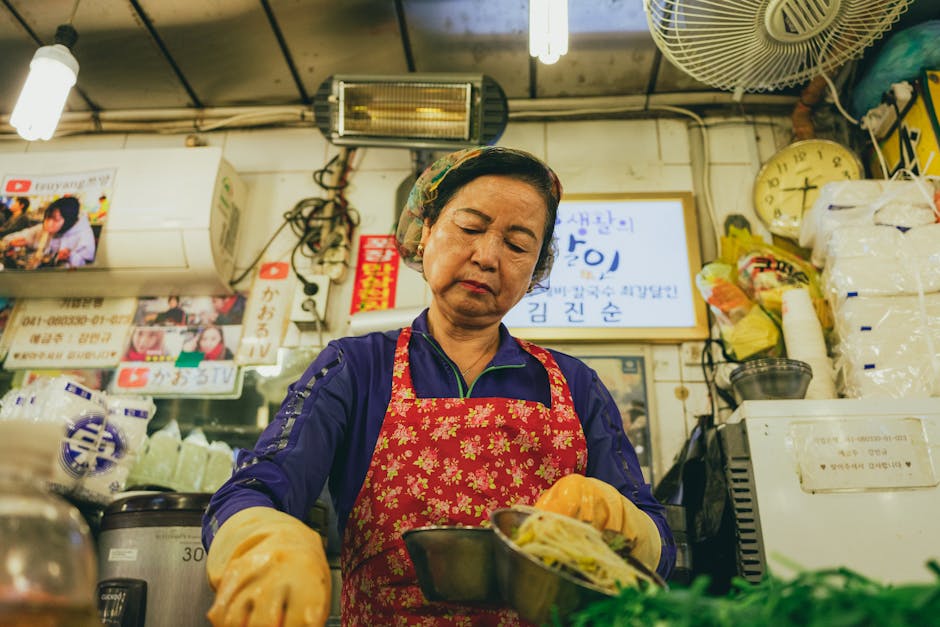
The first things you notice are colorful tent roofs and long rows of stalls. Piled vegetables, fish in shallow bowls, glistening cuts of meat — all of it surprises foreign visitors and feels nostalgic to Korean ones. For market-by-market routes, see the 12-market traditional market course guide. Vendors call out to passersby and often offer a free taste with “Try a bite.”
Example: Gwangjang Market (Seoul)
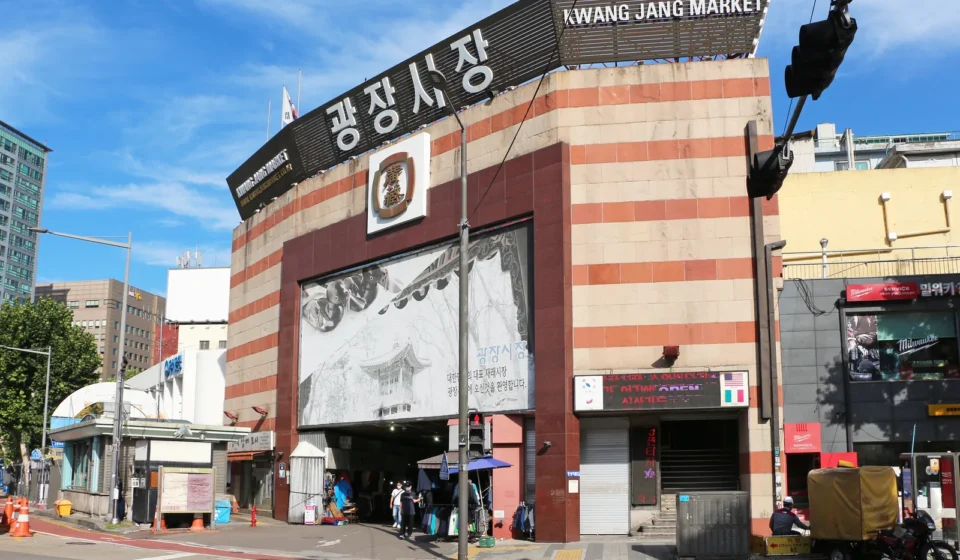
Gwangjang Market, in Jongno-gu Seoul, is one of Korea’s largest traditional markets and a tourist favorite. Food alleys serve bindaetteok (mung-bean pancakes), mayak gimbap, yukhoe bibimbap, sundae-guk, and more. There are also fabric and dry-goods sections, so one loop is never dull. Many stalls open at dawn for morning shoppers. More background at the Korean Food Promotion Institute.
Korean Traditional Market Shopping Core: Freshness And Haggling

A market run is not only about ready-to-eat food — buying ingredients to cook later is half the fun. To make Korean dishes at home you might pick napa cabbage, chili, scallion, garlic, salted shrimp, rice, tofu, and various sauces. Prices vary stall to stall, so polite haggling is part of the game. Say “조금만 깎아주세요 (jogeumman kkakka juseyo, please knock a little off)” and the vendor will either decline with a joke or, in a good mood, throw in a small bonus.
Foreign visitors often spot unfamiliar greens — gondeure, doraji, minari — that are hard to find back home. Just ask vendors how they’re cooked or what they taste like; most will gladly explain. Market vendors are generous with attention when you show interest. Related: Gwangjang Market foreigner-friendly menus.
Where To Cook After Korean Traditional Market Shopping: Studios And Guesthouses
To cook your haul right away you need a kitchen. Cooking studios now rent kitchens by the hour, and many hanok guesthouses and Airbnbs allow shared-kitchen use. Booking a stay near the market lets you head straight back and start cooking while ingredients are still at peak freshness.
Example: Cooking a Korean Home Meal
Use the vegetables and meat you bought to try a simple Korean dish. To make kimchi jjigae (kimchi stew), grab aged kimchi, pork belly, tofu, scallion, and onion at the market and simmer them in a pot. Season with red pepper flakes, garlic, a little doenjang/soy sauce, and anchovy or kelp stock. Adjust with salt or guk-ganjang (soup soy) if it tastes flat, or thin with water if it gets too spicy. Pair it with banchan from the market — soybean-sprout salad, seasoned spinach — and you have a full meal.
Street Food To Eat During Korean Traditional Market Shopping
Even if you didn’t come for ingredients, the street food at a Korean traditional market is hard to ignore. Twigim (fritters), sundae, eomuk (fish cake), hotteok, sikhye, jeon (savory pancakes), and just-made gimbap are cheap and everywhere. Many of these are easier to find at markets than in restaurants, so try the ones you don’t recognize. Related: Korean food basics guide.
In crowded alleys, single portions are cooked on the spot and eaten standing up or on a low stool. You end up chatting with the people next to you, and the owner will often refill your broth with a friendly “More soup?” These small moments are the jeong (情) culture you only really get at the market.
A Korean traditional market is not only food. You can stumble on handmade craft items, traditional kitchenware (onggi clay jars, brassware, old iron pots), hanbok or everyday-hanbok, and vintage knick-knacks. If the standard mall souvenir is starting to bore you, these craft stalls carry more distinctive pieces.
Near Korean holidays or year-end, markets run discount weeks and event days. Tteok (rice cake) decorating workshops, Chuseok-specialty exhibits, and kimjang (group kimchi-making) days are popular with foreigners and younger Korean visitors alike. Time a visit to one of these and the day fills up fast.
Korean Traditional Market Shopping Tips: Haggling, Storage, Timing
- Payment: Carry some cash for stalls that do not accept cards, and check the displayed price before ordering. Card merchants cannot refuse a card merely because the purchase is small, pass their merchant fee to you, or disadvantage you for paying by card.
- Don’t be shy with small talk: Korean market vendors are proactive — smile back if you’re comfortable. Simple Korean phrases like “요거 얼마예요? (yogeo eolma-yeyo, how much is this?)” or “조금 더 싸게 안 될까요? (jogeum deo ssage an doelkkayo, can you go a bit lower?)” usually earn goodwill and sometimes a small discount.
- Mind storage: Refrigerated or frozen items should go straight to your accommodation. If you have a long route afterward, bring an ice pack or insulated bag.
- Timing: Check the particular market section and shop hours. Stock and closing discounts vary by stall; arrival time alone does not establish freshness. Inspect the product and its storage conditions before buying.
Cooking Korean Food At Home With Korean Traditional Market Shopping Hauls
Cooking with ingredients you bought on the road plants the trip deeper in memory. “Oh, this cabbage and chili came from that market…” — small stories like that stick. Europe and Japan have long sold cooking classes as travel experiences, and Korea now runs combined market-tour and cooking-class programs for foreign visitors. For broader market-led food itineraries, see 12 best K-food culinary destinations.
A market-and-cooking class can introduce local ingredients before a studio cooking session. Check the provider’s actual itinerary, teaching language, menu, kitchen access and dietary arrangements before booking; do not assume every class includes kimchi and bulgogi.
Real Korean Flavor Starts Here
Korean food rests on fresh ingredients and careful, hands-on cooking — and the starting point is the Korean traditional market. Vendors moving under bright lights, the smell of food, faces and snippets of conversation in motion — few places show Korean life this clearly. Korean traditional market shopping followed by cooking the food yourself turns a “tourist day” into something you actually remember.
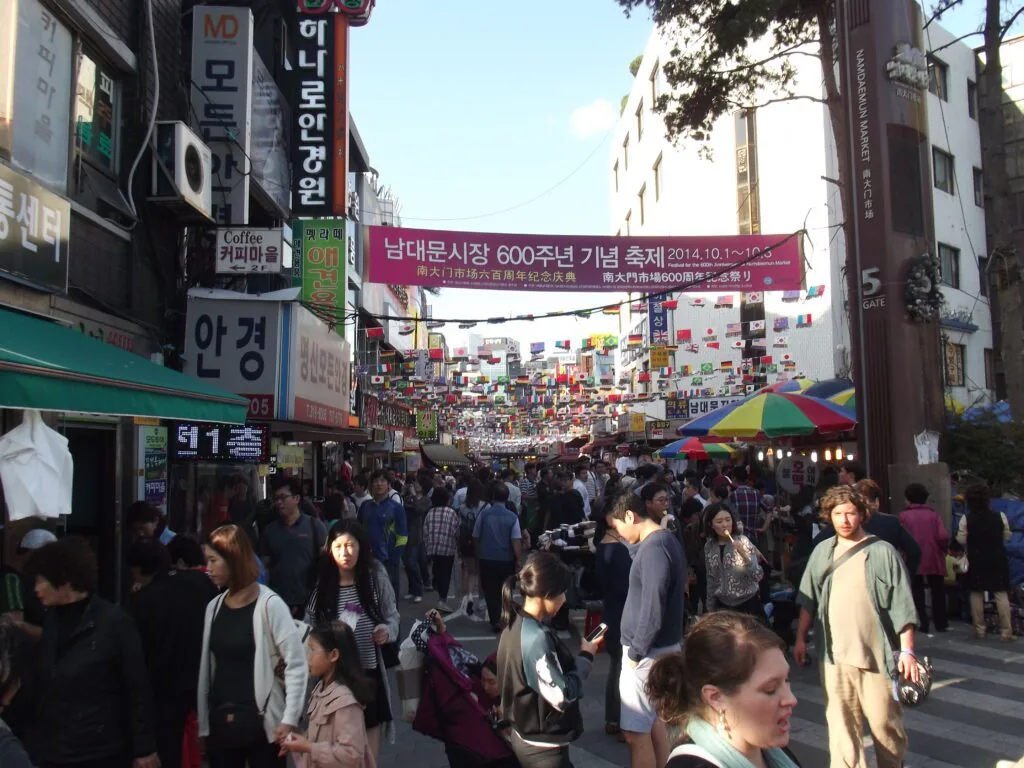
Yes, a Korean traditional market is louder and messier than a polished mall, but that disorder is exactly where the warmth and energy live. First-time visitors can feel a little intimidated — just smile and ask. You will leave with full bags and a warm memory of those alleys.
Image credits
- Featured image: Photo by Bgag / Wikimedia Commons (CC0)
- Gwangjang Market food alley: Photo by Bgag / Wikimedia Commons (CC0)
- Tongin Market: Photo by Republic of Korea / Wikimedia Commons (CC BY-SA 2.0)
- Namdaemun Market: Photo by Smiley.toerist / Wikimedia Commons (CC BY-SA 4.0)
K-Name Studio: Create your perfect Korean name based on your personality and style.
What’s My K-Beauty Personal Color?
WeBring Service : Provides personalized services to foreigners living in Korea
Exclusive offer: Introducing foreign car rental in Korea, WeBring-SoCar
Sources checked (2026-09-08): 1, 2.
- The Unique Charm of Traditional Markets: A Guide to Seoul’s Best Markets
- Traditional Korean Kimchi Types: A Complete Guide
- Korean Vegetarian Restaurant Guide: Vegan Korean Food 7-Day Complete Itinerary
- Korean Vegetarian Food Guide: Temple Cuisine, Vegan Restaurants, and How to Eat Plant-Based in Korea
Last updated: 7 October 2026
Prices, opening hours and transport schedules change with the season and the operator. Check the official channel again before you go.
WeBring operates its own Korea tour and vehicle services. The following is a promotion for that service.
Explore Korea's mountains — guides in your language
Courses, transport and seasonal tips for 30 mountains, from Bukhansan to Hallasan, available in 11 languages. Pick up essential travel Korean and find events for the global community, too.