
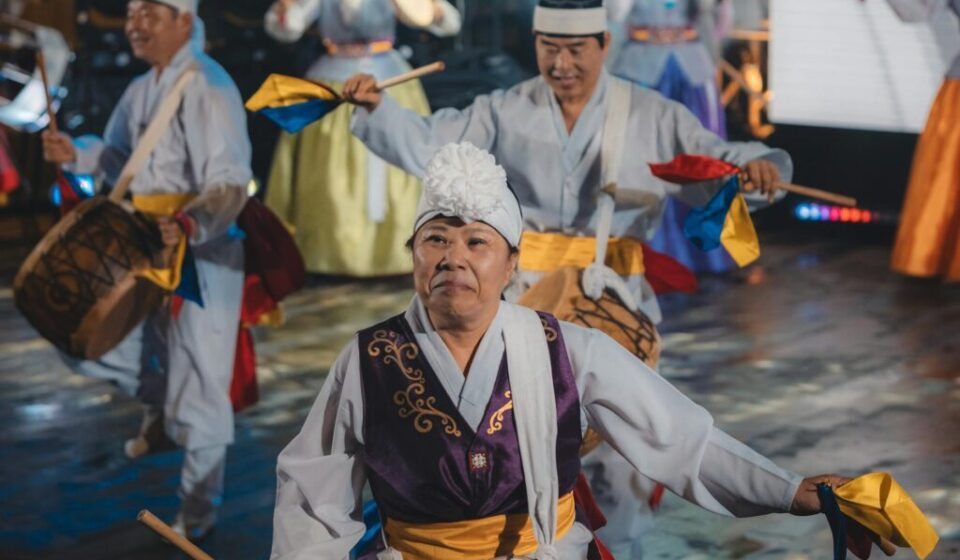

Korean traditional performance — pansori, talchum, and samulnori — are living cultural heritage rooted in folk culture, with samulnori developed as a modern stage genre in 1978. Beyond foreign visitors, these three genres still move younger Korean generations with their raw artistic power. This entry-level guide summarizes each form, where to watch, and how to experience them firsthand.
Pansori: The Essence of Korean Traditional Performance, an Epic by One Singer
Pansori is an art form in which a “sorikkun” (singer) and a “gosu” (drummer) together deliver long narratives in song. The five surviving madang — Chunhyangga, Heungboga, Simcheongga, Sugungga, and Jeokbyeokga — are based on Korean classical tales and folklore. The singer captivates the audience with rapid emotional shifts between laughter and tears and dramatic vocal variations.
Spoken passages called “aniri” alternate with sung passages called “chang”, while the drummer keeps time on the buk and adds shouts (“Joh-ta!”, “Eolssigu!”) to lift the energy. With only a single voice and a drum, a vast saga unfolds — a living experience where performer and audience breathe together. Pansori was proclaimed by UNESCO in 2003 and incorporated into its Representative List of the Intangible Cultural Heritage of Humanity in 2008. Complete performances can last several hours; introductory excerpts are shorter. Check the specific program’s running time before booking.
Talchum: Korean Traditional Performance of Satire Behind the Mask
Notable talchum genres include “Bongsan Talchum” and “Hahoe Byeolsingut Talnori”. Performers wear masks symbolizing each character and tell stories through dance and gesture. The yangban (nobleman) mask, the monk mask, the Malttugi (servant) mask, and the Halmi (old woman) mask each carry distinctive expressions that deliver wit and satire.
Talchum’s appeal lies in its grassroots humor. Many scenes comically mock the yangban or criticize authority, providing catharsis for the common people. Regular performances are still held in Hahoe Village, Andong, with audience participation. Talchum (covering 18 designated mask dance traditions) was inscribed by UNESCO in 2022. Visit our Hahoe Village one-day course to see it firsthand.
Samulnori: A Rhythmic Feast from Four Instruments
Samulnori is a rhythm genre performed on four percussion instruments — kkwaenggwari (small gong), janggu (hourglass drum), buk (barrel drum), and jing (large gong). The original ensemble of Kim Duk-soo, Kim Yong-bae, Lee Kwang-su and Choi Jong-sil developed this stage genre from folk percussion in 1978.
| Instrument | Sound | Role |
|---|---|---|
| Kkwaenggwari | Sharp, piercing | Rhythm lead |
| Janggu | Bright high–low combo | Beat foundation |
| Buk | Heavy pulse | Core tempo |
| Jing | Wide resonance | Closing tone |
As the tempo accelerates, the audience naturally claps and cheers, and the finale becomes a moment when performers and audience merge into one. Running times depend on whether samulnori is one part of a mixed program or the main performance. Short percussion programs can be an approachable introduction.
Korean Traditional Performance: Where and How to Enjoy
All three genres are accessible at venues and cultural heritage events nationwide. The National Theater of Korea, the National Gugak Center, and traditional culture cities like Jeonju and Andong host regular performances, with language support varying by program. Check the Korea Tourism Organization website to find performance information, then confirm the date, running time and language support with the venue.
Hands-on programs are increasingly popular too: samulnori beat basics, talchum step workshops, pansori vocal trial sessions — with fees, language support and availability set by each organizer. Combine these with K-Drama filming location tours for a richer Korean culture trip. Also see our K-Drama filming locations tour guide and Korean traditional village visit etiquette guide.
Fusion: How Korean Traditional Performance Is Evolving
Traditional stages are being reinterpreted in fusion formats. Pansori has been blended with electronic music, talchum with contemporary dance movements. Samulnori has also merged with jazz and rock ‘n’ roll sounds, drawing strong responses from younger audiences — check each production’s current listing before planning a visit to Jeongdong Theater or an outdoor event.
The Living Appeal of Korean Traditional Performance on Stage
Pansori, talchum, and samulnori condense the sentiment and history of Korean folk culture. A single voice expressing the full range of emotions in pansori, satire delivered from behind a mask in talchum, and an explosive ensemble of four instruments in samulnori — all still bring abundant joy and resonance to modern audiences. Even when the language is unfamiliar, the energy carried by movement and sound creates empathy that crosses borders.
K-Name Studio: Create your perfect Korean name based on your personality and style.
What’s My K-Beauty Personal Color?
WeBring Service : Provides personalized services to foreigners living in Korea
Exclusive offer: Introducing foreign car rental in Korea, WeBring-SoCar
Sources checked (2026-09-08): 1, 2, 3, 4, 5.
Last updated: 14 September 2026
Prices, opening hours and transport schedules change with the season and the operator. Check the official channel again before you go.
WeBring operates its own Korea tour and vehicle services. The following is a promotion for that service.
Explore Korea's mountains — guides in your language
Courses, transport and seasonal tips for 30 mountains, from Bukhansan to Hallasan, available in 11 languages. Pick up essential travel Korean and find events for the global community, too.