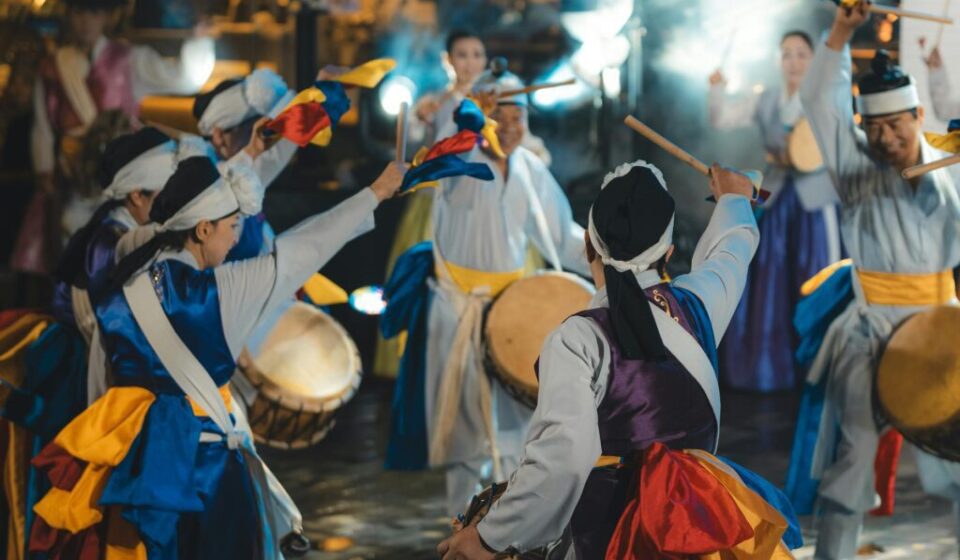

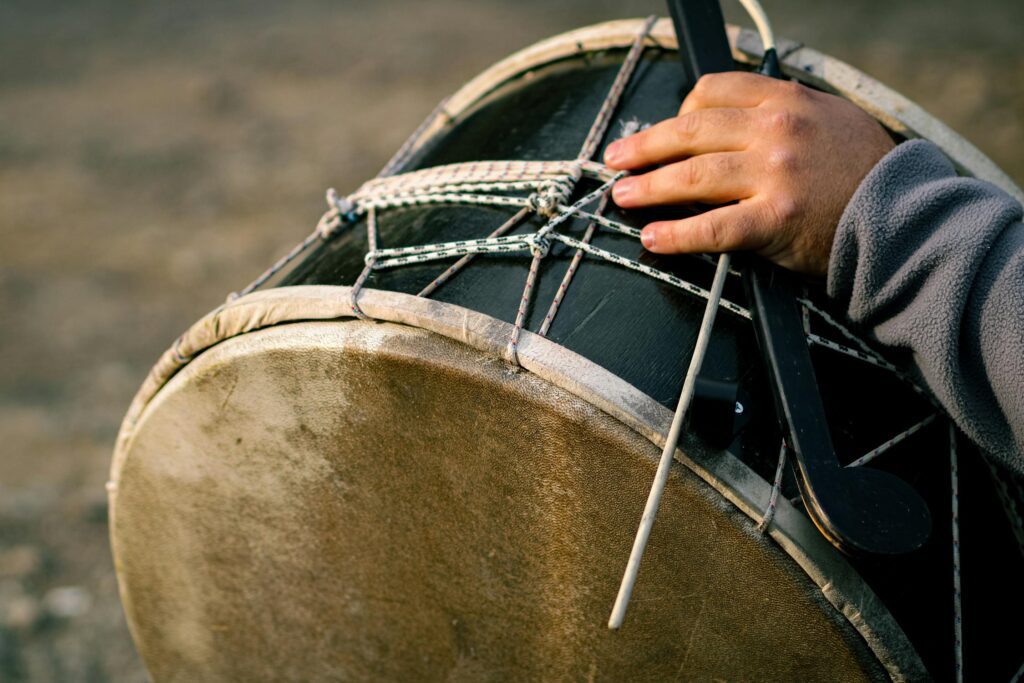
A nongak festival is a living folk-music tradition that Korean farming communities built over centuries to pray for a good harvest. The four-beat rhythm of the kkwaenggwari (small gong), janggu (hourglass drum), buk (barrel drum), and jing (large gong), paired with the spinning sangmo hat-streamer dance, makes the body respond before words can catch up. This guide gathers Korea’s representative festival lineup, regional folk performance dates, on-site activities, and transit tips so first-time visitors can navigate the season without a guide.
Roots of the Nongak Festival: Origins and Meaning
Nongak is the percussion-and-dance art that village farmers played with kkwaenggwari, janggu, buk, and jing while working the fields. It grew as a way to lift spirits during hard labor, to pray for a plentiful harvest, and to share the joy of bringing crops home. Tied to local rituals, it also served as a ‘geollip’ ceremony that honored guardian spirits and chased away the year’s bad luck. Honam, Yeongnam, and Gyeonggi each developed slightly different rhythms and sangmo designs, so the same melody carries a distinct regional accent.
This same percussion later evolved into stage forms like ‘pungmullori’ and ‘samullori,’ but regional festivals still present it in its original outdoor style. When sangmo performers spin the long ribbons on their hats, the audience loses track of time. If you want to dig deeper into Korean traditional performance, our Hahoe Village mask-dance day course and Korean traditional-village visiting etiquette guide are great companions.
Where the Nongak Festival Happens: Top Events Compared
North Jeolla Province is where Korea’s most vibrant nongak culture lives today. Gimje and Jeongeup are the heartland of Honam Udo-style nongak, with intricate rhythm changes and dazzling formation dances. To stay connected during the trip, see our 15 essential apps for foreigners in Korea.
| Festival | Region | Main Period | Highlights |
|---|---|---|---|
| Gimje Horizon Festival | Gimje, North Jeolla | Late Sep – Early Oct | Nongak competition, rice-harvest hands-on, traditional market |
| Jeongeupsa Cultural Festival | Jeongeup, North Jeolla | Mid-October | Nongak street parade, folk performances, Jeongeup gamuak |
| Andong International Mask Dance Festival | Andong, North Gyeongsang | Late Sep – Early Oct | Hahoe Byeolsingut Tallori, international mask-dance contest |
| Jeongseon Arirang Festival | Jeongseon, Gangwon | Early September | Arirang singing contest, folk stage, 5-day market tie-in |
| Anseong Baudeogi Festival | Anseong, Gyeonggi | Early October | Namsadang troupe performances, traditional pungmul demo |
Hands-on booths at each event let you try the kkwaenggwari yourself or watch a traditional rice-milling demo. For accurate yearly dates, the Korea Tourism Organization official site is the safest source, and if you’re going with Korean friends, the conversation tips in our guide to making Korean friends help you blend into the crowd. To pair the trip with a UNESCO site nearby, also see our 15 UNESCO destinations in Korea.
Regional Folk Festivals Around the Nongak Festival Circuit
Beyond pungmul, every region adds its own folk celebration on top. The Jeongseon Arirang Festival in Gangwon builds a large stage around the Arirang melodies passed down for generations. Anseong’s Baudeogi Festival in Gyeonggi honors the Anseong Namsadang troupe through performances and hands-on workshops. In Andong, the International Mask Dance Festival places the Hahoe Byeolsingut Tallori beside masks from around the world, letting you compare the energy of pungmul stages with the wit of mask dance in one weekend.
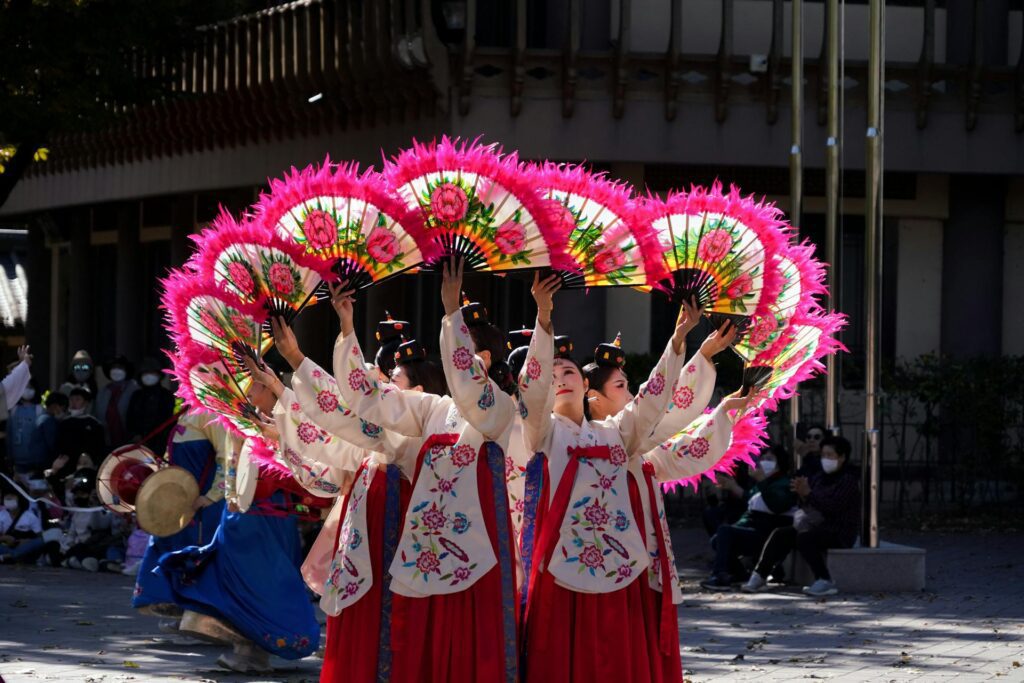
Each event runs side activities such as mask-painting, Arirang singing contests, and food markets featuring local specialties. Knowing the story a community has carried through generations doubles the fun of watching. Pairing the trip with Jeonju Hanok Village lets you balance the energy of pungmul stages with the quiet rhythm of a heritage village in a single itinerary.
How to Enjoy a Nongak Festival to 200%: Booth Tips
Watching is fun, but joining in is what really sticks. Most hands-on programs run free or under 5,000 KRW. Families and first-time visitors especially benefit — just touching the instruments unlocks the rhythm in minutes.
- Costume try-on: Wear a pungmul outfit and join a short parade
- Instrument lesson: 20–30 minute kkwaenggwari and janggu beginner workshop
- Traditional market: Local specialties, makgeolli tasting, handmade snacks
- Farming activity: Rice harvest demo and traditional milling (Gimje Horizon Festival)
- Mask-painting: Color and take home a miniature Hahoe mask (Andong)
Festival traffic can pile up, so check public-transport timetables and parking in advance. KTX-connected cities like Gimje and Jeongseon reward early-morning bookings, while Andong and Anseong are usually easier by intercity bus.
The Modern Value of the Nongak Festival and Folk Traditions
These events are more than nostalgia. It symbolizes a community’s identity and bridges generations through shared sound. As tourism resources, these events feed local economies and introduce Korea’s culture to visitors from every continent. UNESCO inscribed ‘Nongak, community band music, dance and rituals in the Republic of Korea’ on its Intangible Cultural Heritage list in 2014, which broadened preservation work across city offices, schools, and student clubs.
The lead-up to each festival brings residents together, with volunteers and students renewing traditional crafts and regional arts. Each year the next generation reinterprets what their elders kept alive. To see how some Korean festivals scaled globally, check our global festival success-strategy article.
Why a Nongak Festival Stays With You Long After
Centuries of tilling fields, harvesting crops, and turning hard work into dance and song stack up into what you’ll feel today. A noisy, packed festival ground holds a shared joy anyone can fall into. One unplanned pungmul stage can leave a memory that outlasts the trip. Slot one of these festivals into your next Korea itinerary and let the rhythm find you.
K-Name Studio: Create your perfect Korean name based on your personality and style.
What’s My K-Beauty Personal Color?
WeBring Service : Provides personalized services to foreigners living in Korea
Exclusive offer: Introducing foreign car rental in Korea, WeBring-SoCar
- Gyeongju Andong Heritage Tour: Discover Korea’s Ancient Roots
- K-POP Dance One-Day Class: Learn Idol Choreography in Korea
- Korea Four-Season Travel Guide: Cherry Blossoms to Skiing Adventures
- Korean Traditional Performance: Pansori, Talchum, Samulnori
- Korean Holidays: A Comprehensive Guide for Foreigners
Last updated: 7 October 2026
Prices, opening hours and transport schedules change with the season and the operator. Check the official channel again before you go.
WeBring operates its own Korea tour and vehicle services. The following is a promotion for that service.
Explore Korea's mountains — guides in your language
Courses, transport and seasonal tips for 30 mountains, from Bukhansan to Hallasan, available in 11 languages. Pick up essential travel Korean and find events for the global community, too.