
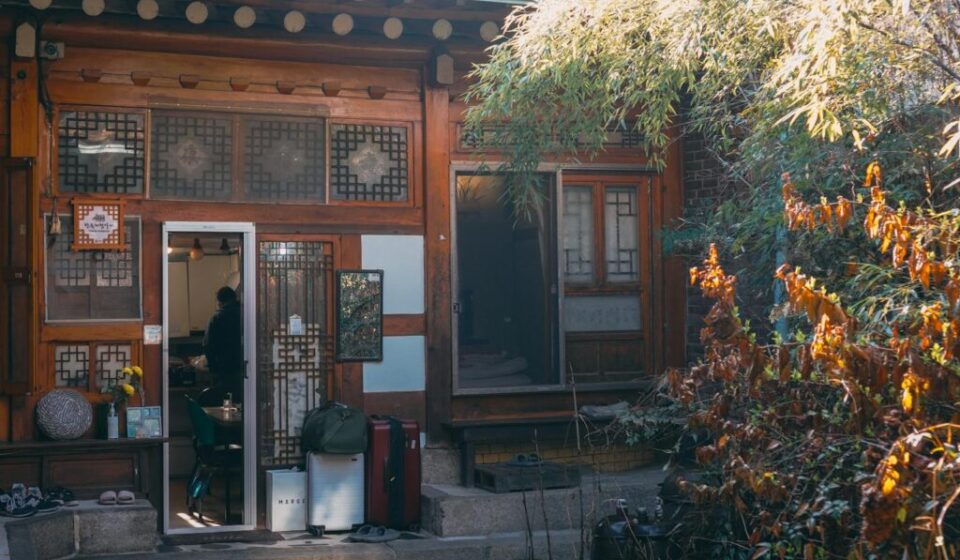

Jeonbuk hanok stay travel anchors on the 600 hanok houses of Jeonju Hanok Village and adds Namwon (Jiri Mountain), Muju (Deogyu Mountain), Buan (Byeonsan Peninsula), and Gochang (Yellow Sea tidal flats) to complete a “forest, fortress wall, and ocean” overnight loop. The province’s hanok stays are not just old-form buildings — each one sits in a different natural setting, so each night feels distinctly different. This guide pulls together Jeonbuk hanok stay regions, a standard 2-night, 3-day route, booking timing, and route efficiency in one read. For more, see the Korea Tourism Organization.
Jeonbuk hanok stay regions at a glance
| Type | Main area | Atmosphere | Nearby attractions |
|---|---|---|---|
| City | Jeonju Hanok Village | 600 houses, walkable night views | Gyeonggijeon, Pungnammun, Jeondong Cathedral |
| Forest | Muju Deogyu, Namwon Jiri | Valleys, mountain mist, true ondol nights | Gucheon-dong valley, Gwanghalluwon |
| Ocean | Buan Byeonsan, Gochang west coast | Sunset, tidal flats, salt sea breeze | Chaeseokgang, Gochangeupseong |
Why Jeonbuk stands out for hanok stay travel
North Jeolla Province has one of the highest densities of hanok stays in Korea. Centered on the 600 hanok houses of Jeonju Hanok Village, each county — Namwon, Muju, Buan, Gochang — adds its own version. Beyond the building style, each one sits beside a different natural setting (forest, fortress, tidal flat), so the overnight experience varies sharply by location. Seoul to Jeonju is a 1 hour 40 minute KTX ride. With Jeonju as base and a rental car, you can string the main hanok stays into a 1- or 2-night loop. If this is your first visit to the village, also see the Jeonju Hanok Village course guide.
Forest Jeonbuk hanok stay — overnight in the Deogyu and Namwon mountains

Along the lower flanks of Muju Deogyu Mountain, small hanok pensions and traditional minbak line the Gucheon-dong valley. In summer, the cool sound of the valley reaches into the rooms; in autumn, foliage-covered ridges frame the open daecheong floor. Most Muju hanok stays come with wood-floor flooring and ocher walls, and meals are usually a sanchae (mountain-vegetable) banquet built around doenjang stew and namul side dishes.
On the Namwon side, around Sannae-myeon at the foot of Jiri Mountain, late-Joseon-era homes restored as guest stays remain in operation. The original main building (anchae) and outer hall (sarangchae) layouts stay intact, with only the lightest modern utilities added, so an ondol-floor night feels as close to historical as you can get. Stand in the courtyard early in the morning and mountain mist often wraps the slopes. Gwanghalluwon is a 20-minute drive away, so visiting during the Chunhyang Festival adds traditional performance and night views to the trip. Forest hanok stays have few rooms; for the July–August peak and October foliage season, booking 2–3 months ahead is standard. Confirm cooking access and parking in advance.
Fortress-side Jeonbuk hanok stay — Jeonju Hanok Village and Pungnammun night view
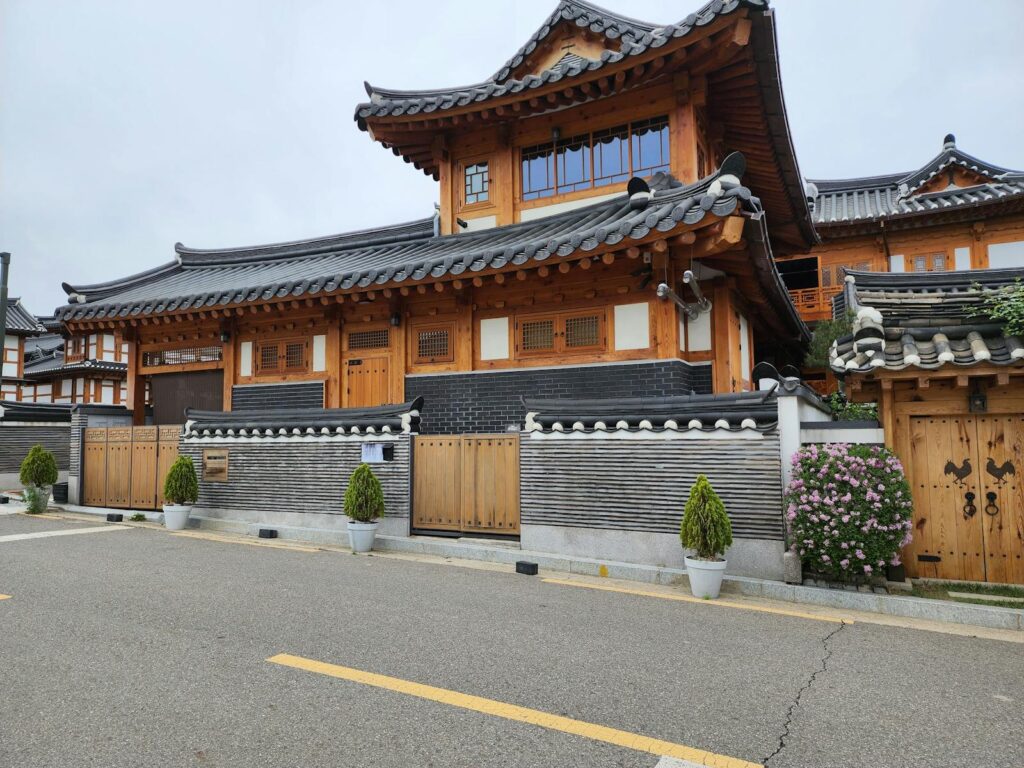
Jeonju Hanok Village is Korea’s largest cluster of traditional buildings. Over 600 hanok houses surround Gyeonggijeon, and a sizable share operate as guesthouses, hanok hotels, or full-house rentals. Gyeonggijeon enshrines the portrait of King Taejo and Pungnammun has served as the southern fortress gate of Jeonju for over 500 years; both sit minutes from the lodging cluster, so a few minutes of walking from your stay puts you in front of the lit fortress wall at night.
Inside the village, the mood shifts a lot by exact location. Hilltop stays near Omokdae overlook the village but require an uphill walk; rooms tucked north of Gyeonggijeon stay quiet at night with less tourist movement; hanok stays close to Jeonju Stream pair well with an early-morning waterside walk. When booking, confirm whether it’s a private house or shared bathroom. In peak season (April–May, September–October), even a single room on a weekend often runs over 150,000 KRW. Weekdays and off-season cut prices to about half.
Ocean Jeonbuk hanok stay — Buan Byeonsan Peninsula and Gochang sunsets
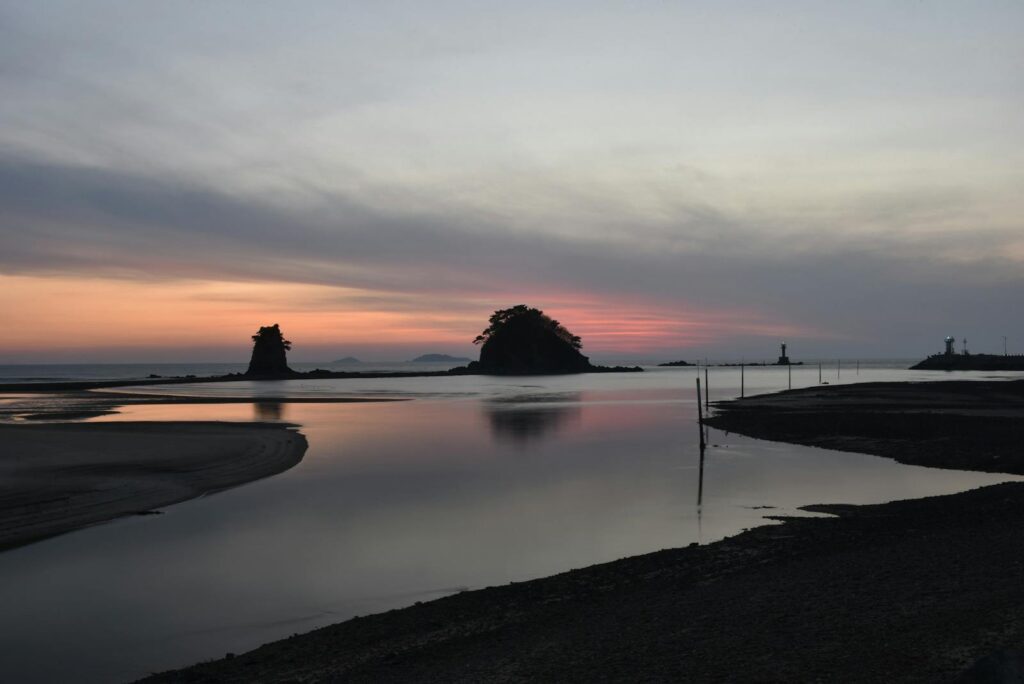
Buan, an hour west of Jeonju, holds Byeonsan Peninsula National Park. The cliff layers of Chaeseokgang, the sunsets at Gyeokpo Beach, and the Gomso salt fields line up in sequence, and a small number of hanok stays sit between them. Among the historical-house lodgings run in farming villages within 3–5 km of the coast, some serve breakfast made from fish caught by the host that morning. Sitting on the wooden veranda with the salty sea wind makes it immediately clear how different the mood is from urban Jeonju Hanok Village.
Gochang is also worth a stop. Gochang holds UNESCO biosphere-reserve tidal flats and Gochangeupseong fortress side by side. Stay at a hanok near Gochangeupseong and you can do an early-morning wall walk alone. In autumn, golden rice fields stretch out and bokbunja and watermelons hit peak season at roadside markets. Seonunsan Provincial Park is also nearby, so when the spider-lily fields bloom in late September, more travelers combine a hanok stay with a hike.
Jeonbuk hanok stay 2-night, 3-day forest–fortress–ocean route design
Day 1 starts in Jeonju Hanok Village. Tour Gyeonggijeon and Pungnammun in the morning, lunch on the bibimbap row in front of Jeondong Cathedral. In the afternoon, join a hanji workshop or traditional-liquor program, then check in to a hanok stay and finish the day with a fortress-wall night walk.
Day 2 morning, check out and move to Namwon or Muju. Jeonju to Namwon is about 50 minutes by car; Jeonju to Muju is about 1 hour 20 minutes. Drop bags at the mountain hanok stay and walk a nearby valley or trail in the afternoon. For dinner, choose between the stay’s mountain-vegetable banquet and a local town restaurant.
Day 3 moves toward the coast — Buan Chaeseokgang and Gyeokpo Beach — then either back to Jeonju or straight to Seoul. Jeonju to Buan is about an hour by car, Buan to Seoul about 3 hours 30 minutes. The route loops the province counterclockwise, so there is no wasted backtracking.
Without a rental car, basing in Jeonju and using intercity buses is realistic. Jeonju–Namwon and Jeonju–Buan each run several buses a day. The piece that often needs separate planning is moving from a stay to the bus terminal; many hanok stays require a separately booked taxi or call van, so ask the lodging in advance. To pair with the cafe-alley itinerary, see the Jeonju cafe alley course guide.
Image credits
- Hanok atmosphere — Photo by Kat Carabio on Pexels
- Forest temple — Photo by byunghyun lee on Pexels
- Hanok village — Photo by Ayesha Naseem on Pexels
- West coast sunset — Photo by joon young, Park on Pexels
K-Name Studio: Create your perfect Korean name based on your personality and style.
What’s My K-Beauty Personal Color?
WeBring Service : Provides personalized services to foreigners living in Korea
Exclusive offer: Introducing foreign car rental in Korea, WeBring-SoCar
Last updated: 16 September 2026
Prices, opening hours and transport schedules change with the season and the operator. Check the official channel again before you go.
WeBring operates its own Korea tour and vehicle services. The following is a promotion for that service.
Explore Korea's mountains — guides in your language
Courses, transport and seasonal tips for 30 mountains, from Bukhansan to Hallasan, available in 11 languages. Pick up essential travel Korean and find events for the global community, too.