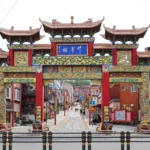


Jeonju Gunsan 2 nights 3 days is the route that ties one night under hanok eaves with one night in a port-city modern district to complete a “tradition + retro” North Jeolla trip. The two cities sit less than an hour apart by car but feel completely different — Jeonju keeps the hanok scenery of the Joseon dynasty, Gunsan keeps the Japanese-occupation-era modern architecture intact. This guide pulls together a no-wasted-detour 2-night, 3-day plan with movement, meals, and lodging in one read. For more, see Jeonbuk Tourism Information.
Jeonju Gunsan 2 nights 3 days schedule at a glance
| Day | Morning | Afternoon | Stay |
|---|---|---|---|
| Day 1 | Arrive Jeonju, Gyeonggijeon, Jeondong Cathedral | Hanok Village alleys, Seohak-dong arts village | Jeonju hanok guesthouse |
| Day 2 | Jeonju bibimbap breakfast, Pungnammun, Nambu Market | Move to Gunsan, inner-port sunset | Near Gunsan modern district |
| Day 3 | Lee Sung-dang bakery, modern architecture hall, Hirotsu House | Gyeongam-dong rail-track village, return | — |
Jeonju Gunsan 2 nights 3 days Day 1: Hanok Village alleys and Jeondong Cathedral walk
Day 1 starts with a slow walk through the heart of Jeonju Hanok Village. Gyeonggijeon enshrines the portrait of King Taejo. Admission is low and the grounds are spacious, so it stays comfortable. Step out past the Gyeonggijeon walls and Jeondong Cathedral comes into view. The 1914 Romanesque-style building paired with hanok tile roofs in a single frame is the icon shot of this area. Arrive early in the morning and the cathedral interior is quiet enough to walk through. If this is your first visit to the village, also see the Jeonju Hanok Village course guide.
Lunch is at a kongnamul-gukbap (bean-sprout soup with rice) restaurant inside the Hanok Village alleys. Jeonju kongnamul-gukbap is served bubbling in a clay pot, and the local way is to crack a raw egg into it. In the afternoon, walk along Jeonju Stream or head to Seohak-dong arts village. Seohak-dong is less commercialized than the main Hanok Village, so resident life and small galleries mix in a quiet block. For lodging, staying inside Hanok Village minimizes movement. Hanok guesthouses cover a wide price range, but soundproofing varies — read reviews carefully before booking.
Jeonju Gunsan 2 nights 3 days Day 2 morning: bibimbap breakfast and Pungnammun
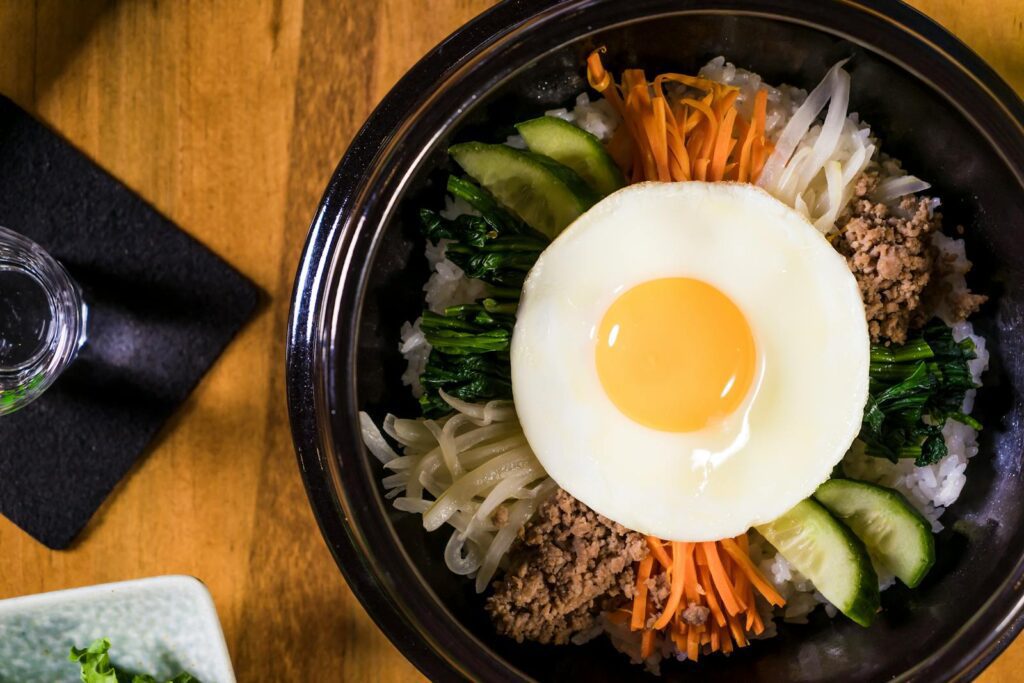
Bibimbap is a meal you’ll likely eat more than once on a Jeonju trip, and Jeonju has a breakfast-bibimbap culture, with several restaurants opening at 7 a.m. Jeonju bibimbap arrives in a hanjeongsik format with up to thirty kinds of namul, hwangpomuk jelly, and yukhoe on top of rice; gochujang comes on the side. After breakfast, walk to Pungnammun, the southern gate of the old Jeonju eupseong fortress. The roundabout around it is modern, but the gate itself is a designated treasure. Jeonju Nambu Market is within walking distance from here. The Nambu Market youth mall sits in the basement, easy to miss from the outside, with locally minded cafes and small shops.
In the afternoon, move from Jeonju to Gunsan. Buses run frequently from Jeonju Intercity Bus Terminal to Gunsan, about 40–50 minutes. With a rental car, the national-road route lets you take in the landscape around the Mangyeonggang River. After arriving in Gunsan, drop off the bags and head out to the inner port before sunset. Connected to the mouth of the Geumgang River, Gunsan inner port shows a particularly red horizon at dusk.
Jeonju Gunsan 2 nights 3 days Day 2 afternoon to Day 3: Gunsan modern history district
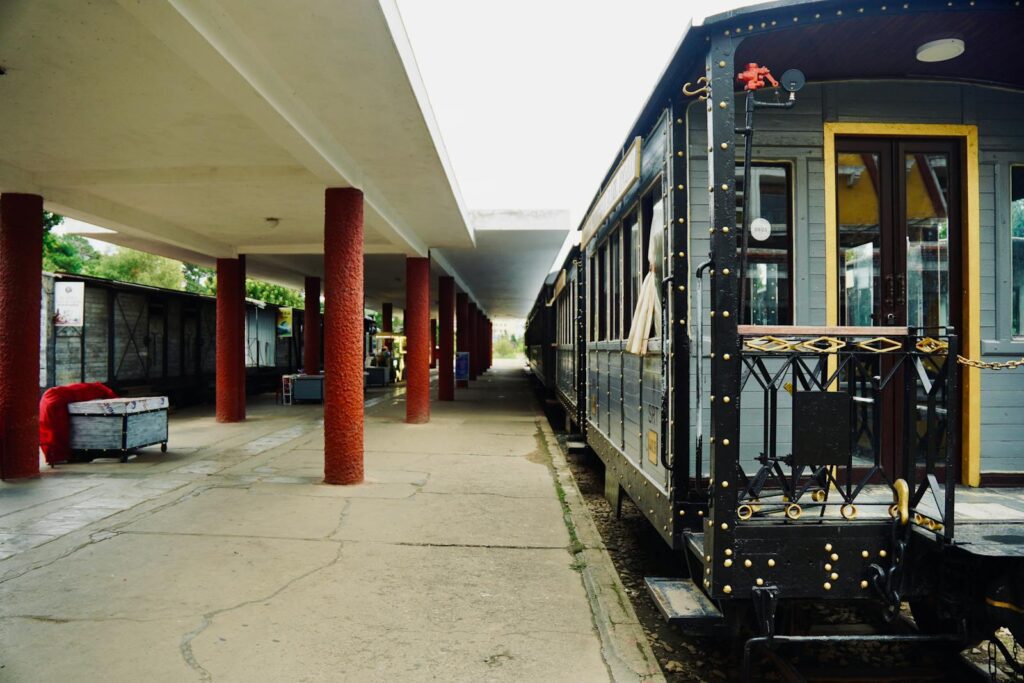
Gunsan’s modern history district stretches across Jangmi-dong and Wolmyeong-dong. Buildings from the Japanese occupation era stand here in original or restored form. The former Joseon Bank Gunsan branch now operates as the Gunsan Modern Architecture Hall, and the 1923 stone building’s interior structure is preserved as-is. Right next door, the former Eighteenth Bank of Japan Gunsan branch was built in the same era and now serves as a modern art museum. Both have free or very low admission. If this is your first time on the Gunsan retro route, also see the Gunsan modern history street guide.
Hirotsu House is the most-known of Gunsan’s modern heritage. A 1930s Japanese wooden house, used in several film productions, with interior viewing including the tatami rooms, Japanese garden, and corridor structure up close. The connecting alleys outside are themselves a known photo spot, busy on weekends. An early-morning visit means a quieter walk-through. Donguksa is the closest-to-original surviving Japanese-style temple in Korea; the temple grounds also hold a “Statue of Peace,” giving the visit added historical weight.
Day 3 morning starts with a Gunsan bakery tour. Gunsan’s bakery reputation traces back to confectionery culture rooted here during the modern era. Lee Sung-dang, opened in 1945, is Korea’s oldest bakery still in business; the signature menus are danpat-bbang (red-bean bun) and yachae-bbang (vegetable bun). Lines form early, so visit around opening time. Buying bread and eating at the inner port or Gyeongam-dong rail-track village ties the route together. Gyeongam-dong rail-track village is a strip where residents lived along an actual rail line; today it is a tourist street with cafes and small shops. The narrow walk-on-rail section is short but enough to deliver the retro mood.
Jeonju Gunsan 2 nights 3 days route summary and practical tips
You can run the Jeonju–Gunsan course on public transit. Jeonju Hanok Village connects via Jeonju city buses and walking; Gunsan modern history district connects via Gunsan city buses or bicycle. There are bike rental points near Gunsan Station and Gunsan Intercity Bus Terminal — a single day rate is enough to loop the main spots by bike. If you walk well, Hirotsu House, Donguksa, the former Joseon Bank, and the inner port all connect on foot without a map app.
Splitting lodging into one night in Jeonju and one in Gunsan is the most efficient pattern. Jeonju Hanok Village rooms get booked out fast — many close 2–3 weeks ahead for weekends. Gunsan has more room to maneuver, but lodging near the modern history district saves movement. For meals, hit bibimbap and kongnamul-gukbap in Jeonju, and agwijjim or kkotgejang in Gunsan to cover the regional signatures. Gunsan kkotgejang (“rice-thief” raw soy-sauce-marinated crab) is mixed straight into rice in the local way. For broader Korea travel info, see the Korea Tourism Organization.
The course feels different by season. In spring, cherry-blossom paths around Hanok Village light up; in autumn, foliage sharpens the hanok rooflines. Summer Gunsan pairs with the Saemangeum seawall drive to add ocean views. Winter is quieter with fewer tourists, and the cold and stillness inside wooden buildings like Hirotsu House make the mood deeper. Whatever the season, this route holds one of the highest historical densities among domestic Korean travel options, with tradition and modern eras layered cleanly side by side.
Image credits
- Hanok village view — Photo by Line Knipst on Pexels
- Jeonju bibimbap — Photo by Luis Becerra on Pexels
- Retro station — Photo by Tuan Vy on Pexels
- Evening atmosphere — Photo by Yong seok Yoon on Pexels
K-Name Studio: Create your perfect Korean name based on your personality and style.
What’s My K-Beauty Personal Color?
WeBring Service : Provides personalized services to foreigners living in Korea
Exclusive offer: Introducing foreign car rental in Korea, WeBring-SoCar
- Gunsan Sea & Modern Architecture Course Guide: Time-Travel Village + Seonyu Day Route
- Gunsan Lee Sung-dang Bakery Tour Guide: Beat the Line + Modern History Walk
- Gunsan Modern History Street Guide: Half-Day Retro Korea Itinerary
- Gunsan Japanese House Visit Guide: Sinheung-dong Hirotsu and Modern Quarter
Last updated: 22 September 2026
Prices, opening hours and transport schedules change with the season and the operator. Check the official channel again before you go.
WeBring operates its own Korea tour and vehicle services. The following is a promotion for that service.
Explore Korea's mountains — guides in your language
Courses, transport and seasonal tips for 30 mountains, from Bukhansan to Hallasan, available in 11 languages. Pick up essential travel Korean and find events for the global community, too.