
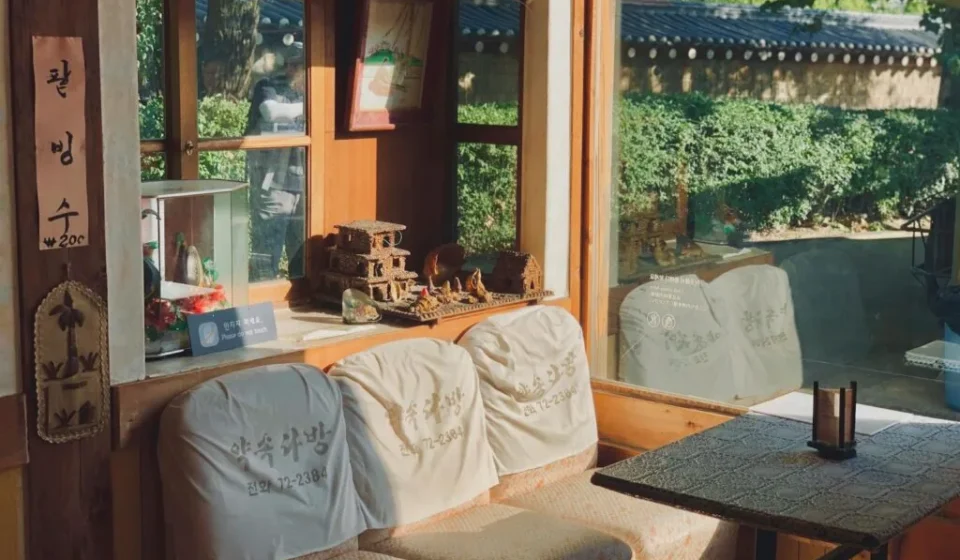

Jeonju cafe alley wraps a coffee under hanok eaves, a vintage studio at the end of the lane, and a quiet artists’ quarter into a single walkable day. Starting from Gyeonggijeon, sweeping through the Hanok Village backstreets, then linking to Gaekridan-gil and the youth mall at Nambu Market, the loop runs about 3 km on foot and falls neatly into place even for first-time visitors. This guide pulls together the core Jeonju cafe alley course, the best time slots, and practical notes on parking and payment in one place. For more detail, check Jeonbuk Tourism Information.
Why Jeonju cafe alley is special
Jeonju cafe alley grew its own cultural footprint around the symbolic anchor of Jeonju Hanok Village. As cafes settled one by one between old tile-roof houses and narrow stone-walled lanes, an alley landscape emerged where traditional architecture and contemporary taste sit side by side. Compared to the hot streets of Seoul or Busan, Jeonju cafe alley moves more slowly toward commercialization, and small owner-run cafes still dominate. The buildings themselves become content; sipping a coffee while a hanok roofline frames your window is something you cannot easily find outside Jeonju.
To enjoy the cafe alleys properly, plan the route in advance and walk between stops. The Hanok Village area packs the main cafe streets within walking distance, so a single day trip can string several together with no wasted detour. If it is your first time at the village itself, pair this with a Jeonju Hanok Village course guide to plan the day better.
Hanok Village core alley cafe course
The starting point of a Jeonju cafe alley walk is the lane around Gyeonggijeon. Stand with your back to the main gate and turn into the right-hand alley, where renovated hanok cafes line up one after another. Many of these cafes use the traditional hanok courtyard as actual seating or convert the wide wooden daecheong floor into a table area, so the space itself becomes part of the experience. Cafes with windows that frame an opposite tile roof like a picture have already gone viral on Instagram, but the view in person leaves a deeper impression than any photo.
Continue along Eunhaeng-ro and you reach Jeondong Catholic Cathedral. From the plaza in front, turn left into the side alley to find a cluster of cafes that opened relatively recently. Many here keep a strict hanok exterior while running a fully modern interior. Signature menus often pair traditional Korean sweets with espresso. Items like injeolmi cream latte, mugwort ice cream, and omija ade are seasonal-only drinks you can really only taste in Jeonju.
Gaekridan-gil and the Nambu Market cafe scene

Walk about ten minutes from the Hanok Village and you arrive at the head of Gaekridan-gil. Among Jeonju cafe alley areas, Gaekridan-gil is the relatively new street, and its mood is different from the touristy Hanok Village. Small, quiet cafes hide along an old residential block, so part of the fun is hunting them down. Many of the spaces leave the texture of the old buildings intact rather than dressing them up, which suits anyone who prefers worn-in vintage atmosphere. The menu mix is also different — small roasters working with specialty beans and shops selling handmade vegan desserts give Gaekridan-gil its own color.
The area around Nambu Market is also not to be missed. As the market’s youth mall came alive, cafes on the second floor of the market building turned into new landmarks. The mix of market energy and cafe culture is something you can only experience here in Jeonju. Step deeper into the market alleys and you find a hand-drip coffee bar opening its doors right next to a red-bean porridge shop or a sundae-gukbap spot with decades of history. That juxtaposition is the identity of the Nambu Market side of Jeonju cafe alley. If you want to stretch the day into evening, also see the Jeonju night-market route for a connected itinerary.
Jeonju cafe alley one-day route and practical tips

To plan a Jeonju cafe alley day, start at Gyeonggijeon, sweep the Hanok Village inner alleys, head toward Jeondong Cathedral, take Gaekridan-gil, and finish at Nambu Market. Total walking distance is about 3 km, comfortable to digest in a single day even with long stops at each cafe. The cafes sit roughly 5 to 15 minutes apart on foot, so you can rest at one and still move easily to the next.
| Leg | From | To | Walk time | Highlight |
|---|---|---|---|---|
| 1 | Gyeonggijeon | Hanok Village inner alleys | ~5 min | Hanok-converted cafes, courtyard and daecheong seating |
| 2 | Hanok Village | Jeondong Cathedral | ~10 min | Eunhaeng-ro cafe row, Korean sweets + espresso |
| 3 | Jeondong Cathedral | Gaekridan-gil | ~15 min | Specialty roasters, vegan desserts, vintage alleys |
| 4 | Gaekridan-gil | Nambu Market youth mall | ~10 min | Second-floor market cafes, links to night market |
The best time slot is between 11 a.m. and 1 p.m. You beat the lunch crowd, get seated without a wait, and the light angle is good for photos. After 2 p.m. on weekends the entire Hanok Village fills up, lines lengthen, and even the alleys get hard to move through. For parking, use the Hanok Village public lot or a public lot near Nambu Market; the inner alleys are mostly off-limits or impractical for cars, so plan as a walking trip from the start.
Cafe hours and rest days change often, and the most reliable source is each shop’s Instagram account. Some cafes around Jeonju Hanok Village close on Mondays or Tuesdays, and a few cut hours during the off season. Bring both cash and a card — small cafes occasionally lack a card terminal or set a minimum charge. Mixing in a Jeonju bibimbap or kongnamul-gukbap meal between stops will deepen the day. The pairing of cafe-hopping with traditional food is the most complete way to spend a day in Jeonju. If you want a quieter Hanok Village walk, also check the Jeonju Hanok Village quiet route guide.
Trends to watch in Jeonju cafe alley
The most visible shift in Jeonju cafe alley is the move from drinking-coffee spaces to hybrid spaces tied to local culture. Cafes that also display and sell traditional crafts, run hanji paper-craft workshops, or host a permanent gallery of regional artists are growing in number. These places offer, alongside a cup of coffee, a chance to feel something specific to Jeonju, which is what sets them apart from a generic cafe.
Local-ingredient menus are another clear current. Cafes increasingly add drinks built from Jeonbuk-grown bokbunja, omija, and ginger; some source directly from regional farms and use that as a marketing angle. This local layer is what gives Jeonju cafe alley its competitive edge over franchise chains and is a real reason to come back. Each season brings new spaces and new menus, so the alleys keep generating reasons to revisit. For broader Jeonju travel info, see the Korea Tourism Organization.
Image credits
- Jeonju Hanok Village rooftops — Photo by Jakob Jin on Pexels
- Hanok cafe interior — Photo by Yena Kwon on Pexels
- Hanok rooflines and alleys — Photo by Line Knipst on Pexels
- Jeonju market street view — Photo by Theodore Nguyen on Pexels
K-Name Studio: Create your perfect Korean name based on your personality and style.
What’s My K-Beauty Personal Color?
WeBring Service : Provides personalized services to foreigners living in Korea
Exclusive offer: Introducing foreign car rental in Korea, WeBring-SoCar
- Jeonju Spring Autumn Itinerary 2026: The Complete Seasonal Travel Route Guide
- Jeonju 1-night 2-day Hanok Stay Route: Zero-Detour Itinerary Guide
- Jeonju Hanok Village Course: Hanbok, Food & Photo Route Guide
- Jeonju Night Market Course Guide: Hanok Village Hours, Food & Walking Route
Last updated: 22 September 2026
Prices, opening hours and transport schedules change with the season and the operator. Check the official channel again before you go.
WeBring operates its own Korea tour and vehicle services. The following is a promotion for that service.
Explore Korea's mountains — guides in your language
Courses, transport and seasonal tips for 30 mountains, from Bukhansan to Hallasan, available in 11 languages. Pick up essential travel Korean and find events for the global community, too.


