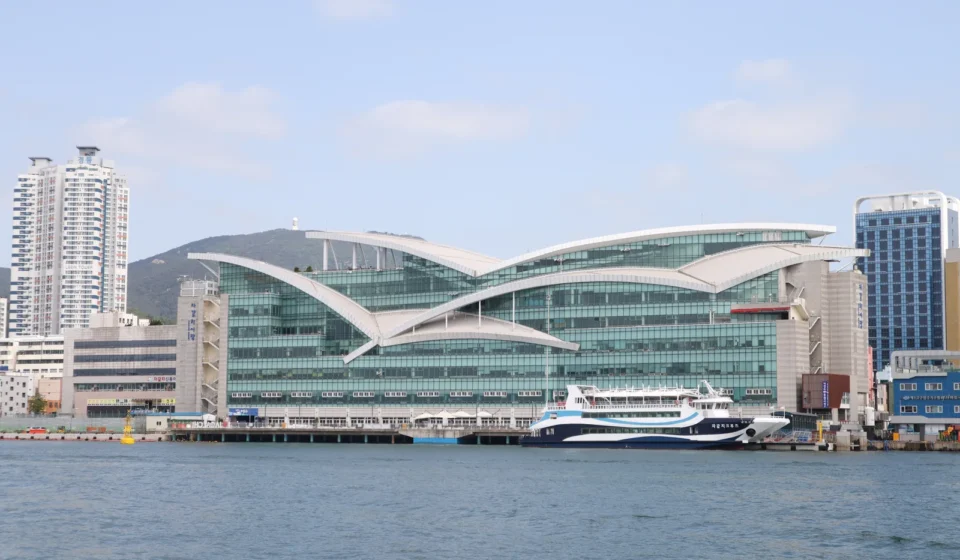

The Jagalchi Gukje Market Nampo course is the go-to half-day itinerary for Busan’s Nampo-dong. Starting at Jagalchi Station Exit 10 on Subway Line 1, this 4-5 hour walk links Jagalchi Fish Market, Gukje Market’s Arirang Street, BIFF Square, and Yongdusan Park with Busan Tower — pulling together a plate of sashimi, eel BBQ, seed hotteok, bibim-dangmyeon noodles, market shopping and a panoramic city view. Below you’ll find the route by time slot, menu prices, opening hours and payment tips.
Jagalchi Gukje Market Nampo course at a Glance — 4-hour, 5-hour, Full Day
The same walk can feel very different depending on how long you stay. Decide in advance whether you want to sit down for sashimi and eel, focus on street food, or stretch the day to include the Busan Tower night view, and the route flows naturally.
| Duration | Recommended mix | Core route | Best for |
|---|---|---|---|
| Half-day, 4 hours | Sashimi + eel for one, 2-3 street foods, Arirang Street shopping | Jagalchi Station → Jagalchi Fish Market → Gukje Market → BIFF Square → Nampo Station | Morning arrivals, families with lunch plans |
| Half-day, 5 hours (recommended) | Above + Yongdusan Park / Busan Tower view | After BIFF Square, walk up Gwangbok-ro to Yongdusan (escalator available) | First-timers, photo-focused travelers |
| Full day, 8 hours | Above + Bupyeong Kkangtong Night Market (19:00-24:00) | Sunset at Jagalchi → night market dinner | Friends, travelers staying until evening |
The two markets sit just one subway stop apart (Jagalchi – Nampo), so you barely walk any distance — but the alleys are narrow and packed, so the felt fatigue is higher than the map suggests. For a first visit, take the 5-hour plan and don’t rush.
Jagalchi Gukje Market Nampo course Starting Point: Jagalchi Station Exit 10 + Fish Market Floor 1
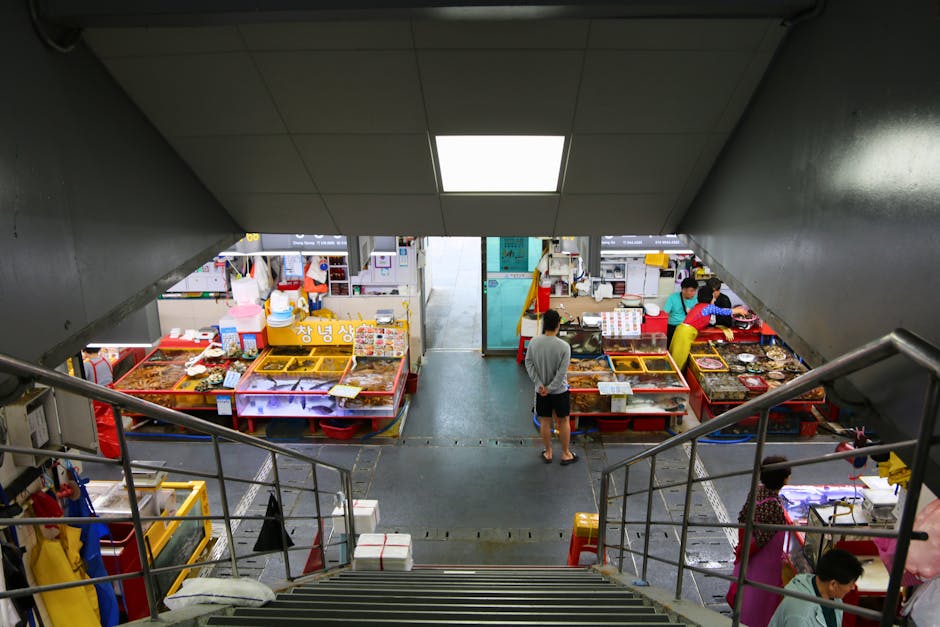
Take Subway Line 1 to Jagalchi Station and use Exit 10 — the Shindonga Seafood Market building is right in front of you. The first stop on the route is the live-fish counters on the 1st floor. Pick your fish on the ground floor, hand it off to a 2nd-floor chojang-jip (sauce restaurant) that fillets it on the spot — a Jagalchi tradition since the 1970s.

Buy the fish downstairs, pay the 2nd-floor table-setting fee (4,000-6,000 KRW per person), and you can sit down for a proper meal with banchan side dishes. More shops now accept cards, but cash is still preferred at the ground-floor stalls — bring at least one 50,000 KRW note to be safe.
| Menu | For 2 (KRW) | Best time | Tip |
|---|---|---|---|
| Mixed sashimi (flounder, rockfish, plaice) | 40,000-70,000 | 11:00-14:00 (lunch) | Check the market rate on floor 1 before booking a floor 2 table |
| Spicy grilled eel (kkomjangeo) | 20,000-30,000 | After 17:00 | Deeper Jagalchi alleys offer better value |
| Salt-grilled eel (gomjangeo) | 20,000-30,000 | After 17:00 | Milder taste — good first try |
| Eel soup / spicy fish stew | 15,000-20,000 per person | Lunch or dinner | Round off a sashimi meal with a warm stew |
Stalls operate roughly 05:00-22:00, with many closed on the 1st and 3rd Tuesday of each month. For sashimi, arrive around 11:00 to grab a seat before the lunch rush. For atmosphere and night views, 18:00-20:00 is the sweet spot.
From Jagalchi to Gukje Market — A 5-Minute Walk Without Getting Lost
Despite the short distance, getting from Jagalchi to Gukje can be confusing. With your back to Jagalchi Fish Market’s main entrance, walk 100 m straight along Jagalchi-ro (the wider street to your right), turn left at the Jagalchi Police Box intersection, then follow the Gukje Market entrance signs. The whole walk is 5-7 minutes. This is the shortest leg of the route — but with narrow streets, a backpack works better than a roller suitcase.
- Shortest walking route: Jagalchi Station Exit 10 → Jagalchi-ro → Jagalchi Police Box intersection → Gukje Market Zone 1 entrance (about 450 m, 6 minutes)
- Subway transfer: Jagalchi → Nampo, 1 stop (2 minutes + 5-minute transfer walk). Only worth it in rain
- Taxi: Short distance, but one-way streets push the meter to about 3,300 KRW. Use only if you have lots of luggage
- Avoid: Saturdays 13:00-15:00, the peak crowd window. Weekday mornings are far more comfortable
Gukje Market Arirang Street + Food Alley — 4 Zones to Hit After Jagalchi
Gukje Market grew out of post-Korean-War relief-goods stalls and evolved over 70 years. It’s divided into Zones 1-6, but for travelers the four meaningful sections are Zone 1’s Arirang Street, Zone 2’s Manmul Street (general goods), the Food Alley, and BIFF Square.
| Zone | Specialty | Sample items | Priority |
|---|---|---|---|
| Zone 1 Arirang Street | Clothing, bags, accessories | Linen summer shirts 10,000-20,000 KRW, bags 30,000-50,000 KRW | Very high |
| Zone 2 Manmul Street | Kitchenware, hardware, household | Stainless cups, Korean ceramic mugs | Medium |
| Food Alley (Changseon-dong) | Bunsik, street food | Bibim-dangmyeon 4,000 KRW, Chungmu gimbap 5,000 KRW | Very high |
| BIFF Square | Seed hotteok, street dessert | Seed hotteok 1,500-2,000 KRW, fish cake 1,500 KRW | Must-do |
First-timers should browse Zone 1’s Arirang Street lightly, then move on to the Food Alley and BIFF Square. Bargaining is reasonable on items above 10,000-20,000 KRW, but many shops post fixed prices, so don’t push too aggressively. For deeper haggling and tasting etiquette, see our guide on Korean market shopping.
Food Alley + BIFF Square Street Food — The Highlight of the Course
The Food Alley and BIFF Square are the most Instagrammable stops on the entire walk. Bibim-dangmyeon (spicy mixed glass noodles) was born here in the 1960s when Gukje Market merchants improvised a quick lunch — you rarely see it outside Busan. Seed hotteok started at BIFF Square stalls in the 1980s and is now Busan’s signature street dessert.
- Bibim-dangmyeon (4,000-5,000 KRW): Boiled glass noodles tossed with spicy sauce and seaweed flakes, eaten standing up out of the bowl. The stall at the entrance has the longest line but moves fast.
- Chungmu gimbap (5,000-6,000 KRW): A set of plain rice rolls, radish kimchi and spicy squid. Perfect for filling up after a light sashimi stop.
- Seed hotteok (1,500-2,000 KRW): The signature BIFF Square treat — pancake stuffed with sunflower seeds and nuts, sliced in half. Wait a moment so you don’t burn your mouth.
- Fish cake / odeng (1,500 KRW+): As the home of Busan eomuk, the broth here is deeper than anywhere else. Essential in winter.
- Yubu bottari (3,000 KRW+): Fried tofu pockets stuffed with japchae and carrots — Busan’s street-snack-style answer to a savory bite before dessert.
Eating order tip: salty (eel, Chungmu gimbap) → spicy (bibim-dangmyeon) → sweet (seed hotteok) keeps your palate fresh at the end. Some BIFF Square stalls take only cash or bank transfer, so keep small 1,000 KRW notes on hand.
Wrap-Up Option: Yongdusan Park + Busan Tower Night View
From BIFF Square, follow the Gwangbok-ro shopping street uphill for 7-10 minutes to reach Yongdusan Park and Busan Tower. If you’ve allotted at least 5 hours, this is the recommended finale. The 120-meter Busan Tower observation deck takes in Jagalchi Fish Market, Yeongdo Bridge, and even Gwangan Bridge in the distance.
| Option | Access | Cost | Best time |
|---|---|---|---|
| Walk up Gwangbok-ro to Yongdusan stairs | 10 minutes on foot from BIFF Square | Free | 16:00-18:00 (just before sunset) |
| Use the Gwangbok-ro outdoor escalator | 5 min walk + 3 min escalator | Free | When your legs are tired |
| Busan Tower observation deck | Inside Yongdusan Park | 12,000 KRW per adult | 30 min before sunset through evening |
For the night view, head up Busan Tower around 19:00 and stay 30-40 minutes — the deep blue hour starting 30 minutes after sunset is when this view is at its peak. Afterwards, walk back toward Jagalchi and continue to Bupyeong Kkangtong Night Market (19:00-24:00) for a full-day extension of the route.
Best Departure Times for the Jagalchi Gukje Market Nampo course
The same route feels completely different depending on when you start. Choose one of the three scenarios below based on whether you prioritize sashimi at lunch, eel and night views in the evening, or photo opportunities.
| Scenario | Arrival | Route summary | Pros and notes |
|---|---|---|---|
| Morning (lunch sashimi focus) | 10:30 at Jagalchi Station | Sashimi → bibim-dangmyeon → seed hotteok → 14:00 Gwangbok-ro shopping → 15:00 wrap | Seats easy to grab; misses sunset/night view |
| Afternoon (balanced — recommended) | 13:30 at Jagalchi Station | Light sashimi → Gukje Market → 17:00 eel → 18:00 Yongdusan → 19:00 night view | Best overall balance; Saturday crowds |
| Evening (night view + photo focus) | 16:30 at Jagalchi Station | 17:00 eel → 18:00 BIFF Square dessert → 19:00 Busan Tower night view | Best for night photos; sashimi seats tight |
FAQ (Nampo Market Course)
- If I only have time for one — Jagalchi or Gukje Market?
- For a first visit, do both in the order Jagalchi → Gukje Market (BIFF Square). If you really have only 2 hours, focus on Jagalchi Fish Market floors 1-2 plus a quick seed hotteok at BIFF Square — that combination has the fewest regrets.
- Is it suitable for families with kids?
- Gukje Market’s Food Alley and BIFF Square are family-friendly. Jagalchi’s ground-floor live-fish counters can be intense for younger kids due to the smell and narrow aisles — keep it short. Strollers handle the BIFF Square / Gwangbok-ro side better.
- Can I drive and park?
- You can, but it’s not recommended. Jagalchi Public Parking charges around 1,800 KRW per hour, with weekend waits of 30+ minutes. Subway Line 1 to Jagalchi or Nampo Station is much easier.
- Is it worth visiting on a rainy day?
- Gukje Market’s Arirang Street and Food Alley have covered arcades and stay fine in light rain. Jagalchi Fish Market’s outdoor stalls need an umbrella, so on rainy days stick to the indoor floor 2 chojang-jip restaurants for a shorter visit.
- Is it a good plan for foreign friends?
- Highly recommended. Sashimi, eel BBQ and seed hotteok are dishes you can only really get in Korea, and the market alleys leave a strong visual impression. If payment or bargaining feels intimidating, save a Korean emergency phrasebook on your phone before you go.
- 12 Korean Traditional Market Routes: Seoul, Busan, Jeonju, Gyeongju — compare city-by-city traditional market walks beyond Jagalchi and Gukje
- 12 K-Food Travel Destinations: Markets, Food Alleys, Night Markets — deeper dive into BIFF Square and Bupyeong night market
- Oryukdo Skywalk Complete Guide: A Short, Strong Busan Sea View — great add-on for a Busan overnight
- Summer Beach Guide: Busan, Gangwon, Jeju Comparison — link the Jagalchi course to Haeundae and Gwangalli
- Korean Market & Mart Shopping Survival Guide — bargaining, tasting, packaging, payment etiquette
Image credits
- Jagalchi Fish Market fresh seafood stall — Pexels License
- Other body images are reused from the mywebring KO media library (Jagalchi, Gukje and Busan market reference shots)
K-Name Studio: Create your perfect Korean name based on your personality and style.
What’s My K-Beauty Personal Color?
WeBring Service : Provides personalized services to foreigners living in Korea
Exclusive offer: Introducing foreign car rental in Korea, WeBring-SoCar
- Busan Travel Itinerary: A Complete 1-Day-2-Night Guide to Tradition and Modern Coast
- Korean Food Travel Guide: 12 Markets & Night Markets
- Korean Traditional Market Itinerary: 12 Routes With Historic Streets (Seoul, Busan, Jeonju, Gyeongju)
- Explore Busan Seafood Markets: A Guide to the Best Seafood Experiences
Last updated: 22 September 2026
Prices, opening hours and transport schedules change with the season and the operator. Check the official channel again before you go.
WeBring operates its own Korea tour and vehicle services. The following is a promotion for that service.
Explore Korea's mountains — guides in your language
Courses, transport and seasonal tips for 30 mountains, from Bukhansan to Hallasan, available in 11 languages. Pick up essential travel Korean and find events for the global community, too.