


A Korean traditional village visit is not just sightseeing — you are walking on living cultural heritage. Andong Hahoe Village, Gyeongju Yangdong Village, Jeonju Hanok Village, and Bukchon Hanok Village all host real residents, so the manner standards differ from regular tourist spots. This guide summarizes seven essential etiquette rules and best photo routes so first-time foreign visitors can capture great photos without being rude.
Korean Traditional Village Visit: 7 Basic Manners to Know
The most common conflict during a Korean traditional village visit is invading residents’ privacy. Hahoe Village and Yangdong Village are UNESCO World Heritage sites and active residential areas, so be one step more careful than at a regular tourist site.
| Manner item | Do | Don’t |
|---|---|---|
| Front gate / fence | Look from the road only | Putting head/camera through the gate |
| Resident photos | Ask “May I take a photo?” first | Sneaky shots / close telephoto |
| Noise | Low-volume conversation in alleys | Group shouting / Bluetooth speakers |
| Food | Eat at designated restaurants/stalls | Sitting in alleys/porches to eat |
| Drones | Only where pre-approved | Unauthorized flight over residences |
| Smoking | Designated smoking areas only | Walking-and-smoking in the village |
| Trash | Use bins or take it out | Dumping at walls/alleys |
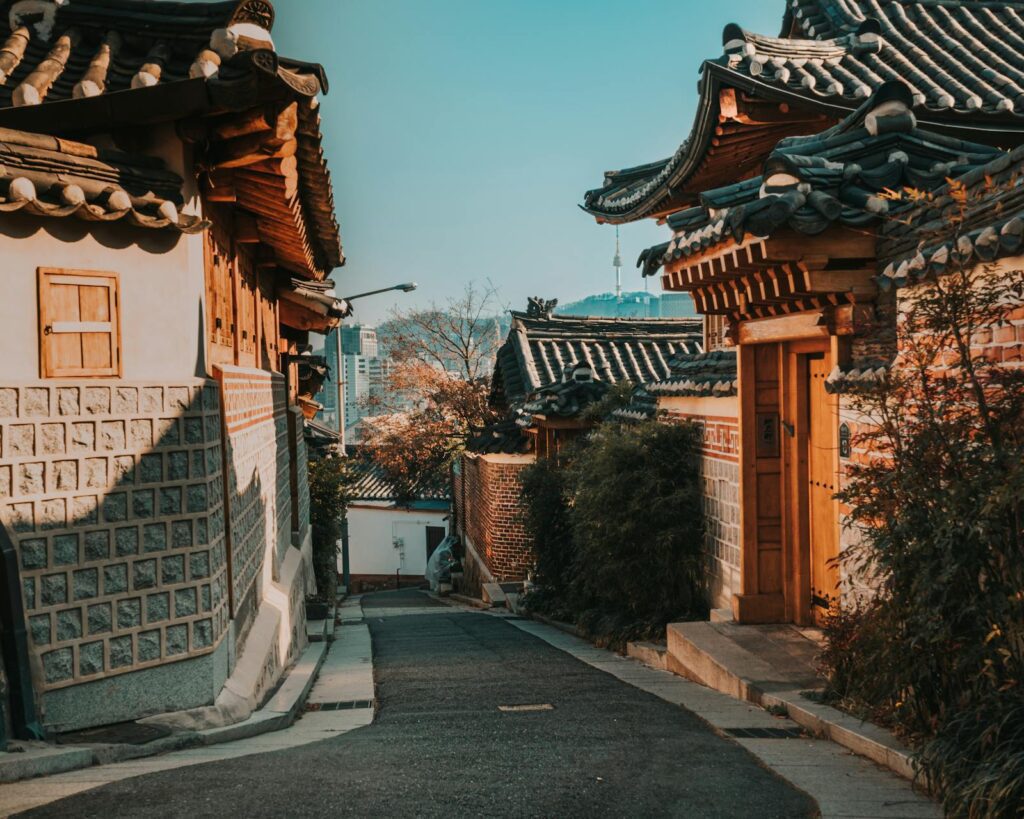
1. Korean Traditional Village Visit: Residents-First Principle
Since 2018, parts of Bukchon Hanok Village enforce quiet hours after 5 p.m. The village is a place where people sleep and eat, not a photo studio. Korean traditional village visit etiquette starts from a simple thought experiment: “What if a stranger stood at my front door with a camera?”
2. Ask Permission Before Taking Portraits
Whether you see a Korean wearing hanbok or a group of foreigners in rental hanbok, the rule is the same. Before taking a recognizable portrait, ask “Sajin han jang gwaenchanha-yo? (May I take one photo?)”. For children, parental consent is required.
3. Do Not Block Narrow Alleys
Bukchon Gahoe-dong 11-gil and 31-gil are especially narrow, with both resident cars and pedestrians sharing the lane. Step toward the wall when taking photos and clear the path immediately afterward.
4. Avoid Bringing Food and Drinks Into the Village
Visitors often place coffee cups on hanok porches or walls — to residents, this is clear trespassing. Eat and drink only inside designated restaurants, stalls, or cafes.
5. Limit Drones, Selfie Sticks, and Tripods
Under Korea’s Aviation Safety Act, drones require advance approval over densely populated areas. Selfie sticks and tripods are technically allowed, but in narrow alleys and stairs they can injure others, so restraint is recommended.
6. Extra Respect in Ritual Spaces
Aristocratic houses like Hahoe Village’s Byeongsan Seowon and Yangdong Village’s Hyangdan and Gwangajeong are spaces for ancestral rites. Photography inside shrines holding spirit tablets is forbidden, and you must remove shoes before stepping onto wooden floors.
7. Pay Entry Fees and Donations Honestly
Entry fees — Hahoe Village (5,000 KRW), Yangdong Village (4,000 KRW), Korean Folk Village (32,000 KRW) — fund preservation. Sneaking in through side paths during a Korean traditional village visit harms the village’s operations and should be avoided.
Korean Traditional Village Visit Top 5: Routes and Features Compared
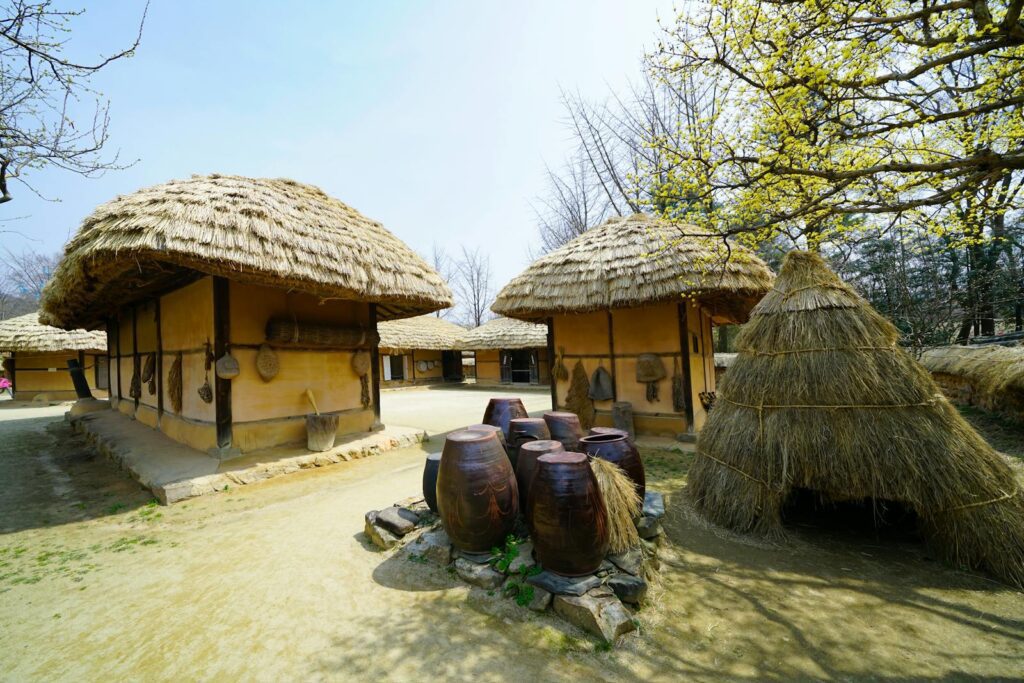
When foreigners first plan a Korean traditional village visit, the toughest question is “where to go first?”. The five villages below all offer foreign-language signage and public transport access.
| Village | Location | Features | Access | Time needed |
|---|---|---|---|---|
| Andong Hahoe Village | Pungcheon-myeon, Andong, Gyeongbuk | UNESCO heritage, active residential, Buyongdae river view | Bus 246 from Andong Station, about 50 min | 2–3 hrs |
| Gyeongju Yangdong Village | Gangdong-myeon, Gyeongju, Gyeongbuk | UNESCO heritage, hillside aristocratic houses | Bus 203 from Gyeongju Station, about 50 min | 2 hrs |
| Bukchon Hanok Village | Gahoe-dong, Jongno-gu, Seoul | Modern city + hanok, evening quiet zones | 5-min walk from Anguk Station (Line 3) | 1.5–2 hrs |
| Jeonju Hanok Village | Wansan-gu, Jeonju, Jeonbuk | 700 hanok houses, food, hanbok rentals | About 25 min by bus from Jeonju Station | 3–4 hrs |
| Korean Folk Village | Giheung-gu, Yongin, Gyeonggi | Recreated village, performances, multilingual guides | Bus 5005 from Gangnam Station, about 60 min | 4–5 hrs |
Korean Traditional Village Visit: Recommended Priority
If your trip is short, Bukchon Hanok Village plus Gyeongbokgung Palace is the most efficient combo. With at least one overnight, Andong Hahoe Village is far superior. For families needing foreign-language guidance, Korean Folk Village is a safe choice.
Korean Traditional Village Visit Photo Spots: Best by Village
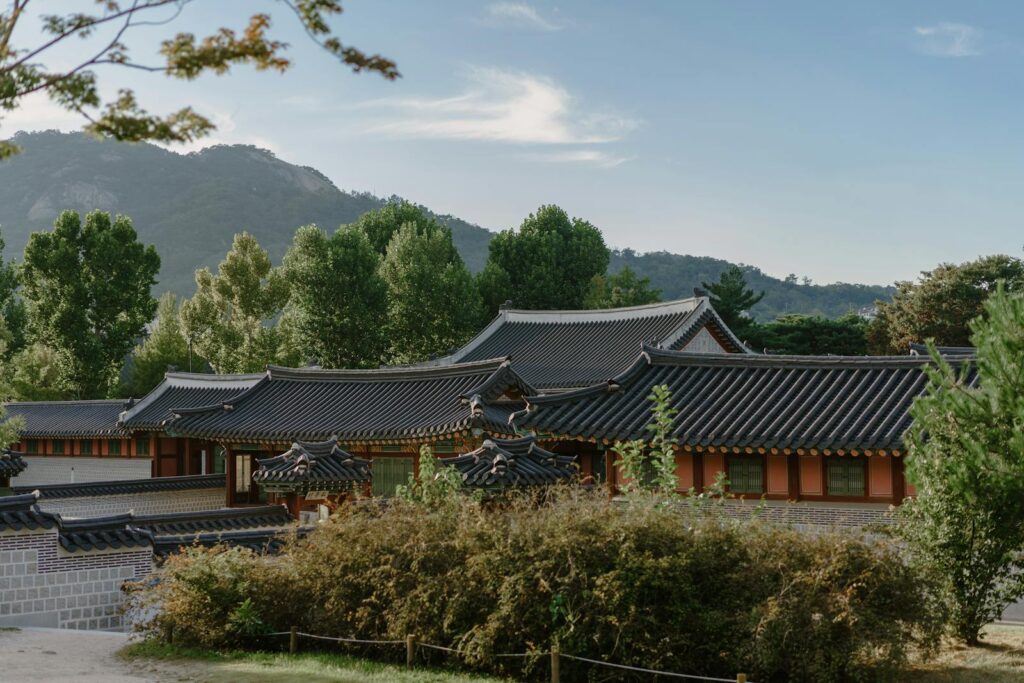
The key to capturing a great photo while staying respectful is choosing the right time and spot. Visiting when residents are least active (9–10 a.m. or weekdays 2–4 p.m.) alone reduces friction dramatically.
Hahoe Village Buyongdae Panorama Spot
Taking the ferry boat (4,000 KRW one-way) across the river to Buyongdae’s summit captures the entire village wrapped in the S-curve of the Nakdong River in one shot. Light around 10 a.m. is softer than sunrise.
Bukchon Hanok Village Gahoe-dong 31-gil
This is View #5 of the famous “Bukchon 8 Views”. The signature composition shows N Seoul Tower over hanok rooftops at the alley’s end. Visit before 11 a.m. or after 4 p.m. on weekdays to avoid crowds.
Yangdong Village Gwangajeong Wooden Floor
The view from Gwangajeong’s main wooden floor — the highest point in the village — is Yangdong Village’s signature shot. Remove shoes and sit at the edge to photograph, but never enter the inner rooms.
Jeonju Hanok Village Omokdae Night View
The night view from Omokdae looking down on the hanok village is most beautiful right after the lights turn on (30 minutes after sunset). Hanok alleys by day, Omokdae by night — combining both time slots fits in a single day.
Hanbok Etiquette During a Korean Traditional Village Visit
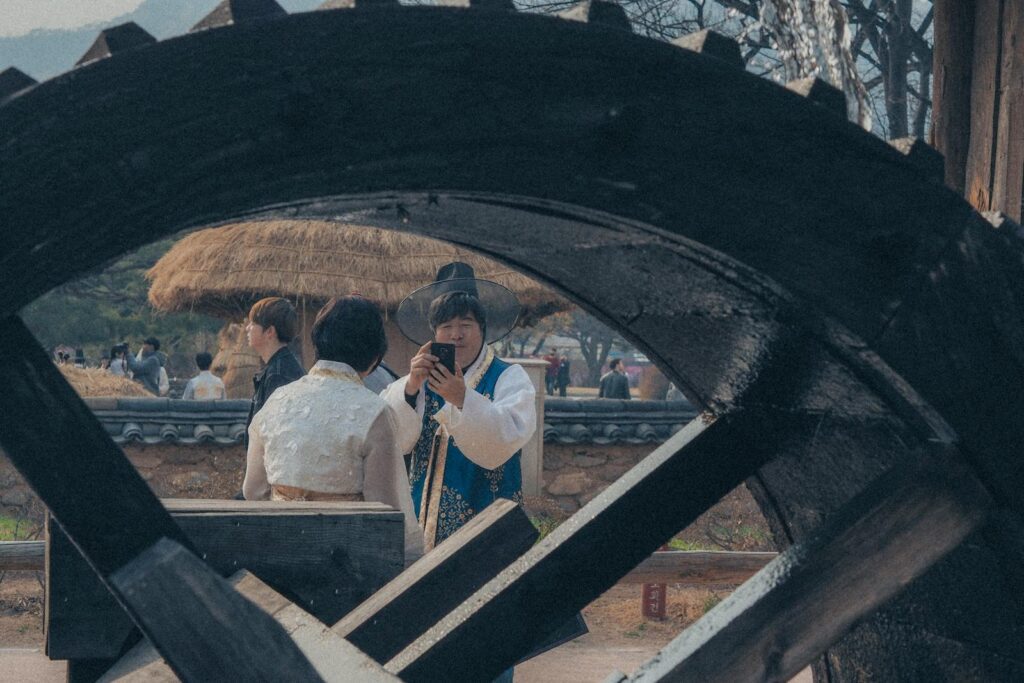
Hanbok rentals near Jeonju, Bukchon, and Gyeongbokgung run about 15,000–25,000 KRW for two to three hours. Wearing hanbok grants free admission to most palaces, including Gyeongbokgung and Changdeokgung.
Behaviors to Avoid While Wearing Hanbok
- Running while holding the skirt — damages the garment and is rude to residents
- Eating or drinking while wearing it — hanbok is hard to wash and replacement fees are high
- Vulgar poses — read as disrespect toward traditional clothing
- Stepping on hanok wooden floors with shoes — forbidden regardless of outfit
Tips for Great Hanbok Photos
Backlight (sun behind you) brings out skirt textures, and late afternoon (after 4 p.m.) gives the softest colors. Hanbok colors that complement hanok rooftops and stone walls — yellow, light green, sky blue — stand out best.
Traditional Village Visit Seasonal Guide (Four Seasons)
Traditional villages show different faces in every season. The wrong timing can hide half of the scenery.
| Season | Strengths | Caveats |
|---|---|---|
| Spring (Mar–May) | Flowers, fresh greens, plum blossoms | Yellow dust, fine dust |
| Summer (Jun–Aug) | Lush green, cool Hahoe river | Humidity, showers, mosquitoes |
| Autumn (Sep–Nov) | Foliage, clear skies, peak photo season | Weekend crowds spike |
| Winter (Dec–Feb) | Snow, icicles on eaves | Some thatched houses closed, slippery paths |
Traditional Village Visit: Best Season Recommendation
Late October to early November combines peak foliage, clear skies, and ideal temperatures (15–20°C). However, weekend lines grow long for the same reason, so weekday visits are recommended.
Korean Traditional Village Visit FAQ
Hahoe Village or Yangdong Village — Which Is Better?
Hahoe Village, with its scale and combined river-and-mountain scenery, leaves a stronger first impression. Yangdong Village is recommended for a second visit focused on aristocratic architectural details.
Is Korean Folk Village a Real Village?
No. Korean Folk Village is a 1974 reconstruction with no residents — an open-air museum. Scheduled foreign-language tours and traditional performances make it ideal for family trips.
How Much Does Hanbok Rental Cost?
Standard 2–3 hour rental costs 15,000–25,000 KRW. Packages over 4 hours or nighttime sessions reach the 30,000 KRW range. Hair accessories and styling typically add 5,000–10,000 KRW.
Can I Eat Food Inside Traditional Villages?
Only inside designated restaurants, stalls, and cafes. Eating in alleys, on porches, or by walls is treated as a manner violation in every village.
- Hanbok Palace Photo Trip: 5 Royal Palaces + Hanyang City Wall + Suwon Hwaseong
- Korea Traditional Market Routes: 12 Picks With History, Food, and Best Walks
- K-Drama Filming Location Tours: 6 Routes for Foreigners (Seoul + Regional)
- Korea Tourism Organization Official English Guide
K-Name Studio: Create your perfect Korean name based on your personality and style.
What’s My K-Beauty Personal Color?
WeBring Service : Provides personalized services to foreigners living in Korea
Exclusive offer: Introducing foreign car rental in Korea, WeBring-SoCar
- Gyeongju Yangdong Village Visit Guide: Hours, Bus 203, Routes
- The Perfect One-Day Guide to Hahoe Village for First-Time Foreign Visitors
- Hanok Guesthouse Complete Guide: Jeonju, Gyeongju and Seoul Booking and Ondol Stay
- Jeonju Hanok Village Course: Hanbok, Food & Photo Route Guide
Last updated: 22 September 2026
Prices, opening hours and transport schedules change with the season and the operator. Check the official channel again before you go.
WeBring operates its own Korea tour and vehicle services. The following is a promotion for that service.
Explore Korea's mountains — guides in your language
Courses, transport and seasonal tips for 30 mountains, from Bukhansan to Hallasan, available in 11 languages. Pick up essential travel Korean and find events for the global community, too.