
Korean Cafe Culture Survival Guide: Seat Saving, Self-Order Flow, Study Cafes (Foreigner Edition)
Korean cafe culture is one of the first everyday environments foreigners encounter when arriving in South Korea. The country has one of the highest cafe densities in the world — Ministry of Public Administration data lists more than 100,000 registered coffee shops nationwide. That is why Korean cafes have become living rooms for studying, remote work, meetings, and quiet personal time, not just places to grab a coffee.
If you are visiting a Korean cafe for the first time, you will likely run into the same questions every foreigner asks.
“Can I save a seat first?” “Why isn’t anyone bringing my drink?” “How is a study cafe different from a regular cafe?”
This single guide will get you through 90% of Korean cafe culture without awkward moments. Seat saving, the self-order flow, and study-cafe kiosks are all covered step by step. For broader Korean travel and lifestyle context, also see the Korea Tourism Organization official site.
1. Korean Cafe Culture Seat Saving: Can You Sit First?
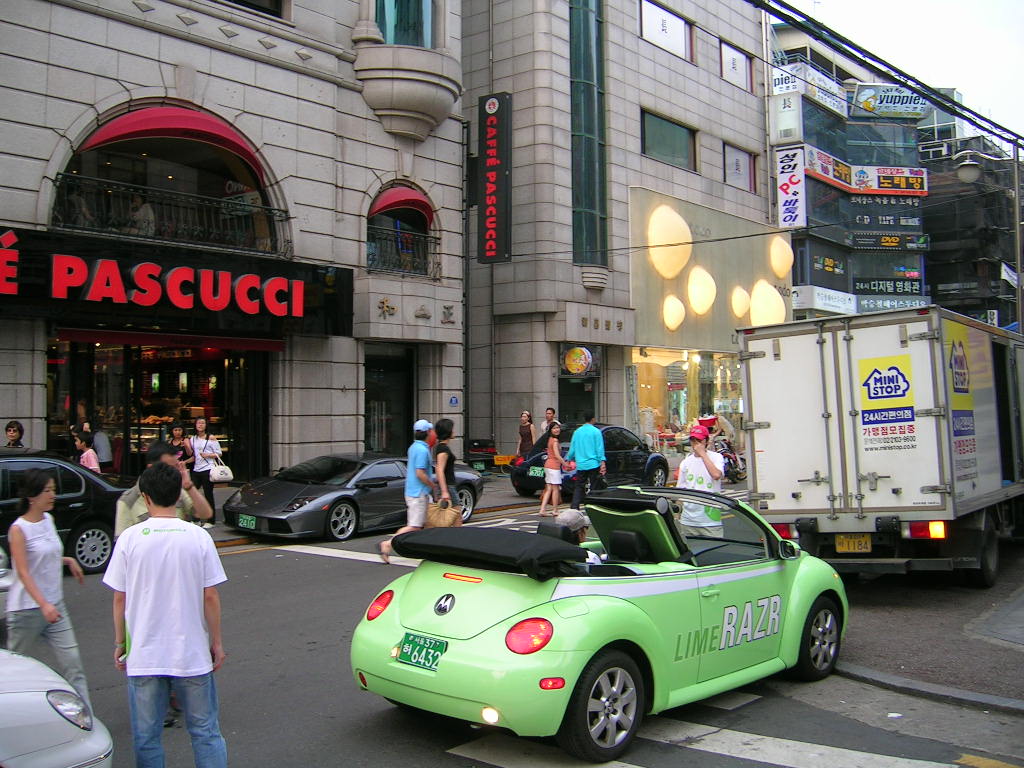
In Korean cafe culture, seat-saving rules depend on the type of venue. Here is the quick answer.
| Venue type | Seat first | Order first | Notes |
|---|---|---|---|
| Indie or chain cafe (weekday, off-peak) | OK | — | Mark the seat with a bag or laptop, then order |
| Peak hours (weekend afternoon) | Limited | Recommended | Look for an “Order first, then seat” notice |
| Study/work-focused cafes | OK | — | Long stays accepted, but ordering is still required |
| Study cafes | — | — | Kiosk auto-assigns the seat |
Notices to Check at the Korean Cafe Entrance
- “Order first, then take a seat” — no pre-saving allowed
- “Minimum one drink per person” — strict per-person order rule
- No notice posted — pre-saving a seat is generally accepted
Korean Cafe Seat-Saving Etiquette Checklist
- Sitting alone at a 4-person table for hours can draw side-eye
- Place an order within five minutes after grabbing a seat — that is the basic Korean cafe norm
- Leaving a bag or umbrella while you visit the restroom is fine, but never leave a laptop or wallet unattended
Curious about restaurant seat and order etiquette in Korea? Pair this guide with our Korean restaurant etiquette and ordering survival guide.
2. Korean Cafe Culture Order Flow: The Self-Service 5-Step Routine
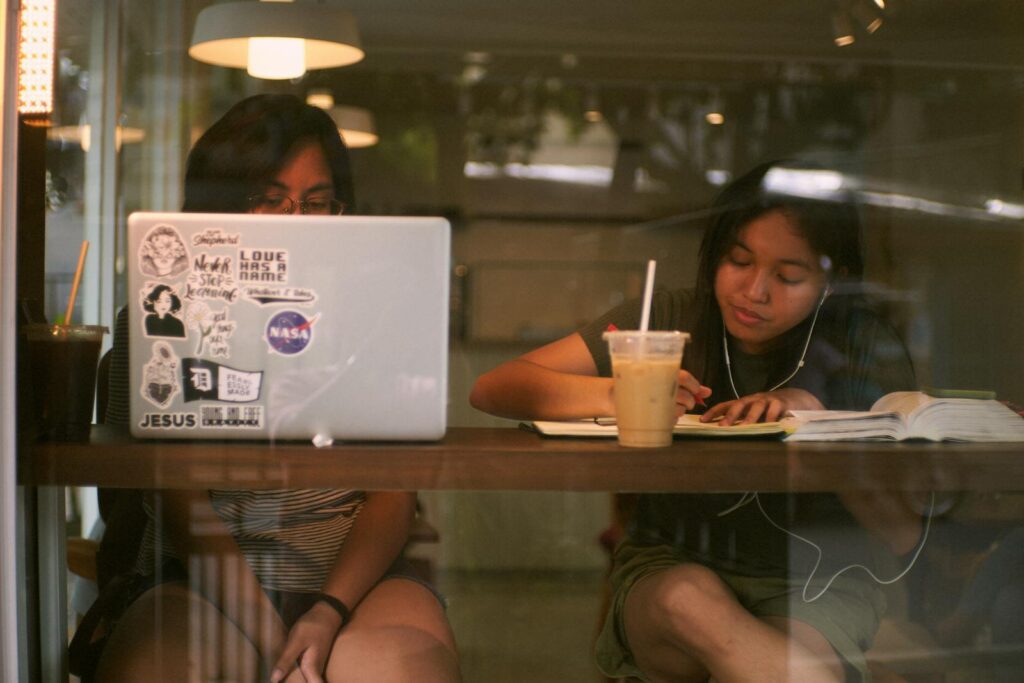
Almost every Korean cafe runs on self-service. It looks complicated at first, but more than 90% of cafes follow the same five steps.
- Join the line at the counter as soon as you walk in.
- Order from the menu and pay by card or mobile pay.
- Receive a buzzer or a printed order number.
- When the buzzer rings or your number is called, pick the drink up at the pickup counter yourself.
- When you finish, drop the cup and tray off at the return station.
Table service is rare and is mostly limited to hotel lounges or premium bakery cafes. Standard Korean cafes do not bring drinks to your table.
Order Steps That Confuse Foreigners Most in Korean Cafes
| Common assumption | How Korean cafes actually work |
|---|---|
| “Staff will come over to take my order at the table” | They will not. You must walk up to the counter |
| “Staff will bring the drink to my table” | Most drinks are picked up at the pickup counter |
| “I can leave the cup on the table when I’m done” | Self-return at the cleanup station is the norm |
| “They will call my name even without checking the buzzer” | If you ignore the buzzer/number, your drink will sit there cold |
Common Korean Cafe Order Prompts You Will Hear
- “Deusigo gaseyo?” — For here? / “Pojangiseyo?” — To go?
- “Sa-ijeu eotteoke haedeurilkkayo?” — Tall (regular) / Grande / Venti?
- “Maejangeseoneun meogeujaneuro deurilkkayo?” — Linked to Korea’s disposable-cup deposit policy. Saying yes to a mug is recommended for in-house
3. Korean Cafe Culture Long-Stay Etiquette: The “Cagongjok” Rule
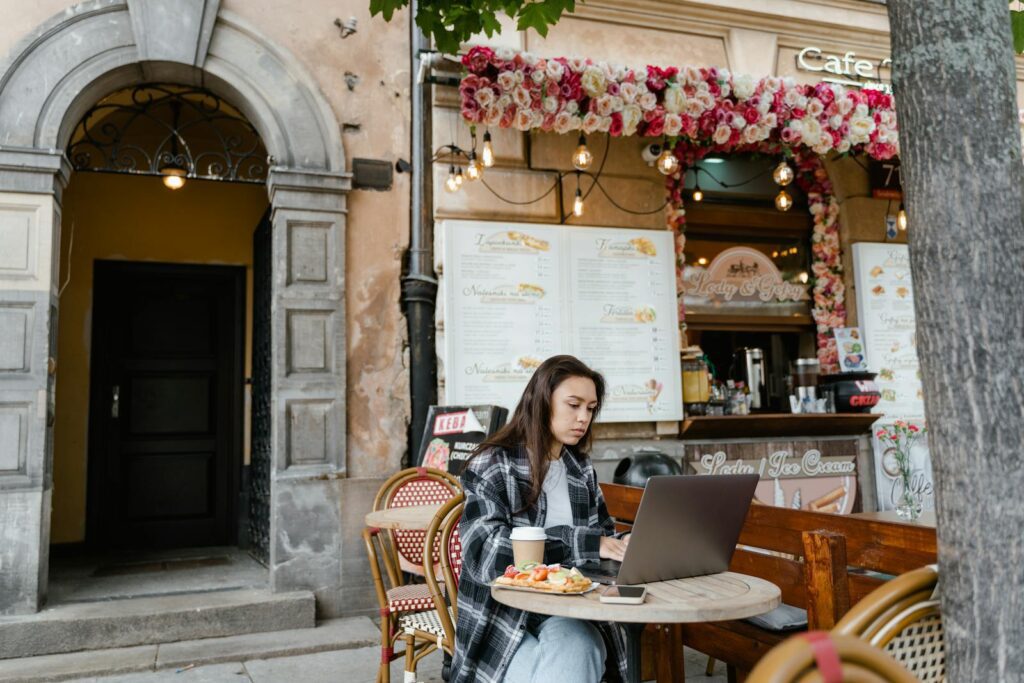
One distinctive feature of Korean cafe culture is how tolerant it is of long stays. The slang term “cagongjok” — literally “cafe-study tribe” — is so mainstream that two- or three-hour laptop sessions at a single table are completely normal.
Three Things to Check When You Plan to Stay Long
- Outlet availability — wall and floor outlets are common, but some cafes mark certain seats as “no outlet use.” Check before sitting down.
- Laptop or tablet restrictions — some bakery and aesthetic cafes ban laptops on weekend peak hours. Look for a notice at the counter.
- Refill etiquette — if you plan to stay over three hours, ordering one extra drink is the unspoken Korean cafe culture rule.
How to Find Wi-Fi and Outlets Quickly
- Check Naver Map or KakaoMap store pages for the “Wi-Fi” tag
- To skip weekend rush, try weekdays 10 a.m.–noon or 2–4 p.m.
- For long laptop sessions, large chains like Starbucks, Paul Bassett, and Twosome Place are safer bets
If you want broader long-term living context, our 20 differences between long-term life in Korea and tourism guide pairs well with this article.
4. Korean Cafe Culture: How a Study Cafe Differs from a Normal Cafe
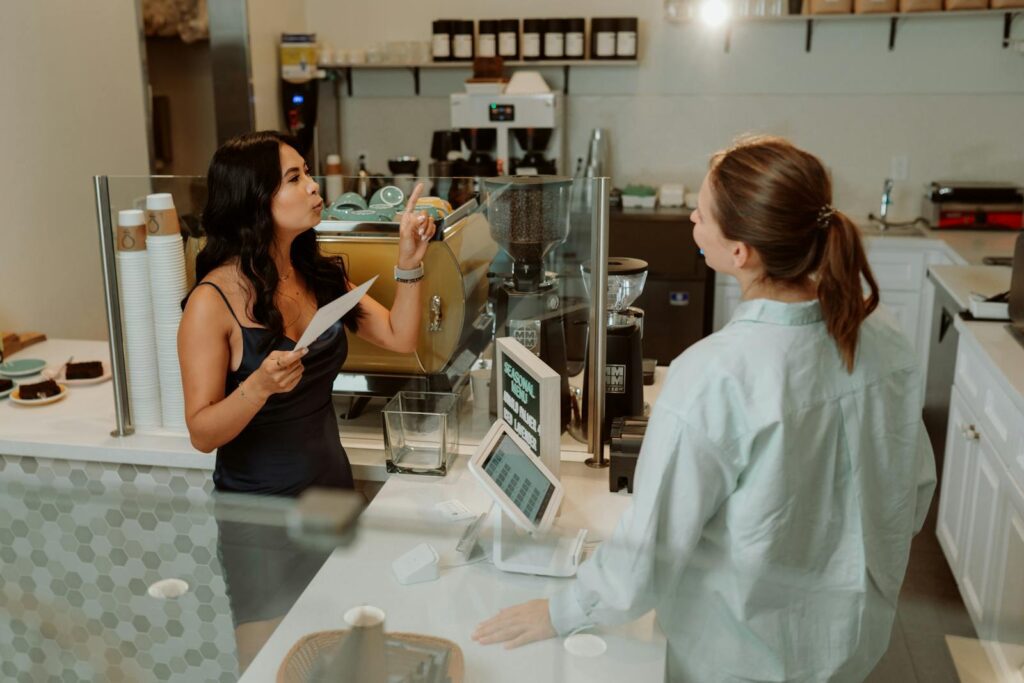
Study cafes are a relatively new addition to Korean cafe culture. The name says “cafe,” but in practice they are paid study spaces billed by the hour. Coffee and tea are bonus services; the real product is seating, focus, and silence.
Study Cafe vs Regular Korean Cafe Comparison
| Item | Regular cafe | Study cafe |
|---|---|---|
| Payment | Per drink | Per hour or pass |
| Operation | Staffed | Unmanned + kiosk |
| Noise level | Conversation OK | Library-grade silence |
| Drinks | Main product | Free or low-cost extra |
| Stay duration | Loose | Limited to purchased time |
Study Cafe Kiosk in 5 Steps
- At the entrance kiosk, choose your stay duration (1, 2, 4, or 8 hours, or a monthly pass).
- Pay with a card or mobile pay.
- A seat is auto-assigned, or pick one from the kiosk screen.
- Enter the seat number or PIN at the access door to get in.
- An alert sounds 10 minutes before your time runs out, and you can extend right at the kiosk.
What You Must Not Do in a Korean Study Cafe
- Phone calls — only allowed inside dedicated call booths
- Loud keyboard typing — the room is quiet enough that small sounds carry
- Strong-smelling food — instant noodles, fried chicken, etc. are banned
- Long absences from your seat — some cafes auto-recycle the seat if you leave too long
Unmanned kiosks like the ones in study cafes also appear in markets and grocery stores. For a similar walkthrough, see our market and mart shopping survival guide.
5. Korean Cafe Culture Cheat Sheet for Foreigners
| Situation | Korean cafe answer |
|---|---|
| Can I save a seat first? | Yes, unless an “order first” notice is posted |
| Who brings the drink to me? | You pick it up at the counter via buzzer or number |
| Can I stay long? | Yes — order one more drink after three hours |
| Laptops | Mostly fine, check store policy |
| Need full silence? | Use a study cafe time pass |
| What about the empty cup? | Drop it at the return station yourself |
| Tipping | Not part of Korean cafe culture |
Korean Cafe Culture FAQ
Q1. Is it a problem if I save a seat in a Korean cafe and step out?
Briefly going to the restroom or the order counter is fine. However, holding a seat for more than 30 minutes without ordering is considered poor manners, and some cafes may move your belongings.
Q2. Can I charge a laptop at a Korean cafe?
In most cases yes, but some cafes designate certain seats as “no outlet” zones. Check the seat label and any counter notice first.
Q3. Can I drink coffee in a study cafe?
Yes, but most study cafes only allow lidded cups, and strongly scented drinks (heavily syrup-loaded lattes, for example) may be restricted.
Q4. Should I tip at a Korean cafe?
No. Korean cafe culture has no tipping, and most counters do not even keep a tip jar.
Q5. Are study-cafe kiosks hard for foreigners to use?
Most kiosks support an English mode. Seat assignment, payment, and time extension are all guided on screen, so even with limited Korean you can adapt within five minutes.
Final Notes on Adapting to Korean Cafe Culture
Korean cafe culture is more about understanding the system than memorizing politeness rules. Once you internalize the four-step rhythm — seat, order, pickup, self-return — any neighborhood cafe in Korea becomes familiar territory. For long laptop sessions, pick a regular cafe; for total silence, switch to a study cafe time pass. Treating Korean cafes as living spaces rather than mere coffee shops reframes them, from a foreigner’s perspective, as one of the most cost-effective everyday venues in the country.
Image Credits
- Featured image: Photo by Richard / Wikimedia Commons (CC BY 2.0)
- Body image 1 (seat saving): Photo by HunkinElvis / Wikimedia Commons (Public Domain)
- Body image 2 (order flow): Photo by Pamu / Pexels
- Body image 3 (laptop work): Photo by MART PRODUCTION / Pexels
- Body image 4 (study cafe kiosk): Photo by RDNE Stock project / Pexels
K-Name Studio: Create your perfect Korean name based on your personality and style.
What’s My K-Beauty Personal Color?
WeBring Service : Provides personalized services to foreigners living in Korea
Exclusive offer: Introducing foreign car rental in Korea, WeBring-SoCar
Living in Korea? You don't have to figure it out alone
Insurance, visas, jobs and hospital interpretation — WeBring supports every step of settling in Korea, in your language.