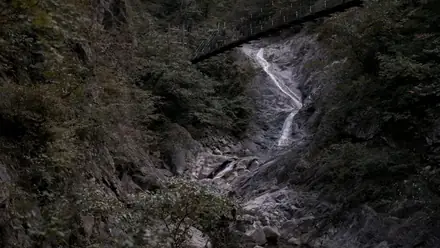

Seoul subway valley trips are the easiest summer escape in the city — no need to travel far. We compiled 8 valleys you can reach with the Seoul subway plus a short walk. One thing to remember though: some valleys around Seoul are inside national parks or protected zones where entering the water is prohibited. Even when locals say “valley swim,” some sections allow only foot/hand dipping while others ban entry entirely. This guide separates the two clearly. (Visit Seoul)
Seoul subway valley — 8 picks at a glance (closest first)
| Spot | One-line summary | Water play level | Recommended stay |
|---|---|---|---|
| Gwanaksan Sillim Valley water play area | The closest thing to a real “water park” valley in Seoul | Water play (shallow) | 2–4 hours |
| Suraksan Byeogun Valley | 10 min from the subway, cool water sound + deck path | Foot/hand dipping | 2–3 hours |
| Achasan Gingorang Valley | Gunja Station → village bus 10–15 min, hidden urban valley | Foot dipping/shallow | 2–3 hours |
| Anyang Sammaksa Valley (near Anyang Art Park) | Right next to Seoul, famous summer water play spot | Valley swimming | Half day to full day |
| Cheonggyesan Wonteogol trail | Walking-friendly valley path (beginner, 2.5 km) | Water-sound walk only | 1–2 hours |
| Inwangsan Suseongdong Valley | Near Seochon/Gyeongbokgung, atmospheric urban valley | Foot dipping only | 1–2 hours |
| Bukhansan Uidong Valley | Great valley views, no entering water | No water entry | 1–3 hours |
| Bukhansan Jingwansa Valley | Hanok village + valley path, protected zone / no entry | No water entry | 2–4 hours |
1) Gwanaksan Sillim Valley water play area — Seoul subway valley pick #1
If I had to name the most family-friendly summer pick, I would go with the Gwanaksan Sillim Valley water play area first. It is operated as a “water play facility,” so even beginners can enjoy it safely. (gwanak.go.kr)
Why it works
- Average water depth is shallow (designed for kids), so the “valley = scary” barrier is low. (Media Hub Seoul)
- After the Sillim Line (light rail) opened, access improved a lot: about 10–15 minutes on foot from the station. (Media Hub Seoul)
- Crowded on weekends but operated systematically (first-come, session-based). (gwanak.go.kr)
Operating info (2025, may change yearly)
- Operating period: July 19 – August 24, 2025
- Closed every Monday (some exceptions); may suspend during heavy rain or strong winds
- Eligible: elementary students and below + guardians, free
- Format: first-come, 400 people, weekend/holiday morning + afternoon two-shift system (gwanak.go.kr)
How to get there (no car)
- Sillim Line, Gwanaksan (SNU) Station Exit 1 → about 15-min walk (gwanak.go.kr)
Field tip: Many weekend visitors do “just the water play and go.” I recommend “water play (1–2 hr) + valley walk (30–60 min) + nearby meal” instead.
2) Suraksan Byeogun Valley — Seoul subway valley 10 min from Line 7
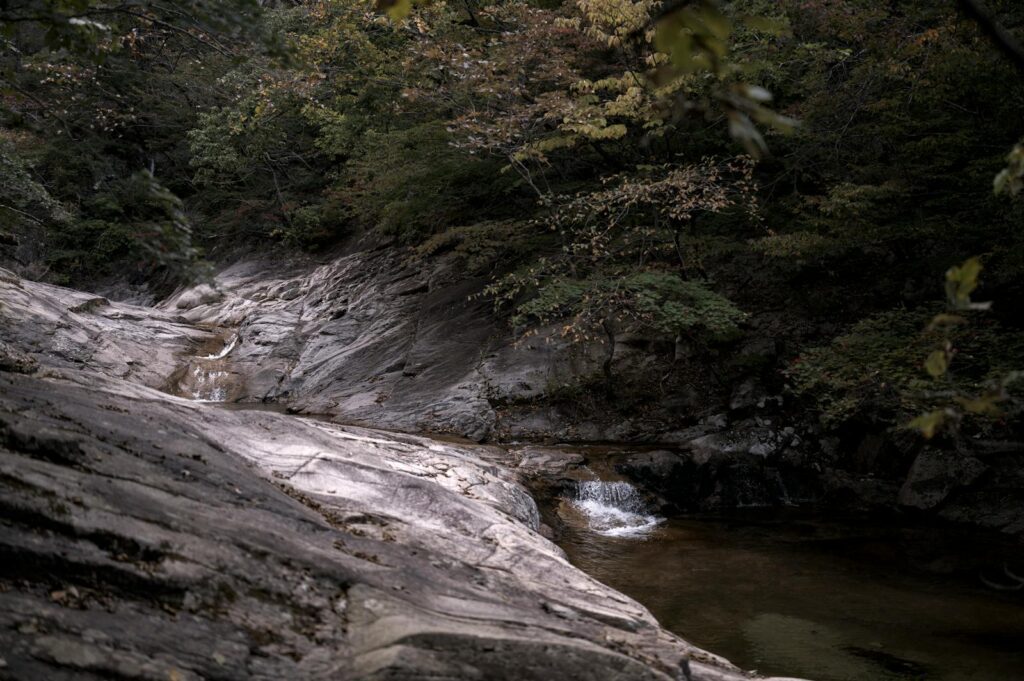
Famous for “real valley feel inside Seoul + best access,” Suraksan Byeogun Valley is the pick. The key point: 10 minutes on foot from Suraksan Station on Subway Line 7 gets you to the valley entrance. (Media Hub Seoul)
Highlights
- The path features the wooden Suraksan-jarak deck trail, making it relatively easy to walk. (Media Hub Seoul)
- Mid-route there is a Healing & Meditation Forest section; in front of it the stream spreads wide and shallow, which is described as good for families to settle. (Media Hub Seoul)
How to get there (super simple)
- Location: Sanggye-dong, Nowon-gu, Seoul
- Transit: Line 7, Suraksan Station Exit 1 → 10-min walk
- Recommended walking course: Surakgol entrance → Si-rip Surak senior home front → Surak Bridge → Jangrak Bridge → Byeogun Bridge → Sinseon Bridge (Media Hub Seoul)
Caution: Valley rocks are always slippery. Especially right after rain, scenery improves but danger jumps too. For more details, see Seoul Tourism Organization.
3) Achasan Gingorang Valley — Seoul subway valley via Gunja village bus
The kind of place that makes you say, “There’s a valley like this in Seoul?” Gingorang Valley is an urban valley reachable by 10–15 min village bus from Gunja Station. (Media Hub Seoul)
Why it is good for “summer walk + light water play”
- An article describes the depth as just right for kids to play (varies by season/water volume). (Media Hub Seoul)
- It is not a large valley, which actually makes it good for “a quick visit.”
- The entrance area is paved like a park, with shelter, restrooms, and other amenities relatively well equipped. (Media Hub Seoul)
- Camping and cooking are clearly prohibited. (Media Hub Seoul)
How to get there (no car)
- Location: 143-130 Junggok 4-dong, Gwangjin-gu, Seoul
- Transit: Line 5/7 Gunja Station Exit 3 → Gwangjin 02 village bus → Gingorang terminal
- Bus interval/time: every 25 min, about 10–15 min ride (Media Hub Seoul)
Best timing: Gingorang is not a “high-volume” valley, so the article specifically recommends the period right after the rainy season, when the heat just starts. (Media Hub Seoul)
4) Anyang Sammaksa Valley — Seoul nearby valley half-day pick
Stretching just outside Seoul, Anyang Sammaksa Valley is a strong candidate. Anyang City tourism content also describes it as “a widely known summer water play destination.” (Anyang City Official Website)
Recommended route (half-day)
- Water play / foot dipping at the valley
- Shaded walk
- (If possible) Add Anyang Art Park area artworks/walk
Check points
- On busy days parking and crowds can be an issue, so designing the route with public transit + short walk is more comfortable.
- Valleys are weather-sensitive. If rain is forecast, change the schedule for safety.
5) Cheonggyesan Wonteogol trail — walkable Seoul subway valley path
If you prefer walking along a flowing valley path over jumping in the water, Cheonggyesan Wonteogol fits perfectly. Related read: Han River picnic spots complete guide.
By Seoul City theme trail standards:
- Distance: 2.5 km
- Time: 60 minutes
- Difficulty: Beginner (1/3 stars)
- Access: Sinbundang Line, Cheonggyesan Ipgu Station Exit 2 → about 700 m walk (Seoul Trail)
According to the guide:
- Restroom: at Wonteo rest stop
- Water fountain/store: none on site
- Pets: allowed (leashed) (Seoul Trail)
Foreigner tip: Buy water and snacks near the station beforehand. “I will just buy it up there” may not work.
6) Inwangsan Suseongdong Valley — urban valley near Seochon and Gyeongbokgung
The strength of Suseongdong Valley is atmosphere and access rather than water play. It is near Gyeongbokgung and Seochon, so it is easy to combine with a foreign friend’s walking route. Related read: Seoul night view spots top 12.
- Bus access: Line 3 Gyeongbokgung Station Exit 3 → Jongno 09 bus → Suseongdong Valley stop → about 140 m walk (Visit Korea)
- The Inwangsan-jarak trail (barrier-free path) is also recommended as a connecting walk. (Visit Korea)
Tip: Here, instead of expecting “water play,” combine shaded walk + photos + Seochon cafés for higher satisfaction.
7) Bukhansan Uidong Valley — Seoul subway valley scenery, no water entry
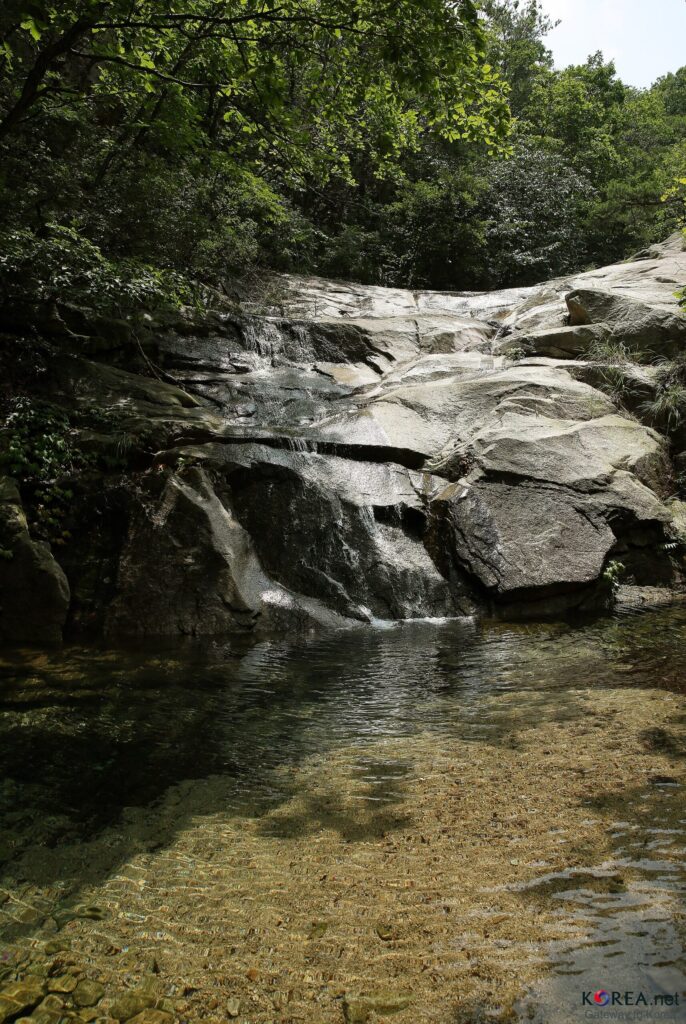
Searches will surface “Uidong Valley water play,” but official tourism info clearly states it is “located inside Bukhansan National Park, where entering the water is prohibited.” (Visit Seoul)
So the recommended approach is:
- Not entering the water, but
- Valley views + sitting on rocks + breathing forest air to lower the “summer feel” temperature
Also, in summer the city of Seoul has cracked down on illegal facilities (platforms, tents, etc.) around valleys. The valley is public space, so if a specific business blocks the path or demands seat fees, walk away. (Asia Economy)
8) Bukhansan Jingwansa Valley — protected zone, no water entry
Jingwansa Valley scenery is great too, but the key is that it is a protected zone within the national park.
- Seoul official tourism: Wildlife protection area + inside the national park → entering water is prohibited (Visit Seoul)
- The Seoul foreigner portal also notes “the area is protected so water entry is not allowed,” and emphasizes checking on-site signs and closed zones. (global.seoul.go.kr)
- Seoul Parks ecology data also notes annual access control from Feb 20 to June 30 (to protect amphibian breeding). (Seoul Parks)
Bottom line: Jingwansa Valley should be planned as hanok village + temple + valley path walk (water-gazing), not “water play.” For more hike ideas, also see Top 23 famous mountains in Seoul for foreigners.
Seoul subway valley walking — common safety rules
- Avoid the day of rain or the day after: water volume rises suddenly and rocks are slippery.
- Even where “water play” is allowed, swimming/diving is forbidden (urban valleys often lack constant rescue staff).
- No-entry / closed zones must be respected: the national park has “special protection zones,” with fines for violations. (Dobong Tour)
- Cooking and camping are usually prohibited: the Gingorang Valley article also mentions camping/cooking bans. (Media Hub Seoul)
- Take all trash and food back (protect the valley ecosystem).
- If kids come along: aqua shoes (anti-slip) + spare clothes + towels are a must.
Five must-know Korean signs at the valley (for foreigners)
- 입수 금지 (ipsu geumji): No entering the water
- 수영 금지 (suyeong geumji): No swimming
- 취사 금지 (chwisa geumji): No cooking
- 야영 금지 (yayeong geumji): No camping
- 출입 통제 / 특별보호구 (churip tongje / teukbyeol bohogu): Restricted area / Special protection zone
The rule is simple: If a sign says “prohibited,” take only photos and switch to walking. (Seoul does enforce these rules.)
Seoul subway valley FAQ
Q1. Where is the easiest “water play” reachable by Seoul subway only?
Gwanaksan Sillim Valley water play area is the closest to a “facility-style water play,” and you can reach it on foot from Sillim Line Gwanaksan (SNU) Station. (gwanak.go.kr)
Q2. Which Seoul valleys are best with kids?
Gwanaksan Sillim Valley water play area (operated for elementary students and below + guardians) with shallow water, and Suraksan Byeogun Valley with described gentle sections, are both safe picks. (gwanak.go.kr)
Q3. Can I get to Gingorang Valley by public transit?
Yes. Take the Gwangjin 02 village bus from Gunja Station Exit 3 and get off at the Gingorang terminal. (Media Hub Seoul)
Q4. Can I enter the water at Bukhansan (Uidong/Jingwansa) valleys?
By official tourism information, water entry is prohibited. Always check the on-site signs when you visit. (Visit Seoul)
Q5. How difficult is the Cheonggyesan Wonteogol trail?
By Seoul City theme trails, it is described as a 2.5 km / 60-minute / beginner course. (Seoul Trail)
Q6. Is Suseongdong Valley a good “water play” pick?
Suseongdong is more satisfying for urban valley scenery + walking + Seochon route than water play. It is also accessible by city bus. (Visit Korea)
Q7. Can I cook (e.g., boil ramen) at Seoul valleys?
Most are prohibited; the Gingorang Valley article also mentions a no camping / no cooking rule. Pack light snacks or a lunchbox instead. (Media Hub Seoul)
Q8. What if someone demands a “seat fee” at a summer valley?
Seoul has cracked down on illegal facilities (platforms, tents, etc.) around valleys. If it is uncomfortable, move to another section and prioritize public-space rules. (Asia Economy)
K-Name Studio: Create your perfect Korean name based on your personality and style.
What’s My K-Beauty Personal Color?
WeBring Service : Provides personalized services to foreigners living in Korea
Exclusive offer: Introducing foreign car rental in Korea, WeBring-SoCar
- Seochon Walking Course: A Half-Day Hanok & Lunchbox Route (2026)
- Gyeonggi Valley Day Trip Best 10: 1-Hour Summer Escape from Seoul
- Gyeonggi Valley Day Trip Near Seoul: BEST 10 Summer Courses Within 1 Hour
- Korea Summer Camping: Glamping vs Standard vs Valley Camping (10 Best Spots)
Last updated: 22 September 2026
Prices, opening hours and transport schedules change with the season and the operator. Check the official channel again before you go.
WeBring operates its own Korea tour and vehicle services. The following is a promotion for that service.
Explore Korea's mountains — guides in your language
Courses, transport and seasonal tips for 30 mountains, from Bukhansan to Hallasan, available in 11 languages. Pick up essential travel Korean and find events for the global community, too.