


If you want to wrap up a Korean traditional architecture tour in one trip, the smartest move is to put hanok villages, Seowon (Confucian academies), and Buddhist temples on a single route. Start in Andong (Hahoe Folk Village + Byeongsan Seowon), move to Gyeongju (Bulguksa + Seokguram), then Yangsan (Tongdosa), and finish at Hapcheon (Haeinsa) — four nights, five days. This guide packs KTX and intercity bus connections, ticket prices, photo spots, and visitor etiquette so you and your foreign friends never get lost.
Before planning a Korean traditional architecture tour: three building types at a glance
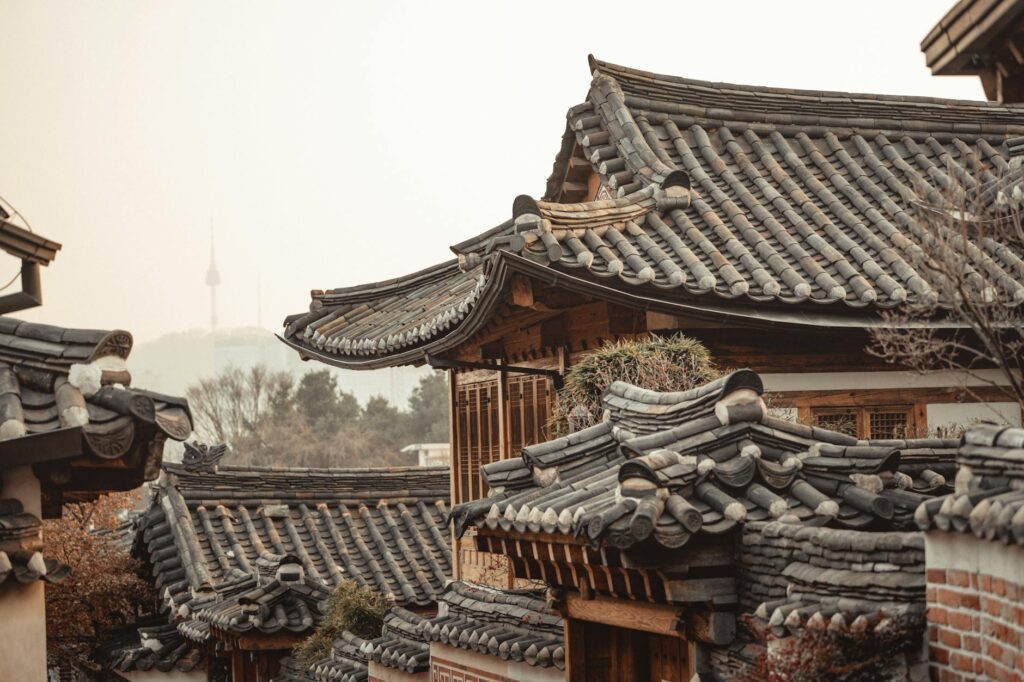
Hanok (residential, official, palace), Seowon (private Confucian academies of Joseon’s gentry), and Buddhist temples differ in location, function, and aesthetic. Knowing the differences before you plan changes how much you actually enjoy each stop.
| Type | Typical Setting | Aesthetic Core | What to Watch |
|---|---|---|---|
| Hanok village | Riverside or castle-town | Eaves, courtyard, wall rhythm | Alley flow, window detail |
| Seowon | Hillside, by a river | Restraint, lecture-hall hierarchy | Front courtyard, pavilion view |
| Temple | Deep mountain valleys | Axis, dancheong, proportion | Iljumun-Cheonwangmun-Daewungjeon line |
Korean traditional architecture tour: 4-night, 5-day best route at a glance (KTX + intercity bus)
- Day 1 Seoul → Andong (KTX-Eum, ~2h 30m from Cheongnyangni). Stay overnight at Hahoe Folk Village.
- Day 2 Visit Byeongsan Seowon near Hahoe → Andong → Gyeongju (intercity bus ~1h 50m).
- Day 3 Bulguksa, Seokguram, Donggung & Wolji → overnight in Gyeongju.
- Day 4 Gyeongju → Yangsan Tongdosa → Hapcheon Haeinsa (1 night).
- Day 5 Haeinsa Tripitaka Koreana visit → Daegu Dongdaegu Station → SRT/KTX back to Seoul.
This is a “diagonal southbound” route through the Gyeongsang region. Because everything stays in one province, transit times stay short, and each day adds a new building type instead of repeating one.

Day 1–2 Andong Hahoe Folk Village + Byeongsan Seowon: where the Korean traditional architecture tour begins
Inscribed on UNESCO’s “Historic Villages of Korea: Hahoe and Yangdong” list, Hahoe Folk Village sits inside an “S-shaped” bend of the Nakdong River — a textbook pungsu (geomancy) location. The village mixes tile-roofed and thatch-roofed houses, so you can compare elite and commoner hanok side by side. Climb to the Buyongdae cliff opposite for the cluster aesthetic of a hanok village in one frame (UNESCO World Heritage).
Byeongsan Seowon is about 15 minutes by car. Stand on the Mandaeru pavilion and the Nakdong River with its folding-screen mountains arrive head-on — and the question “why did Joseon scholars build a school here?” answers itself in landscape form. The hierarchy and quiet proportions of the lecture hall, east hall (dongjae), and west hall (seojae) are the highlights.
- Tickets (2026) Hahoe Village adult KRW 5,000 / Byeongsan Seowon free
- Hours Hahoe 09:00–18:00, Byeongsan 09:00–18:00
- Access Andong Station → village bus 246 or taxi (~15 min)
- Stay Hanok stays inside the village (book 1–2 months ahead in peak season)
A hanok stay with ondol heating, a wooden floor (maru), and a courtyard is the most direct way to “experience” the architecture rather than just look at it.
Day 3 Gyeongju Bulguksa + Seokguram: Unified Silla architecture on a Korean traditional architecture tour
Bulguksa is a “map of the Buddha’s Pure Land” laid out by Unified Silla. The proportions of Cheongungyo (Blue Cloud Bridge), Baegungyo (White Cloud Bridge), Yeonhwagyo (Lotus Bridge), and Chilbogyo (Seven Treasures Bridge) are widely cited as a high point of 8th-century East Asian stone architecture (Korea Tourism Organization). The symmetry around Daewungjeon and the contrast between Dabotap and Seokgatap are textbook Korean temple aesthetics.
Seokguram is an artificial stone grotto just below Tohamsan’s summit. The line of sight from the entrance to the principal Buddha image aligns precisely with the East Sea sunrise direction. Photography is banned inside, but the in-person impact is unrepeatable.
- Tickets (2026) Bulguksa and Seokguram cultural-property admission is free from May 4, 2023; parking and separate services excluded
- Hours 09:00–17:00 (±30 min seasonal)
- Access Gyeongju Station (KTX) → bus 700 or taxi (~25 min)
- Flow Bulguksa (1.5h) → shuttle → Seokguram (40 min) → Anapji/Daereungwon at night
Day 4 Yangsan Tongdosa: a Korean traditional architecture tour stop with “Daewungjeon without a Buddha image”
Tongdosa is famous for housing the Buddha’s actual sari (relics) — which is why its main hall (Daewungjeon) has no Buddha statue inside. The mountain-temple axis Iljumun → Cheonwangmun → Buimun → Daewungjeon is often cited as a model of Korean mountain Buddhist gate sequencing. Stop in front of the Daewungjeon’s “Jeongmyeolbogung” plaque and the role of “emptiness” in Korean temple architecture clicks into place.
The Mupunghansong-gil (~1.5 km) leading to the Iljumun is a pine-forest valley walk — one of Korea’s best temple approaches in autumn (color) and summer (shade).
- Tickets (2026) Free (cultural admission abolished)
- Hours Sunrise–sunset (may close during services)
- Access KTX Ulsan → bus 12 (~30 min) / Busan Nopodong → intercity bus (~30 min)
- Etiquette No flash inside Daewungjeon, hapjang (palms together) bow recommended
Day 4–5 Hapcheon Haeinsa: closing the Korean traditional architecture tour at Janggyeong Panjeon
Haeinsa sits deep in Gayasan and is the home of UNESCO World Heritage “Janggyeong Panjeon” (UNESCO World Heritage). The wooden depository has preserved 80,000+ Goryeo-era Tripitaka Koreana woodblocks for over 700 years using natural ventilation and humidity control engineered into the building itself.
The approach from the ticket booth through Iljumun, Bonghwangmun, Haetalmun, and finally Daejeokgwangjeon is another model mountain-temple gate sequence. Time it for early-morning prayer and the dancheong, roof tiles, and pine forest go to their deepest tones.
- Tickets (2026) Free
- Hours Sunrise–sunset (Janggyeong Panjeon exterior viewing only)
- Access Daegu Seobu Bus Terminal → Hapcheon Haeinsa intercity bus (~1h 30m)
Korean traditional architecture tour etiquette and photography tips
“Quiet” and “yielding the path” are the core etiquette of any traditional architecture trip. Brief your travel companions ahead of time.
- Hanok villages are real residential areas. Do not photograph windows or courtyards without consent.
- Seowon Some lecture halls and shrines restrict entry. No loud voices, no running.
- Temples Remove shoes before entering, hapjang bow, silence phones, avoid front-facing photos of the principal Buddha.
- Drones Banned in all UNESCO-inscribed zones without prior permission.
Photography is best in the golden hour — the first hour after sunrise and the last hour before sunset. Eaves cast long shadows across the courtyard, and the proportions of a hanok suddenly become legible.
Common mistakes when planning a Korean traditional architecture tour
| Mistake | Why it hurts | Fix |
|---|---|---|
| Andong + Gyeongju in one day | 3+ hours of transit kills sightseeing | Sleep in Andong, move to Gyeongju the next day |
| Day-tripping Haeinsa | Only the Janggyeong Panjeon exterior | Add a night in Hapcheon or Goryeong |
| Four temples back-to-back | Repeating gate sequences = burnout | Mix hanok/seowon/temple at 1:1:2 |
| Midday summer visits | Little shade, harsh photos | 09:00–11:00 or after 16:00 |
Korean traditional architecture tour FAQ
Q1. Can foreigners book hanok stays? Yes. Andong’s Hahoe, Jeonju Hanok Village, and Gyeongju Hwangnidan-gil all have hanok stays with English booking pages. Reserve 1–2 months ahead for peak season.
Q2. Does the KORAIL Pass cover Andong and Gyeongju? Yes. KTX-Eum to Andong and KTX to Gyeongju are both included. Yangsan Tongdosa and Hapcheon Haeinsa require an intercity bus transfer from KTX Ulsan or Dongdaegu.
Q3. Can I take photos inside temples? Outdoor temple grounds are usually OK; inside main halls, photos of the principal Buddha are restricted or banned. Tongdosa’s main hall is fully off-limits inside.
Q4. How do I shorten this to a 2-night, 3-day route? Andong (Hahoe + Byeongsan, 1 night) + Gyeongju (Bulguksa + Seokguram, 1 night) + Yangsan Tongdosa as a day trip → fly out from Busan. Save Haeinsa for a separate trip.
Q5. What if I only want a hanok village experience? Pick one — Jeonju Hanok Village, Seoul Bukchon, or Andong Hahoe — and treat it as a one-day course.
K-Name Studio: Create your perfect Korean name based on your personality and style.
What’s My K-Beauty Personal Color?
WeBring Service : Provides personalized services to foreigners living in Korea
Exclusive offer: Introducing foreign car rental in Korea, WeBring-SoCar
Operating information checked September 8, 2026: 1, 2, 3, 4
- Korea UNESCO Travel Destinations: 15 Sites Ranked
- Gyeongju Andong Heritage Tour: Discover Korea’s Ancient Roots
- The Perfect One-Day Guide to Hahoe Village for First-Time Foreign Visitors
- Gyeongju 1 Night 2 Days Bulguksa Course: Seokguram, Daereungwon, Hwangnidan-gil
- Korea Temple Stay Complete Guide: Booking, Daily Schedule, Etiquette, Dawn Yebul
Last updated: 23 September 2026
Prices, opening hours and transport schedules change with the season and the operator. Check the official channel again before you go.
WeBring operates its own Korea tour and vehicle services. The following is a promotion for that service.
Explore Korea's mountains — guides in your language
Courses, transport and seasonal tips for 30 mountains, from Bukhansan to Hallasan, available in 11 languages. Pick up essential travel Korean and find events for the global community, too.