
Korea UNESCO Travel Destinations: 15 Sites Ranked
The first question most people ask about Korea UNESCO travel destinations is “how many are there?” The Republic of Korea has 17 UNESCO World Heritage sites in total — 15 cultural and 2 natural. This guide ranks 15 of those 17 by visitor priority for a first-time or long-stay foreign traveler, and adds the remaining two as bonus picks.
How we ranked these Korea UNESCO travel destinations
The order is based on the routes real foreign travelers in Korea actually take, weighted by the four factors below. “No. 1” doesn’t mean “objectively the best” — it means “least likely to disappoint on a first visit.”
- Symbolic value & completeness — proven satisfaction as a flagship Korea UNESCO experience
- Accessibility — easy to reach from Seoul by public transport
- Route efficiency — easy to bundle with other UNESCO sites or major attractions
- Repeat value — still rewarding when you change seasons or time of day
Korea UNESCO travel destinations: 15 sites at a glance
All 15 below are UNESCO World Heritage sites (year inscribed in parentheses), selected from Korea’s 17 listings and ordered by how clean the visiting route is.
| Rank | UNESCO World Heritage (Inscribed) | Region | Suggested time |
|---|---|---|---|
| 1 | Changdeokgung Palace (1997) | Seoul | 2–3 hours |
| 2 | Jongmyo Shrine (1995) | Seoul | 1–2 hours |
| 3 | Seokguram & Bulguksa (1995) | Gyeongju | Half day |
| 4 | Gyeongju Historic Areas (2000) | Gyeongju | 1 day |
| 5 | Jeju Volcanic Island & Lava Tubes (2007) | Jeju | 2N3D or more |
| 6 | Hwaseong Fortress (1997) | Suwon, Gyeonggi | Half to 1 day |
| 7 | Haeinsa Janggyeong Panjeon (1995) | Hapcheon, Gyeongnam | Half day |
| 8 | Hahoe & Yangdong Historic Villages (2010) | Andong / Gyeongju | Half to 1 day |
| 9 | Royal Tombs of the Joseon Dynasty (2009) | Greater Seoul & beyond | 1–2 hours per site |
| 10 | Baekje Historic Areas (2015) | Gongju · Buyeo · Iksan | 1–2 days |
| 11 | Namhansanseong (2014) | Gwangju, Gyeonggi | Half day |
| 12 | Sansa, 7 Buddhist Mountain Monasteries (2018) | Nationwide (7 temples) | Half day per site |
| 13 | Seowon, 9 Neo-Confucian Academies (2019) | Nationwide (9 academies) | Half day per site |
| 14 | Getbol, Korean Tidal Flats (2021) | Seocheon · Gochang · Sinan · Boseong-Suncheon | 1+ day |
| 15 | Petroglyphs along the Bangucheon Stream (2025) | Ulsan | 2–3 hours |
No. 1. Changdeokgung — palace meets nature, the textbook Korea UNESCO travel destination (1997)
Changdeokgung is where you can feel a Korea UNESCO travel destination in central Seoul most easily and most powerfully. Built in the early 15th century, the palace was inscribed in 1997 for an architectural layout that follows the natural topography and harmonizes with the surroundings.
- Photo points: Injeongjeon hall and the Secret Garden (Huwon) — scenery shifts dramatically by season.
- Recommended route: Changdeokgung → connect to Changgyeonggung → finish in Ikseon-dong / Insa-dong.
- One-line pitch: A UNESCO palace in Seoul famous for architecture that blends into nature.
No. 2. Jongmyo Shrine — Seoul’s quietest Confucian space (1995)
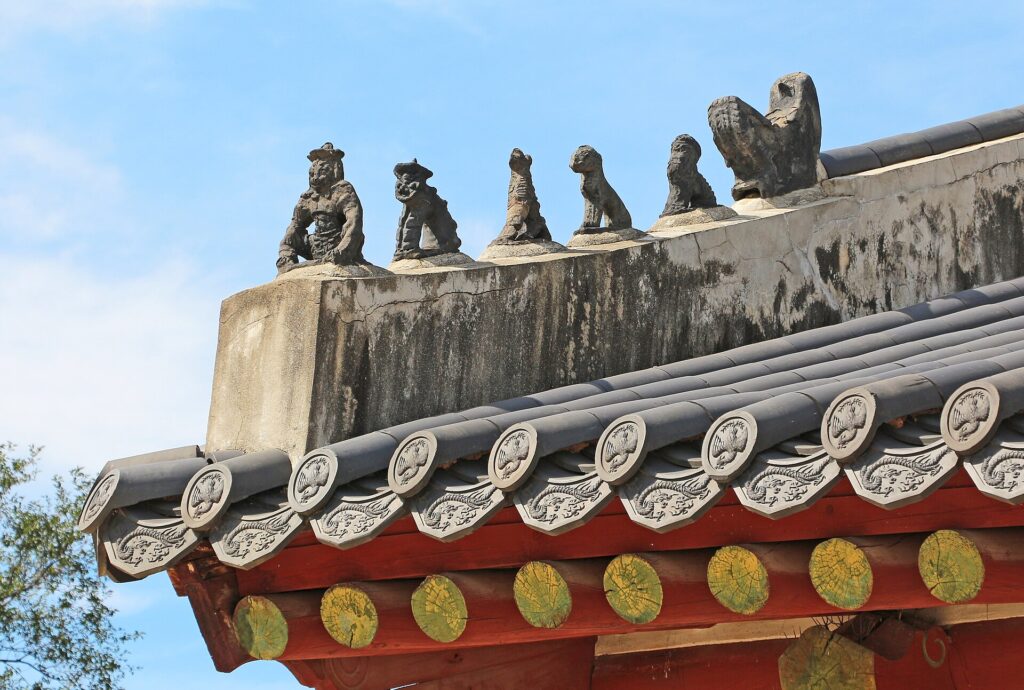
Jongmyo is the royal shrine where the spirit tablets of Joseon kings and queens are enshrined. Its strength is the symbolic value of the Confucian ritual space and the restraint of its layout. For official hours and access, see the Korea Tourism Organization website.
- The unusual stillness — feels worlds apart from the city around it.
- Easy to bundle with Changdeokgung on the same day, on foot or by transit.
- Closed on Tuesdays — re-check operating hours before visiting.
No. 3. Seokguram & Bulguksa — masterpieces of Korean Buddhist art (1995)
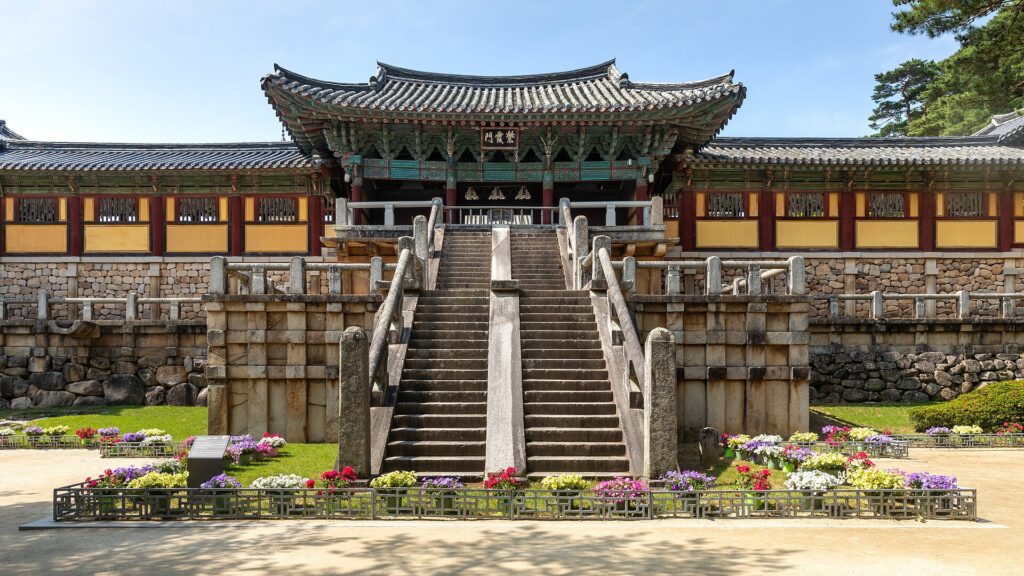
The Seokguram Grotto, built in the 8th-century Silla period, houses a Buddha facing the East Sea. Together with Bulguksa, it’s regarded as the peak of Korean religious architecture and sculptural beauty.
- Bundling Gyeongju’s two UNESCO sites (No. 3 + No. 4) gives the highest satisfaction.
- Best time slot: early morning (more comfortable, beautiful light for photos).
- Inside Seokguram you view through a glass wall — flash photography and tripods are restricted.
No. 4. Gyeongju Historic Areas — a city that’s an open-air museum (2000)
The Gyeongju Historic Areas concentrate the relics of the 7th–10th-century Silla peak — sculptures, reliefs, pagodas, temple and palace remains. It’s the Korea UNESCO travel destination where you can tick off the most points in a single day.
- Gyeongju = a 2-day, 1-night trip (relics by day, night-illumination route after dark).
- Combine with Bulguksa & Seokguram for the full “Gyeongju UNESCO” set.
- Daereungwon and Hwangridan-gil flow naturally into the same walking route.
No. 5. Jeju Volcanic Island & Lava Tubes — Korea’s top natural UNESCO (2007)
Jeju’s natural heritage lets you experience volcanic landforms and lava tubes in one trip. Hallasan, Seongsan Ilchulbong (Sunrise Peak) and the Geomunoreum Lava Tube System are core components — and it’s the only island-wide natural site among Korea UNESCO travel destinations.
- Plan at least 2 nights / 3 days, ideally 3 nights / 4 days.
- In peak season flights and rental cars sell out fast — early booking dramatically lowers difficulty.
- Geomunoreum requires advance reservation — check time slots on the Korea Tourism Organization site.
No. 6. Hwaseong Fortress — the ultimate “fortress walk” near Seoul (1997)
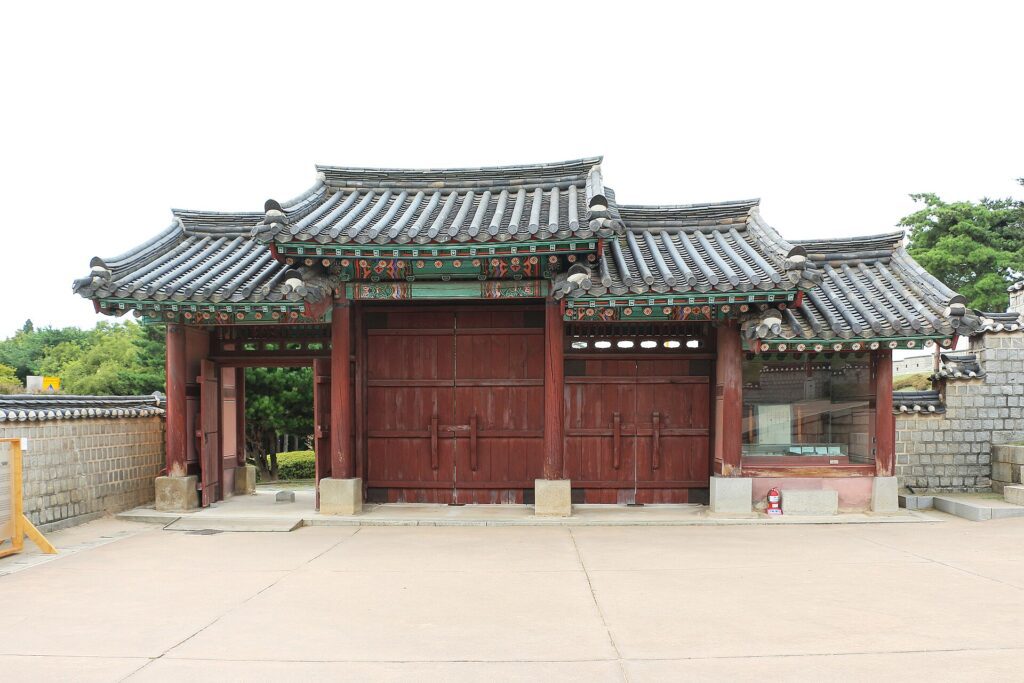
Built by King Jeongjo in the late 18th century, the roughly 5.74 km fortress wall around Suwon fuses Eastern and Western military engineering. Among Korea UNESCO travel destinations, Hwaseong has the strongest “you can do this in a day from Seoul” advantage.
- Wall walk + night illumination — both day and night are rewarding.
- Bundle Hwaseong Haenggung Palace, fried-chicken alley and the traditional market for a full day.
- Beginner-friendly difficulty for foreign friends (Suwon Station → shuttle / walking).
No. 7. Haeinsa Janggyeong Panjeon — preservation tech as the heritage (1995)
Haeinsa houses the 13th-century Tripitaka Koreana wooden printing blocks (about 80,000); the 15th-century Janggyeong Panjeon depository hall is what’s actually inscribed. The point isn’t “the blocks exist” but the architecture and ventilation design that made centuries-long preservation possible.
- Satisfaction shoots up the more you love history and architecture.
- Slotting one day into a Busan / Daegu trip is the most efficient route.
- Dong-Daegu Station → Hapcheon intercity bus is about 1 hour 30 minutes.
No. 8. Hahoe & Yangdong Historic Villages — landscape and layout of Joseon clan villages (2010)
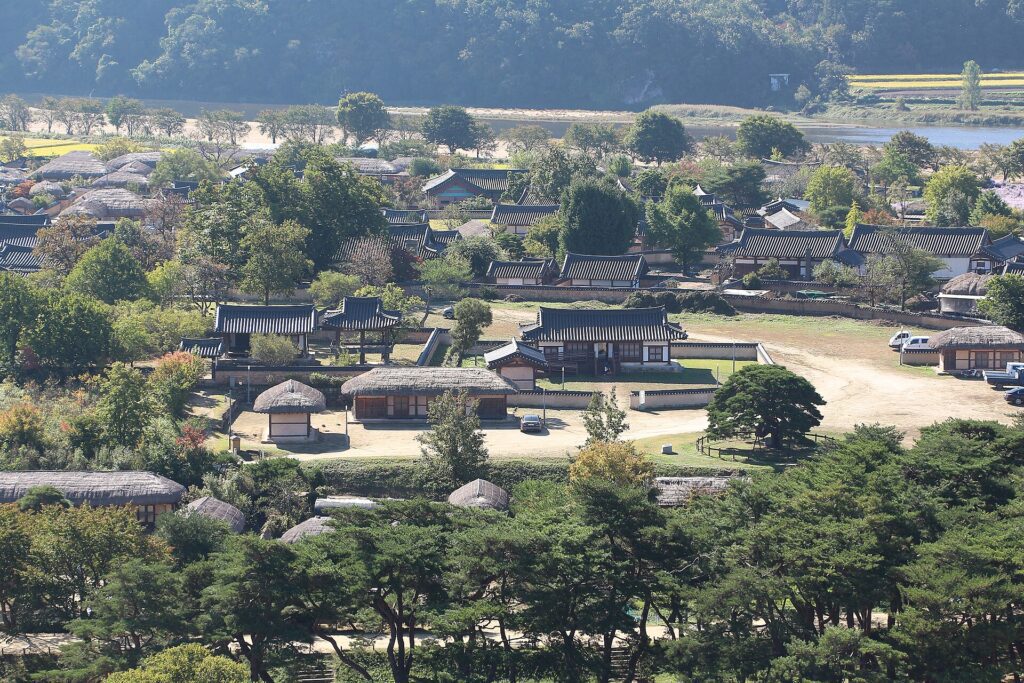
Formed in the 14th–15th centuries, these are signature clan villages. They’re prized for their setting — tucked between mountains and facing rivers — and the well-preserved early Joseon Confucian way of life.
- Hahoe Village (Andong) + a nearby Seowon (No. 13) is the highest-satisfaction combo among Korea UNESCO travel destinations.
- Many homes are private residences — visitor manners directly affect your experience.
- Time your visit for weekend mask-dance performances to maximize the cultural payoff.
No. 9. Royal Tombs of the Joseon Dynasty — the “forest in the city” Korea UNESCO travel destination (2009)
The Joseon Royal Tombs comprise 40 burials across 18 sites, built between 1408 and 1966. The royal funerary culture and feng-shui-driven layout are the inscribed value.
- Easy starts like Seonjeongneung in Gangnam, Seoul work well.
- Slot one in mid-trip and you get a quiet “walk + forest + silence” reset.
- Admission is cheap (around KRW 1,000) and English signage is solid.
No. 10. Baekje Historic Areas — Gongju, Buyeo & Iksan, 2 nights / 3 days (2015)
Baekje Historic Areas is a serial property of 8 components across Gongju, Buyeo and Iksan, showing late-Baekje cities, fortresses, temples and royal tombs.
- A 2-night, 3-day route minimizes inter-city fatigue.
- Knowing the historical arc (Baekje → Silla → Tang) doubles the experience.
- Standard route: Iksan Mireuksa Temple Site ↔ Gongju Gongsanseong ↔ Buyeo Jeongnimsa Temple Site.
No. 11. Namhansanseong — fortress trekking + history near Seoul (2014)
Namhansanseong is a Joseon fortress city built on a mountain near Seoul as an emergency capital. Its history includes defense by warrior-monks (seungbyeong).
- Top pick for “I want a light walk” — difficulty is adjustable per route.
- Best in autumn foliage and on clear early-winter days.
- Subway Line 8 Sanseong Station → transfer to shuttle bus No. 9.
No. 12. Sansa, 7 mountain monasteries — living temple culture (2018)
Sansa is a serial property of seven mountain Buddhist monasteries (Tongdosa, Buseoksa, Bongjeongsa, Beopjusa, Magoksa, Seonamsa, Daeheungsa) in southern Korea. The point isn’t a single building but the practice and community life these mountain temples have sustained.
Among Korea UNESCO travel destinations, Sansa is the clearest “you don’t need to visit all seven.” Pick one that fits your route.
| Travel area | Recommended Sansa | Nearest city |
|---|---|---|
| Busan / Ulsan | Tongdosa | Yangsan |
| Andong / North Gyeongsang | Bongjeongsa | Andong |
| Chungcheong | Beopjusa / Magoksa | Boeun / Gongju |
| Jeolla | Seonamsa / Daeheungsa | Suncheon / Haenam |
| North Gyeongsang Yeongju | Buseoksa | Yeongju |
No. 13. Seowon, 9 Neo-Confucian academies — Joseon’s schools and public sphere (2019)
Seowon were mid-Joseon Neo-Confucian academies. The 9 inscribed academies (Sosu, Namgye, Oksan, Dosan, Pilam, Dodong, Byeongsan, Museong, Donam) are particularly rewarding for travelers who like quiet courtyards and study halls.
- Andong (Dosan + Byeongsan) + Hahoe Village (No. 8) is the best route.
- Lower visitor counts make it easy to find good photo time slots.
- Dodong and Oksan are especially photogenic in autumn.
No. 14. Getbol, Korean Tidal Flats — natural heritage that needs prep (2021)
Getbol is composed of four components on Korea’s western and southern coasts — Seocheon, Gochang, Sinan and Boseong-Suncheon — and its inscribed value lies in tidal-flat systems and biodiversity shaped by geology, oceanography and climate.
- Always check tide tables and seasonal cues (migratory birds, ecological highlights).
- Bundling with a Suncheon trip drops the difficulty significantly (Boseong-Suncheon is part of the inscription).
- Trails are decked, but pack sun and wind protection.
No. 15. Petroglyphs along the Bangucheon Stream — the newest Korea UNESCO travel destination (2025)
Around Ulsan’s Bangucheon Stream you’ll find the Daegok-ri and Cheonjeon-ri petroglyphs. Layers carved over many generations — from around 5,000 BCE to the 9th century CE — make for a unique on-site reading of Korea’s prehistoric and historic visual record.
- Slots well into a Busan / Ulsan trip as a day add-on.
- Conservation rules are tight — re-check on-site guidance and access before going.
- Pair with the Bangucheon Petroglyph Museum for context.
Bonus: the remaining two Korea UNESCO travel destinations
If you want to clear all 17 Korea UNESCO travel destinations, two more sites remain. Worth adding when time and taste allow.
- Gaya Tumuli (2023) — a serial property of 7 burial fields showing the political and cultural character of the 1st–6th-century Gaya confederacy.
- Gochang, Hwasun and Ganghwa Dolmen Sites (2000) — Korea’s dolmens are among the densest in the world; this inscription highlights that density and diversity.
5 ready-made Korea UNESCO travel destinations bundles
Trying to hit all the Korea UNESCO travel destinations at once breaks your itinerary. Five bundles below cover Seoul day trips up to a 2N3D Baekje route — pick one and you stay on track.
| Route | Length | UNESCO bundle |
|---|---|---|
| ① Seoul 1-day urban | 1 day | Changdeokgung (No.1) → Jongmyo (No.2) → Insadong / Ikseondong |
| ② Seoul + Gyeonggi 2-day | 2 days | Day1 Changdeokgung + Jongmyo / Day2 Hwaseong (No.6) or Namhansanseong (No.11) |
| ③ Gyeongju Silla full set | 1 night, 2 days | Bulguksa & Seokguram (No.3) + Gyeongju Historic Areas (No.4) |
| ④ Andong tradition theme | 1 night, 2 days | Hahoe Village (No.8) + Seowon (No.13 — Dosan / Byeongsan) |
| ⑤ Baekje + southwest coast | 2 nights, 3 days | Baekje Historic Areas (No.10) + part of Getbol (No.14) |
Small tips that maximize Korea UNESCO travel destinations satisfaction
- UNESCO sites aren’t “photo spots” — they’re about context. Palaces are about layout and landscape, temples about mountain setting and practice culture, ruins about historical flow. Reading up first multiplies the on-site payoff.
- For serial properties, picking one good representative is enough. Sansa, Seowon, the Royal Tombs, Baekje and Getbol all reward picking one well-chosen site.
- Before visiting, double-check closure days, reservations and guided-tour times on the Korea Tourism Organization website and each local heritage page.
Korea UNESCO travel destinations FAQ
- Q1. How many Korea UNESCO travel destinations (World Heritage sites) are there?
- 17 in total in the Republic of Korea — 15 cultural and 2 natural.
- Q2. Can I see two Korea UNESCO travel destinations in one day from Seoul?
- Yes. Changdeokgung + Jongmyo is an easy same-day combo.
- Q3. If it’s my first time in Korea, where should I start?
- Most travelers do best with Changdeokgung → Jongmyo → Gyeongju (Bulguksa & Seokguram or the Historic Areas).
- Q4. Where are the natural UNESCO sites?
- Korea’s natural heritage is split between Jeju Volcanic Island & Lava Tubes and Korean Tidal Flats (Getbol).
- Q5. Do I need to visit all seven Sansa mountain monasteries?
- No. Sansa is a serial property — one site that fits your route is enough.
- Q6. Which Seowon is most representative?
- There are 9 inscribed Seowon. Andong (Dosan / Byeongsan) is easiest to bundle with other UNESCO sites and gives the best satisfaction.
- Q7. How many Korea UNESCO travel destinations can I see in Gyeongju?
- Two — Bulguksa & Seokguram and the Gyeongju Historic Areas — easily combined in a 1-night, 2-day trip.
- Q8. What’s the most recently inscribed Korea UNESCO travel destination?
- Petroglyphs along the Bangucheon Stream (2025) is the newest addition.
Image credits
- Featured image: Photo by Basile Morin / Wikimedia Commons (CC BY-SA 4.0)
- Jongmyo: Photo by Bgag / Wikimedia Commons (CC0)
- Bulguksa: Photo by Basile Morin / Wikimedia Commons (CC BY-SA 4.0)
- Hwaseong Fortress: Photo by Bernard Gagnon / Wikimedia Commons (CC0)
- Hahoe Folk Village: Photo by Bernard Gagnon / Wikimedia Commons (CC0)
K-Name Studio: Create your perfect Korean name based on your personality and style.
What’s My K-Beauty Personal Color?
WeBring Service : Provides personalized services to foreigners living in Korea
Exclusive offer: Introducing foreign car rental in Korea, WeBring-SoCar