
Korea four seasons travel is uniquely rewarding because the landscape transforms completely from one season to the next. The April cherry blossom tunnel at Jinhae Gunhangje, summer scenery on Busan’s beaches, the October maple foliage at Naejangsan, and the January Hwacheon Sancheoneo Ice Festival — it can feel like four different countries. Few overseas travelers can experience all of Korea four seasons travel in a single trip, so it pays to choose the season that matches the scenery and activities you love most. This guide covers the signature spots, festivals, seasonal food, and booking timing for spring, summer, autumn, and winter, all in one place.
Korea Four Seasons Travel at a Glance: Timing, Scenery, Booking Difficulty
Each season brings different scenery, but also different airfares, accommodation prices, booking pressure, and festival schedules. If you are planning Korea four seasons travel for the first time, start with the comparison table below and narrow it down to one or two seasons that suit your dates.
| Season | Period | Signature Scenery | Key Festivals | Booking Difficulty |
|---|---|---|---|---|
| Spring | Late Mar – Mid Apr | Cherry blossoms, azaleas | Jinhae Gunhangje, Yeouido Cherry Blossom Festival | Very high (1–2 months ahead) |
| Summer | Late Jun – Aug | Beaches, mountain streams | Hangang River Festival summer program, Boryeong Mud Festival | High (1 month ahead, vacation season) |
| Autumn | Mid Oct – Early Nov | Maple foliage, silver grass | Busan International Film Festival, Jarasum Jazz | High (limited peak window) |
| Winter | Dec – Feb | Snow, ice landscapes | Hwacheon Sancheoneo, Pyeongchang Trout Festival | Moderate (only specific weekends busy) |
Korea Four Seasons Travel in Spring (Mar–May): Cherry Blossom Spots and Festivals

Spring in Korea typically begins in late March as temperatures rise, and cherry blossoms generally reach full bloom between the first and second week of April. The most popular routes for international travelers are Jinhae Gunhangje in South Gyeongsang Province, Yeouido Yunjungno cherry blossom street in Seoul, and Bomun district in Gyeongju. Jinhae Gunhangje runs for about ten days, with blossoms forming tunnels along the streets, and the nighttime view of Gyeonghwa Station illuminated under the petals is one of Korea’s most iconic spring photo spots.
On the food side, spring greens like water dropwort (minari), shepherd’s purse (naengi), and wild chive (dalrae) are in season, along with grilled flatfish with mugwort soup and stir-fried baby octopus. Many regional events such as the Cheongja Namdo Food Festival in Gangjin and the baby octopus festival in Seocheon are tied to local specialties, making this a strong season for a culinary trip. For the most current bloom dates, check the official Korea Tourism Organization site, which updates annually. For more detailed cherry blossom routes, see our 12 cherry blossom destinations outside Seoul.
Spring booking tip: Accommodation on peak cherry blossom weekends sells out 1–2 months in advance. Weekday visits make more sense for popular destinations such as Jinhae and Gyeongju, and if you are starting from Seoul, check the KTX arrivals at Changwon, Changwon Jungang or Masan and onward buses or festival shuttles to Jinhae in advance.
Korea Four Seasons Travel in Summer (Jun–Aug): Beaches, Water Play, and Night Markets

Recent Busan Sea Festival guidance centers on Dadaepo Beach; do not assume it takes place at Haeundae every August. Check the Busan Festival Organizing Committee for the relevant year’s venue, dates and performances. Gangneung’s beaches and coffee street can be combined separately.
Inland, the Hangang River Festival summer program (Han River parks in Seoul, Jul–Aug) and the Boryeong Mud Festival (Daecheon Beach in South Chungcheong, mid-July) are options to consider for a summer trip. Hangang River Festival summer program features water sports, outdoor cinema, and live concerts, while the Boryeong Mud Festival goes viral on global social media thanks to its mud slides and mud marathon. For summer camping, check campsite operations and weather restrictions. Jarasum Jazz is an autumn festival; its announced 2026 dates are October 9–11. City-by-city beach comparisons are covered in detail in our summer beach travel guide.
Summer foods center on cold noodles (naengmyeon), chilled soybean noodle soup (kongguksu), and raw fish soup (mulhoe), and during the three “dog days” (chobok, jungbok, malbok), samgyetang (ginseng chicken soup) restaurants form long lines. Shaved ice with red beans and mango bingsu have become standard café menus, and night markets come alive again. Seoul night-market and Hangang event names, locations and dates can change. Check the current Seoul notice instead of treating an old Bamdokkaebi schedule as a recurring calendar.
Korea Four Seasons Travel in Autumn (Sep–Nov): Maple Foliage and Cultural Festivals
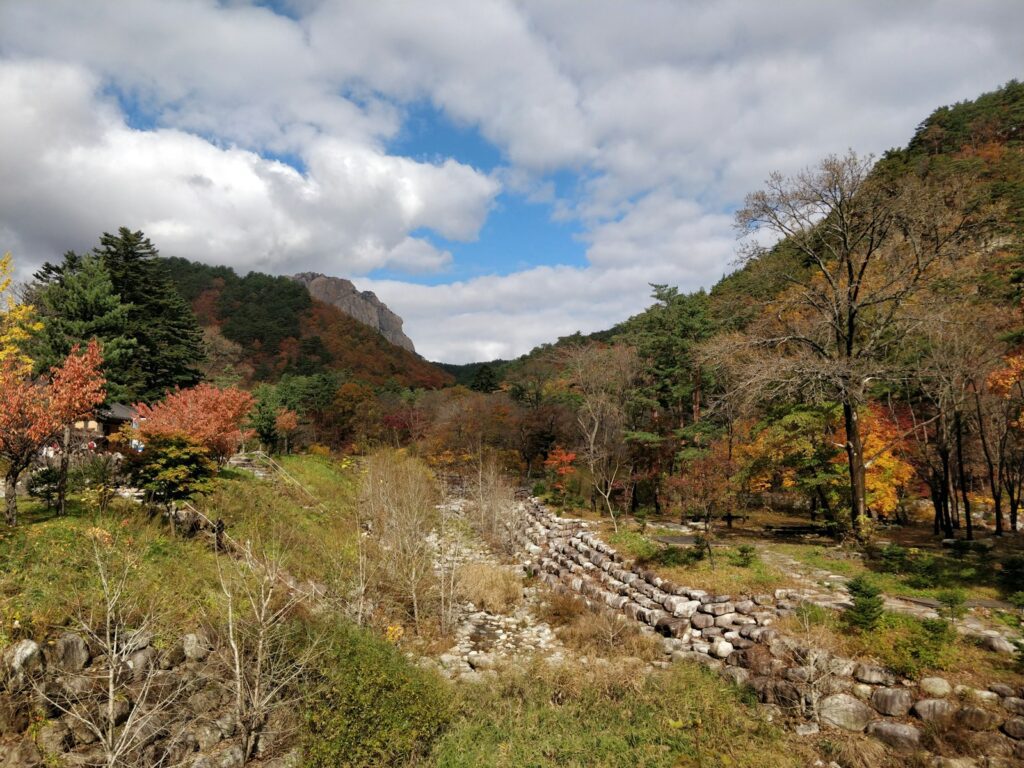
Korean autumns start with a sharper day-night temperature gap from late September, and peak foliage moves south from northern Gangwon at roughly two-week intervals. Naejangsan in Jeongeup (Jeollabuk-do) typically peaks in early November, Seoraksan in mid-October, and Odaesan, Chiaksan, and Jirisan in late October. If a mountain hike feels too much, Seoul’s Namsan and Deoksugung stone-wall walk, Busan’s Dongbaekseom, and the ginkgo-lined alleys of Jeonju Hanok Village still deliver the autumn mood without much effort.
Autumn offers film, jazz and art events. BIFF is announced for October 6–15, 2026, and Jarasum Jazz for October 9–11, 2026. Check the organizers for the relevant dates and venues of the Gwangju Biennale, Seoul fireworks and regional harvest, chrysanthemum or light events before booking lodging.
Autumn cuisine highlights pine mushrooms, jumbo shrimp (daeha), oysters, and soy-marinated crab. Pine mushroom festivals run in Yangyang and Goseong in Gangwon every September, Seosan in Chungnam holds its jumbo shrimp festival in October, and oyster season starts on Ganghwa Island from November. Pairing foliage with cuisine works especially well along the Gangwon east coast.
Korea Four Seasons Travel in Winter (Dec–Feb): Ski Resorts and Ice Festivals
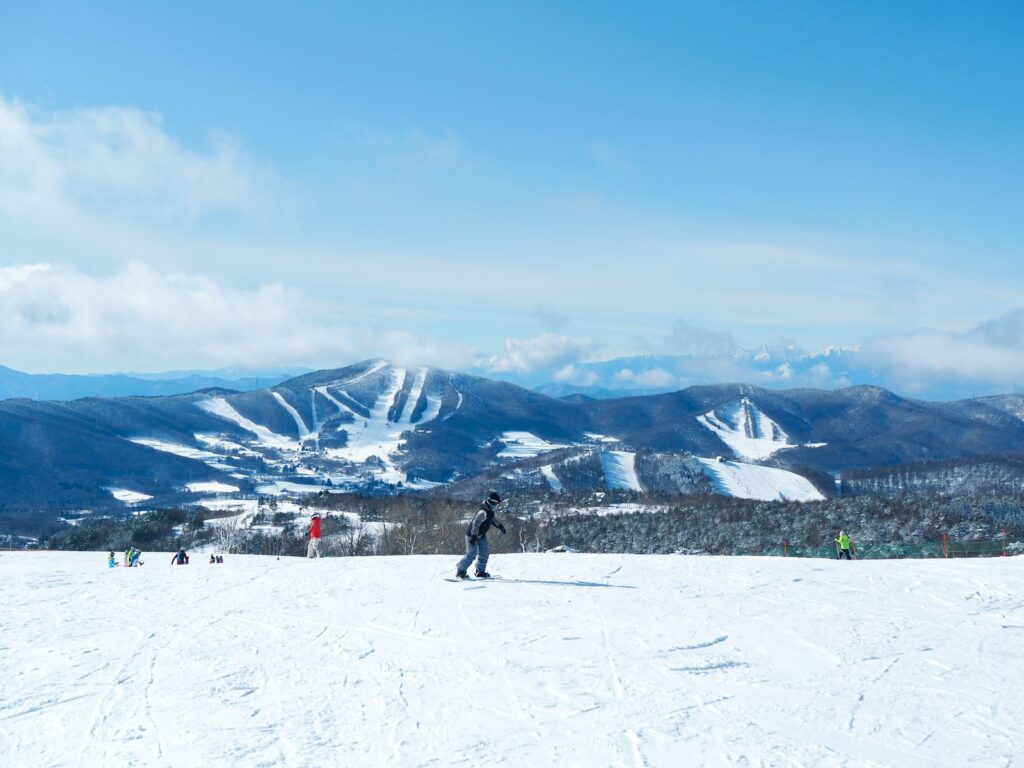
Winter in Korea runs from mid-December to late February with sub-zero temperatures, and the Gangwon mountain region enjoys plenty of both natural and machine-made snow. Major ski resorts include Yongpyong, Phoenix Park, High1, Vivaldi Park, and Alpensia, while Konjiam and Jisan are the closest day-trip options from the metropolitan area. Beginners often find Vivaldi Park and Phoenix Park easier thanks to wide slopes and well-organized lessons, and families gravitate to Alpensia and Welli Hilli, where snow sled parks and kids’ lessons run alongside the main slopes.
Consider winter events such as Hwacheon Sancheoneo, Pyeongchang Trout, Inje icefish-related events and Chilgapsan Ice Fountain Festival. Check each organizer’s season-specific dates and fishing, performance or snow-play program. Ice conditions and weather can change or cancel operations; do not assume all events run together. In Seoul, check the season’s lantern-festival and Seoul Plaza rink schedules.
Winter foods center on street snacks like fish cakes, hotteok, roasted sweet potatoes, and bungeoppang, alongside warming stews like budae jjigae, gamjatang, and gomtang. Yeongdo and Gwangalli in Busan are home to the original fish cake shops and make a strong gourmet stop, and Sokcho Central Market’s sweet-and-spicy chicken (dakgangjeong) and abai sundae are equally beloved winter menus in Gangwon.
Korea Four Seasons Travel Booking Tips: Flights, Accommodation, Domestic Transport
Booking timing per season directly affects satisfaction and budget. Here are the most frequently asked booking questions for Korea four seasons travel.
Q. When should I book flights for the best price?
Compare actual flight totals, baggage and refund conditions for your route. There is no guaranteed cheapest 8–12-week booking window or 30–40% connection discount. For blossom, holiday and year-end trips, set price alerts after choosing dates and check accommodation cancellation terms.
Q. Which season fills up accommodation fastest?
Jinhae Gunhangje weekends, Busan Sea Festival weekends, Pyeongchang and Gangwon ski-season weekends, and Hwacheon Sancheoneo weekends sell out first. Guesthouses and hanok stays book up even faster than hotels, so reserve traditional stays 2–3 months ahead if a hanok experience is the goal.
Q. Do I really need a car for Korea four seasons travel?
Cities such as Seoul, Busan, and Jeonju are well covered by subway and bus. However, a rental car is far more practical for the Gangwon east coast, Jeju Island, southern coastal drives, and winter ski-resort access. Most international visitors can use an International Driving Permit, though some rental companies only accept countries with reciprocal license agreements, so confirm before arrival.
Korea Four Seasons Travel: How to Catch the Most Authentic Korean Scenery
The charm of Korea four seasons travel is not only about varied landscapes. Families sharing kimbap and makgeolli under spring cherry blossoms, nighttime concerts on Haeundae’s summer sands, maple shadows along hanok village eaves in autumn, and people grilling freshly caught sancheoneo on Hwacheon’s winter ice — every scene comes with daily life moving through it, and that is the true draw of traveling in Korea.
For a first visit, narrowing the trip to a single season such as spring (cherry blossoms) or autumn (maple foliage) and planning a 5–7 day itinerary tends to deliver more satisfaction, then expanding to summer beaches or winter ski and festival trips on the next visit. Choosing one signature scene and exploring one or two anchor cities deeply usually leaves a stronger impression than trying to compress four seasons into a single trip.
K-Name Studio: Create your perfect Korean name based on your personality and style.
What’s My K-Beauty Personal Color?
WeBring Service : Provides personalized services to foreigners living in Korea
Exclusive offer: Introducing foreign car rental in Korea, WeBring-SoCar
- Korea Festival Schedule: Year-Round Guide to Cherry Blossoms, Fireworks, and Ice Festivals
- Korea Four-Season Travel Guide: Cherry Blossoms to Skiing Adventures
- Korea Seasonal Travel Guide: Best Spring Summer Fall Winter Destinations
- Korea Festivals – 13 must-see festivals for foreigners
- Korea Autumn Food Festivals 2026: Namdanghang Shrimp & Bonghwa Songi Dates
Last updated: 23 September 2026
Prices, opening hours and transport schedules change with the season and the operator. Check the official channel again before you go.
WeBring operates its own Korea tour and vehicle services. The following is a promotion for that service.
Explore Korea's mountains — guides in your language
Courses, transport and seasonal tips for 30 mountains, from Bukhansan to Hallasan, available in 11 languages. Pick up essential travel Korean and find events for the global community, too.