
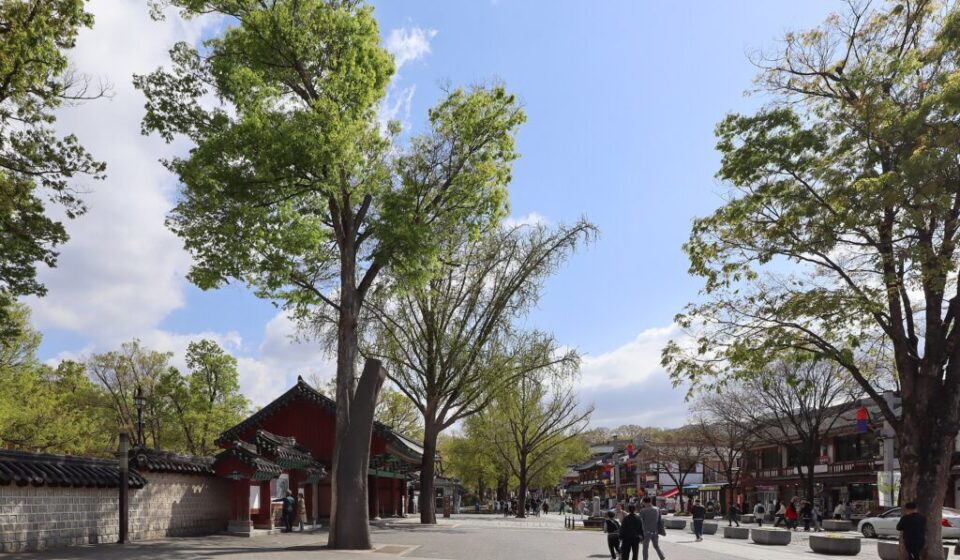
Jeonju Gyeonggijeon Hyanggyo Walk: Quiet Korean Heritage Course
The Jeonju Gyeonggijeon Hyanggyo walk is a 2-hour quiet course that bypasses the busiest part of Jeonju Hanok Village. The route links Gyeonggijeon, the shrine that preserves the royal portrait of Joseon’s founder King Taejo (Yi Seong-gye), with Jeonju Hyanggyo, the regional Confucian academy that taught generations of students. This guide covers admission, opening hours, walking distance, and the back-alley route between the two sites — so you can experience a calm, traditional side of Jeonju without bibimbap restaurants and souvenir alleys.
Jeonju Gyeonggijeon Hyanggyo Course at a Glance
Before you start, glance through the key facts. Linked on foot, the three points form a flat 2-hour course.
| Site | Hours | Adult Fee | Time on site |
|---|---|---|---|
| Gyeonggijeon | Mar–Oct 09:00–19:00 / Nov–Feb 09:00–18:00 (closed Mon) | KRW 3,000 (free with hanbok) | 60–90 min |
| Jeonju Hyanggyo | 09:00–18:00 (open daily) | Free | 30–40 min |
| Gyeonggijeon → Hyanggyo (walk) | — | — | ~10 min (550m) |

Gyeonggijeon: The Shrine of King Taejo’s Royal Portrait
Gyeonggijeon was first built in 1410, the 10th year of King Taejong’s reign, to enshrine the official portrait (eojin) of King Taejo, founder of the Joseon dynasty. The choice of Jeonju is no accident — Jeonju is the ancestral home of the Yi royal house. The original hall burned during the Imjin War and was rebuilt in 1614 under King Gwanghaegun. The current building has a 3-by-3-bay maetjibung (gabled) roof and exposes raw timber without dancheong (painted decoration), giving it a notably austere look.
Twenty-six royal portraits were made during the Joseon dynasty, but only one survives today — the very portrait that Jeonju protected when officials evacuated it during the Imjin War. The complex also includes Jogyeongmyo, the shrine for the Jeonju Yi clan’s progenitor, and Yejong Taesil, a stone reliquary holding the placenta of King Yejong. Together they make the Jeonju Gyeonggijeon Hyanggyo walk feel less like a tourist stop and more like a slice of dynastic memory.
Admission is KRW 3,000 for adults, KRW 2,000 for teens, KRW 1,000 for children, and free for Jeonju residents. Wearing hanbok grants free entry, which is why hanbok rental shops near the village are popular. The bamboo-grove path inside the compound stays cool even in summer, and the front plaza faces Jeondong Cathedral, putting Eastern and Western architecture in the same field of view. Visit right at the 09:00 opening for the lightest crowds.

Jeonju Hyanggyo: A Living Confucian Academy
Jeonju Hyanggyo dates back to King Gongmin of Goryeo and was moved to its current location in 1398, the 7th year of King Taejo’s reign. As a regional Confucian academy, it consists of Daeseongjeon (the main hall enshrining Confucius, his disciples, and 18 Korean Confucian sages) and Myeongnyundang (the lecture hall where students were taught). Its scale and preservation rank it among the best in Korea, and it was designated Historic Site No. 379 in 1963.
You enter through the outer (Oesammun) and inner (Naesammun) gates in turn. Myeongnyundang has a wide front yard often used for events, while Daeseongjeon is usually closed inside outside ceremonial periods — but the wooden joinery and proportions are clearly visible from outside. Spring brings red and white plum blossoms, and autumn lights the grounds with ginkgo gold, so the same Jeonju Gyeonggijeon Hyanggyo walk looks completely different across seasons.
The academy still hosts traditional etiquette classes and Confucian rites today. The Seokjeondaeje rites are held every spring and autumn; depending on your visit window, you may catch officials in traditional dress preparing the ceremony. Entry is free, hours are 09:00–18:00, and food and smoking are prohibited inside. Keep your voice down near Daeseongjeon.
Walking Route: From Gyeonggijeon to Hyanggyo
The walk between Gyeonggijeon’s main gate and Jeonju Hyanggyo runs about 550m and takes roughly 10 minutes. Exit Gyeonggijeon, turn left, and you will be on Taejo-ro. Hanok walls line the lane, and tiled roofs layer over each other in the background. Push deeper into the alleys past Taejo-ro and the commercial shops thin out; residential hanok houses take over, marking the boundary between the “tourist zone” and the “residential zone” of Hanok Village.

Because real residents live along this stretch, you can see that Jeonju Hanok Village is not a theme park. Once you reach Hyanggyo-gil, a stone-walled lane leads directly to the academy — the quietest segment of the entire Jeonju Gyeonggijeon Hyanggyo walk. Earlier in the morning, photographers are scarce and you can capture clean alley shots without crowds.
- 10:00 start — Buy a Gyeonggijeon ticket, tour the main hall, Jogyeongmyo, and Yejong Taesil (60–90 min)
- 11:30 transit — Walk Taejo-ro and Hyanggyo-gil alleys (10–15 min)
- 11:45 arrive — Tour Myeongnyundang and the Daeseongjeon exterior at Jeonju Hyanggyo (30–40 min)
- 12:30 wrap — Lunch at a kongnamul-gukbap (bean sprout soup) shop or the makgeolli alley
For an afternoon extension, add Jeondong Cathedral and Pungnammun Gate plaza. The course is mostly flat, so it is easy on any age group.
Practical Info Before You Go
Hours change by season. Gyeonggijeon opens 09:00–19:00 from March through October and 09:00–18:00 from November through February, and is closed every Monday. Hyanggyo runs 09:00–18:00 daily, free of charge — a useful anchor when planning. The free-with-hanbok perk only applies to Gyeonggijeon, so do not rent hanbok solely for Hyanggyo.
Public transit is the easiest option. From Jeonju Express Bus Terminal or Jeonju Station, take a city bus headed to Hanok Village and get off at the Gyeonggijeon-front stop. On weekends and holidays, parking near Hanok Village fills up fast, so driving is not recommended. For the latest event schedule, check the Jeollabuk-do Tourism site and the official Jeonju Hanok Village portal.
The area around Gyeonggijeon and Hyanggyo is packed with kongnamul-gukbap shops and the makgeolli alley, so lunch flows naturally after the walk. To extend your Jeonju trip, see the Jeonju Hanok Village Quiet Route Guide, the Jeonju Family Trip Course, and the Iksan + Jeonju 2-day Course.
FAQ: Jeonju Gyeonggijeon Hyanggyo Walk
Q. How long does the full course take?
Roughly 2 hours: 60–90 minutes at Gyeonggijeon, 10 minutes walking, and 30–40 minutes at Hyanggyo.
Q. Where does hanbok free entry apply?
Wearing hanbok waives the Gyeonggijeon admission. Hyanggyo is free regardless, so there is no extra benefit there.
Q. When are they closed?
Gyeonggijeon is closed every Monday. Jeonju Hyanggyo is open year-round, so plan a Hyanggyo-first route on Mondays.
Image Credits
- Featured image: Photo by Mobius6 / Wikimedia Commons (CC BY-SA 4.0)
- Daeseongjeon: Photo by nachof / Wikimedia Commons (CC BY-SA 2.0)
- Hanok village alley: Photo by Jjw / Wikimedia Commons (CC BY 4.0)
- Gyeonggijeon courtyard: Photo by Mobius6 / Wikimedia Commons (CC BY-SA 4.0)
K-Name Studio: Create your perfect Korean name based on your personality and style.
What’s My K-Beauty Personal Color?
WeBring Service : Provides personalized services to foreigners living in Korea
Exclusive offer: Introducing foreign car rental in Korea, WeBring-SoCar
Explore Korea's mountains — guides in your language
Courses, transport and seasonal tips for 30 mountains, from Bukhansan to Hallasan, available in 11 languages. Pick up essential travel Korean and find events for the global community, too.

