

Exchange Student Preparation Timeline: Flights, Insurance, Docs, Credit Transfer
If you do not lock down your exchange student preparation timeline from the very first month, visas, insurance, and flights tend to collide right before departure and wipe out an entire semester. This article lays out an exchange student preparation timeline month by month from D-12 months to D-day, and finishes credit transfer and dual-degree prep on one page.
Exchange Student Preparation Timeline at a Glance (D-12 Months to D-Day)
The core of an exchange student preparation timeline is the five-step chain: documents → visa → insurance → flight → credit transfer. If one step slips, the next step blocks. A late visa delays ticketing, a late ticket pushes your arrival past the school registration deadline. The table below is the standard timeline for exchange and dual-degree programs at a four-year university.
| Timing | What to do | Notes |
|---|---|---|
| D-12 months | Shortlist 3–5 partner universities, attend your home university’s international office briefing | Recruitment opens at the start of the semester |
| D-10 months | Take or retake language tests (IELTS / TOEFL / JLPT / HSK) | 2-year validity, check score cutoffs |
| D-9 months | Submit application package to your home university, attend department interview | Application form, statement of purpose, transcript |
| D-7 months | Placement confirmed, nominate at partner university | Your home international office sends nomination |
| D-6 months | Main application to partner school + receive course registration guide | Online portal account creation |
| D-5 months | Receive Letter of Acceptance | Core document for visa application |
| D-4 months | Apply for student visa, compare and buy international student insurance | Embassy processing 4–8 weeks |
| D-3 months | Book flights, finalize dormitory | Lowest-fare window |
| D-2 months | Submit pre-approval for credit transfer, attach course syllabi | Pre-approval through your home academic system |
| D-1 month | International driver’s license, credit card limit upgrade, vaccinations | Last-mile work |
| D-2 weeks | Packing, currency exchange, final pickup and accommodation confirmation | Baggage limit 23 kg × 2 |
| D-day | Carry printed passport, visa, LOA, and insurance certificate | For immigration inspection |
Five Things Most Often Missed in an Exchange Student Preparation Timeline
These are the mistakes that keep recurring in post-program surveys from a decade of dispatched students.
- Missing credit transfer pre-approval — courses changed after arrival are not recognized by the home university
- Not checking insurance coverage limits — cheap plans get exhausted by a single emergency room visit
- Visa validity vs. semester end mismatch — visa expires during final exam period
- Mandatory return-ticket rule — some countries require proof of an outbound ticket on entry
- Delayed ARC / residence permit after arrival — fines for missing the 90-day registration deadline
Student Visa Documents — The First Gate in Your Exchange Student Preparation Timeline
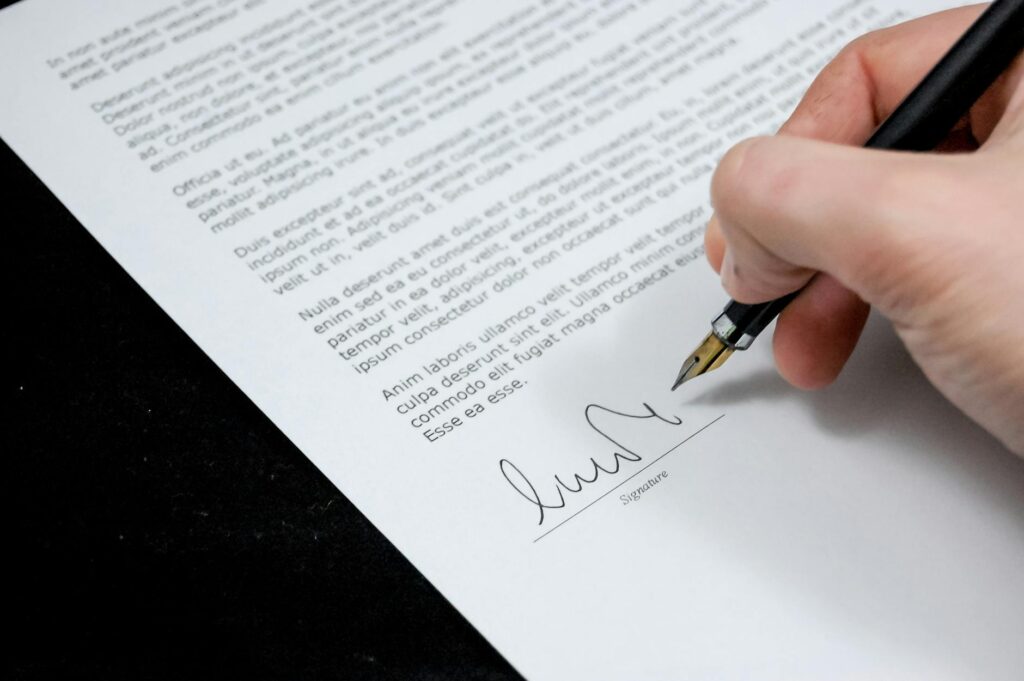
The names differ by country, but student visas everywhere require roughly the same set of documents. U.S. F-1, U.K. Student Route, Japan 留学, German student visa, and China X-2 all rely on the seven core items below.
| Document | Issued by | Validity |
|---|---|---|
| Passport (6+ months remaining) | Passport office | 10 years |
| Letter of Acceptance / DS-2019 / CAS | Partner university | Until semester end |
| Financial proof (balance + transactions) | Bank | 1 month from issue |
| English transcript | Home university registrar | 3 months from issue |
| Passport photo (size varies by country) | Photo studio | Taken within 6 months |
| Visa application fee receipt | Embassy / VFS | Date of submission |
| SEVIS / tuition deposit receipt | Partner university | Until semester end |
Countries that require an apostille or consular legalization (China, Russia, parts of the Middle East) add another 2–3 weeks. If the document organization process feels confusing, check the immigration document organization guide first to nail down the order of originals, copies, translations, and apostille.
International Student Insurance — Mandatory vs. Recommended Is the Key

Insurance in your exchange student preparation timeline starts the same day your visa application starts. Some countries require proof of medical coverage at the visa stage. Insurance comes in three layers.
| Layer | Example | Coverage | Monthly premium (ref.) |
|---|---|---|---|
| Mandatory school plan | U.S. SHIP, U.K. NHS Surcharge | Outpatient + inpatient basics | USD 50–150 |
| International student (home-country plan) | Major insurers in Korea, Japan, etc. | Treatment + belongings + flight delay | USD 25–60 |
| Travel insurance (short-term gap filler) | Short-term policies | 1–2 week gap on arrival | USD 1–3 / day |
Plans capped at USD 80,000 or below burn out after a single emergency surgery. For high-cost destinations like the U.S., Canada, or Australia, target at least USD 250,000 (ideally USD 500,000+) in coverage. If you are an exchange student coming into Korea, the Korea hospital cost and insurance guide explains the reverse direction and helps you size your plan.
Flight Booking Window — The Cost-Optimization Zone of Your Timeline

Flights are cheapest in the 90–120 day window before departure. Inside 60 days the price ladders up, and bookings inside 30 days run on average 1.8× more expensive. For a one-semester or one-year exchange, compare the following options.
- One-way + one-way — full flexibility, fits one-year programs. Countries that require proof of onward travel need extra documentation
- Round trip (open return) — add a return-change option (USD 80–180 fee)
- Student airfare (Student Universe / STA) — extra baggage, waived change fees
- Stopover ticket — 1–3 day layovers can lower the total fare
Checked baggage on U.S. and European routes is typically 23 kg × 2 pieces; many Southeast Asia routes include only one piece free. Buying extra baggage at the airport counter costs 2–3× the online rate, so pre-pay through the airline app before you leave.
Credit Transfer — Pre-Approval, Course Changes, Return Documents
Credit transfer is the most paperwork-heavy stage of an exchange student preparation timeline. It follows the home university’s transfer policy, usually in three steps.
- Pre-approval — submit syllabi of planned courses to your department office before departure to confirm what will be accepted. Usually 5–10 business days
- Re-approval after course changes — if the timetable changes after arrival, email the new syllabi and the change reason to your department within 14 days
- Submit final transcript on return — request the official English transcript from the partner university, then file it with the credit transfer application at your home registrar
Dual-degree programs add another layer. Both schools must align departments, semester counts, and GPA conversion tables for joint degree awards, so review the bilateral agreement during pre-approval. Korean grading (4.5 max) and U.S./U.K. GPA (4.0 max) are normally converted by the department’s official table, with 12–18 credits per semester typically recognized.
Dorm vs. Off-Campus — Housing That Matches Your Timeline
For a single-semester program, dormitories are the efficient choice — move-in day one and small deposits. For one year or more, off-campus and shared housing run 30–50% cheaper per month. If you are an inbound student coming to Korea, the international student housing guide compares dorm, studio, and share-house options that map cleanly onto most destination cities.
Exchange Student Preparation Timeline — D-30 Final Checklist
- 3 passport photocopies, 1 cloud backup
- Letter of Acceptance, visa, and insurance certificate stored as PDF on phone
- International driver’s license issued
- Credit card limit raised, overseas use enabled, one backup card
- Vaccinations per destination guidelines (MMR, hepatitis A, yellow fever where required)
- Roaming plan or local SIM purchased in advance
- Critical medications and English prescriptions (be careful with controlled substances)
- Emergency contacts (embassy, home international office, 24-hour insurance hotline)
- First-week accommodation pickup route confirmed
- Domestic auto-debits paused or delegated to family
If you anticipate a visa extension or extra documents mid-program, avoid having to deal with the home international office or local immigration twice. For Korean D-2 series visa extensions specifically, the D-2 / E-series visa extension documents checklist applies directly.
FAQ — Exchange Student Preparation Timeline
Can I start the exchange student preparation timeline only 6 months in advance instead of 12?
Possible, but the language test, financial proof, and visa schedule all compress. If your language score is already in hand and your family financial proof issues immediately, six months can work — barely. Note that popular partner universities may already be closed for nominations at that point, so check the recruitment notice at your home international office first.
What happens if I leave without pre-approval for credit transfer?
The post-arrival recognition decision goes to the department’s discretion, and rejection rates climb 30–50% compared to pre-approved courses. The risk to your graduation credit count is real — always secure pre-approval.
Can I stack student insurance with credit-card travel insurance?
Yes, you can carry both, but reimbursement is paid only once on an actual loss. Credit card travel insurance usually caps at USD 30,000–50,000 with 7–14 day validity, so a dedicated student insurance plan is mandatory for long programs.
How does the dual-degree preparation timeline differ from a regular exchange?
The core steps are identical, but dual degrees add agreement review, double graduation requirements, and joint ceremony scheduling. Start meetings with the partner department from D-15 months.
Can family handle anything back home after I leave?
Yes. With a power of attorney and certificate of seal prepared before departure, your family can extend student loans, maintain health insurance enrollment, suspend auto insurance, and similar administrative tasks on your behalf.
References
Korean government scholarships and student loan extensions for outbound students are on the Study in Korea portal, and inbound foreign students can search Korean partner universities on the same site.
K-Name Studio: Create your perfect Korean name based on your personality and style.
What’s My K-Beauty Personal Color?
WeBring Service : Provides personalized services to foreigners living in Korea
Exclusive offer: Introducing foreign car rental in Korea, WeBring-SoCar
Living in Korea? You don't have to figure it out alone
Insurance, visas, jobs and hospital interpretation — WeBring supports every step of settling in Korea, in your language.