


The True Cost of International Remittance Has Two Layers
If you want to understand the real structure of international remittance fees, this single guide is enough. When sending money abroad, most people only check the visible transfer fee shown on the app screen (e.g., KRW 3,900 or 5,000) before deciding. In reality, the cost is split into two layers.
- Visible cost: transfer fee / cable (telegraphic) fee / intermediary bank fee / receiving bank fee
- Invisible cost: FX spread (the margin hidden inside the applied exchange rate)
Even when a bank or service advertises “zero fees,” if a margin is added to the exchange rate, you ultimately pay through the rate itself. Wise also warns about this “looks-like-0%-fee but adds-margin-to-the-rate” model. (Wise)
If sending money abroad is new to you, also see Korea International Remittance Guide: Fintech, Banks, Migration Insurance Compared and Overseas Money Transfer Guide for Foreigners. This article focuses on what those guides skip — the FX spread and the total-cost calculation.
1) International Remittance Fee Components: What Exactly Gets Charged?
For bank-based international remittance (especially SWIFT transfers), the following items typically combine.
- Transfer fee: the processing fee charged by the sending bank/service
- Cable fee (telegraph fee): cost related to sending the SWIFT message
- Intermediary/Correspondent bank fee: cost deducted by middle banks on the route
- Receiving bank fee: cost deducted by the receiving bank for processing
KB’s guide content also explains that transfer fee, cable fee, and intermediary fee can occur during international remittance. (KB Think)
In practice, the case where users feel the heaviest “loss” is when intermediary or receiving bank fees are deducted “in transit” from the principal. KB’s Q&A also notes that for inbound transfers from abroad to Korea, the intermediary bank fee is deducted first before the funds arrive, and additional domestic bank fees may then be deducted. (KB Kookmin Bank)
2) OUR / SHA / BEN: The Option for “Who Pays the Fee” Changes the Received Amount
OUR / SHA / BEN options often shown on the remittance screen indicate “who pays the fees.” Related: Foreigner Credit Score Building Guide.
- OUR: the sender is instructed to bear the fees. This does not by itself guarantee the exact credited amount on every correspondent-bank route.
- SHA: sender and recipient share the fees
- BEN: recipient pays (likely deducted from the principal during transit)
This concept is explained the same way on many payment/remittance help pages. (Flywire Help)
Important: Why Some Apps Now Show DEBT/SHAR/CRED Instead of OUR/SHA/BEN

For more details, see Financial Supervisory Service (FSS).
Hana Bank’s notice on the SWIFT message migration (MT → MX) explains that the labels can change: OUR → DEBT, SHA → SHAR, BEN → CRED (representing who bears the fee). (biz.kebhana.com)
Even if you don’t see “OUR,” the labels “DEBT/SHAR/CRED” can mean the same thing in context. Related: T-money Transit Card Complete Guide.

3-1. Mid-Market Rate: Not the Starting Point of International Remittance Fees
According to the Bank of Korea, the mid-market rate is the average exchange rate of the interbank market, and banks then add or subtract a margin from this base to set their customer rates. (Bank of Korea)
That means the mid-market rate (often loosely called “the reference rate”) you see on search engines and the cable/cash rates actually applied when you remit or exchange will inevitably differ. (Bank of Korea)
3-2. Cable (T/T) Rate — The Rate Actually Applied to International Remittance Fees
KB also explains that cable selling/buying rates apply when sending money or trading foreign currency checks. (KB Think) Hana Bank’s glossary defines the cable selling rate as the rate applied when sending money abroad in foreign currency, and the cable buying rate as the rate applied when receiving money in foreign currency. (Kebhana)
To compute the total cost of international remittance, separate the following three buckets.
- Explicit fees (fixed): transfer fee + cable fee
- Deducted fees (variable / uncertain): intermediary + receiving bank fees
- FX spread cost (hidden): difference between reference rate and applied rate
4-1. The 4 Values You Need to Calculate International Remittance Fees
- Reference rate (R_ref): mid-market rate or interbank average (preferably at the same time)
- Applied rate (R_used): the rate actually applied (e.g., cable selling rate when sending)
- Foreign currency amount converted (A_fx): the FX amount actually exchanged out (not the received amount)
- Explicit fees (F): transfer fee / cable fee, etc.
The mid-market concept is “the midpoint between buy and sell rates in the global market,” and Wise describes it as the rate banks use when trading among themselves. (Wise Help)
(Most Intuitive) Calculate International Remittance Fees on FX Basis
FX spread cost (in KRW) = (R_used − R_ref) × A_fx
Example: when sending USD 1,000 abroad with reference rate 1,300 KRW/USD and applied rate 1,310 KRW/USD, the spread cost = (1,310 − 1,300) × 1,000 = 10,000 KRW. This is the “invisible” cost in addition to the explicit fees.
(When Only KRW Amount Is Known) Estimate International Remittance Fees
If you only know the KRW amount sent (P_KRW) and the rates: A_fx ≈ (P_KRW − F) / R_used. Plug A_fx back into the formula above.
5) Real Example: Even With “Zero Transfer Fee,” KRW 10,000 Leaks Through the Rate

5-1. Calculate the Spread (KRW/USD) First
Suppose mid-market = 1,300, applied selling rate = 1,313. Spread per USD = 13 KRW. Citibank Korea publishes its rate sheet, including cable selling/buying rates, that you can compare against the mid-market. (Citibank Korea)
5-2. If You Convert KRW 1,000,000 “By Rate Alone,” What Are the International Remittance Fees?
Convert KRW 1,000,000 ÷ 1,313 ≈ USD 761.6. Spread cost = USD 761.6 × 13 ≈ KRW 9,901. So even with “zero fee,” roughly KRW 10,000 disappears into the rate alone.
6) Total Cost Template Including Intermediary/Receiving Bank Fees
6-1. Total International Remittance Fees (KRW) = A + B + C
- A. Explicit fees: transfer fee + cable fee (e.g., 5,000 + 8,000)
- B. Deducted fees: obtain a route-specific estimate for intermediary and receiving-bank fees. Convert foreign-currency fees to KRW at the comparison rate before adding them to KRW-denominated costs; USD 15–30 is not a universal fee.
- C. FX spread cost: (R_used − R_ref) × A_fx
7) Two Points Foreigners Often Miss When Receiving Money From Abroad to Korea
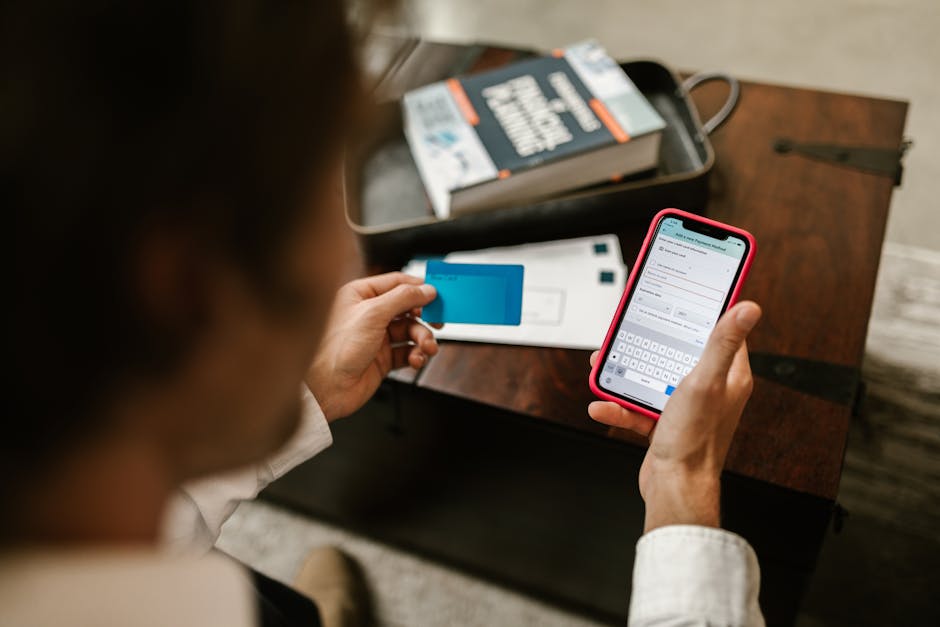
Point 1) When Receiving Into a KRW Account, the Cable Buying Rate Applies
If incoming foreign currency is auto-converted to KRW, the cable buying rate is applied (lower than mid-market), so the received KRW amount is smaller than the back-of-envelope estimate. KB explains the same point. (KB Kookmin Bank)
Point 2) Intermediary Bank Fees Can Be Deducted In Transit
Even if you set OUR (sender pays), an intermediary bank may still take its cut from the principal in some routes. KB’s Q&A also describes this. (KB Kookmin Bank)
8) Practical Tips to Reduce Costs (Within Common Sense and Law)
- Compare the actual applied rate against the mid-market — not just the headline fee.
- Compare providers that actually support your source currency, residence and payment method. A narrow FX spread alone does not establish the lowest total cost; compare the same paid amount and final received amount.
- If an exact amount is required, ask the provider whether it guarantees the recipient amount and covers intermediary/receiving-bank charges. OUR indicates the fee bearer, but is not a universal full-payment guarantee.
- Consolidate multiple small remittances into one larger transfer to dilute the fixed fees.
(Ready-to-Use) Google Sheets / Excel Formula Examples
Set up a sheet with these columns: R_ref, R_used, A_fx, F. Then use:
- FX spread cost =
(R_used - R_ref) * A_fx - Total cost in KRW = F + (R_used – R_ref) * A_fx + B_KRW, where F and B_KRW contain different fee items so nothing is counted twice.
- Effective rate =
P_KRW / received_FX_amount
International Remittance Fees FAQ — Frequently Asked Questions
Q1. What Exactly Is the FX Spread?
It’s the gap between the mid-market rate and the rate actually applied to your transaction (e.g., cable selling rate). It is the bank’s/service’s hidden margin on the rate.
Q2. Why Does Calculating With “Mid-Market Rate” Differ From the Actual Received Amount?
Because banks apply cable selling/buying rates (not the mid-market) and may also deduct intermediary/receiving bank fees in transit.
Q3. When Should I Choose OUR / SHA / BEN?
For tuition or other exact-amount payments, confirm the provider’s guaranteed recipient amount and any correspondent charges. OUR assigns fees to the sender; SHA/BEN assign some or all fees to the recipient, but the actual result depends on the route.
Q4. Why Are “Intermediary Bank Fees” Deducted Suddenly?
SWIFT routes pass through correspondent banks, each of which can deduct its fee from the principal in transit, even if the sender selected OUR.
Q5. What Rate Applies When Receiving Foreign Currency Into a Korean KRW Account?
The cable buying rate applies, which is lower than the mid-market — meaning the KRW credited to your account is smaller than a “mid-market” calculation would suggest.
Q6. If “Zero Fees,” Is It Really Free?
No. The fee is usually baked into the exchange rate as the FX spread. To see real cost, compare the applied rate to the mid-market and quantify the spread.
K-Name Studio: Create your perfect Korean name based on your personality and style.
What’s My K-Beauty Personal Color?
WeBring Service : Provides personalized services to foreigners living in Korea
Exclusive offer: Introducing foreign car rental in Korea, WeBring-SoCar
Overseas remittance fee — provider comparison (KRW 1M to USD example)

| Provider | Transfer fee | FX spread | Total cost (KRW 1M) |
|---|---|---|---|
| Wise | KRW ~7,500 | 0.4–0.6% | ~KRW 12,500 |
| Toss Bank Foreign Transfer | KRW 0 | 0.5–1.0% | ~KRW 7,500 |
| SC First Bank online | KRW 5,000 | 0.7–1.2% | ~KRW 14,500 |
| KEB Hana online (50% off) | KRW 4,000 | 0.6–1.0% | ~KRW 12,500 |
| KB Bank branch | KRW 15,000 | 1.5–2.0% | ~KRW 32,500 |
On large transfers (KRW 5M+), the FX spread differential dwarfs the transfer-fee differential. KB Bank branch costs roughly 4× Wise on a KRW 1M transfer, and the gap widens on bigger amounts.
Overseas remittance fee — when each provider wins

- Wise — best transparency; verify mid-market rate; ideal KRW 100K–10M one-off transfers
- Toss Bank Foreign Transfer — best for Korean residents; zero transfer fee + competitive spread
- SC First Bank online — strong for Korean residents who already bank with SC
- KEB Hana online with 50% discount — promotional periods can match Toss
- Traditional bank branch — only when receiving end requires SWIFT details and online options aren’t feasible
Overseas remittance fee — common foreigner traps
- Comparing only transfer fees — ignoring FX spread is the single biggest cost mistake
- Receiving-end fees — many US/EU banks charge USD 10–25 to receive SWIFT transfers
- Currency hop — KRW → USD → EUR routes pay spread twice; direct KRW → EUR (where supported) saves significantly
- Sending KRW vs sending USD — sending in destination currency usually cheaper; verify the spread direction
- Year-end limits — Korean residents have annual remittance caps (USD 50K personal); plan large transfers across calendar years if needed
Overseas remittance fee — decision tree
- Under KRW 500K, monthly: Toss Bank (zero fee + decent spread)
- KRW 500K–5M, occasional: Wise for transparency, Toss if Korean-resident-only routes
- KRW 5M+, one-off (apartment deposit return, etc.): compare Wise vs SC First / KEB Hana online with promotion; check receiving-end fees
- Recurring salary repatriation: KEB Hana with employer-discount partnership often best
K-Name Studio: Create your perfect Korean name based on your personality and style.
What’s My K-Beauty Personal Color?
WeBring Service : Provides personalized services to foreigners living in Korea
Exclusive offer: Introducing foreign car rental in Korea, WeBring-SoCar
- International Remittance Korea: Your Guide to Sending Money Abroad
- Foreign student bank account in Korea: A Complete Guide
- Korea Overseas Remittance Guide: Fintech vs Bank Fees and Tips for Foreigners
- Opening a bank account in Korea: Start your financial journey (1 of 2)
Last updated: 22 September 2026
Rules, fees and procedures can change over time. Before an important decision, check the latest guidance from the relevant authority.
WeBring operates its own services for foreign residents in Korea. The following is a promotion for those services.
Living in Korea? You don't have to figure it out alone
Insurance, visas, jobs and hospital interpretation — WeBring supports every step of settling in Korea, in your language.