

Korea Overseas Remittance Guide: Foreigner Fintech, Bank, Emigration Insurance Comparison

Korea overseas remittance is a financial topic every foreigner must understand before living long-term in Korea or preparing to emigrate. Whether you need to send living costs to a home-country account, move overseas funds into Korea, or transfer assets before permanent residency, mastering Korea overseas remittance and the related financial products helps you cut unnecessary fees and avoid legal hurdles. This guide covers remittance methods for foreigners, the core of emigration insurance, currency exchange know-how, and bank account management tips in one place.
Korea Overseas Remittance Methods: Bank vs Fintech Comparison

How to Use Fintech Remittance Services
In the past, you had to fill out a bank counter form and accept high fees for every transfer. Today, fintech apps and internet banking let you handle Korea overseas remittance at much lower cost. Leading fintech remittance services include Toss, WireBarley, Wise (formerly TransferWise), and Remitly. Each service has its own fee structure and FX preferential conditions, so compare them based on your situation.
Internet Banking Transfers from Korean Commercial Banks
Traditional banks such as KB Kookmin, Shinhan, Hana, and Woori also support overseas remittance through internet and mobile banking. You typically need a digital certificate, security card, or OTP, and per-transaction limits may apply. Fees can be higher than fintech options, but their reliability makes them the preferred choice for large transfers.
Korea Overseas Remittance Limits and Required Documents
Under FX regulations, transfers above USD 50,000 per person per year require additional supporting documents such as proof of income (Korea Customs Service FX declaration guide). You must accurately state the purpose of the transfer (tuition, living costs, investment, etc.); exceeding limits may trigger reporting to the National Tax Service. Always enter the recipient’s IBAN, SWIFT code, bank name, and address correctly to avoid errors.
Emigration Insurance: Protecting Assets and Health Before You Move
What Is Emigration Insurance?
Emigration insurance is a comprehensive policy designed for individuals or families preparing for long-term or permanent relocation abroad, protecting against asset loss, legal costs, and health-related issues. It is offered by immigration-focused insurers and major property-and-casualty companies, and it addresses risks tied to disposing of Korean assets and settling in the destination country. While not mandatory, many emigrants consider it because of the size of cross-border asset moves and local settlement risk.
Key Coverage in Emigration Insurance
- Incidents during remittance: partial compensation for theft or fraud occurring during withdrawal, currency exchange, or transfer
- Initial overseas medical costs: a rider that covers early medical expenses before local health insurance kicks in
- Legal dispute expenses: attorney fee support for litigation arising from business investments or contractual issues abroad
- Death and accident coverage: payout for death or disability caused by accidents in the destination country
Not every product covers all of these items, and contract terms vary widely. Because destination-country laws and Korean financial rules can interact in complex ways, consulting a specialized planner is recommended. Reading up on foreigner travel insurance in Korea also helps if you have short-term stays in the picture.
Korea Overseas Remittance Essentials: Bank Account Opening and FX Tips
How Foreigners Open a Korean Bank Account
To open a Korean bank account as a foreigner, you need your passport, Alien Registration Card, and in some cases proof of address. Visiting a large commercial bank branch and asking for an English-speaking counter makes the process smoother. After opening the account, you can apply for internet banking, mobile banking, and the Korea overseas remittance feature as add-ons.
Cutting Korea Overseas Remittance Costs with Preferential FX Rates
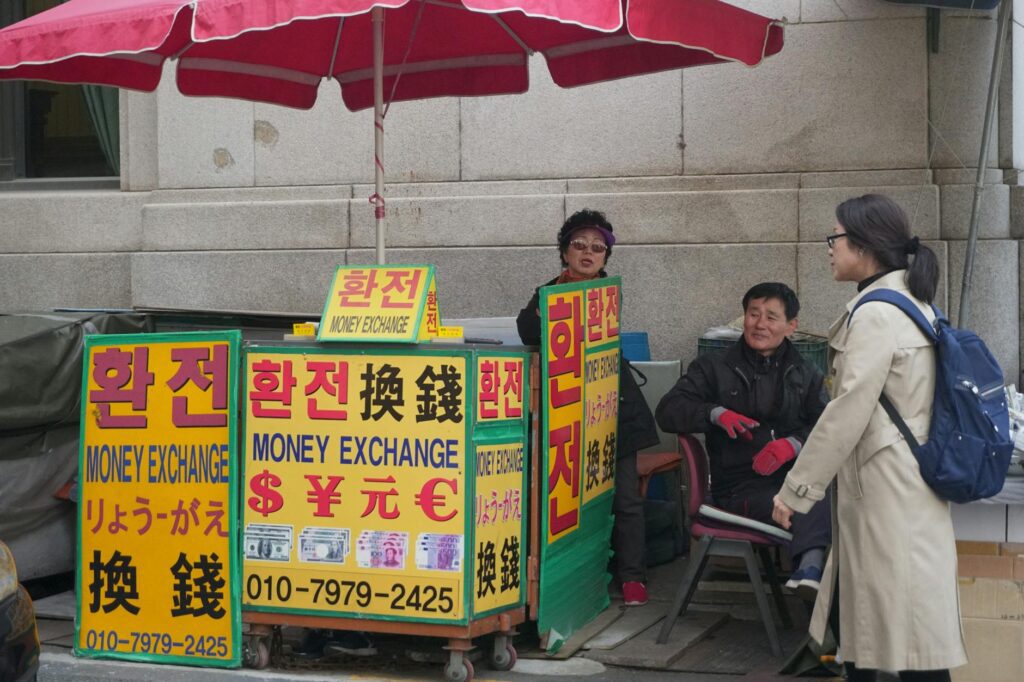
If you remit overseas frequently or exchange cash often, taking advantage of preferential FX rates can dramatically reduce costs. Banks routinely offer 70–80% fee discounts for online currency exchange. Airport exchange counters are expensive, so it’s better to exchange at downtown branches in advance or use a fintech app. If you also make many overseas card payments, picking up on overseas card payment tips and a card with under 1% foreign transaction fees is a clear win.
Korean Financial Products for Long-Term Foreign Residents

Savings, Term Deposits, and Fund Investments
If you live in Korea long-term, you can earn interest through Korean bank savings or term deposits, and most stock and fund investments are open to foreigners with an Alien Registration Card. However, if you plan to emigrate, account opening may be restricted, so check with your bank in advance. If you have dependents or a spouse, family-type insurance products are also worth considering. Signing up for foreigner auto insurance in Korea is another key piece of financial preparation for long-term residents.
Severance and Salary Remittance Procedures
Foreign workers often need to process severance pay or savings via Korea overseas remittance when returning home after working in Korea. Banks may request a severance statement or employment certificate, and large sums are reported to the authorities. Understanding tax and FX rules ahead of time keeps your return trip smooth. Long-term international students should plan finances together with student insurance options.
Korea Overseas Remittance: Key Takeaways
Korea overseas remittance and specialized financial products such as emigration insurance are essential territory for long-term foreign residents. From basic account management to large-scale asset moves and permanent emigration prep, the process involves many moving parts. The good news is that the rise of fintech remittance services and the diversification of emigration insurance products make these steps far easier than they used to be.
For short tourism or brief stays, a simple remittance app is enough; for long-term residence or immigration plans, however, designing the full picture with an insurance planner or a bank PB advisor is the smart move. By learning the rules in advance and preparing documents accurately, you can cut unnecessary fees and avoid legal hurdles, freeing you to focus on study, work, and life in Korea.
Financial Design for a Long Stay: Arriving and Leaving
What makes more difference than shaving transfer fees is how you design the flow of money. Separating what you earn in Korea, what you send home and what you leave behind removes the decision from every single transfer.
- Separate regular transfers from lump sums. Fix monthly living-cost transfers to the lowest-fee channel, and compare afresh for large amounts such as a returned deposit or severance.
- Exchange rates are not forecastable. Sending on the same day each month converges on the average rate. Trying to time it usually costs more than it saves.
- Compare on the amount received, not the fee. For the same amount in the same currency, compare what actually lands — the exchange rate margin frequently exceeds the fee.
- Decide what stays in Korea. Deposit returns, severance and tax refunds arrive later, so do not empty the account early.
As departure nears, the order matters: cancel direct debits → confirm final incoming payments → transfer → close the account. Closing first leaves you with no way to receive what arrives afterwards. The full checklist is in our pre-departure admin guide.
Limits and Documentation: What Changes at Larger Amounts
Small transfers are simple, but banks verify the source of funds as amounts grow. Knowing this in advance prevents the surprise.
- Annual cumulative totals apply. It is not only the size of one transfer; the total sent during the year can be the reference.
- Documentation by source — withholding receipts or payslips for salary, retirement income documents for severance, the lease and deposit records for a returned deposit.
- Resident or non-resident status changes the requirements. If you are leaving, tell your bank and confirm the procedure.
- Designated foreign exchange bank — certain transactions must go through a designated bank. Ask your main bank.
One thing to be clear about: do not split an amount across transfers to stay under a threshold. Totals are tracked cumulatively, and deliberate structuring is itself a problem. Assembling the documents and sending it normally is always faster.
Building Savings in Korea: Deposits and Pensions
Focusing only on transfers means missing the options for holding assets in Korea. For a longer stay they are worth evaluating.
- Time deposits and installment savings — generally available with a residence card. Design them so maturity falls inside your period of stay; early termination forfeits the contracted rate.
- Foreign currency deposits — hold funds in your home currency and avoid exchange rate exposure. Compare the conversion cost against the interest rate.
- National Pension — if you are enrolled, contributions come out of your pay. Whether a lump-sum refund applies on departure, or whether aggregating periods toward your home pension under a social security agreement serves you better, depends on nationality. Check individually with the National Pension Service (1355).
- Retirement pension (IRP) — severance transfers here as a rule. Confirm with both your employer and the pension provider whether a departure exception applies to you.
Investment products carry the risk of losing principal and sit outside the scope of this guide. Where you need to decide, get the institution’s explanation in writing, and do not buy a product you do not understand. Signing Korean-language terms you cannot read is the most dangerous option available.
Frequently Asked Questions
I send money home regularly. Is there a cheaper way?
If it is the same amount to the same person each month, saving the recipient as a favorite and using a scheduled transfer removes both input errors and time. For smaller amounts, specialist remittance providers usually beat banks — but cost varies with how the money is received (bank deposit or cash pickup), so compare on the recipient’s side.
One caution: avoid informal exchange or transfer services offering unusually good rates. Sending through unregistered operators risks funds being frozen or your being drawn into criminal proceedings, with little recourse when something goes wrong.
Do I need to declare money received into Korea?
Receiving is also a foreign exchange transaction, so verification applies depending on amount and purpose. A clear reason — a student receiving tuition from a parent — is usually straightforward, but the bank may ask about the purpose and your relationship to the sender.
Worth having ready: the sender’s details and proof of the relationship — family documents for a relative, a tuition invoice for school fees. Money that lands without an explainable source can have its withdrawal delayed.
K-Name Studio: Create your perfect Korean name based on your personality and style.
What’s My K-Beauty Personal Color?
WeBring Service : Provides personalized services to foreigners living in Korea
Exclusive offer: Introducing foreign car rental in Korea, WeBring-SoCar
- Korea Overseas Remittance Guide: Fintech vs Bank Fees and Tips for Foreigners
- International Remittance Korea: Your Guide to Sending Money Abroad
- Foreign student bank account in Korea: A Complete Guide
- Open Bank Account Korea Foreigner The Ultimate Checklist for a Single Visit
Last updated: 22 September 2026
Rules, fees and procedures can change over time. Before an important decision, check the latest guidance from the relevant authority.
WeBring operates its own services for foreign residents in Korea. The following is a promotion for those services.
Living in Korea? You don't have to figure it out alone
Insurance, visas, jobs and hospital interpretation — WeBring supports every step of settling in Korea, in your language.