
Korean Housing Types Comparison Guide: Apartments, Officetels, Goshiwons & Sharehouses

Knowing the Korean Housing Types Comparison is the first step to finding a home that matches your budget and lifestyle. Rent, deposits, sizes, and amenities vary dramatically between apartments, officetels, one-rooms, goshiwons, and sharehouses — and what works for foreign residents depends on your stay length and visa type. Check which Korean housing type fits you best below.
Korean Housing Types Comparison at a Glance (Summary Table)
| Housing Type | Illustrative Monthly Rent | Deposit | Size | Best For |
|---|---|---|---|---|
| Apartment | KRW 800K-2.5M | KRW 10M+ to hundreds of millions | 20-40 pyeong (66-132 sqm) | Families – long-term residents |
| Officetel | KRW 600K-1.2M | KRW 5M-30M | 8-15 pyeong (26-50 sqm) | Single professionals near transit |
| One-room (Wonroom) | KRW 400K-700K | KRW 2M-10M | 5-10 pyeong (16-33 sqm) | Students – early-career workers |
| Goshiwon | KRW 250K-500K | KRW 0-300K | 1.5-3 pyeong (5-10 sqm) | Short stays – tight budgets |
| Sharehouse | KRW 350K-650K | KRW 1M-5M | Private room 3-5 pyeong + shared areas | Cultural exchange – language learners |
The amounts and sizes are illustrative comparison ranges, not measured 2025 averages. Compare current listings with similar area, neighborhood and age, including maintenance charges and separate utilities.
Apartments: The Standard Korean Housing Type for Families
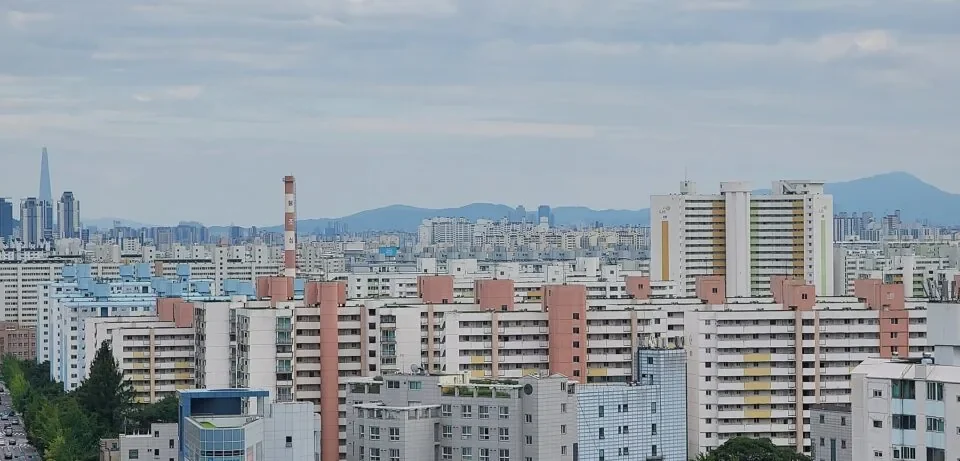
Apartments are the most popular housing form in Korea. They offer generous floor space, on-site management, security systems, dedicated parking, and community amenities like gyms and pools. Complexes in strong school districts also boost the appeal for families with school-age children. Foreign residents settling in Korea with family usually shortlist apartments first.
The downside is high jeonse and purchase prices in competitive markets. Apartments in popular Seoul districts can be hard for foreign residents to secure, and jeonse deposits often reach hundreds of millions of won. Review the foreigner real estate contract guide for apartment lease procedures and how to verify the property registry before signing.
Officetels: Korean Housing Types Comparison Favorite for Single Professionals
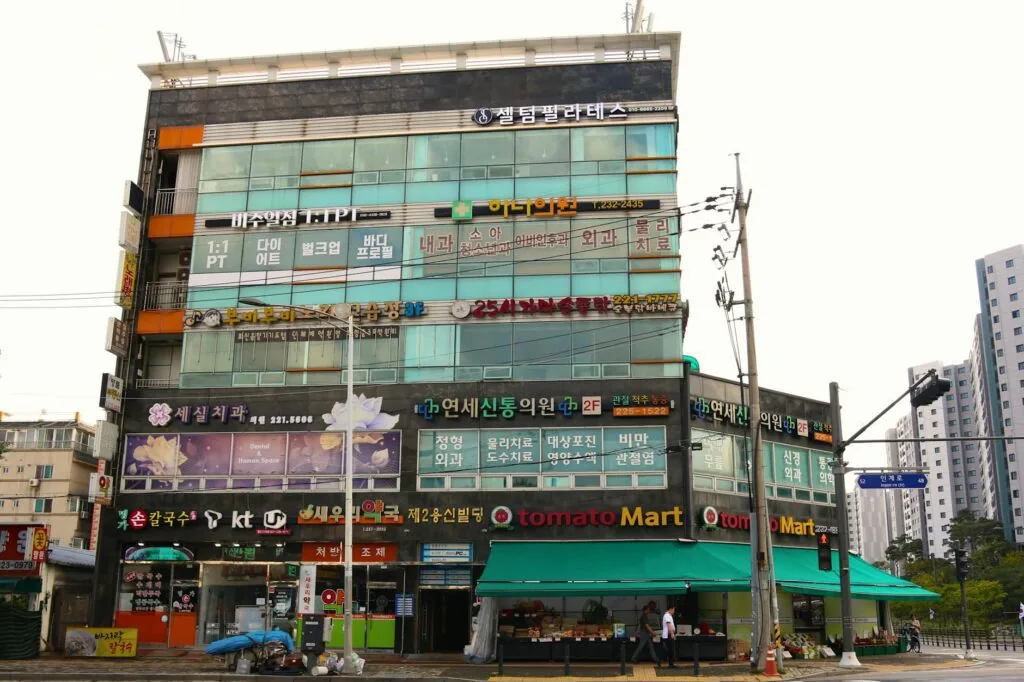
Officetels are mixed-use buildings combining office and residential functions, though in practice most units serve as studio or 1.5-room residences. They cluster in downtown cores and around major subway stations, making commutes convenient — and deposits tend to be lower than nearby apartments. This makes officetels the favorite Korean housing type for single professionals.
Ask which maintenance charges and utilities are included or separately metered. The trade-offs are tight floor space and occasional sound or ventilation issues. Rent can climb sharply by location, so always confirm the maintenance fee breakdown and included options before signing.
Goshiwon: The Ultra-Budget Korean Housing Type
Goshiwon (sometimes called goshitel) is a uniquely Korean housing form that started as study cubicles for civil-service exam takers. Today students, workers, and foreign residents use them to keep monthly costs low. Deposits are often zero or under KRW 300,000, and monthly rent ranges from KRW 250,000 to 500,000 — the lightest option for short-term residents.
The trade-off is the 1.5-3 pyeong (5-10 sqm) room and shared bathrooms and kitchens. Some goshiwons have no windows, so always inspect in person before signing. Goshiwons suit short stays or temporary budget tightening rather than long-term living.
A sharehouse is a home where several residents have their own private rooms while sharing the living room, kitchen, and bathroom. Mixed Korean-foreign households are common, creating natural opportunities for cultural exchange and language practice. Rent is often lower than nearby officetels, so students and early-career workers frequently choose this option.
The downside is potential friction with housemates over routines. Before moving in, verify the operator’s reputation, cleaning cadence, and average resident age range. Compare options on a major Korean sharehouse platform, and read the Sharehouse vs One-Room comparison for a deeper foreign-resident perspective.
One-Room (Wonroom): Independent Living Korean Housing Type

A one-room combines bedroom, kitchenette, and bathroom in a single connected layout, common near universities and subway stations. Fully furnished units with air conditioning, fridge, and washing machine are widespread, lowering the move-in friction. Deposits sit below apartments and officetels, and rent runs KRW 400,000-700,000 — making one-rooms the most common Korean housing type for students and early-career foreign residents.
Do not rush a contract because a listing is said to be in demand. Check the actual area, ventilation, mold, property rights and total costs before deciding.
Four Criteria to Apply When Doing a Korean Housing Types Comparison
- Total budget — Separate the refundable deposit from recurring rent, maintenance and utilities; include deposit financing and moving costs in your budget. Low-deposit options like goshiwons and sharehouses can match a one-room over a full year once rent stacks up.
- Length of stay — Under 3 months suits goshiwons and sharehouses; 1 year or more favors one-rooms, officetels, and apartments.
- Commute distance — Officetels win for Gangnam, Yeouido, or Pangyo workers; apartments deliver better value in outer new towns.
- Privacy preference — If shared spaces feel intrusive, skip goshiwons and sharehouses and choose at least a one-room.
Start any Korean Housing Types Comparison from your budget and daily routine. Families lean toward apartments; single commuters toward officetels and one-rooms; budget-first residents toward goshiwons and sharehouses. Preferences also shift by region — Gangnam favors officetels, university districts favor one-rooms and goshiwons, and provincial cities make apartments more affordable.
Illustrative Housing Choice Scenario
Illustrative scenario: a resident uses temporary housing near a school, then compares one-rooms near a new workplace. Repeated moves add brokerage, transport and contract costs; moving through a fixed sequence of housing types is not necessarily economical.
If you need temporary housing, compare the actual stay length and cancellation terms. Moving and brokerage costs can matter disproportionately for a short stay.
The Size of the Deposit Is the Size of the Risk
Comparing monthly rent alone covers only half the decision. Each housing type asks you to place a different amount of capital with someone else, and the risk of not getting it back scales with it. Choosing a large-deposit contract because the monthly rent looked cheap, then struggling at the end of the term, is the most common way this goes wrong.
| Type | What you place with the landlord | What to watch |
|---|---|---|
| Jeonse | The largest lump sum — potentially close to the property’s sale price | Always check the registry and whether deposit guarantee insurance is available first |
| Wolse with a large deposit | Millions to tens of millions of won | Move-in registration and the fixed date stamp are what actually protect it |
| Goshiwon | Little or nothing | Less money at stake, but often no written contract at all |
| Share house | Mid-sized | Your counterparty is often an operator rather than the owner, which changes the protection structure |
The larger the deposit, the more important it is to complete move-in registration and the fixed date stamp on moving day itself. Without both, a contract alone gives you little priority to assert. Our guide to move-in registration and the fixed date stamp covers the mechanics.
Share houses confuse people the most. Many are sublets where you contract with an operating company rather than the owner, and the key question becomes whether the owner consented to the sublet. Without that consent you have little to stand on if the owner demands possession, so ask one question before signing: “Is there written consent from the owner?”
What to Check in Ten Minutes On Site
Some things differ from the listing photos more than others. Working through the order below at a viewing filters out most problems in about ten minutes.
- Water pressure and hot water. Run the kitchen and bathroom taps at once, and time how long hot water takes to arrive. Older buildings vary enormously.
- Mold and condensation. Look under window frames, inside built-in wardrobes, and along north-facing walls. Fresh wallpaper on one wall only deserves a question.
- Sound. Close the door and stand still for a moment. Footsteps in the corridor or a neighbor’s TV now is what you will hear every day.
- Ventilation and light. Check that the windows actually open and that another building is not pressed right up against them.
- Phone signal. Look at the bars inside the room. Semi-basement and low floors can drop calls.
- What the maintenance fee includes. Confirm whether water, internet and heating are covered in the sentence written into the contract, not in conversation.
Visit once by day and once at night if you can. A quiet alley at noon can become bar noise after dark, and light problems invisible at night show up in daylight. Pressure to decide on the spot (“it’ll be gone tomorrow”) is usually a negotiating technique — don’t give up a second viewing for it.
Extra Hurdles Foreign Tenants Meet
The same listing can come with an extra condition attached for a foreign tenant. Knowing about them in advance makes them easier to handle.
- “We don’t rent to foreigners.” The concern is usually communication and a tenant leaving mid-contract. Showing a residence card with time remaining plus proof of employment or enrollment resolves a good share of these.
- A guarantor requirement. Some landlords ask for a Korean guarantor. If you cannot provide one, negotiating a slightly higher deposit, or finding an agent who handles foreign tenants regularly, is usually faster.
- Contract language. The Korean contract is the original. Even with an English translation, what you sign is the Korean version — ask for interpretation or translation rather than signing something you cannot read.
- Agency fees. Rates are capped. Confirm the amount up front and ask for a cash receipt.
- Who you are signing with. Check the signer’s ID against the owner named in the property registry. If they are acting as an agent, ask for a power of attorney and seal certificate.
Frequently Asked Questions
What happens if I leave before the contract ends?
Early departure is commonly handled by the tenant covering rent and the agency fee until a replacement tenant is found. That is a matter of contract and negotiation rather than a fixed statutory rule, so the surest approach is to write the early-termination terms into a special clause when you sign — especially if your residence status may end before the lease does.
What if my deposit isn’t returned on time?
First, request the return in writing or by text before you move out and keep the record. Moving out and transferring your move-in registration while the deposit is still unpaid can cost you the protection you had, so look into a lease registration order before doing so. If the dispute continues, the Korea Legal Aid Corporation (132) and the housing lease dispute mediation committee both offer routes.
Do I need a written contract for a goshiwon?
Yes. A small deposit is no reason to rely on a verbal agreement — when a dispute arises over refunds or responsibility for the room, there is nothing to point to. Get a document stating the monthly fee, what is included (electricity, internet, meals), the refund basis for leaving early, and the notice period. Where no document is offered, at minimum confirm the same points by text message.
Checklist After Your Korean Housing Types Comparison
- Confirm the brokerage’s official registration with its district office; association membership alone is not the licensing record.
- Cross-check pricing on Zigbang, Dabang, and Naver Real Estate
- Visit in person — inspect noise, ventilation, water leaks, and mold
- Pull the property registry and building ledger (check for liens or seizures)
- Use the standard residential lease contract — capture special terms in writing
- For registered foreign residents, foreigner registration and the residence-change report replace resident registration/move-in reporting. Deposit priority generally requires possession, the applicable registration requirements and a confirmed lease date; this does not guarantee full recovery.
The variety of Korean housing forms means the choice is yours to optimize. Pair this article with the Korean real estate type differences guide and the international student housing guide for a more rounded view of the Korean Housing Types Comparison. Map your situation clearly and you will pick a first home you will not regret.
K-Name Studio: Create your perfect Korean name based on your personality and style.
What’s My K-Beauty Personal Color?
WeBring Service : Provides personalized services to foreigners living in Korea
Exclusive offer: Introducing foreign car rental in Korea, WeBring-SoCar
Legal procedure sources checked September 8, 2026: 외국인등록·체류지 신고 · 대항력·우선변제권
- Korea Real Estate Contract Process: Complete 5-Step Guide for Foreigners
- Finding a Studio in Seoul: Rental Guide for Foreigners on Apartments & Officetels
- Finding a Studio Apartment in Korea: Complete Step-by-Step Guide for International Students
- Korea Housing Guide: Buying, Renting, and Leasing
Last updated: 21 October 2026
Rules, fees and procedures can change over time. Before an important decision, check the latest guidance from the relevant authority.
WeBring operates its own services for foreign residents in Korea. The following is a promotion for those services.
Living in Korea? You don't have to figure it out alone
Insurance, visas, jobs and hospital interpretation — WeBring supports every step of settling in Korea, in your language.

