Gyeongju Donggung Wolji Night View Course: Silla Moonlit Guide
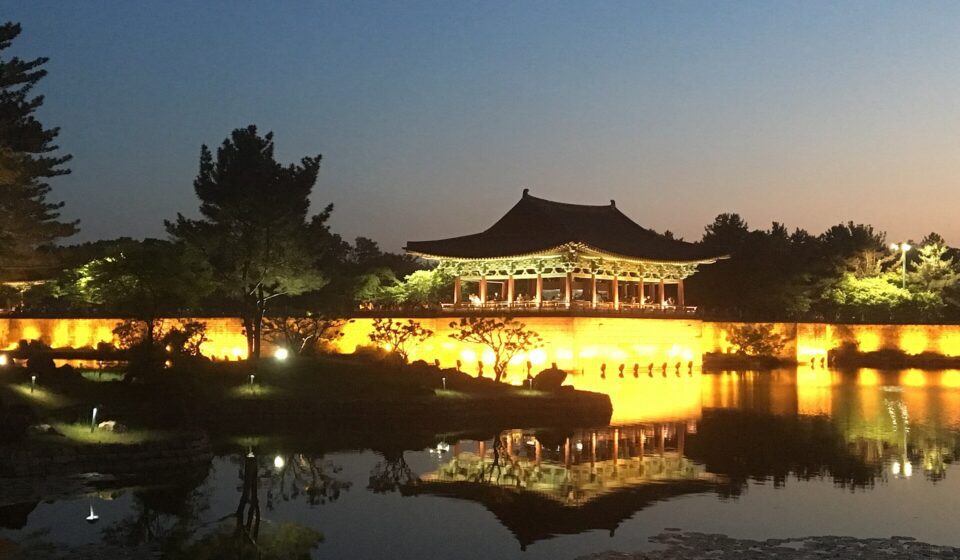
Gyeongju Donggung Wolji night view leaves you feeling like you have visited the same city twice. If daytime Gyeongju is a journey through a thousand years of Silla heritage, the night version of Donggung Palace and Wolji Pond shows the atmosphere of a 1,300-year-old palace in a single still image: pavilions reflected on the pond. We packed entry times, parking, photo points, and dining routes into a 90-minute core loop and a 3 to 4 hour standard course.
Gyeongju Donggung Wolji night view course at a glance
If you plan well, the night course works either as a two-hour highlight or as a full evening tour. Here are the time-block options first, with details for each leg below.
| Course | Total time | Stops | Best for |
|---|---|---|---|
| A. Short core | 2 to 3 hours | Donggung & Wolji → Woljeonggyo Bridge | After-dinner light visit |
| B. Standard | 3 to 4 hours | Dinner → Donggung & Wolji → Cheomseongdae → Woljeonggyo → Gyochon Village | First-time visitors, 2-day trips |
| C. Saturday extended | 4 to 5 hours | Gyeongju National Museum night opening (Mar to Dec, Sat) → Donggung & Wolji → Woljeonggyo | Travelers who also want artifacts |
Why Gyeongju Donggung Wolji night view (Anapji) ranks first
The key here is light and water. Once the lamps along the pond edge come on, three pavilions and the corridor reflect cleanly on the water surface, so you see the same architecture twice, once above and once below. The Gyeongju city tourism office calls Donggung and Wolji “the number one night view spot in Gyeongju.” The site officially recovered its original name “Donggung-gwa-Wolji” in 2011, having been called “Anapji” during the Joseon era.
The historical weight is real too. Donggung and Wolji is part of the Wolseong Belt within the UNESCO World Heritage Gyeongju Historic Areas, the same heritage zone that contains Cheomseongdae observatory. So a single night course covers both the secondary palace of the Silla crown prince and an ancient observatory. For deeper background, see the Korea Tourism Organization official site.
The currently restored pavilions were rebuilt in the 1980s based on excavation results. About 33,000 artifacts unearthed during the dig are displayed in the Anapji Hall of the Gyeongju National Museum, so pairing the museum with the night view in the same day adds depth to the scene. The name “Anapji” comes from a Joseon-era poem about geese and ducks playing on the pond, while the original Unified Silla name “Donggung and Wolji” was confirmed by inscribed pottery found during the excavation.
Gyeongju Donggung Wolji night view basics (hours, fees, parking)
| Hours | 09:00 to 22:00 (open year-round) |
| Last ticket / entry | 21:30 |
| Admission | Adult KRW 3,000 / Youth KRW 2,000 / Child KRW 1,000 |
| Parking | Donggung & Wolji parking lot (Inwang-dong 504-1), free |
| Address | 102 Wonhwa-ro, Gyeongju, Gyeongbuk |
Lines for night entry get longer as you approach closing. To enjoy the view comfortably, arrive at least one hour before the cutoff, around 20:30. Weekend and holiday evenings often fill the parking lot, so keep the Hwangnyongsa Historical Culture Center lot as a backup if you drive. To pair this course with a daytime route, see Charter Bus Group Travel in Korea.
Recommended Course B: ideal first-time route
If this is your first visit, Course B handles the highlights without rushing. From dinner to closing, the route loops Donggung and Wolji as the centerpiece, with Cheomseongdae, Woljeonggyo Bridge, and Gyochon Village in sequence over 3 to 4 hours.
- Dinner (18:30 to 19:30) — Hwangnidan-gil or downtown for a light meal. Build energy before the night walk.
- Donggung & Wolji (19:30 to 21:00) — about 60 to 90 minutes. The key is to see both the blue hour (sky still navy) and the post-lighting period. Use phone night mode and turn off the flash.
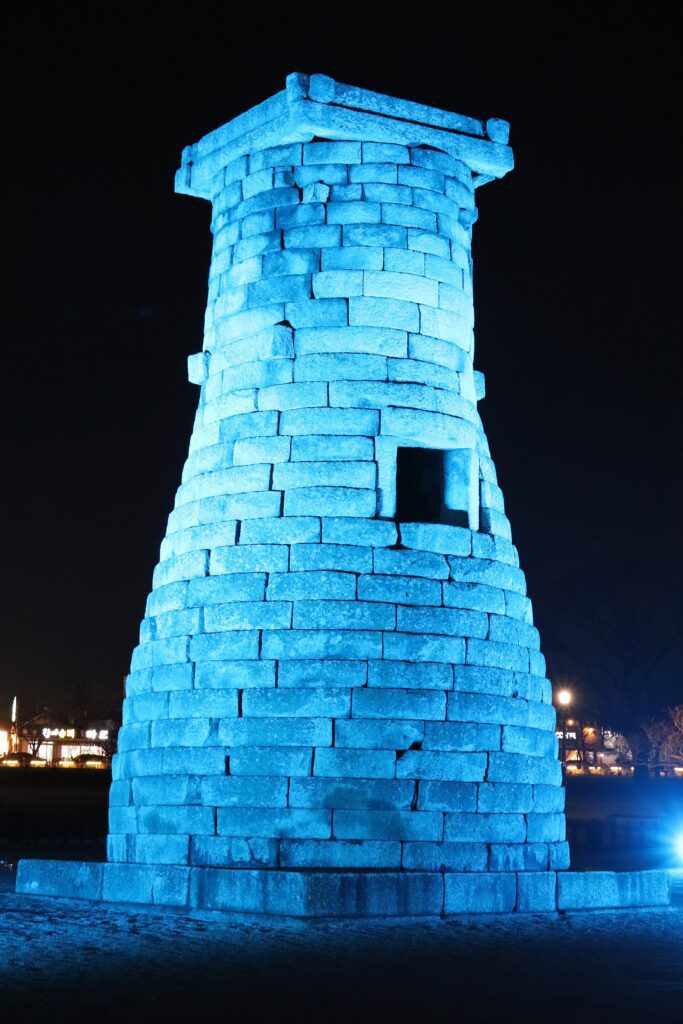
- Cheomseongdae night (21:00 to 21:30) — free, about 15 to 30 minutes. One frame of the lit observatory from the lawn.
- Woljeonggyo Bridge (21:30 to 22:30) — about 40 to 60 minutes. A restored Silla-era bridge that is itself a night-view landmark. Reflections on the river from the bridge top are also worth the stop.
- Gyochon Hanok Village (22:30 to 23:00) — closing walk, about 20 to 30 minutes. Hanok alleys and a cafe street.
Short on time? Course A (Donggung and Wolji 60 to 90 min → Woljeonggyo 40 to 60 min) still captures the essence. On Saturdays you can prepend Gyeongju National Museum night opening (Mar to Dec, until 21:00) as Course C to fold in artifact viewing.
Donggung Wolji photo points and timing (blue hour playbook)
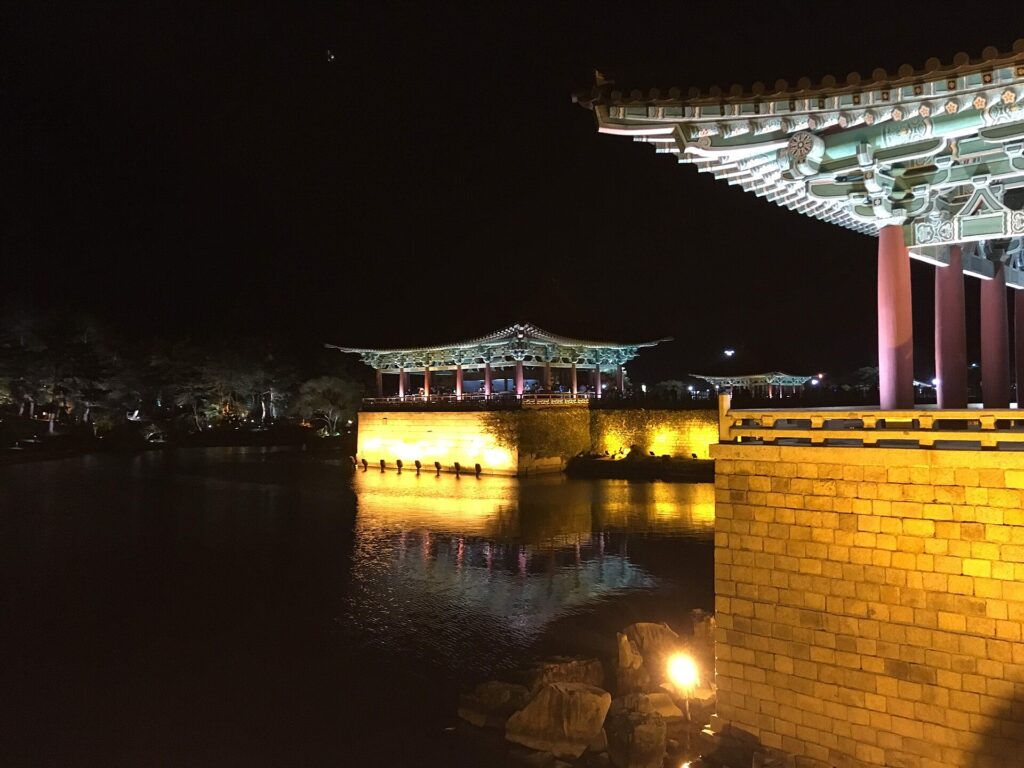
The best slot is 20 to 40 minutes after sunset. The sky has not yet turned fully black, so the reflection plus a graded sky tone form the iconic “single pavilion + blue gradient” composition.
| Point | Location | Recommended shot |
|---|---|---|
| Pavilion 1 frontal | First pavilion clockwise from entrance | Symmetric reflection, 24 to 35 mm equivalent |
| Corridor between pavilions 2 & 3 | Deepest corridor line on the pond | Curved corridor + reflection, longer focal length |
| Far-side path | Walking trail opposite the parking lot | All three pavilions in a single frame |
Shooting tips: tripods are allowed, but on busy corridor sections set up briefly and move on. Phones with night mode auto-stack 1 to 3 second exposures, capturing reflections without blur. On windy nights the surface ripples and softens the reflection, so prioritize Cheomseongdae or Woljeonggyo on those evenings.
Seasons feel different too. Spring (April to May) shows green willows by the pond and mild evening air, friendly for families. Summer (July to August) pushes sunset to around 19:30, so the blue hour shifts late. Autumn (October to November) brings foliage with the lighting and is peak season, so go on weekdays. Winter (December to February) starts blue hour as early as 17:30, brief but with the deepest blue tone of the year. For thinner crowds, weekday slots between 19:00 and 20:00 are typically the calmest.
Gyeongju Donggung Wolji night view: transit and driving
- City bus 10: connects Gyeongju downtown heritage area + Bomun + Bulguksa in one line. From the terminal, first run 06:00 / last run around 21:40 / headway about 20 min.
- Gyeongju Intercity / Express Bus Terminal → Donggung & Wolji: bus 11, 602, 604, 605, or 607. Get off at “Donggung-gwa-Wolji” stop.
- Singyeongju (KTX) Station → Donggung & Wolji: limited-stop bus 700 is fastest, about 20 to 25 minutes.
- By car: dedicated Donggung & Wolji parking is free. If full, use Hwangnyongsa Historical Culture Center or Gyeongju National Museum lots nearby.
- Walking distances: Donggung & Wolji ↔ Cheomseongdae about 600 m, Cheomseongdae ↔ Woljeonggyo about 1.0 km. Walkable in sequence.
After the night gate closes (last entry 21:30, exit by 22:00), city buses end around 21:40, so plan a taxi for the final leg if you rely on transit. Gyeongju downtown taxi base fares are short and reasonable, so finishing at Gyochon Village or Woljeonggyo and taking a taxi back to your accommodation is the most reliable wrap-up.
Foreign visitors can use ride-hailing apps such as Kakao T or UT (Uber-affiliate). For an English address, enter “102 Wonhwa-ro, Gyeongju.” Hwangnidan-gil and Bomun Tourist Complex are both within 5 to 15 minutes of the area, so reverse the loop based on your hotel. If you stay at Bomun, finish at Donggung and Wolji, then return on bus 700 or 11.
Sites to pair with Gyeongju Donggung Wolji night view
Stopping at Donggung and Wolji alone is a missed chance. Several night-friendly spots cluster within 5 minutes by foot or car, with staggered closing times that let you chain by time slot.
| Spot | Type | Hours | From Donggung & Wolji |
|---|---|---|---|
| Cheomseongdae | Heritage / night lighting | 24 hours (lights until 23:00) | About 8 min on foot |
| Woljeonggyo Bridge | Restored hanok bridge / night view | Lit from sunset to 23:00 | About 5 min by car / 15 min on foot |
| Gyochon Hanok Village | Hanok alleys | Always open (shops close around 22:00) | 3 min on foot from Woljeonggyo |
| Gyeongju National Museum | Museum / night opening | Mar to Dec, Saturdays until 21:00 | About 10 min on foot |
| Hwangnidan-gil | Food and cafe street | Restaurants close around 22:00 / cafes until 24:00 | About 5 min by car |
To extend the night course into a sunrise, link an East Sea sunrise spot the next morning. Points like Gampo Port and the Underwater Tomb of King Munmu sit about an hour from Gyeongju by car, so a 1-night-2-day plan slots in naturally. For routes, see Korea Travel Outside Seoul.
For dining, Hwangnidan-gil is the safest bet. It is 5 minutes by car or 15 to 20 on foot from the pond, and it packs Korean set meals, gukbap, pork cutlets, cafes, and desserts into one alley. A clean 30-minute schedule looks like 18:30 to 19:30 dinner, 19:30 to 21:00 Donggung and Wolji, then Cheomseongdae, Woljeonggyo, and Gyochon. Use a Hwangnidan-gil public lot or one of the small private lots in the side alleys.
Gyeongju Donggung Wolji night view FAQ
- Q. Can I visit on a rainy night?
A. Yes. Light rain often improves the surface reflection for moody photos. In heavy rain entry can be restricted, so check the official tourism page before leaving. - Q. What is the exact entry cutoff?
A. Last ticket and last entry at 21:30, exit by 22:00. For a stable visit, aim to be on site before 20:30. - Q. Is it safe with kids?
A. The path is flat and well lit. Just hold small children’s hands on the pond-side walk. - Q. If I can only pick one, Donggung and Wolji or Woljeonggyo?
A. For a first visit, Donggung and Wolji wins. Woljeonggyo is great as a quick add-on, while Donggung and Wolji deserves 60 to 90 minutes to do justice. - Q. Can foreign visitors buy tickets on-site?
A. Yes. Card payment is accepted at the booth, and signage is in Korean, English, Chinese, and Japanese.
Image credits
- Featured image (Anapji Pond Night View): Photo by Serena Kang / Wikimedia Commons (CC BY-SA 4.0)
- Blue hour reflection: Photo by Kouz14 / Wikimedia Commons (CC BY-SA 4.0)
- Cheomseongdae night: Photo by Brinacor / Wikimedia Commons (CC BY-SA 4.0)
- Night pavilion: Photo by Christophe95 / Wikimedia Commons (CC BY-SA 4.0)

K-Name Studio: Create your perfect Korean name based on your personality and style.
What’s My K-Beauty Personal Color?
WeBring Service : Provides personalized services to foreigners living in Korea
Exclusive offer: Introducing foreign car rental in Korea, WeBring-SoCar
Explore Korea's mountains — guides in your language
Courses, transport and seasonal tips for 30 mountains, from Bukhansan to Hallasan, available in 11 languages. Pick up essential travel Korean and find events for the global community, too.