
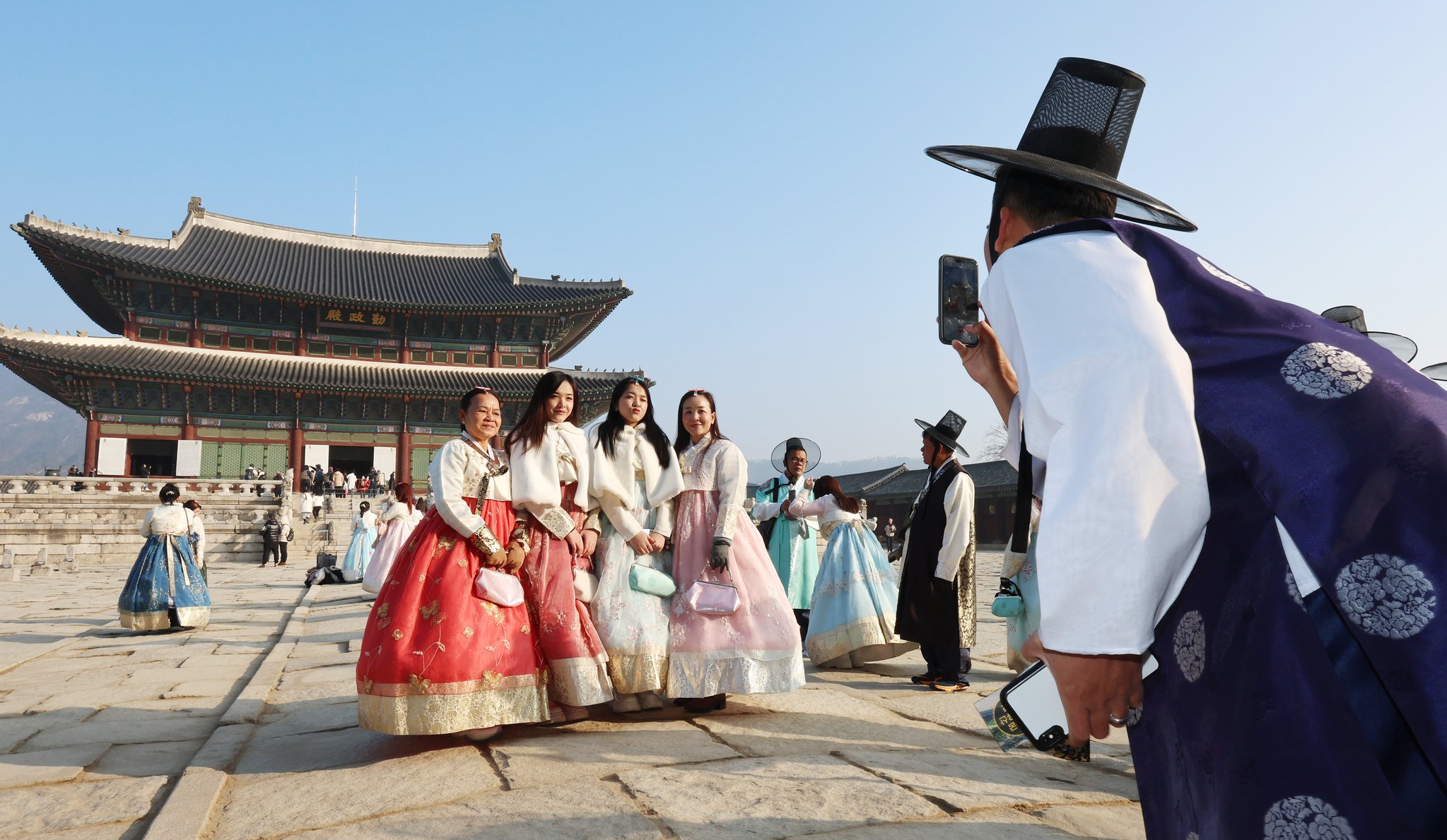

If you’re a foreign traveler visiting Korea, you may have dreamed of strolling through a traditional royal palace in a hanbok at least once. Hanbok is Korea’s traditional attire and a symbolic garment steeped in centuries of history and cultural meaning. Its vibrant yet elegant colors, voluminous skirt lines, and graceful curves exude a captivating charm that makes anyone say, “I’ve always wanted to try it on.” In this blog post, we’ll explore the experience of a hanbok rental and strolling through representative Korean palaces such as Gyeongbokgung and Changdeokgung. Experiencing the historical significance of these palaces alongside the emotional depth of wearing a hanbok offers one of the most authentic ways to connect with Korean culture.
Starting Your Hanbok Rental: Choosing the Perfect Design and Color
Hanbok rental shops are conveniently concentrated around Gyeongbokgung, Changdeokgung, and Changgyeonggung in Seoul, making it easy to stop by a shop before heading into the palace. One of the most exciting parts of the renting process is contemplating which design and color scheme to choose. From soft pastel tones to bold, primary-colored hanboks with striking accents, the variety makes the selection process feel like a mini fashion show.
Women’s hanbok typically consists of a jeogori (jacket) and a voluminous skirt, with more billowing styles offering a grander look. Men’s hanbok usually includes pants, a jeogori, and a vest or a durumagi (overcoat), with color matching playing an important role in creating a refined feel. Couples and friends sometimes coordinate matching hanboks, creating delightfully charming scenes for onlookers as well.
The Charm of Palace Strolls in Hanbok: Immersive Scenery & Stunning Photos
Once you step into a palace wearing hanbok, the architecture takes on a whole new perspective. Many describe it as feeling like they’ve been transported back to the Joseon Dynasty, either as royalty or nobility. Korean palaces are renowned for their architectural harmony, combining colorful dancheong patterns, soaring columns, and graceful tiled roofs that evoke a serene atmosphere. Posing for photos in this setting while wearing a hanbok feels like capturing a moment from a time-travel experience—making these palaces top contenders for bucket-list photo spots.
At Gyeongbokgung, prime photo spots include the expansive courtyard in front of Geunjeongjeon and the scenic pond near Gyeonghoeru. At Changdeokgung, the picturesque Secret Garden provides stunning natural backdrops. Autumn foliage and winter snow elevate the palace ambiance even further, allowing visitors to enjoy the seasonal charm. Many visitors also love capturing spontaneous snapshots, like the flow of hanbok sleeves caught in the breeze, and sharing them on social media to eternalize the memory.
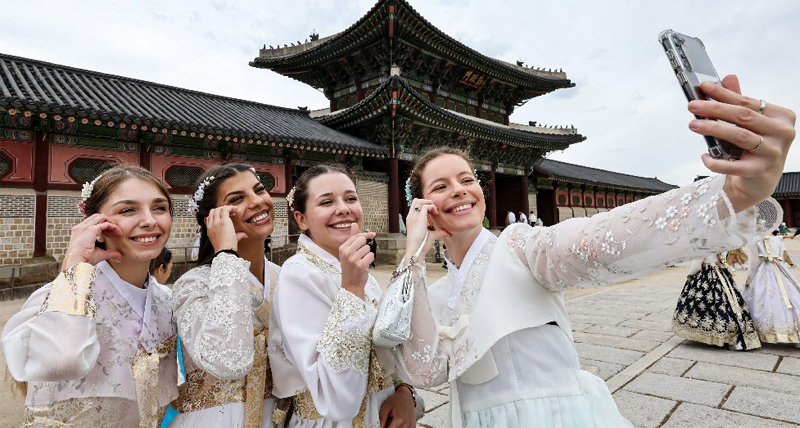
Etiquette and Comfort: How to Fully Enjoy Wearing Hanbok
While wearing hanbok, people naturally become more mindful of their posture and manners. Since palaces are historic and cultural sites, behaviors that cause excessive noise or potential damage to structures should be strictly avoided. Because hanbok skirts and pants tend to be long and the jeogori fits differently than Western clothing, it’s wise to exercise caution when walking or climbing stairs. For instance, gently holding the end of your skirt as you walk prevents it from dragging or getting dirty.
Wearing hanbok doesn’t mean you need to be overly formal, but maintaining proper etiquette and graceful posture can feel like a delightful bit of role-play. For foreign visitors, it creates an immersive experience—“Is this what it feels like to be a character from Korea’s historical past?” Many are inspired to develop a deeper appreciation for Korean culture as a result.
Nearby Experiences: From Traditional Tea to Tasty Snacks
After walking around in your hanbok for a while, you’re likely to feel a bit peckish. That’s the perfect time to visit a nearby café for traditional Korean tea or enjoy light snacks. Just a short walk to areas like Insadong, Bukchon, or Seochon gives access to a variety of atmospheric teahouses. Savoring jujube tea, citron tea, or green tea while dressed in hanbok creates yet another unforgettable experience. Alternatively, strolling palace alleyways with street foods like hotteok (sweet pancakes), fish cakes, or spicy tteokbokki is a fan-favorite activity among travelers.
Some travelers opt for visually appealing hanok cafés, where tradition meets modernity. While you may attract curious glances in your hanbok, they are often filled with admiration—“That traveler looks like they’re having such a great time.” Places with Instagrammable interiors allow your hanbok attire to beautifully complement the vintage ambiance, ensuring memorable photo ops.
Practical Tips: Rental Duration and Costs
Hanbok rental rates are typically structured around four-hour or full-day sessions. While prices vary somewhat depending on the area and shop, renting a full set—hanbok, underskirt, and accessories like hairpieces—is generally affordable. Optional extras such as norigae (ornamental pendants), vests, or hair and makeup services may increase the cost, so it’s a good idea to check in advance.
If you’re looking to save on palace admission fees, take advantage of the policy allowing free entry when wearing a hanbok (subject to change depending on the season or special events). However, since international visitors have significantly increased in number, there might be waiting times at rental shops or palace entrances during weekends and peak travel seasons, so plan your itinerary with some flexibility to avoid delays.
In Conclusion: Immersed in the Scenery of a Bygone Era
Walking through a royal palace in hanbok is a meaningful experience not only for Koreans, but also for international tourists—evoking feelings of stepping into an entirely different world. When you, dressed in traditional Korean attire, walk the very grounds once tread by kings and ministers, it creates a uniquely emotional and unforgettable moment. Alongside the respectful appreciation of historic heritage, observing how these landmarks harmonize with today’s urban lifestyle adds yet another layer of beauty.
If you ever get the chance to visit Korea, renting a hanbok and strolling through a traditional palace is a must-try adventure. In the midst of a busy life, it allows you to pause and reconnect with timeless elegance and history. As you catch a glimpse of your skirt hem fluttering in the breeze or the graceful sway of a jeogori sleeve, you may well find yourself thinking, “This is the true elegance of Korean culture.” Whether captured in a photo or cherished as a vivid memory, this day will remain with you for years to come.
K-Name Studio: Create your perfect Korean name based on your personality and style.
What’s My K-Beauty Personal Color?
WeBring Service : Provides personalized services to foreigners living in Korea
Exclusive offer: Introducing foreign car rental in Korea, WeBring-SoCar
- Hanbok Experiences: A Guide to Korean Traditional Clothing
- Hanbok Palace Photo Travel: Best 1-2 Day Course in Seoul and Suwon
- Hanbok Photoshoot Rural Village Guide: Stone Walls, Fields, Traditional Korean Photos
Last updated: 22 September 2026
Prices, opening hours and transport schedules change with the season and the operator. Check the official channel again before you go.
WeBring operates its own Korea tour and vehicle services. The following is a promotion for that service.
Explore Korea's mountains — guides in your language
Courses, transport and seasonal tips for 30 mountains, from Bukhansan to Hallasan, available in 11 languages. Pick up essential travel Korean and find events for the global community, too.


