
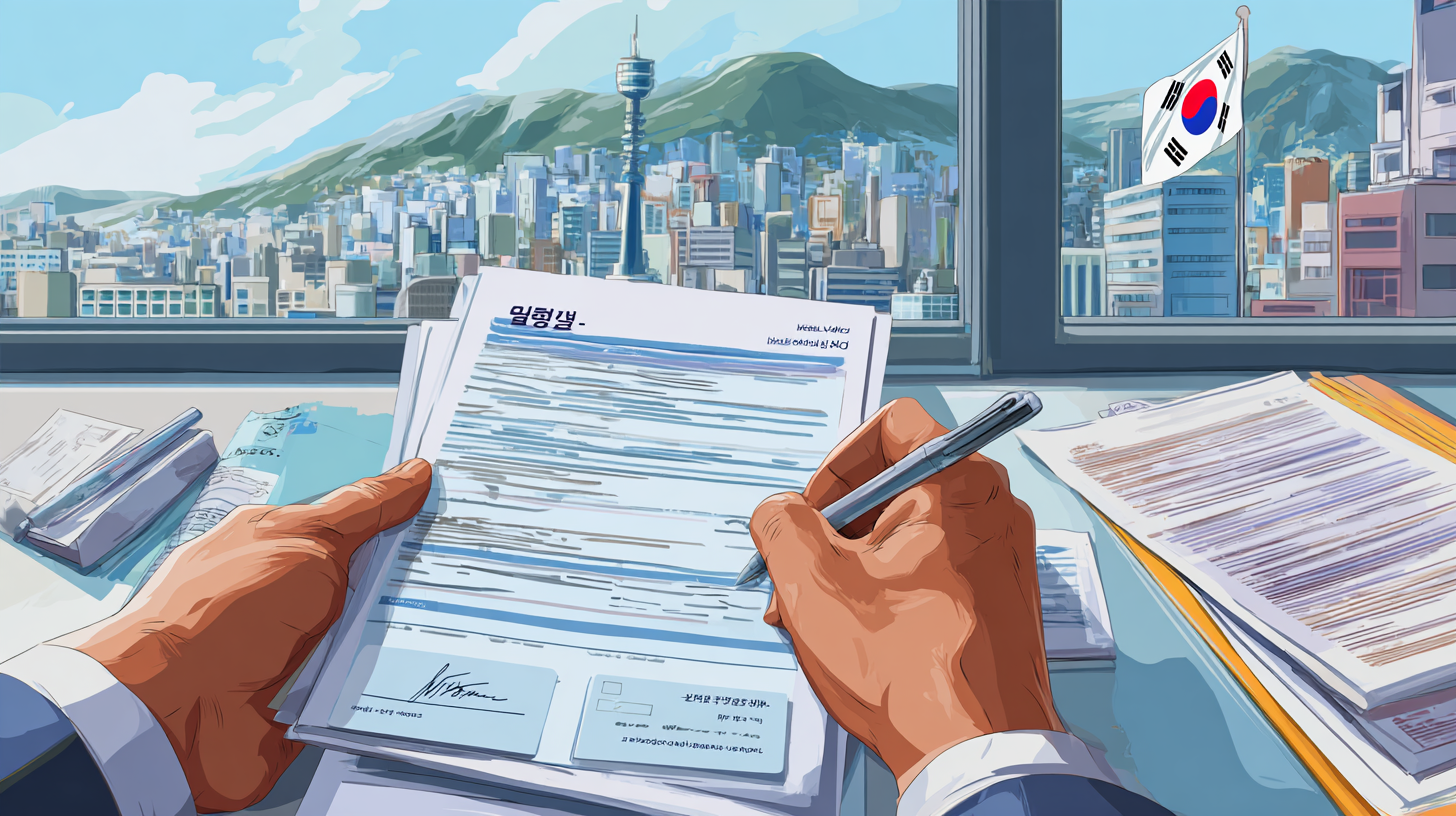

The journey of coming to Korea from abroad and starting a new job can be a continuous series of challenges. This is especially true when someone has entered the country on a student, visitor (D-series), or Working Holiday (H-1) visa but needs to switch to the appropriate “work visa” to work full-time in Korea. Even individuals already holding a work visa may find themselves needing to change visa types when switching jobs or aiming to build a better career in a different company.
Changing a visa involves substantial administrative steps, with numerous documents to prepare and important points to consider. Missing any of these steps may result in being considered as residing or working illegally in Korea, leading to potential penalties or even forced deportation. In this article, we will explore in detail the key considerations foreign nationals must keep in mind when changing their work visa in Korea.
Understanding Your Current Visa Status: What Visa Am I On?
The first step in the visa change process is to confirm the type of visa you currently hold and your length of stay. For instance, someone who graduates from a Korean university with a D-2 (student) visa and wishes to work may need to switch to an E-7 (Special Occupation) visa. Or, if you’ve been working at an English academy with an E-2 (Teaching) visa and want to switch to an IT company, you may also need to transition to an E-7 visa.
Another scenario involves entering Korea on a Working Holiday (H-1) visa, traveling, doing short-term jobs, and then receiving a full-time job offer. In that case, you would need to change your visa to a type suitable for the new job, such as E-7 or E-2. It’s crucial to identify your current visa type and remaining valid stay period in order to carry out a smooth change to a work visa.
Advanced Discussion with Employer: Sponsorship and Employment Contract
The core of changing to a work visa relies on whether there’s a valid employer (sponsor) in Korea willing and legally eligible to hire a foreigner. When changing to or applying for an E-7 visa, factors such as the company’s size, industry, and its quota for hiring foreigners (Employment Permit System) become critical.
- Employment Contract: You’ll need a formal contract specifying employment conditions, duration, and salary with the new company. The start date and terms of compensation must be clearly defined and might need to follow the standard template provided by the Immigration Office.
- Company Business Registration and Financial Documents: To verify that the company is operating and financially stable, documents like a copy of the business registration certificate, recent financial statements, or tax payment certificates may need to be submitted.
If the company is not familiar with hiring foreign nationals, it’s important to proactively provide guidance. Share the official list of documents required by Immigration Law with the HR personnel and establish a timeline for document preparation within your legal stay period.
Preparation Before Visiting the Immigration Office: Timing, Fee, and Additional Documents
Changing your visa isn’t complete just because you have a contract. You must officially submit an application and supporting documents to the Immigration Office. Missteps in timing and missing documents are the most common problems during this process.
- Timing: Ideally, you should start the process at least 1 to 2 months before your current visa expires. Even if you’ve already secured a job offer, it can take more time than expected to prepare documents and go through the review process, so allow for extra time.
- Additional Documents: Typically required documents include an employment contract, employment certificate (or a letter of offer if unemployed), company registration certificate, proof of education (degree or graduation certificate), and proof of career experience. Depending on the role or situation, you may also be asked to submit a letter of guarantee, recommendation letter, or Korean language proficiency certificate. If you’re switching from a D-2 (student) visa, you may be asked to prove the relevance between your major and the new job duties.
- Fees: Visa change fees vary depending on the visa type. In addition to the application fee, there might be a reissuance fee for your Alien Registration Card. Applying online via the HiKorea website could be slightly cheaper than doing so offline — check what applies in your case.
How the D-2 to E-7 Change Actually Works
Moving from D-2 (study) to E-7 (specific activity) is the most common route after graduation. The steps themselves are fixed, so here they are in order.
- Confirm the company can sponsor — Business type, capital, number of Korean employees, and the foreign-worker quota all factor in. Check this with HR first; if it fails here, nothing else matters.
- Sign the employment contract — It must state the job duties and salary. Salary level affects the review.
- Gather documents — Degree certificate, transcript, proof of work experience, and any job-related certifications. Documents issued abroad may need an apostille or consular authentication, which adds time.
- Apply at your Immigration Office — File well before your current status expires. Processing takes time, and a request for additional documents extends it further.
The point that trips people up most often is the relevance between your major and the job. If you move into a field unrelated to your degree, you will need to explain why. Build that link with related experience, certifications, or project history before you apply.
Requirements and document lists change, and decisions vary case by case. Before you start, confirm your own situation with HiKorea or the Immigration Contact Center (1345).
Post-Visa Change: What to Double-Check
Once your visa change is approved, thoroughly check the updated visa type and period of stay. The new stay period might be shorter than expected, and your permitted scope of activities may also be limited. For example, with an E-7 visa, you can legally only work in the designated role at your sponsoring company — freelancing or side jobs are prohibited and can lead to legal issues.
Also verify whether you need a new Alien Registration Card, and remember to report any changes in address or contact information to your local immigration office within the required time frame. Receiving visa change approval doesn’t mean all related matters are complete. You’ll still need to manage legal and administrative tasks like notifying address changes, year-end tax settlements, and enrolling in the four major insurances to ensure a smooth life in Korea.
Conclusion: Thorough Preparation is the Key to a Successful Work Visa Change
Changing your work visa may seem like a “complicated and difficult process,” but with proper planning, it’s quite manageable. The most crucial elements are timing and complete documentation. Maintain close communication with your company, understand immigration regulations, and seek assistance from legal experts like administrative services or immigration lawyers if necessary.
Above all, you need a strategic approach that aligns your career goals with the appropriate visa type. One may think, “Any work visa will do,” but in reality, each visa category has different scopes and extension criteria — deeply affecting your future career and lifestyle. If you aim to initially obtain a visa that suits your field and build a plan to maintain and extend that visa, then your career growth in Korea will be much more seamless.
Timing Is Everything: When to Apply, When to Start
What actually causes problems in a work visa change is not the documents but the order. Break either of these and a perfect file still works against you.
- Do not start work before approval. Even with the offer accepted and the contract signed, working before the status change is granted is activity outside status. An employer saying “you can start now” does not move the consequence off you.
- Apply while your current period of stay still has room. After expiry it is no longer a change but a different problem. Begin at least a month or two before expiry to absorb the review period.
If time is tight, there is the route through job-seeking status (D-10) — a status that lets you stay and search after graduation without a confirmed job, and from which you change to an employment status once hired. It has its own requirements and period of stay, so check it several months before graduating.
Establishing the Link Between Your Background and the Role
This is the most frequently raised point in review: whether your degree or experience connects to the work you will do. Where the link is weak, there are ways to strengthen it.
- Coursework — even with a differently named major, relevant courses can be evidenced through your transcript. Have the course titles available in English.
- Experience — internships, projects and previous employment that connect to the role, evidenced by employment certificates.
- Certifications — a recognized qualification in the field is strong support.
- Job description — the employer’s description of your duties must show concretely how they meet your degree and experience. Generic wording does not help.
- Portfolio — for development and design roles, the work itself is the most direct evidence.
Do not simply leave the paperwork to the company. The burden of explaining the connection sits with the applicant. HR staff without experience hiring foreign nationals often do not know what is needed, so checking the document list yourself and handing it over is faster.
If the Change Is Refused
Refusal is not the end, but the clock tightens. How much of your current period of stay remains decides your options, so act the day the notice arrives.
- Establish the reason. Whether you fell short of a requirement or simply need better documentation changes the response entirely.
- Remedy and reapply — if it was documentary, you can apply again for the same status. Resubmitting the same file achieves nothing.
- Consider another status — if the requirement itself does not fit, check whether D-10 or another route does.
- If expiry is close, say so at the start of any consultation. Moving after expiry sharply narrows what is available.
The consultation line is 1345, with foreign-language support. For complex cases a licensed administrative agent is a reasonable option, but avoid anyone guaranteeing approval. No agency can guarantee the outcome of a review.
K-Name Studio: Create your perfect Korean name based on your personality and style.
What’s My K-Beauty Personal Color?
WeBring Service : Provides personalized services to foreigners living in Korea
Exclusive offer: Introducing foreign car rental in Korea, WeBring-SoCar
- E-7 Visa Korea: The Ultimate Guide for Foreign Professionals
- Types of Korean Visas: A Guide to Tourist, Study, Work, and Long-Term Stay Options
- The Ultimate Guide to Korea Visa Renewal Mistakes: Prevent Fines and Deportation
- Korea visa extension documents perfect checklist: Essential Requirements for D-2 and E-Series Visas
Last updated: 22 September 2026
Immigration rules and guidelines change often. This article summarises information that was publicly available when it was written and is not legal advice for your individual case. Confirm the current requirements with HiKorea (1345) or your local immigration office before you apply.
WeBring operates its own visa application and extension service. The following is a promotion for that service.
Don't let your visa expire
Check your remaining stay and extension deadline in 30 seconds with the WeBring visa calculator. Need help with the paperwork? Our experts speak your language.


