


The Korea Working Holiday Visa gives young foreigners the chance to work and travel in Korea for one year. Citizens of more than 25 partner countries can apply, enjoying short-term employment and cultural experiences at the same time. To make the most of one year on the Korea Working Holiday Visa, you need to understand the eligibility requirements, allowed job sectors, and visa conversion options. This guide pulls together everything you need to work and travel in Korea on the working holiday program.
What Is the Korea Working Holiday Visa? Concept and Partner Countries
The Goal Is Cultural Exchange, Not Employment
The working holiday visa was created so young people can learn culture and language abroad while supplementing their living expenses through limited work. Travel is the primary purpose and employment is secondary. Long-term work under a single employer can be restricted, and there are limits on job type and total work duration.
Korea Working Holiday Partner Countries
Korea has working holiday agreements with more than 25 countries, including Canada, New Zealand, Australia, France, Germany, and the UK. Age limits (usually 18–30), stay duration (typically 1 year), and application quotas differ by country, so check the latest information on the Ministry of Foreign Affairs, Ministry of Justice, or your country’s embassy website.
Korea Working Holiday Visa Eligibility and Application Process
Eligibility Requirements
Korea Working Holiday Visa eligibility is generally age 18–30 (35 for some countries) with no criminal record. A health certificate is required, and some embassies require proof of 1,000–3,000 USD in initial living funds. For more information, visit the Korea Tourism Organization.
How to Apply for the Working Holiday Visa
Submit a Working Holiday Visa (H-1) application at the Korean embassy or consulate in your home country. Required documents include:
- Passport and photos
- Proof of finances (bank balance certificate)
- Criminal record check (no criminal history)
- Round-trip ticket or booking proof
For popular partner countries the quota fills quickly, so it is important not to miss the application window at the start of each year.
Jobs You Can Do on the Korea Working Holiday Visa
Sector Restrictions
While the working holiday visa lets you take part-time jobs freely, some sectors such as adult entertainment and hostess bars are off-limits. Certain skilled professions may also be restricted to protect domestic workers and prevent crime. Check the allowed and prohibited sector list with the Ministry of Justice or your country’s embassy.
Limit on Long-Term Work With the Same Employer
Because of the program’s purpose, working long-term as a regular employee at a single company is not appropriate. Some countries allow up to 6 months under one employer, beyond which is not permitted. If you want longer employment, consider switching from the working holiday to an E-7 (specific activity) work visa.
Travel and Cultural Experience on the Korea Working Holiday
Saving on Accommodation and Transport
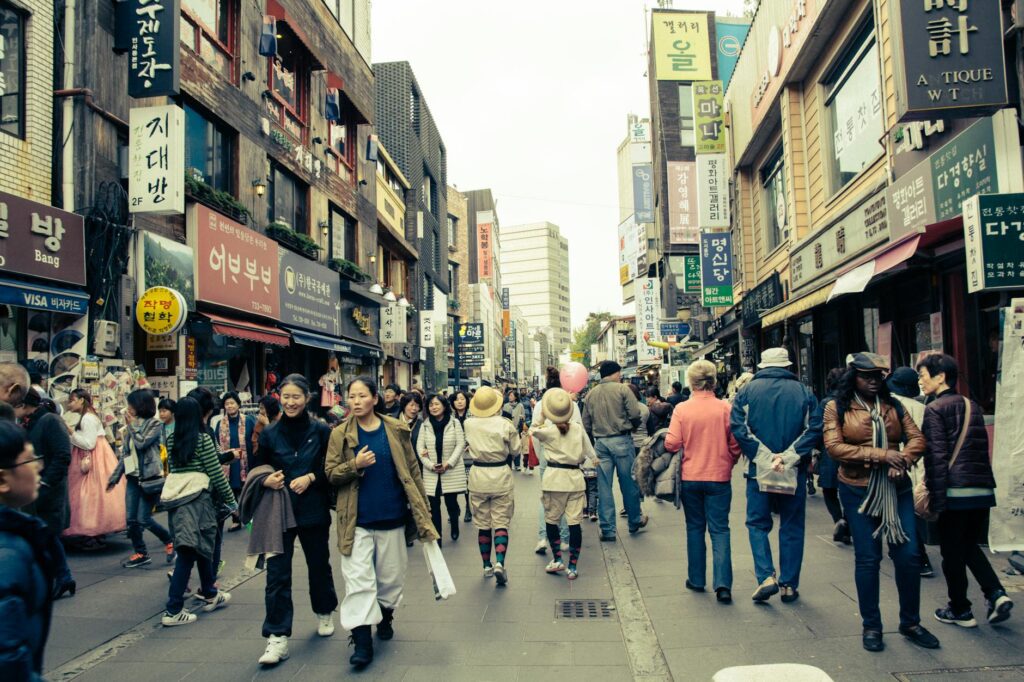
For working holiday makers who want to keep costs low while exploring multiple cities, working as guesthouse staff is a great option. You save on lodging and can enjoy nearby sights on weekends. Using KTX trains, intercity buses, and share-cars lets you travel efficiently across the country.
Language Exchange and Korean Cultural Experience
If you want to learn Korean, you can practice with Korean partners through language exchange meetups or KakaoTalk open chat communities. Joining Korean cooking classes, hanbok experiences, and traditional culture festivals will make your working holiday richer.
Korea Working Holiday Visa Extension and Conversion Options
Standard 1 Year — Can You Extend?
The Korea Working Holiday Visa runs for one year by default, and some countries allow extension up to 18 months or 2 years under their agreements. Since most holders must leave after one year, you should plan your next route (E-2, E-7, D-2 conversion, etc.) in advance.
How to Convert to a Long-Term Visa
If you want to stay in Korea longer, explore converting to a work visa (E-7) or student visa (D-2). E-7 conversion requires a company sponsor, and D-2 requires meeting university admission criteria. If you are hired as an English teacher, you will need an E-2 visa with a degree, criminal record check, and health screening. Visa conversion paperwork can be tricky, so consulting the Ministry of Justice or a specialized administrative agent is the safer route.
Designing the Year: Before Arrival, First Three Months, and After
A working holiday has a fixed clock, which makes the first three months decide the rest. Start figuring things out after you land and you will spend that whole window just settling in. Prepare in this order.
- Before arrival — secure two to three months of living costs. Opening a bank account and getting a phone line both hinge on the residence card, so until then you run on cards and cash.
- Weeks 1–2 — book alien registration (waits can be long depending on the office), fix your address, get a prepaid SIM. Contracts in your own name are difficult before the card arrives.
- Weeks 3–6 — with the residence card in hand: bank account, a phone line in your name, and confirmation of your health insurance status. Serious job hunting needs all three.
- Months 2–3 — the real job search. Landing something by this point is what frees the remaining months for travel and saving.
The condition people run into most often is sector restrictions. Because the agreements exist for cultural exchange, entertainment and gambling-adjacent work is prohibited, and there are limits on professional practice and on staying long with one employer. The specific prohibited sectors and permitted hours vary by partner country and by when the visa was issued, so check the conditions that attach to your own visa at Hi Korea before starting any job. “Other people do it” is not a basis.
Insurance and Tax: The Two Most Commonly Missed
These are what gets skipped when a working holiday is treated like a long trip. Neither is small in money terms.
- Health insurance — employment sometimes brings workplace enrollment; otherwise check whether regional enrollment applies to you. An accident during the uninsured gap is paid entirely out of pocket, so cover the early period with travel insurance or a product aimed at foreign residents.
- Income tax — withheld from your pay. If only 3.3% is deducted and there are no social insurance lines, you are being treated as a freelancer rather than an employee, which removes weekly holiday allowance and employment insurance.
- Year-end and global income filing — settling before you leave Korea often returns a substantial amount. Make sure you collect your withholding receipts.
- Closing out — shut the bank account only after the final salary, deposit return and utility refunds have landed. Cancelling your phone number first breaks the authentication chain and blocks transfers.
Finally, work outside your visa conditions rebounds on you, not the employer. An employer saying it is fine does not change who bears the consequence. When a condition is ambiguous, confirming it on 1345 before you start is what protects the whole year.
Korea Working Holiday Visa Key Takeaways
The Korea Working Holiday Visa is a hybrid opportunity to work and travel at the same time. Citizens of partner countries can use it freely as long as they follow a few rules, such as age limits and job sector restrictions. Prepare your documents thoroughly (criminal record check, financial proof, flight ticket) and check the application schedule early, since quotas for popular countries run out quickly.
To make the most of your one year, balancing work and travel is the key. The working holiday lets you experience Korean culture firsthand while improving your language skills, and it can become one of the most valuable experiences of your youth.
Frequently Asked Questions
Can I switch from a working holiday to another visa?
Routes exist, but nothing converts automatically. Changing to an employment status (E-series) or to study (D-2) inside Korea means meeting that status’s own requirements and passing a change-of-status review. Education, experience and employment-contract requirements apply, so start looking into it several months before your stay ends.
Critically, do not start the new job before the change is approved. Even with an offer in hand, wait until the status change completes. Reversing the order makes it unauthorized activity and works against you in later reviews.
Is the working holiday visa once in a lifetime?
For most partner countries the agreements make it once per lifetime. If you want to return after finishing a working holiday in Korea, coming back on a different status — tourism, study or employment — is the realistic path. Agreement terms differ by country, so confirm what applies to you with the responsible authority at home.
Can I stay if I haven’t found work?
Yes. On a working holiday, employment is not a condition of your stay. Travelling without working creates no status problem. What you do need is the means to support yourself, and to keep your health insurance status and premiums in order separately.
The danger in a long job search is impatience. Work outside your visa conditions tends to be offered exactly during this stretch. The better an offer looks, the more worth asking why — usually it is because the work falls outside what your visa allows.
K-Name Studio: Create your perfect Korean name based on your personality and style.
What’s My K-Beauty Personal Color?
WeBring Service : Provides personalized services to foreigners living in Korea
Exclusive offer: Introducing foreign car rental in Korea, WeBring-SoCar
- Master the Teach English Korea E-2 Visa Process Your Ultimate Handbook
- Work Visa Change: Key Considerations for Foreign Nationals in Korea
- International Student Part-Time Work Checklist: Hours, Documents, Cautions in Korea
- Korea Family Invitation Visa: Complete Guide to F-6, F-1, and F-3 Applications
- Guide to Entering South Korea for Foreigners: Passport, Visa, and K-ETA Information
Last updated: 7 October 2026
Immigration rules and guidelines change often. This article summarises information that was publicly available when it was written and is not legal advice for your individual case. Confirm the current requirements with HiKorea (1345) or your local immigration office before you apply.
WeBring operates its own visa application and extension service. The following is a promotion for that service.
Don't let your visa expire
Check your remaining stay and extension deadline in 30 seconds with the WeBring visa calculator. Need help with the paperwork? Our experts speak your language.