

In Korean student life, knowing just one or two alleys from this university campus food guide lets you keep a single meal around 7,000 won while naturally building friendships and Korean conversation skills. This article maps the budget-friendly restaurants that international students actually frequent — from major Seoul university districts to regional campuses in Busan, Jeonju and Daegu — organized by price range, signature menu, and solo-dining difficulty.
Start with the core information at a glance.
| Campus area | Region | Signature menu (per person) | Solo-dining ease |
|---|---|---|---|
| Sinchon · Ewha · Sogang | Seodaemun, Seoul | Tteokbokki 3–4K won / Korean set meal 8K won | Easy |
| Hongdae · Hapjeong | Mapo, Seoul | Fusion Western 12K won / Dessert 6K won | Moderate |
| Korea Univ · Sungshin · HUFS | Northeast Seoul | Rice bowl 7K won / 24h snack bar 5K won | Easy |
| Pusan National (Jangjeon-dong) | Busan | Dwaeji-gukbap 7K won / Milmyeon 7K won | Very easy |
| Jeonbuk National | Jeonju | Bean sprout soup 7K won / Bibimbap 9K won | Easy |
| Kyungpook National | Daegu | Napjak-mandu 4K won / Gopchang 15K won | Moderate |
1) Sinchon · Ewha · Sogang university campus food guide course
Sinchon clusters Yonsei, Ewha Womans and Sogang universities within a 15-minute walk, making it one of the highest student-density restaurant zones in Seoul. The area splits into three sub-districts — the Myeongmul-geori connecting Sinchon Station (Line 2) and Sinchon Station (Gyeongui-Jungang Line), the alleys in front of Ewha’s main gate, and the back-gate of Sogang — with diverse pricing for both lunch and dinner.
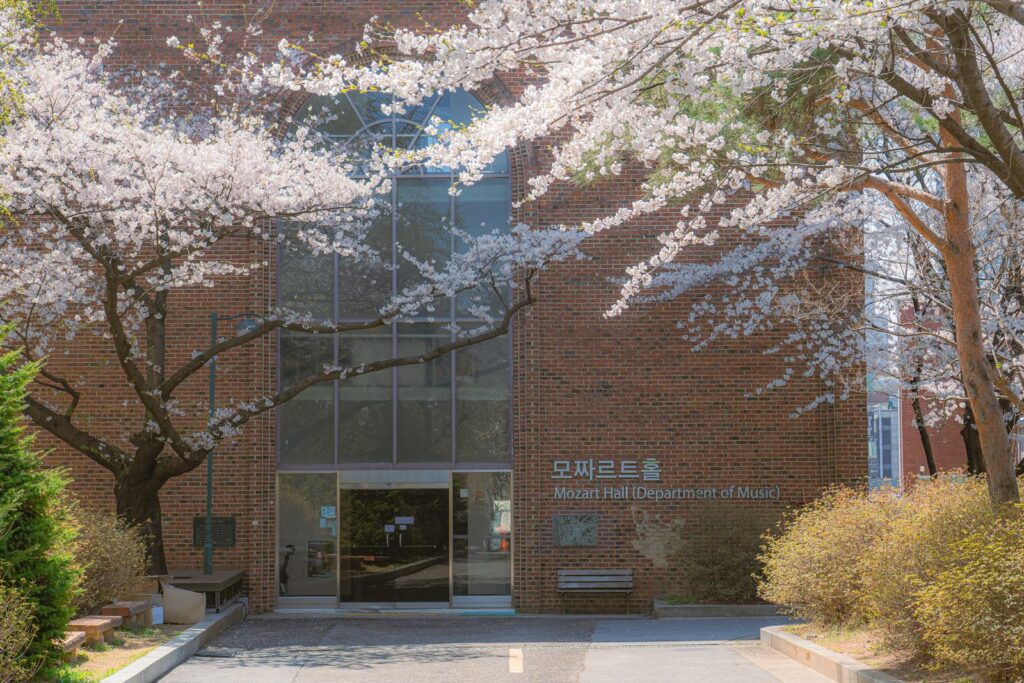
- Snack alley: Tteokbokki, sundae and gimbap start at 3,000–4,000 won. The tteok-twi-sun (tteokbokki + fried snacks + sundae) shop inside Sinchon Myeongmul-geori has long lines even at weekday lunch, so arriving around 11:40 right after class is the safer bet.
- Korean set meal (baekban): Filling Korean meals for 7,000–9,000 won, and many places allow self-serve side dish refills — a favorite of international students trying to cut down on grocery costs.
- Cafes & desserts: The alley in front of Ewha’s main gate is packed with macaron and cupcake specialty shops — perfect for a breather with friends right after assignments or mid-terms. Americano runs 3,000–4,000 won and desserts 4,000–6,000 won.
Student tip: Lunch peak (12–1 PM) brings 20+ minute waits at almost every spot. If your class ends at 1 PM, ask a friend to grab a seat in advance, or delay your visit until after 1:30 PM when turnover speeds up. Popular weekend dinner spots routinely have hour-long lines, so always have a back-up baekban place in the same alley as Plan B.
2) Hongdae · Hapjeong university campus food guide hotspot course
The streets running from Hongik University’s main gate toward Hapjeong Station blend an arts-and-culture vibe with the fastest-moving food trends. The Korea Tourism Organization’s official guide is available in English at visitkorea.or.kr, useful when showing friends around.
- Fusion food: Italian, Mexican and Japanese restaurants line every alley, letting you try international cuisines for 10,000–15,000 won. About 1.5x the Sinchon price, but with frequent new openings that get heavy Instagram exposure.
- Hof bars & pojangmacha: Many spots serve beer, highballs and soju after dark, with a plate of anju running 10,000–20,000 won. Some run small live performances, making them a popular first-night-out venue with Korean friends.
- Desserts & bakeries: Croffle, financier and salt-bread shops cluster 5–6 per alley, making a dessert tour alone substantial enough to count as a meal.
Student tip: Hongdae streets get very crowded on weekend afternoons once tourists arrive. Visit between 2–5 PM on weekdays for easier seating, and you can pair the food course with the art market or street busking for a combined dating-and-dining route. See Myeongdong vs Hongdae restaurant comparison for detailed hotspot routes.
3) Korea Univ · Sungshin · HUFS northeastern university campus food guide course
Northeast Seoul campus districts attract fewer tourists, so student-priced restaurants are densely packed. Even the same menu typically runs 10–20% cheaper than Sinchon or Hongdae, which is an advantage for international students trying to cut living expenses.
- Korea University’s Anam alleys: Pork cutlet and rice bowl spots start at 6,000–8,000 won, and 24-hour snack bars near the Anam 5-way intersection serve ramyeon and gimbap until 2 AM — go-to spots after late-night library sessions.
- Sungshin Women’s University street: Pasta and risotto restaurants cluster around 10,000 won, with plenty of dessert cafes — frequently recommended as a meet-up spot for female international students. More entrances now display vegan and halal options at the doorway.
- Hankuk University of Foreign Studies (Imun-dong): Japanese, Chinese, Thai and Central Asian restaurants gather in one alley — the fastest zone for homesick international students to find food from their home country. A proper meal runs around 10,000 won per person.
Student tip: Each university’s Facebook groups, Discord channels and international-student-council KakaoTalk open chats post new restaurant reviews almost in real time. Joining two or three channels in your first week lets you memorize the budget alleys within a month.
4) Regional university campus food guide: Busan, Jeonju, Daegu
Regional campus districts combine local specialty foods with student-friendly prices, often 30–40% cheaper than the same menu in Seoul. Even on short vacation trips, locking down one or two spots near a regional campus drastically cuts food costs.
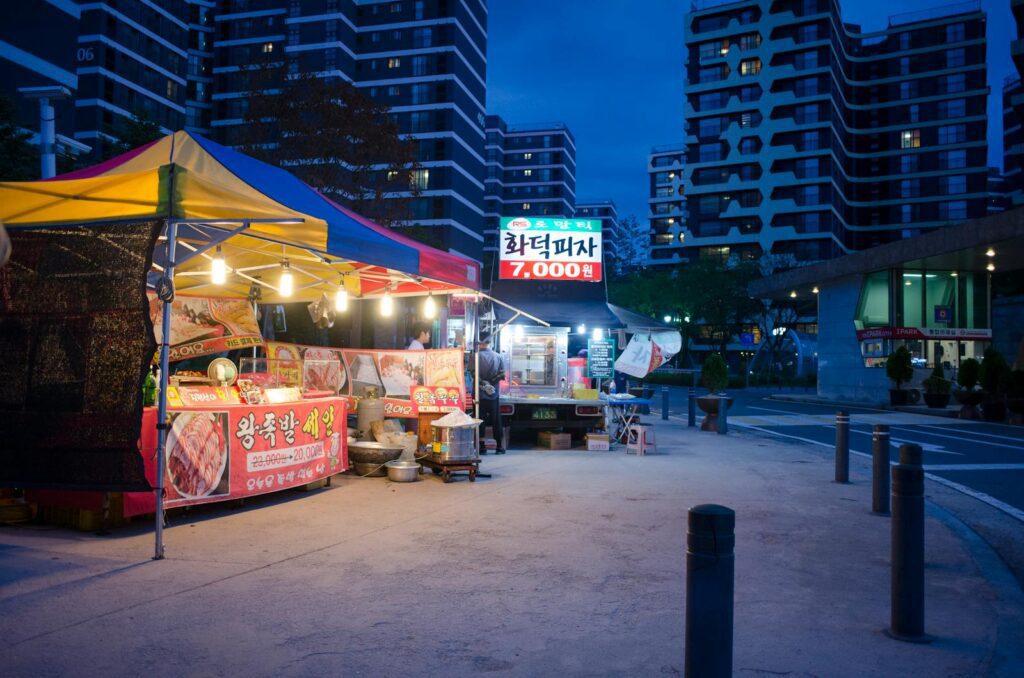
- In front of Pusan National (Jangjeon-dong): Dwaeji-gukbap (pork-broth rice soup) and milmyeon both standardize at 6,000–7,000 won, with many seafood restaurants within walking distance of campus. Plenty of alley-level budget spots recommended by Busan-native students, making it a great base for short-term exchange.
- Jeonbuk National (Jeonju): Bean sprout soup 7,000 won, bibimbap 9,000 won, makgeolli house anju around 20,000 won. The Hanok Village is a 30-minute walk away and draws tourists, but the back gate of Jeonbuk National holds student-grade pricing.
- Kyungpook National (Daegu): Mungtigi (raw beef sashimi), gopchang and napjak-mandu are the signature menus, with snack and chicken shops also clustered in one alley — short walking distances for night-time hweshik.
Student tip: Building one meal near a campus into your regional travel itinerary lets you try local food at roughly half the price of tourist-area restaurants. National-level night-market and market-alley routes are detailed in K-food culinary travel — 12 destinations.
5) Budget management: building a 300,000-won monthly food bill
Even if campus-area restaurants are budget-friendly, eating out every meal easily pushes monthly food costs past 600,000 won. Following these three rules lets you enjoy eating out while keeping your monthly food bill in the 300,000-won range.
- Weekend treats + weekday student cafeteria: Handle only two weekend meals with budget eating-out, and fill weekdays with the student cafeteria (3,000–5,000 won) or home cooking. Pre-loading your student ID for cafeteria payments also makes spending easier to track.
- Lunch out / dinner convenience-food split: Schedule friend meet-ups at lunch and finish dinner with a convenience-store bento (4,000–5,000 won) or home cooking — the most effective rhythm for cost control.
- Student ID and SNS coupons: Some shops in Sinchon and Hongdae offer 5–10% off when you show a student ID, and others throw in a free side menu when you follow on Instagram or post a story. Just ask once before paying: “Do you offer a student discount?”
6) How to spot solo-dining-friendly university campus food guide picks
Korean campus areas are rapidly adding restaurants that sell single-serving ramyeon, rice bowls and stews as standard menu items, so international students can comfortably eat alone. The three quickest signals for solo-dining friendliness are:
- The entrance menu shows “1-person set” or “solo menu”
- There are 4 or more 1-person bar seats
- Naver Map reviews contain 10+ entries mentioning the “honbap” (solo dining) keyword
On days when going out is impossible, delivery apps such as Baemin (Baedalui Minjok) can bring campus-area menus straight to your dorm or studio. The minimum order is typically 12,000–15,000 won, so splitting an order with a roommate reduces the per-person burden.
7) Extending into cafes and desserts
Campus areas have just as many cafes as restaurants, so study, group work and interview-prep space is rarely a problem. Americano runs 3,000–4,000 won, dessert-cafe cakes and brunches 6,000–9,000 won, and some dessert cafes run separate lunch sets under 10,000 won.
When using cafes as study space, check three things in advance — outlet availability, noise level and seating-time policy. Spots displaying “laptop use discouraged” or “2-hour limit” at the entrance are better for short meetings than group study sessions.
8) Group-dining culture: hof bars, soju rooms, makgeolli houses
Another pillar of campus dining is hof bars, soju rooms and makgeolli houses. Chicken + beer (chimaek), samgyeopsal + soju, and pajeon + makgeolli combinations are the basic patterns of Korean student hweshik culture, so trying them once is worthwhile if you want to bond quickly with Korean friends.
If you don’t drink or can’t drink for religious or health reasons, a simple “I can’t drink alcohol” is enough. Most student gatherings don’t push, and substituting with non-alcoholic drinks, Sprite or cola feels natural. See how to make Korean friends for hweshik etiquette and drinking-table phrases.
9) Unusual spots: fusion, themed, pop-up
The experimental spirit of campus areas keeps producing seasonal unusual spots — rabokki specialty shops, cheese-loaded fusion Korean food, meal-kit experience cafes. Many disappear within 3 months to a year, so cross-checking Instagram hashtags (#hongdaematjip #sinchonmatjip) with fresh Naver blog reviews is the safer approach.
For a quick signature-menu comparison, read alongside the Seoul street food guide. Even the same tteokbokki or bungeoppang varies by campus, and you can see at a glance which variation is popular where.

10) University campus food guide wrap-up: priorities for international students
Campus-area restaurants are not just dining spaces — they are hubs that simultaneously unlock Korean conversation, friendships, living-cost control and cultural adjustment. From Sinchon, Hongdae and the northeastern Seoul campuses to regional zones in Busan, Jeonju and Daegu, trying just one new spot per week builds two or three “regular alleys” within one semester.
The administrative and life setup for the first two weeks after arriving in Korea is organized in the post-orientation international student checklist — read it alongside this university campus food guide course to accelerate your settlement. Food carries meaning beyond just a meal, and one campus alley becomes the starting point of a semester’s worth of memories and connections.
K-Name Studio: Create your perfect Korean name based on your personality and style.
What’s My K-Beauty Personal Color?
WeBring Service : Provides personalized services to foreigners living in Korea
Exclusive offer: Introducing foreign car rental in Korea, WeBring-SoCar
- Dormitory vs Self-Boarding in Korea: A Complete Housing Guide for International Students
- Guide to Safe Neighborhoods for International Students in Korea
Last updated: 22 September 2026
Rules, fees and procedures can change over time. Before an important decision, check the latest guidance from the relevant authority.
WeBring operates its own services for foreign residents in Korea. The following is a promotion for those services.
Living in Korea? You don't have to figure it out alone
Insurance, visas, jobs and hospital interpretation — WeBring supports every step of settling in Korea, in your language.