
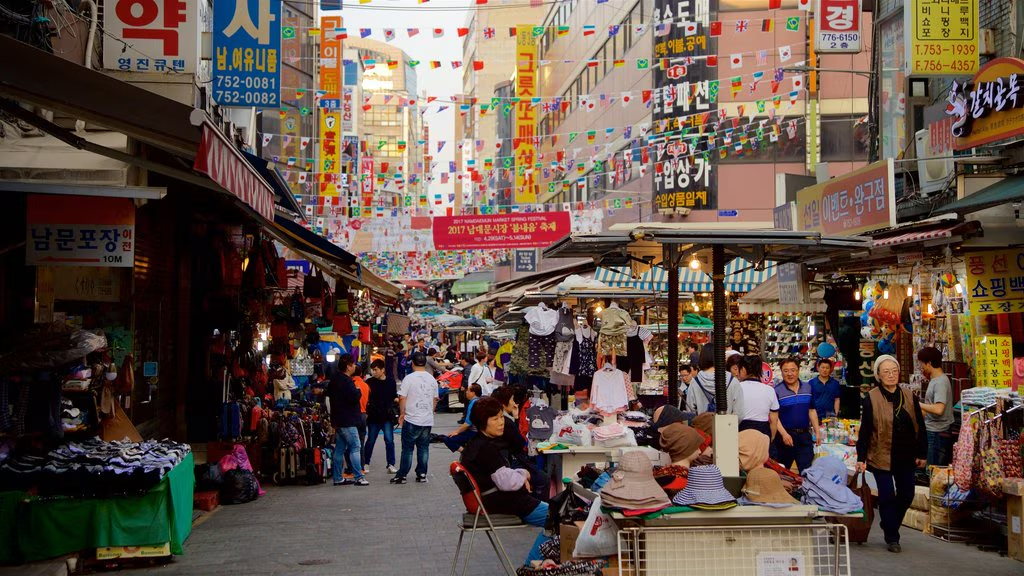

The Unique Charm of Traditional Markets
Traditional markets offer one of the most vibrant glimpses into a nation’s local lifestyle. They teem with vendors preparing freshly cooked meals, selling everyday essentials, clothing, and souvenirs, creating a dynamic and rich cultural atmosphere. In South Korea, traditional markets are more than just places to shop; they embody a unique heritage and provide unforgettable experiences for both locals and tourists.
Unlike modern shopping malls or department stores, traditional markets exude a distinct energy. Narrow alleys lined with street stalls, the lively chatter of vendors, and the smell of sizzling food create a sensory-rich environment. Visitors can interact directly with merchants, try their hand at the art of bargaining, and sample street foods that are hard to find elsewhere in Korea. These elements combine to make every trip to a traditional market a fresh and exciting adventure.
This guide highlights three of Seoul’s most representative traditional markets: Gwangjang Market, Namdaemun Market, and Tongin Market. Whether you are a tourist, an international student, or an expat working in Korea, this guide will help you explore the distinct appeal of each market.
Gwangjang Market: A Century-Old Paradise for Food Lovers
Located in Jongno-gu, Gwangjang Market has been operating since 1905, boasting over a hundred years of history. Situated in the heart of Seoul, it offers excellent accessibility, being close to popular attractions like Insadong and Jongno 3-ga. True to its reputation as a “food paradise,” the market is packed with mouthwatering delicacies, among which bindaetteok (mung bean pancakes), mayak gimbap (literally “drug gimbap,” so addictively good), and yukhoe (Korean-style beef tartare) are must-tries.
As you step inside Gwangjang Market, the first thing to tickle your senses is the rich aroma of sizzling oil as various pancakes are fried to golden perfection. Among them, bindaetteok stands out as a signature dish. Made by grinding mung beans into a thick batter and frying it until crispy, this pancake is flavorful, crunchy, and incredibly satisfying. Cooked on the spot, it is always served hot and fresh.
Another famous delicacy is mayak gimbap. Despite its small size and simple ingredients, its unique taste has earned it the nickname “drug gimbap” because of its addictive nature. Made with thinly sliced pickled radish and carrots, then rolled with sesame oil and sprinkled with sesame seeds, this little treat is a favorite among both locals and travelers.
Beyond its food offerings, Gwangjang Market also features numerous stalls selling clothing, traditional Korean hanbok, fashion accessories, and handmade crafts, all at reasonable prices. The market still embraces Korea’s bargaining culture, allowing visitors to negotiate for better deals with friendly vendors.
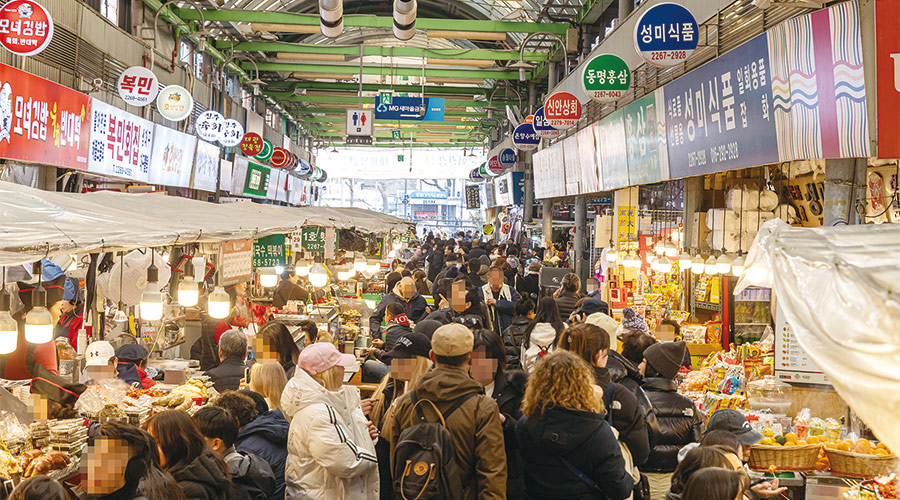
Namdaemun Market: A Shopper’s Paradise in Seoul
While Gwangjang Market is renowned for its street food, Namdaemun Market functions more like a comprehensive shopping hub. Located in Jung-gu, it has its roots in the Joseon Dynasty and is now one of the largest and most diverse traditional markets in central Seoul. As its name suggests, it is situated near the iconic Namdaemun (Sungnyemun Gate), making it a highly frequented spot for tourists.
The greatest appeal of Namdaemun Market is its vast selection of goods. Here, you can find clothing, accessories, bags, shoes, eyewear, sporting goods, and souvenirs, all in one place. Thanks to its strong presence as a wholesale market, prices tend to be lower compared to other shopping areas, especially when buying in bulk.
Food lovers will also find plenty to enjoy here. The market features famous food alleys, such as Kal-guksu Alley (Knife-Cut Noodles Alley) and Galchi Jorim Alley (Braised Hairtail Fish Alley). The Kal-guksu Alley, in particular, is a must-visit, where handmade noodles paired with dumplings or boiled pork slices offer an authentic taste of Korea. Additionally, you’ll find a wide range of street food options like tteokbokki (spicy rice cakes), soondae (Korean blood sausage), and odeng (fish cakes), perfect for a quick snack.
When visiting Namdaemun Market, keep in mind that the market layout can be somewhat complex, so it’s advisable to plan your visit with a map or a navigation app. On weekends and holidays, the market can get extremely crowded, so visiting during off-peak hours can make for a more relaxed experience.
Tongin Market: A Modern Twist on Traditional Markets
Located near Gwanghwamun and Gyeongbokgung Palace, Tongin Market is a relatively smaller traditional market with a unique modern twist. Established in 1941 during the Japanese occupation, it has gradually evolved into what is now known as an “urban traditional market”, gaining popularity with both locals and tourists. Its central location makes it an excellent stop after exploring the nearby Gwanghwamun area and Gyeongbokgung Palace.
The most distinctive feature of Tongin Market is the “Dosirak (Lunchbox) Café” system. Instead of purchasing food the conventional way, visitors use market tokens to buy various side dishes and snacks to fill their customized lunchbox. Here’s how it works:
- Visit the market’s information center or the Dosirak Café to purchase tokens.
- Roam through the market, selecting your favorite dishes from different vendors, each of whom accepts the tokens as payment.
- Once you’ve gathered your meal, find a designated eating area to enjoy your customized Korean lunchbox.
This interactive experience is especially loved by young people and tourists, adding a fresh vibrancy to the market while preserving its traditional charm. Despite its small size, the market offers a wide range of delicious options, including fried tteokbokki, various deep-fried snacks, traditional side dishes, gimbap, Korean rice cakes, and handmade sweets.
Tips for Enjoying Traditional Markets to the Fullest
To make the most of your traditional market experience, keep these tips in mind:
- Wear comfortable shoes and clothing. Most markets have narrow alleys and uneven pavements, so sneakers are recommended over dress shoes.
- Carry some cash. While many vendors accept cards, small purchases and bargaining are often easier with cash.
- Don’t hesitate to bargain. Negotiating prices is common in traditional markets—just do it with a friendly attitude!
- Visit early in the morning. Many markets open at dawn, providing a different atmosphere with vendors setting up stalls and fresh produce arriving. Mornings also tend to be less crowded, making for a more leisurely shopping experience.
Language barriers shouldn’t be a major concern, as many market vendors are accustomed to foreign visitors and use basic English or simple gestures. Even if communication isn’t perfect, a smile or a few basic Korean phrases can go a long way in making your visit enjoyable.
Combine Your Visit with Nearby Attractions
Seoul’s traditional markets are conveniently located near popular tourist spots, allowing for an easy combination of sightseeing and shopping.
- Gwangjang Market: Close to Insadong, Ikseon-dong Hanok Alley, Changgyeonggung Palace, and Changdeokgung Palace.
- Namdaemun Market: Within walking distance of Myeongdong, Seoul Station, Deoksugung Palace, and Cheonggyecheon Stream.
- Tongin Market: Perfectly paired with visits to Gyeongbokgung Palace, Gwanghwamun Plaza, and Seochon Village.
By integrating these markets into your travel itinerary, you can experience food, shopping, and cultural heritage all in one trip, making the most out of your time in Seoul.
Final Thoughts
Seoul’s traditional markets are lively reflections of Korean heritage, daily life, and culinary richness. Each market—Gwangjang’s iconic street food, Namdaemun’s extensive shopping, and Tongin’s unique lunchbox experience—brings something special to the table.
For expatriates and travelers alike, exploring these markets offers an immersive cultural experience, bridging language barriers through the universal language of food and human connection. So, grab some cash, put on your comfortable walking shoes, and step into the energetic world of Seoul’s bustling traditional markets!
K-Name Studio: Create your perfect Korean name based on your personality and style.
What’s My K-Beauty Personal Color?
WeBring Service : Provides personalized services to foreigners living in Korea
Exclusive offer: Introducing foreign car rental in Korea, WeBring-SoCar
- Seochon Walking Course: A Half-Day Hanok & Lunchbox Route (2026)
- Korean Food Travel Guide: 12 Markets & Night Markets
- Gwangjang Market Foreigner-Friendly Menu: A Top 10 Guide for First-Time Visitors
- Namdaemun Market Myeongdong Day Trip Guide: Shopping, Food & Tips
Last updated: 22 September 2026
Prices, opening hours and transport schedules change with the season and the operator. Check the official channel again before you go.
WeBring operates its own Korea tour and vehicle services. The following is a promotion for that service.
Explore Korea's mountains — guides in your language
Courses, transport and seasonal tips for 30 mountains, from Bukhansan to Hallasan, available in 11 languages. Pick up essential travel Korean and find events for the global community, too.