Korean Food Basics Complete Guide: Kimchi, Bulgogi, Bibimbap & Doenjang-jjigae (2026)

Learning Korean food basics makes student life in Korea far more enjoyable. The signature Korean food basics – kimchi, bulgogi, bibimbap, and doenjang-jjigae – have won global popularity thanks to their harmony of fermentation and seasoning. This guide walks through the essential Korean dishes and dining tips, plus tips for ordering at restaurants, simple recipes for students living alone, and how to ease into spicy flavors.
1) Kimchi: The Essence of Fermented Korean Food Basics
Kimchi is the indispensable side dish of the Korean table, a fermented Korean food basics staple made by salting napa cabbage, radish, or young radish and then mixing it with red chili powder, garlic, ginger, and salted shrimp. The classic napa cabbage kimchi is known for its spicy, refreshing kick, served as a banchan and used in stews, fried rice, and many other dishes. Kimchi was inscribed on the UNESCO Intangible Cultural Heritage of Humanity list in 2013, a testament to its global cultural value. It may taste too spicy and salty at first, but as fermentation progresses it develops a deep tangy flavor that becomes almost addictive. Other varieties include baek-kimchi (white, non-spicy kimchi), kkakdugi (cubed radish kimchi), and yeolmu-kimchi (young summer radish kimchi), so you can pick what suits your taste.
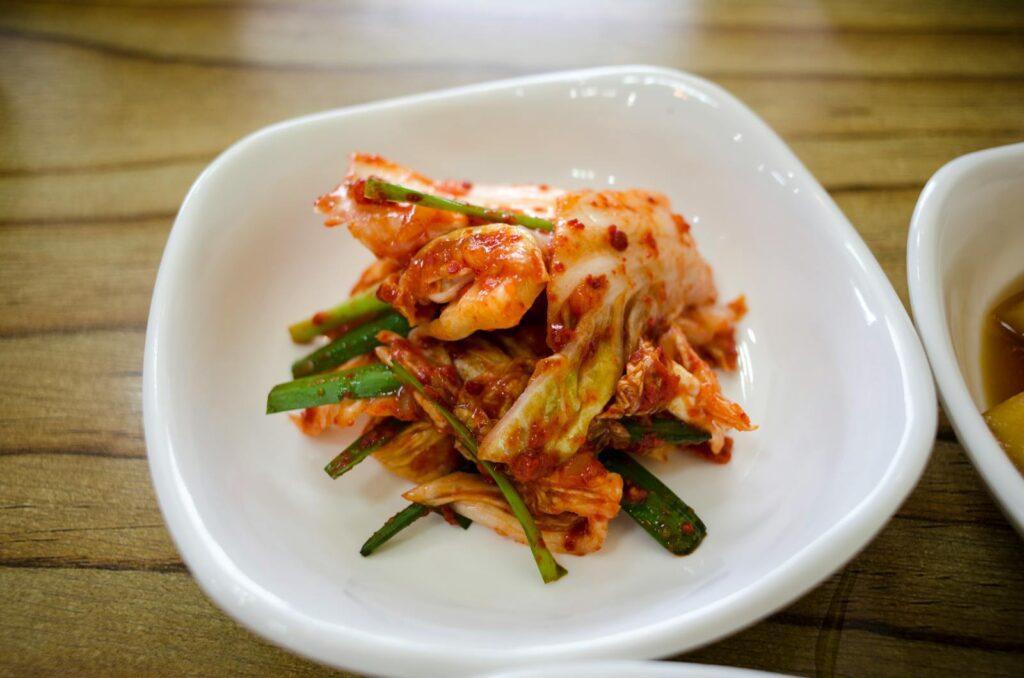
Student tip: If it tastes too spicy, rinse well-fermented kimchi briefly in water to reduce the heat, or mix it with other side dishes. Small-pack kimchi from Korean supermarkets stores easily and lets you sample different varieties.
2) Bulgogi: Sweet-Savory Marinated Beef Korean Food Basics
Bulgogi is thinly sliced beef marinated in soy sauce, sugar, garlic, and sesame oil, then grilled – a Korean food basics dish even beginners enjoy thanks to its sweet-savory flavor. Traditionally it uses thinly sliced beef sirloin or chuck, stir-fried with onion, scallion, and carrot. Some restaurants serve bulgogi jeongol, a hot-pot version with broth that lets vegetables and meat simmer together so you can enjoy the soup as well. Bulgogi pairs beautifully with rice, and the sweet soy marinade is an easy entry point for first-timers.
Student tip: To cook bulgogi yourself, buy pre-sliced bulgogi beef from a mart or butcher and use a store-bought sauce or a simple blend of soy sauce, sugar, and garlic. Stir-fry in a pan or simmer in a hot pot – it’s surprisingly easy even for students cooking solo.
3) Bibimbap: A Harmony of Color, Flavor, and Nutrition
Bibimbap is a classic Korean food basics dish: rice topped with assorted seasoned vegetables, meat, and egg, then mixed with gochujang sauce. With spinach, bean sprouts, seasoned radish, carrot, and stir-fried beef, the colors are gorgeous and the nutrition is well balanced. Regional and restaurant variations like Jeonju bibimbap and dolsot (stone pot) bibimbap mean you’ll encounter unique versions throughout your travels in Korea. To control the heat, use less gochujang or swap in a milder sauce. If finding seasoned vegetables is tricky, you can still enjoy a bibimbap-style bowl with just sesame oil, lettuce, cucumber, fried egg, and kimchi.

Student tip: Restaurant bibimbap often comes with a generous serving of gochujang that can be quite spicy – start by mixing in only half. Vegetarian bibimbap with tofu or mushrooms instead of meat is also common, so it’s a great option if you prefer plant-based meals.
4) Doenjang-jjigae: The Charm of Hearty Fermented Soybean
Doenjang-jjigae is a traditional Korean stew made by dissolving doenjang (fermented soybean paste) in broth – the flagship Korean food basics broth dish. The deep, savory flavor that comes from fermented soybeans is its hallmark. It usually contains tofu, potato, onion, zucchini, mushrooms, and green onion, with seafood or meat added for extra richness. The distinctive aroma of doenjang may feel unfamiliar at first, but many foreigners come to love its salty, soulful depth after a few tastes. If the strong fermented scent isn’t for you, try a doenjang-jjigae with clams or shrimp – the seafood adds a clean, refreshing note that softens the overall flavor.

Student tip: Stews are eaten with rice and pair well with side dishes like kimchi and kkakdugi. For solo cooking, just add water, vegetables, tofu, and meat to store-bought doenjang and simmer – it’s surprisingly low-effort and budget-friendly, so give it a try.
5) More Korean Food Basics: Kimchi-jjigae, Samgyetang, Japchae
Beyond the four above, there are many more Korean food basics dishes new students should know. Think kimchi-jjigae, budae-jjigae (army stew with ham and sausage), samgyetang (chicken stuffed with ginseng and sweet rice – a restorative dish), galbitang, japchae, and pajeon – each with its own appeal, making Korean menus wonderfully varied. Grilled samgyeopsal, galbi, and samgyetang are favorites at Korean gatherings and company dinners, so going with friends or coworkers lets you experience the food alongside the culture (grilling meat together and pairing it with soju, for instance).
6) at a Glance: Signature Dishes Compared
| Dish | Flavor Profile | Spice Level | Editorial Suggestion (not survey data) |
|---|---|---|---|
| Kimchi | Spicy, tangy, fermented | Medium-High | ★★★★★ |
| Bulgogi | Sweet, savory | None | ★★★★★ |
| Bibimbap | Nutty, mildly spicy (adjustable) | Low-Medium | ★★★★★ |
| Doenjang-jjigae | Hearty, savory | Low | ★★★★☆ |
| Kimchi-jjigae | Tangy, bold-spicy | Medium-High | ★★★★☆ |
| Samgyetang | Clean, ginseng-aromatic | None | ★★★★☆ |
| Japchae | Sweet, nutty | None | ★★★★★ |
7) Meal Structure: Balancing Rice, Soup, and Banchan
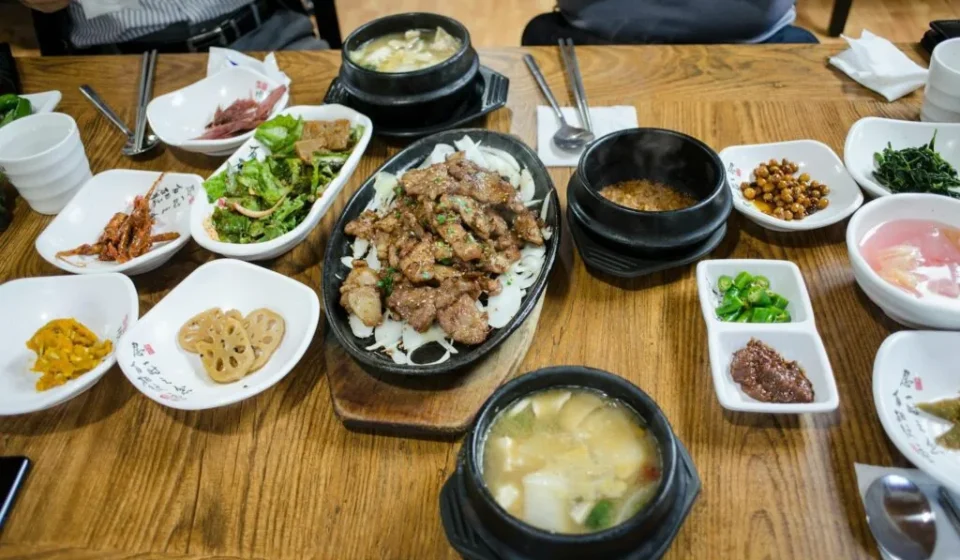
Whether at a Korean home or restaurant, the foundation of Korean food basics is “rice + soup (or stew) + several side dishes.” The Korean banchan culture spans kimchi varieties, seasoned vegetables, stir-fries and more, letting you enjoy different flavors throughout the meal.
- Rice: Usually white rice or mixed-grain rice; black rice has also become common.
- Soup/stew: A hot broth dish (doenjang-jjigae, kimchi-jjigae, seaweed soup, etc.) almost always joins the meal.
- Banchan: Beyond kimchi there are countless options – sweet black beans, stir-fried anchovies, cucumber salad, seasoned spinach, rolled omelet – so each meal feels fresh.
Student tip: It can be surprising to see multiple side dishes served for free at a restaurant, but this is part of Korean food culture. If you want more, just ask the staff “banchan deo juseyo” (more side dishes please) – ask which side dishes can be refilled without an extra charge.
8) Caution: Step-by-Step Spice Adaptation
Korean cuisine includes a fair number of seriously spicy dishes. Items that have recently trended overseas – like buldak-bokkeummyeon (fire-spicy ramen), spicy chicken feet, or tteokbokki – can be intensely stimulating for beginners, so caution is in order. Even Koreans are split on extreme heat, so start with a milder version and step up gradually.
Student tip: Saying “deol maepge hae juseyo” (please make it less spicy) at restaurants often gets the heat dialed down. Still, products like buldak come with their own spice levels – if you see “Haek Buldak” (nuclear fire chicken) on the package, know it’s seriously intense.
9) Restorative Dishes: Samgyetang and Chueotang
Korean cuisine, centered on fermentation and vegetables, is often praised as healthy – though it can also be salty due to strong seasoning, so moderation matters. Koreans enjoy boyangsik (restorative dishes) in summer and at key seasonal moments, with samgyetang (ginseng chicken soup), chueotang (mudfish soup), and grilled eel as signature examples. The belief is that these dishes restore energy when you’re feeling drained.

Student tip: Samgyetang is a classic Korean restorative dish – a whole chicken simmered with sweet rice, ginseng, and garlic – and foreigners typically enjoy it. Ginseng’s distinctive aroma can feel unfamiliar at first, so try a lighter-aroma version to start.
10) How to Find Vegetarian and Halal Korean Food Basics
If you’re vegetarian or seeking halal food, ordinary Korean restaurants can pose challenges, since most signature Korean food basics dishes include meat or seafood. Look closer though, and you’ll find plenty of options: pure vegetable side dishes, meatless bibimbap, and dedicated temple-cuisine restaurants. For details, see the Korean vegetarian food guide and the halal and kosher restaurants guide. Kimchi often contains salted seafood, so strict vegetarians may need to avoid it; if you have a seafood allergy, double-check the ingredients of doenjang and gochujang as well.
11) Wrap-Up: A Guide to Korean Food Culture
Korean cuisine – built on the “rice and banchan” structure and the diversity of fermentation and seasoning – has earned a unique global reputation. As a student, try the Korean food basics like kimchi, bulgogi, bibimbap, and doenjang-jjigae, and consider cooking some yourself. Even if it tastes too spicy or salty at first, many people end up loving it once they adapt. Joining a K-food cooking class is a great way to pick up the principles behind Korean food basics in one session.
The key is to adjust to your own palate and health, ease into bold flavors gradually, and – whenever possible – share meals with friends or locals to experience the dining culture. Along the way you’ll naturally pick up the language and culture, building rich memories of your time in Korea. Start with Korean food basics, appreciate the history and care behind Korean cooking, and let yourself fall deeper into its charm.
Image credits
- Featured image: Korean meal spread – Pexels, photographer makafood (Pexels License)
K-Name Studio: Create your perfect Korean name based on your personality and style.
What’s My K-Beauty Personal Color?
WeBring Service : Provides personalized services to foreigners living in Korea
Exclusive offer: Introducing foreign car rental in Korea, WeBring-SoCar
Kimjang inscription source: UNESCO 8.COM 8.23. Check broth, fermented seafood, sauces and preparation for vegetarian or halal requirements. Removing visible meat alone does not establish compliance.
- Korean Banchan: Unveiling the Heart of Korean Cuisine
- Korean Vegetarian Restaurant Guide: Vegan Korean Food 7-Day Complete Itinerary
- Traditional Korean Kimchi Types: A Complete Guide
- Korean Vegetarian Food Guide: Temple Cuisine, Vegan Restaurants, and How to Eat Plant-Based in Korea
Last updated: 21 October 2026
Rules, fees and procedures can change over time. Before an important decision, check the latest guidance from the relevant authority.
WeBring operates its own services for foreign residents in Korea. The following is a promotion for those services.
Living in Korea? You don't have to figure it out alone
Insurance, visas, jobs and hospital interpretation — WeBring supports every step of settling in Korea, in your language.