

Planning a Jeonju spring autumn itinerary requires different routes for each season. Cherry blossoms in spring and autumn foliage create entirely different landscapes at the same spots, and seasonal festivals and food options vary too. Below is a day-by-day breakdown organized by season.
Jeonju Spring Itinerary: March to May Route
From late March to early April, cherry blossoms bloom along the stream near Jeonju Hanok Village. Visiting the village early in the morning during this period means fewer tourists and much easier photo opportunities. The stone wall path in front of Gyeonggijeon and the Eunhaeng-ro area are the most beautiful stretches under the spring sun.
The basic spring route works like this: walk the main alleys of Hanok Village in the morning, then have lunch in the Jeondong area with Jeonju bibimbap or bean sprout soup. In the afternoon, head to Jaman Mural Village for an alley stroll, then finish by walking along Jeonjucheon Stream. This route covers the highlights without wearing you out.
In May, the Jeonju International Film Festival takes place. Visiting during this period adds outdoor performances and film screenings, making for a much richer cultural experience. Book a hanok stay inside the village at least two weeks ahead to secure your preferred dates.
Jeonju Autumn Itinerary: September to November Route
Autumn Jeonju is especially famous for its ginkgo tree foliage. From mid-October to early November, Eunhaeng-ro near Hanok Village turns bright yellow, and Deokjin Park’s lotus pond creates a striking contrast with the autumn sky, making it a top photography spot. Among the Jeonju spring autumn itinerary options, the fall foliage period draws the most visitors all year.
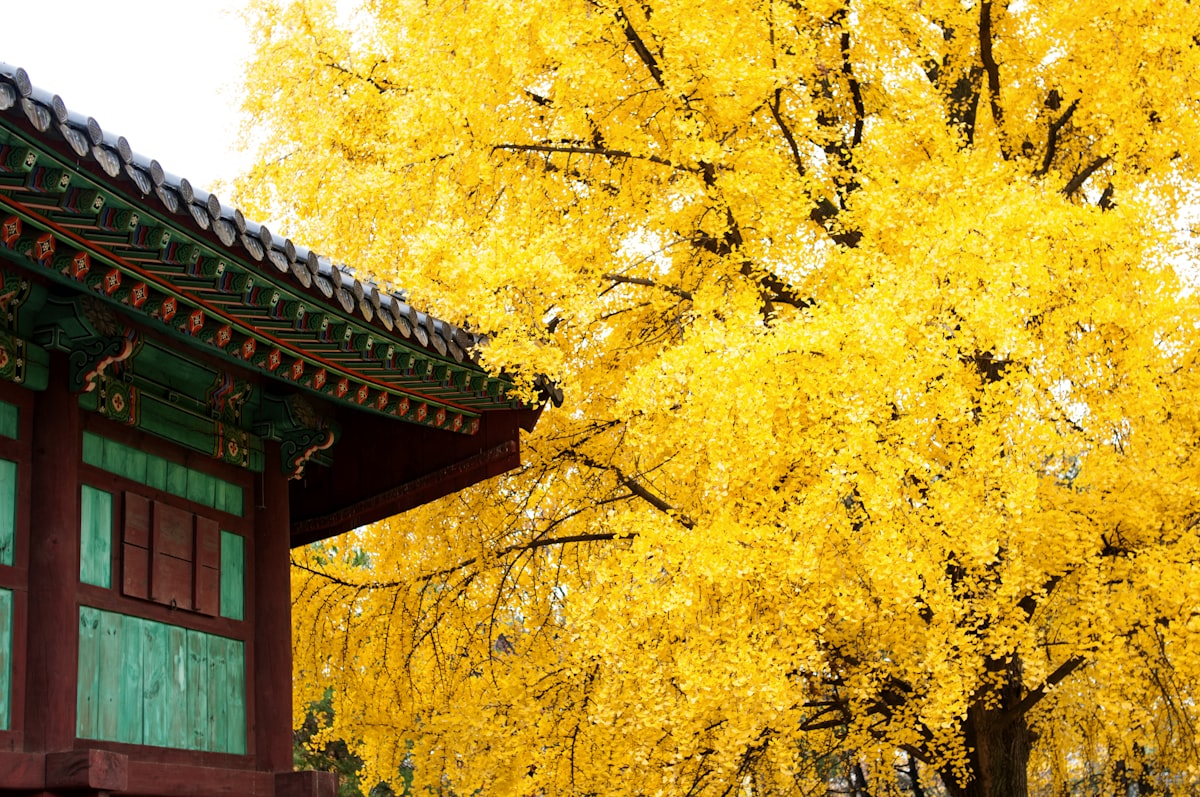
The recommended autumn route starts with a morning visit to Deokjin Park. After the park walk, head down toward Jeonjucheon Stream for lunch, then spend the afternoon slowly exploring Gyeonggijeon and Jeonju Hyanggyo. The Gyeonggijeon garden in autumn afternoon light, with foliage against traditional roof tiles, offers a completely different atmosphere from spring.
For dinner, try the Nambu Night Market. It operates every Friday and Saturday, and together with the Youth Mall, it is the heart of Jeonju’s late-night food scene. Stir-fried bibimbap, blood sausage, and handmade skewers are worth lining up for. By early November, temperatures drop sharply, so pack a light puffer jacket or windbreaker.
Seasonal Comparison of Key Jeonju Attractions
Hanok Village is a must in both spring and autumn, but the spots worth focusing on differ by season. Here is a priority breakdown by season.
| Attraction | Spring (Mar-May) | Autumn (Sep-Nov) |
|---|---|---|
| Gyeonggijeon Stone Wall Path | Cherry blossom photo spot | Foliage and roof tile combination |
| Jeonjucheon Stream Walk | Cherry blossom tunnel | Silver grass and autumn colors |
| Deokjin Park | Lotus pond early season | Peak autumn foliage |
| Eunhaeng-ro | Fresh green leaves | Golden ginkgo foliage |
| Nambu Night Market | Open year-round (Fri, Sat) | Open year-round (Fri, Sat) |
Jeonju Spring Autumn Itinerary: Practical Travel Tips
Jeonju is about 1 hour 20 minutes from Seoul by KTX. A day trip works fine, but adding one night at a hanok stay lets you enjoy the village at a relaxed pace in the early morning. Most of Hanok Village is walkable, and you only need a taxi or bus to reach Deokjin Park.
On spring weekends, traffic controls and parking congestion around Hanok Village are heavy. Since a taxi from Jeonju Station to Hanok Village takes just 5 minutes, public transportation is more efficient than a rental car. Fall foliage weekends require reservations for both accommodation and popular restaurants. If you plan to visit on a peak-season weekend, book your stay at least three weeks in advance.
A daily food budget of 20,000 to 30,000 won covers traditional set meals and street food comfortably. Prices drop noticeably just one block away from the tourist-heavy areas inside Hanok Village. Seeking out restaurants near traditional markets that locals prefer is a win for both cost and taste.
Frequently Asked Questions
When is the best time for a Jeonju spring trip?
Late March to early April is peak cherry blossom season. Since bloom timing varies each year, check the Jeonju City official tourism page or local SNS accounts one to two weeks before your visit.
When does Jeonju autumn foliage peak?
Based on ginkgo trees, mid-October to early November is the most beautiful period. The area around Deokjin Park and Eunhaeng-ro are the top autumn foliage spots in Jeonju.
How early should I book a Jeonju hanok stay?
For spring and autumn weekends, booking three to four weeks ahead is recommended. Early April and mid-October are the busiest periods, and popular hanok stays fill up even earlier. Since hanok accommodations have limited rooms, late booking significantly reduces your options.
Find more travel information on the Korea Tourism Organization official website.
For hanbok experiences and food routes at Jeonju Hanok Village, check out our Jeonju Hanok Village Hanbok Route Guide.
For information on getting from Seoul to Jeonju, see our Korea Transportation Guide.
K-Name Studio: Create your perfect Korean name based on your personality and style.
What’s My K-Beauty Personal Color?
WeBring Service : Provides personalized services to foreigners living in Korea
Exclusive offer: Introducing foreign car rental in Korea, WeBring-SoCar
- Nami Island Cherry Blossom and Autumn Foliage: Your Complete Seasonal Guide
- Jeonju Cafe Alley Course Guide: Hanok Village, Gaekridan-gil & Nambu Market
- Jeonju Hanok Village Course: Hanbok, Food & Photo Route Guide
- Jeonju Night Market Course Guide: Hanok Village Hours, Food & Walking Route
Last updated: 22 September 2026
Prices, opening hours and transport schedules change with the season and the operator. Check the official channel again before you go.
WeBring operates its own Korea tour and vehicle services. The following is a promotion for that service.
Explore Korea's mountains — guides in your language
Courses, transport and seasonal tips for 30 mountains, from Bukhansan to Hallasan, available in 11 languages. Pick up essential travel Korean and find events for the global community, too.