
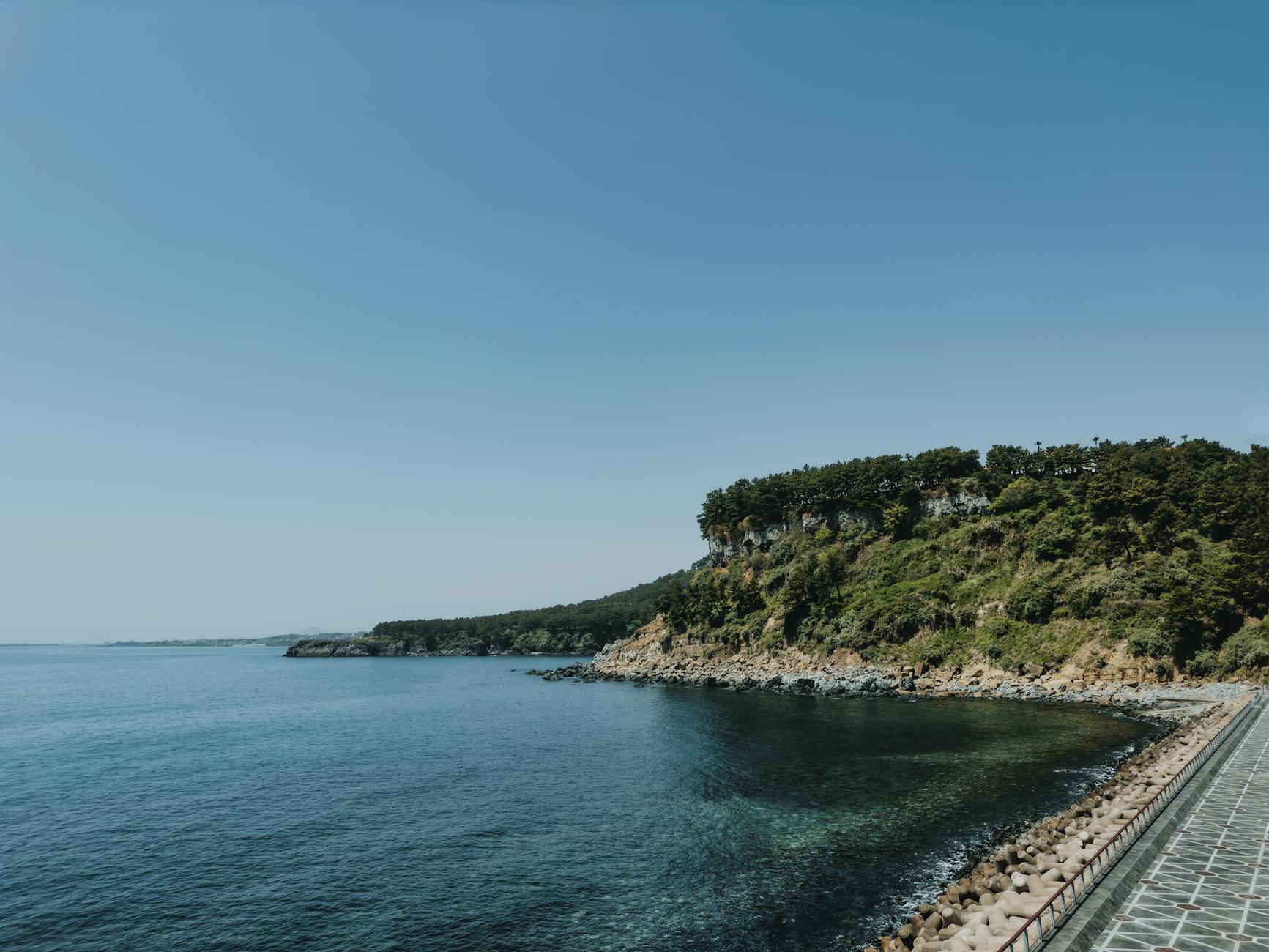
Top 10 Jeju Oreum Hiking Trails by Difficulty: Beginner to Advanced Guide
If you are searching for the best Jeju oreum hiking trails, you already know the dilemma: with over 360 oreums scattered across the island, choosing where to start can feel overwhelming. An oreum is a small parasitic volcano formed on the slopes of Hallasan, characterized by a crater and volcanic debris — and each one offers a completely different landscape.
This guide narrows it down to 10 essential Jeju oreum hiking trails organized by difficulty, from beginner-friendly strolls to challenging summit climbs. Note that trail times vary by individual pace, and wind and weather can significantly change how difficult a hike feels.
Jeju Oreum Hiking Difficulty Levels Explained

Level 1 (Beginner / Easy walk): 10-40 minutes to the summit, gentle slopes or short trails. Level 2 (Intermediate / Scenic explorer): Summit plus ridge or crater rim takes 1-2 hours, with stairs and exposed sections. Level 3 (Advanced / Time commitment): 2.5 hours or more, or requires reservation and guided access.
Jeju Oreum Hiking Top 10: Quick Comparison
Level 1: Saebyeloreum (summit 30 min), Abuoreum (summit 5-10 min), Yongnunioreum (1 hour round trip), Mogurioreum (30 min round trip), Akkeundarangswioreum (summit 10 min / rim 30 min). Level 2: Baegyagioreum (summit 30 min), Ttarabioreum (summit 30 min / ridge 1 hour), Geumagoreum (crater rim 1.2 km). Level 3: Darangswioreum (summit 40 min, steep), Geomunoreum (crater course 2.5 hours / full course 3.5 hours).
Before heading out: Some oreums have inaccurate GPS coordinates, no parking, or restricted access due to private land. Always verify current conditions before departure.
Level 1: 5 Easy Jeju Oreum Hiking Trails for Beginners
1) Saebyeloreum: The Signature West-Side Oreum
Saebyeloreum is one of the most frequently recommended oreums in western Jeju’s mid-mountain area. Standing at 519.3 meters above sea level, it takes roughly 30 minutes to reach the summit. From the top, you get panoramic views of Jeju’s western coast and Biyangdo Island. Two entrances (east and west) offer different slope gradients.
Why visit: Low barrier to entry with wide-open summit views. Wind is often strong, so bring a windbreaker for a more comfortable experience.
2) Abuoreum: Crater and Cedar Forest
Abuoreum features gentle slopes on all sides, with a rounded crater (gumburi) at the summit and a cedar forest inside the bowl that serves as the main photo spot. Jeju’s official tourism accounts describe it as reachable in just 5-10 minutes, making it one of the lightest Jeju oreum hiking options.
Why visit: Minimal physical effort with surprisingly rewarding scenery. If hiking with a dog, check the leash requirements posted at the trailhead.
3) Yongnunioreum: Ridge Walk Vibes
According to Visit Jeju, Yongnunioreum has gentle slopes and short trails suitable for all ages, completable in about 1 hour. However, this oreum has been subject to natural rest-year closures due to heavy foot traffic. Since reopening in July 2023, only certain summit trail sections are open, and conditions may change.
Why visit: One of the easiest ways to experience the classic Jeju ridge-walk feeling. Check which sections are open before your visit to avoid route confusion.
4) Mogurioreum: Cypress Forest Stroll
Located in Seongsan-eup, Mogurioreum takes about 30 minutes round trip and doubles as a casual walking trail for nearby campground visitors. The highlight is its cypress (hinoki) forest path.
Why visit: Quick forest therapy in under half an hour. A perfect add-on when your Jeju schedule is already packed.
5) Akkeundarangswioreum: Short and Scenic Silver Grass Oreum
As the name suggests, this is the “little sibling” of Darangswioreum. Guides indicate about 10 minutes to the summit and 30 minutes for a full loop around the rim. More details are available at Visit Jeju.
Why visit: A short, photogenic silver grass oreum. Especially efficient during autumn when you want a quick taste of Jeju’s famous susuk (pampas grass) scenery. Wear long sleeves and pants, as the grass brushes against clothing.
Level 2: 3 Intermediate Jeju Oreum Hiking Trails for Scenic Views
6) Baegyagioreum: Medicinal Herbs and Crater Views
Baegyagioreum in Pyoseon-myeon earned its name from the wild medicinal herbs that historically grew on its slopes. A 30-minute climb past grazing cattle and a water trough leads to the summit, where the crater view is the main reward.
Why visit: The summit delivers diverse views of surrounding oreums. Sunrise and early morning visits receive especially high praise (wind and light conditions are key).
7) Ttarabioreum: The Silver Grass Queen of Oreums
Ttarabioreum features 3 craters and 6 peaks. In autumn, its silver grass colonies create such a spectacular scene that it earned the nickname “Queen of Oreums.” The summit takes about 30 minutes, and a full ridge loop adds up to roughly 1 hour.
Why visit: The summit alone is worthwhile, but walking the full ridge line completes the Ttarabi experience. During silver grass season (autumn), wind is strong and raises the perceived difficulty — a windbreaker is essential.
8) Geumagoreum: Crater Lake and Rim Trail

Geumagoreum’s standout feature is the “wangmae,” a crater lake that forms after rain (though the water may not last long). At 428 meters elevation with a 1.2 km crater rim, the summit walk is highly enjoyable. For a broader Jeju trip plan, see our Jeju 2-night 3-day itinerary for first-timers.
Why visit: The crater rim produces excellent photographs. To catch the wangmae lake filled with water, aim for a visit shortly after rainfall (though timing is unpredictable).
As with many oreums, GPS accuracy, parking availability, and private land restrictions can be issues — verify before you go.
Level 3: 2 Challenging Jeju Oreum Hiking Trails
9) Darangswioreum: Steep Trails and a Grand Crater
Darangswioreum is also called the “Queen of Oreums” and features a notoriously steep trail that takes about 40 minutes to summit. Visit Jeju describes all sides as sharply inclined, so despite its modest appearance, the perceived difficulty is high.
The area around Darangswioreum also carries painful history related to the Jeju April 3rd Incident, and the Darangswidong cave entrance is permanently sealed.
Why visit: On a clear, breezy day, the wide-open eastern views from the summit are exceptional. Choose this trail when you want a serious Jeju oreum hiking experience rather than a casual stroll.
10) Geomunoreum: UNESCO World Heritage Lava Trail
Geomunoreum is the source volcano for the Geomunoreum Lava Tube System, a UNESCO World Natural Heritage site. The lava tubes formed when lava flowed from this oreum, making it deeply symbolic. Two course options are available: the crater course at approximately 5.5 km (2.5 hours) and the full course at approximately 10 km (3.5 hours).
For ecological protection, daily visitors are limited to 400, departures run from 9:00 AM at 30-minute intervals until 1:00 PM, and reservations must be made at least 2 days in advance. This adds a logistical layer not found at other oreums. Always confirm the latest operating rules before booking.
Why visit: This trail shows you why Jeju’s volcanic landscape earned UNESCO status. Since reservations are required, lock in Geomunoreum first when building your itinerary.
Jeju Oreum Hiking Route Combos: Proven Itineraries
Visiting just one oreum feels incomplete, but cramming in too many leads to fatigue. Mixing difficulty levels keeps satisfaction high. Western half-day (easy): Saebyeloreum followed by a nearby coastal cafe. Eastern half-day (scenic): Abuoreum then Yongnunioreum. Autumn signature: Ttarabioreum ridge loop (1 hour). Challenge day: Darangswioreum (steep ascent). UNESCO reservation day: Geomunoreum (book early, pick your course). For a complete Jeju itinerary, check our Jeju 2-night 3-day itinerary for first-timers.
Jeju Oreum Hiking Packing Checklist for Beginners
Windbreaker (wind is the wildcard on every Jeju oreum). Sneakers or light hiking shoes (watch for slippery conditions after rain). One bottle of water (guides note that even Yongnunioreum is manageable with just one bottle). Sun protection (hat and sunscreen). For silver grass oreums, long sleeves and pants are recommended (Akkeundarangswioreum guides specifically advise covering up).
Jeju Oreum Hiking FAQ
Q1. Which oreum is best for a first-timer? For your first Jeju oreum hiking experience, start with Saebyeloreum (30 minutes to summit) or Yongnunioreum (1 hour round trip) — both have clear trails and low physical demands.
Q2. Which oreum has the best silver grass? Ttarabioreum is the most famous autumn silver grass oreum. For a shorter option, Akkeundarangswioreum (10 min summit / 30 min rim loop) is highly efficient.
Q3. Is Yongnunioreum currently open? Yongnunioreum reopened after a natural rest-year closure, but only certain summit trail sections are accessible. Check the current open sections before visiting.
Q4. Why does Geomunoreum require a reservation? Geomunoreum limits daily visitors and requires advance booking to protect its fragile volcanic ecosystem. Lock in your reservation as soon as your travel dates are set.
Q5. What is the most important thing to watch out for when hiking oreums? GPS coordinates can be inaccurate, some oreums lack parking, and others sit on restricted private land. Always verify the latest access information before heading out.
K-Name Studio: Create your perfect Korean name based on your personality and style.
What’s My K-Beauty Personal Color?
WeBring Service : Provides personalized services to foreigners living in Korea
Exclusive offer: Introducing foreign car rental in Korea, WeBring-SoCar
Explore Korea's mountains — guides in your language
Courses, transport and seasonal tips for 30 mountains, from Bukhansan to Hallasan, available in 11 languages. Pick up essential travel Korean and find events for the global community, too.