
When international students come to Korea for their studies, one of the first things they consider when searching for housing is safety. Living in a foreign country means having concerns about walking home late at night or going out alone on weekends. Besides safety, factors like convenience, accessibility to public transportation, nearby universities, and the overall atmosphere of the area play a significant role in choosing the right neighborhood.
In this article, we will explore the key factors that determine a safe neighborhood for international students, review prominent safe areas in Seoul and other major cities, and provide practical tips for ensuring a secure and comfortable living environment.
1) Key Factors for Determining a Safe Neighborhood
When thinking of a safe neighborhood, factors such as crime rates and law enforcement presence often come to mind. However, simply having a low crime rate does not necessarily mean a neighborhood is the best place for international students to live comfortably.
For students, key safety indicators include:
✔ Well-lit streets with streetlights and CCTV
✔ Presence of 24-hour convenience stores, cafes, and shops where people are around even at night
✔ A police station or security outpost nearby for quick emergency response
Additionally, good public transportation is essential. Living near a subway station or bus stop allows for convenient travel, while neighborhoods too close to nightlife districts may be noisy or have occasional disturbances caused by intoxicated individuals. Finding the right balance is important.
2) Safe and Convenient Neighborhoods in Seoul
Seoul is the most popular city for international students in Korea, with many universities and well-established infrastructure for foreigners. Among the many districts, some of the safest and most well-regarded areas for students include Sinchon, Ewha, and Hongdae.
These areas are central university hubs with a large student population, offering vibrant nightlife, plenty of amenities, and a strong police presence with CCTV coverage. Many international students find them relatively safe due to the constant flow of people, even late at night.
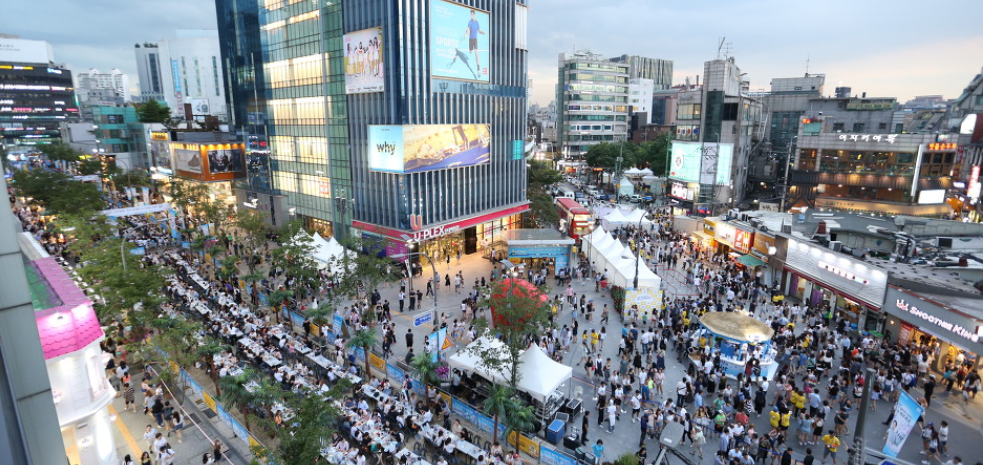
However, Hongdae is known for its club and bar scene, which can make it a bit noisy at night, and unexpected situations might occur. For students who prefer a quieter setting, Ewha and Sinchon offer a calmer atmosphere suitable for female students living alone. The downside is that rent prices in these areas tend to be high, so budgeting is essential.
Gangnam is another safe area with excellent public infrastructure and security, but the cost of living is significantly higher, making it less affordable for many international students. More budget-friendly yet safe alternatives include Gangseo, Dongjak, and Seongbuk, which are home to many college campuses.
3) Safe Areas in Other Cities Outside of Seoul
Apart from Seoul, cities like Busan, Daegu, Gwangju, and Daejeon are also popular among international students. Each city has certain areas known for being safe and convenient:
✔ Busan: Seomyeon and Haeundae are bright and bustling even at night, but Seomyeon can be quite crowded. Haeundae, with many tourists, has good security but can become very busy during peak seasons.
✔ Daegu: Dongseong-ro and Suseong District offer clean and safe living environments, although rent may be slightly higher.
✔ Gwangju: Sangmu and Cheomdan Districts are well-planned urban areas with universities and research centers nearby, creating an academic-oriented atmosphere.
✔ Daejeon: Yuseong District, home to KAIST and Chungnam National University, provides a student-friendly environment with good security and study-friendly cafes.
While these areas are generally considered safe, some nightlife-related disturbances and noise are common in any metropolitan city.
4) Pros and Cons of Living Near a University
Living near a university means plenty of student-friendly housing options such as one-room apartments, shared houses, and dormitories. Plus, these areas have convenient 24-hour stores and restaurants, making everyday life easier.
Another advantage is that it’s easier to connect with other students, which can be beneficial for social life and study groups. Since university districts see a high number of students returning home from libraries or cafes at night, they tend to feel safer.
However, university neighborhoods can be loud, especially during exam seasons or on weekends when social gatherings are common. Additionally, the high demand for housing drives rental prices up, meaning students may need to search extensively for affordable options.
5) How to Check the Safety of an Area
Before choosing a neighborhood:
✔ Seek feedback from current residents or fellow international students through Facebook groups, KakaoTalk open chats, and online forums.
✔ Check South Korea’s National Police Agency website for regional crime statistics and a security map.
✔ Visit the area both during the day and at night to assess street lighting, pedestrian traffic, and the overall environment.
Even if crime statistics are low, sparsely populated streets with poor lighting can feel unsafe. On the other hand, bustling areas with CCTV and frequent police patrols may offer better security despite higher incident reports.
6) Considering Convenience and Academic Environments
Beyond safety, students should also look at accessibility and nearby facilities. A convenient area should have:
✔ Supermarkets or traditional markets for groceries
✔ Banks, hospitals, and post offices for essential services
✔ Study-friendly spaces like libraries and cafes
Neighborhoods with good academic environments typically have many schools and a strong focus on education. These areas often have study cafes and bookstores, but they can also have higher rental costs.
7) Recommended Safe Neighborhoods for International Students
Here are some student-friendly, safe neighborhoods in Korea:
✔ Sinchon, Ewha, Sogang University area (Seoul): Young student population, well-developed infrastructure, 24-hour convenience, good public transport. Safe but expensive.
✔ Heukseok-dong, Dongjak District (Seoul): Near Chung-Ang University and Soongsil University, quieter area with key facilities.
✔ Yuseong District (Daejeon): KAIST and Chungnam National University, strong student presence, safe and study-friendly.
✔ Haeundae (Busan): Well-maintained security and tourism infrastructure. Offers a high quality of life but can be crowded during tourist seasons.
✔ Cheomdan District (Gwangju): Home to research institutes and universities, clean, well-organized, and relatively safe.
That said, no neighborhood is guaranteed to be 100% safe, so students must still weigh their options based on budget, proximity to school, and lifestyle preferences.
8) Visiting the Neighborhood Before Signing a Lease
For the best housing choice, a pre-visit is highly recommended. Walk around the area in both daylight and nighttime to check:
✅ Street lighting and foot traffic at night
✅ How often patrol cars pass by
✅ Presence of nearby security offices or police stations
Ask seniors or local real estate agents questions like:
✔ “Do many students live in this area?”
✔ “Is it safe to walk alone at night?”
Getting honest feedback from locals can help prevent poor decisions.
9) Personal Safety Tips
No matter how safe an area is, students should always stay vigilant:
✔ Avoid walking alone on empty streets late at night
✔ Be mindful when drinking or using public transportation at night
✔ Check security features in housing, such as door locks and CCTV
✔ Share your location with friends when returning home late
✔ Know emergency numbers: 112 (police) and 119 (fire & emergency services)
10) Conclusion: Research and On-Site Visits are Key
The safety of a student’s living environment greatly impacts their academic and personal life. Rather than relying solely on crime statistics, a combination of online research, community feedback, and physical visits is essential.
Korea is generally considered a safe country, but staying prepared and informed can make a huge difference. By following these guidelines, international students can enjoy a secure and enriching experience during their studies in Korea.
How to Actually Check Safety Information
“A safe neighborhood” is not an impression but information you can verify. Checking these before signing turns a vague sense into a concrete judgment.
- Public safety maps — a government service presents area-level safety information on a map, letting you compare crime, traffic and disaster indicators by district.
- Police box locations — check the walking time from the property. Closer also means more frequent patrols.
- Street lighting and CCTV — an alley by day and by night are different places. Walk it at night. Walking the actual route from the station to the door tells you more than any statistic.
- Building access control — entrance locks, cameras, parcel lockers. On ground and semi-basement floors, check the window bars.
- Local safety services — check whether the district runs escort-home or secure parcel services.
What matters additionally for foreign residents is the distance to help. A district center with multilingual staff, a hospital with interpretation, and a community speaking your language nearby all raise real-world safety. Statistically safe but isolated means risk arriving in a different form.
Set These Up Now
Choosing the area well does not remove the need to prepare separately. These take minutes and are the only preparation that works when it is needed.
- Emergency SOS — both iPhone and Android place an emergency call and share location from a button sequence. Check how it works on your model today.
- Medical ID — put blood type, allergies and an emergency contact who is in Korea into the lock-screen information.
- Text reporting to 112 and 119 — for situations where you cannot make a sound. Both accept text reports.
- Location sharing — set up live location sharing with family or a friend for late journeys home.
- Your address in Korean — save it in your phone’s notes so you can read it out when reporting.
In an emergency the numbers are 112 (crime) and 119 (fire and ambulance). If Korean is difficult, open with “English, please” and do not hang up. Connecting an interpreter takes a moment, and waiting is better than ending the call.
K-Name Studio: Create your perfect Korean name based on your personality and style.
What’s My K-Beauty Personal Color?
WeBring Service : Provides personalized services to foreigners living in Korea
Exclusive offer: Introducing foreign car rental in Korea, WeBring-SoCar
- University campus food guide: 10 BEST Korea dining courses
- Best Guesthouse in Seoul: Top 5 Areas for Budget Travelers
- Navigating Korea Subway: A Comprehensive Guide for International Students
- Lost Stolen Passport Korea: Your 1-Hour Golden Time Emergency Checklist
Last updated: 23 September 2026
Rules, fees and procedures can change over time. Before an important decision, check the latest guidance from the relevant authority.
WeBring operates its own services for foreign residents in Korea. The following is a promotion for those services.
Living in Korea? You don't have to figure it out alone
Insurance, visas, jobs and hospital interpretation — WeBring supports every step of settling in Korea, in your language.