Gunsan Lee Sung-dang Bakery Tour Guide: Beat the Line + Modern History Walk
Gunsan Lee Sung-dang bakery tour is a standard route that pairs a visit to Korea’s oldest still-operating bakery (1945, on the same site for almost 80 years) with a walking course through the Gunsan modern history district. Lining up 30 minutes on weekdays and over an hour on weekends for a single red-bean bun is normal here, but adjusting timing and route cuts the wait by half while still covering the modern district. This guide pulls together Lee Sung-dang’s history, signature breads, line-saving tips, and the modern-street walking route in one read. For more, see the Korea Tourism Organization.

Gunsan Lee Sung-dang bakery tour essentials at a glance
| Item | Detail |
|---|---|
| Address | 177 Jungang-ro, Gunsan, North Jeolla |
| Founded | 1945 (Korea’s oldest bakery) |
| Hours | 08:30–20:30 |
| Closed | Mondays (often closed when Monday is a public holiday) |
| Signature menu | Red-bean bun, vegetable bun (~1,500 KRW each) |
| Wait | ~30 min weekday, 60+ min weekend (no wait if you arrive 10–15 min before opening) |
Lee Sung-dang has held the same spot since 1945
Lee Sung-dang’s start traces back to 1945, the late occupation period. Just after liberation, Lee Seok-woo took over the spot of a Japanese-run pastry shop and opened the bakery, and the family has run it across three generations to today. The address is 177 Jungang-ro, Gunsan. In the heart of an old commercial district where the surrounding storefronts have faded, customers still line up — for one reason: the red-bean bun recipe has not changed in nearly 80 years. To pair with the Gunsan retro route, also see the Gunsan modern history street guide.
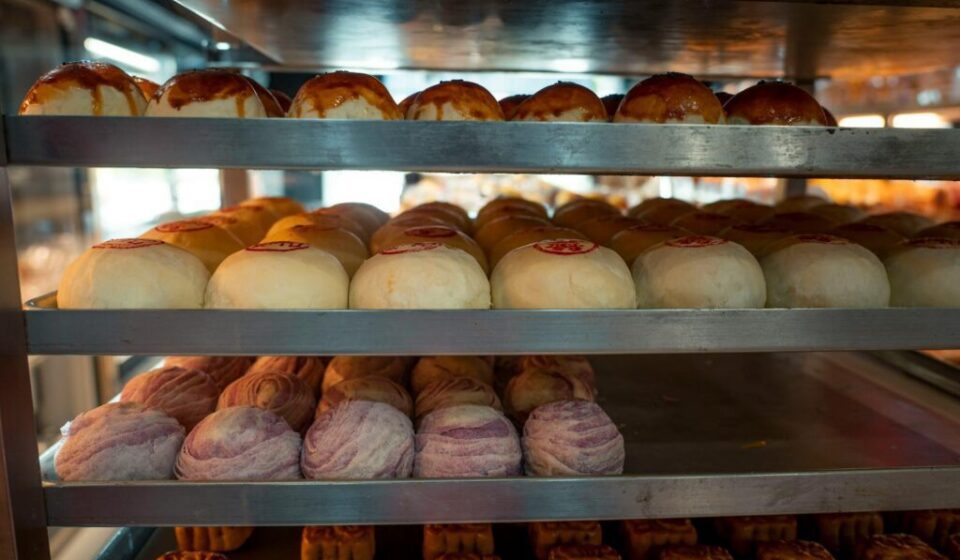
Lee Sung-dang is more than a tourist stop because it is still an active neighborhood bakery. The breads on the shelves are baked from before dawn, and on busy days the main items can sell out by midday. Long before the Instagram era, Gunsan locals came here for holiday gifts, ancestral rite offerings, and everyday snacks. That stack of years is what makes Lee Sung-dang part of Gunsan’s history rather than a passing landmark.
Gunsan Lee Sung-dang bakery tour: how to cut the wait

Visiting Gunsan Lee Sung-dang on a weekend afternoon means a line of dozens stretching out the door. If wait time matters, use the methods below.
| Method | Action | Effect |
|---|---|---|
| Right at opening | Arrive 10–15 minutes before 08:30 | Walk in without waiting |
| Weekday morning | Tue–Thu, 09:00–10:00 | ~50% shorter than weekend wait |
| One hour before closing | After 19:30 | Almost no line; popular items may be sold out |
Mondays are the regular closed day, so always confirm before going. When a public holiday falls on a Monday, the bakery often stays closed too — checking SNS or Naver Place for the day’s hours is a useful habit. Red-bean and vegetable buns also sell out fast, so a late-afternoon visit may not have what you wanted.
There is no separate takeout line versus dine-in line. With a single register, everyone waits in one line. Once inside, staff ask which breads and how many, then bag them right away. Deciding on the breads and quantities before you reach the front speeds the checkout for you and the people behind you.
Gunsan Lee Sung-dang bakery tour: must-buy breads

Lee Sung-dang’s lineup is short. The strength is a small set of items made on a recipe that has not changed in decades.
- Red-bean bun (danpat-bbang) — The signature. The red-bean filling is not too sweet and the bread shell is not thick, making it approachable even for people who don’t usually love red bean. Around 1,500 KRW.
- Vegetable bun (yachae-bbang) — A symbolic menu paired with the red-bean bun. A soft savory bread with mayonnaise filling that includes carrots, onions, and other vegetables. The salty profile pairs naturally with the red-bean bun, so most visitors buy both.
- Cream bun — A classic with custard cream filling. The cream is not heavy, so it works for both kids and elderly customers.
- Soboro bun — Crisp soboro topping. Lower sweetness than typical Korean bakeries, so it stays light.
If you’re buying multiples as a gift, eat them the same day. With no preservatives, the texture changes by the next day. Leaving them in a car or out at room temperature speeds up hardening. From a long distance, bring an ice bag or cooler.
Gunsan Lee Sung-dang bakery tour + modern-street walking course

The Jungang-ro area where Lee Sung-dang sits is the center of the Gunsan modern history culture district. After buying bread, you can walk to nearby modern buildings and alleys without taking transit. A 2–3 hour walking loop is enough to cover the core sites.
| Place | Walk from Lee Sung-dang | Note |
|---|---|---|
| Gunsan Modern History Museum | ~10 min | Open-port era to occupation life, free admission |
| Hirotsu House | ~5 min | 1920s Japanese wooden house, film location |
| Sinheung-dong Japanese-style alley | ~10 min | Block-level modern Japanese architecture |
| Former Gunsan Customs Building | ~15 min | 1908 brick exterior, registered cultural property |
| Wolmyeong Park | ~20 min | Downtown view, March 1 Independence Movement memorial |
The recommended order: buy bread at Lee Sung-dang, walk first to Hirotsu House and Sinheung-dong alleys, then escape weather inside the Modern History Museum, see the former Customs Building exterior, and finish at Wolmyeong Park. The bench in front of Hirotsu House and the outdoor tables at the museum entrance are good places to eat the bread. To extend with the Gunsan ocean route, see the Gunsan sea modern architecture day course.
By car, use the Jungang-ro public lot or the Gunsan Modern History Museum lot first, then walk to Lee Sung-dang. Parking on Jungang-ro itself is tight.
Gunsan Lee Sung-dang bakery tour FAQ
What are Lee Sung-dang’s hours and rest day?
08:30–20:30, closed every Monday. When a public holiday falls on a Monday, it usually stays closed too, so confirm via Naver Place or phone before going.
Should the red-bean bun be eaten the same day?
No preservatives, so same-day eating is best. Next-day eating is fine but the texture hardens. For long-distance travel, seal it and use an ice cooler, then freeze on arrival and microwave briefly to recover much of the texture.
Where do I park near Lee Sung-dang?
No store-specific lot. Use Jungang-ro public parking or the Gunsan Modern History Museum lot, then walk over. Weekend mornings fill up fast — arriving before opening secures both a spot and the no-line option.
Image credits
- Bread display — Photo by Jimmy Liao on Pexels
- Bakery shelf — Photo by Javey Du on Pexels
- Red-bean bun — Photo by Cats Coming on Pexels
- Modern history district — Photo by Theodore Nguyen on Pexels
K-Name Studio: Create your perfect Korean name based on your personality and style.
What’s My K-Beauty Personal Color?
WeBring Service : Provides personalized services to foreigners living in Korea
Exclusive offer: Introducing foreign car rental in Korea, WeBring-SoCar
Explore Korea's mountains — guides in your language
Courses, transport and seasonal tips for 30 mountains, from Bukhansan to Hallasan, available in 11 languages. Pick up essential travel Korean and find events for the global community, too.