

Iksan Mireuksa is the largest ancient Buddhist temple site in Korea, founded under King Mu of Baekje in Geumma-myeon, Iksan, North Jeolla Province. Inscribed in 2015 as part of the UNESCO World Heritage “Baekje Historic Areas,” its international value is now formally recognized. This guide pulls together Iksan Mireuksa’s history, the stone-pagoda restoration story, the National Museum of Iksan, transit, and seasonal tips into a one-day Baekje UNESCO course. For more, see the Korea Tourism Organization.
Iksan Mireuksa essentials at a glance
| Item | Detail |
|---|---|
| Location | Giyang-ri, Geumma-myeon, Iksan, North Jeolla |
| Founded | Early 7th century, by King Mu of Baekje |
| Scale | About 190,000 sqm, three-precinct (East/Middle/West) layout |
| UNESCO | 2015, as part of “Baekje Historic Areas” |
| Admission | Free at the site and the National Museum of Iksan |
| Museum hours | Tue–Sun 09:00–18:00; closed Mon and Jan 1 |
What is Iksan Mireuksa? The largest Baekje temple’s history
Iksan Mireuksa is the temple site founded in the early 7th century under Baekje’s King Mu (r. 600–641). According to a founding legend recorded in Samguk Yusa, the king and queen founded the temple after seeing a Maitreya triad emerge from a pond at the foot of Yonghwasan. Excavation results show a rare three-precinct layout — East, Middle, and West — with one pagoda and one main hall paired in each precinct. This composition has few parallels in Korean Buddhist temple architecture.
The temple is believed to have remained active through the Goryeo period and gradually went out of use during the Joseon era. What’s visible above ground today is mostly stone bases and stone elements, but excavations starting in the 1980s and the integrated maintenance plan since have made the precinct outlines clear. With a total area of about 190,000 square meters, this site is at an outstanding scale among ancient Korean temples. To pair Iksan Baekje sites with Jeonju, also see the Iksan Jeonju 2-night, 3-day course.
Iksan Mireuksa stone pagoda: the oldest stone pagoda in Korea and its restoration

What catches the eye first at Iksan Mireuksa is the Mireuksa stone pagoda standing in the West precinct (National Treasure No. 11). The oldest and largest surviving stone pagoda in Korea, this transitional work translates wood-pagoda style into stone and carries enormous architectural and sculptural value. Its original form is estimated at nine stories; centuries of damage left only parts of six stories. During the Japanese occupation, an emergency reinforcement using added concrete was carried out, but later that very concrete caused internal cracking inside the pagoda.
Disassembly and conservation began in 1999. During the work, in January 2009, the gold reliquary record (geumje sari bongyeonggi) was discovered in the central pillar’s relic chamber, and the inscription identified the patron of the construction as the daughter of Lady Sa Tak Jeokdeok, a major historiographical surprise. The reliquary set and inscription record are now displayed at the National Museum of Iksan. After 20 years of disassembly and restoration, the pagoda was reopened to the public in its restored form in 2019. Next to it, on the East precinct site, stands a 1993 reconstruction in modeled-pagoda style, useful for side-by-side comparison.
Beside Iksan Mireuksa: the National Museum of Iksan
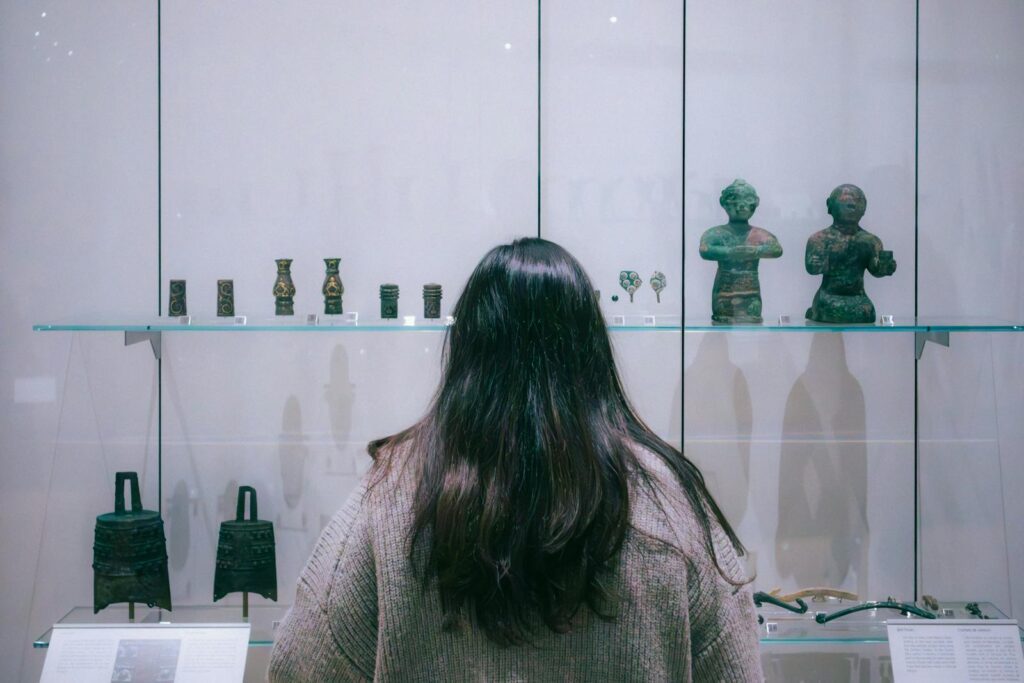
Right next to the site, the National Museum of Iksan specializes in collecting and exhibiting artifacts excavated from Iksan Mireuksa. Opened in 2020, it minimizes above-ground volume and tucks the building low into the landscape so that it does not interrupt the view of the site. The permanent galleries display tens of thousands of artifacts — reliquary fittings, gilt-bronze incense burners, roof tiles, ceramics, and metal ornaments — arranged by period and theme.
The viewing path begins with an introduction to Iksan as a Baekje royal capital, follows the founding of Mireuksa, the disassembly and restoration of the stone pagoda, and the relic enshrinement ritual. The video reconstruction of the enshrinement ritual, paired with the original inscription, brings Baekje royal Buddhist practice to life in concrete detail. The museum also runs a children’s experience room and education programs, making it suitable for family visits. Hours are Tuesday–Sunday 09:00–18:00; closed Mondays and January 1.
Iksan Mireuksa visit info: transit, nearby attractions, seasonal tips
Iksan Mireuksa sits in Giyang-ri, Geumma-myeon, Iksan, about a 15-minute drive from Iksan Station. By public transit, Iksan city bus 80 runs to the entrance of the site. Admission to the site is free, and the National Museum of Iksan is also free. The parking lot at the entrance handles full-size buses as well.
Other Baekje heritage sites cluster nearby — Iksan Wanggung-ri (national treasure, UNESCO), the Wanggung-ri branch of the National Museum of Iksan, and Iksan Ssangneung (the Great King’s Tomb and the Lesser King’s Tomb) — so a half-day or full-day combined tour works well. In spring, cherry blossoms and rapeseed flowers around the site make it a popular photo spot; in autumn, golden rice paddies as a backdrop to the stone pagoda are a draw on their own. On summer weekends, the site sometimes runs reservation-based after-hours openings, so check the official Iksan culture and tourism channels before going.
Iksan Mireuksa is more than an abandoned temple ground. The 1,400-year stack of time on the stones reads simultaneously as Baekje royal ambition, religious belief, and craftsmanship. Standing in front of the restored pagoda, that weight of presence reaches you before any explanation. Pairing this with the Gongju and Buyeo Baekje sites makes a strong 2-night, 3-day route as well.
Image credits
- Baekje stone pagoda — Photo by TimePRO TV on Pexels
- Korean stone pagoda — Photo by Joel M B Marrinan on Pexels
- Museum artifact — Photo by Anurag Jamwal on Pexels
- Temple grounds — Photo by Saksham Vikram on Pexels
K-Name Studio: Create your perfect Korean name based on your personality and style.
What’s My K-Beauty Personal Color?
WeBring Service : Provides personalized services to foreigners living in Korea
Exclusive offer: Introducing foreign car rental in Korea, WeBring-SoCar
Image credits: Mireuksa, Iksan 2015.jpg — Korea.net , Jeon Han, CC BY-SA 2.0; 익산 미륵사지 석탑.jpg — Unknown author Unknown author, Public domain
- Korea History Museum Tour: 10 One-Day Heritage Routes
- Korea UNESCO Travel Destinations: 15 Sites Ranked
- Gyeongju Historical Tour: Explore Silla’s Ancient Capital
- Seoul Olympic Park Guide for Foreign Visitors: Routes, Hours, and Hidden Spots
Last updated: 22 September 2026
Prices, opening hours and transport schedules change with the season and the operator. Check the official channel again before you go.
WeBring operates its own Korea tour and vehicle services. The following is a promotion for that service.
Explore Korea's mountains — guides in your language
Courses, transport and seasonal tips for 30 mountains, from Bukhansan to Hallasan, available in 11 languages. Pick up essential travel Korean and find events for the global community, too.


