
Korean recycling rules: bags, fines & district guide
Korean recycling rules confuse almost every newcomer. Korea’s waste sorting system is challenging for one reason: the big principles are nationwide, but the actual disposal method (day, time, bag, collection) changes by district (gu) and even by neighborhood (dong). Even within Seoul, some areas accept waste from 6pm–midnight, while others restrict it to 8pm–midnight, and bag colors and prices also differ (Gangseo-gu Office).
So this guide focuses less on theory and more on the Korean recycling rules that actually help you avoid fines and rejected pickups. For other administrative basics foreign residents need, see the 15 things you can do at a community service center.
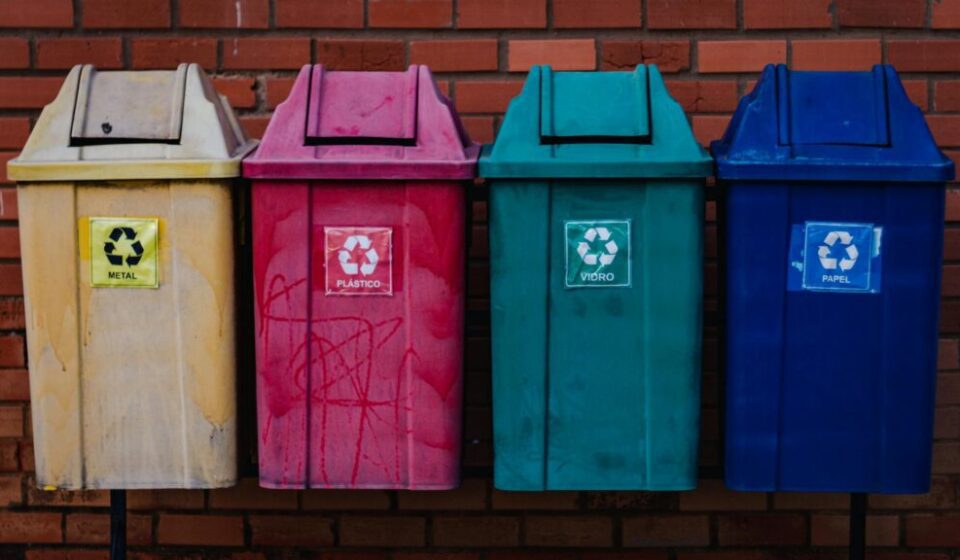
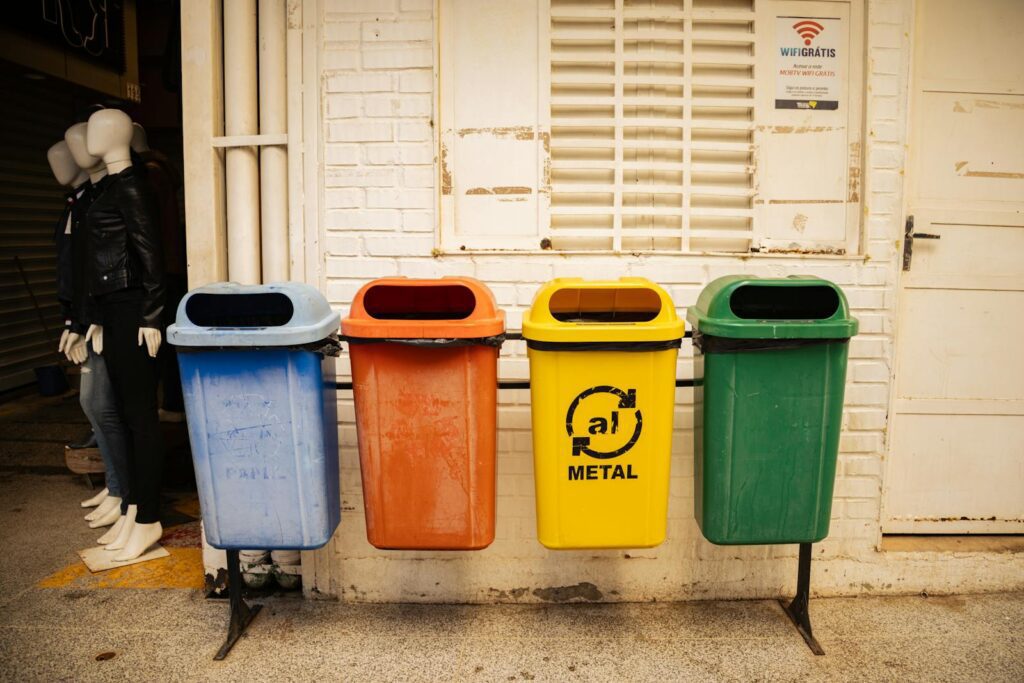
Korean recycling rules: the 5 main waste categories (half the battle)
| Category | Where it goes | Cost / bag | Common foreigner mistake |
|---|---|---|---|
| General waste (생활폐기물) | Volume-based bag (jongnyangje) | Paid (bag price) | Using a regular plastic bag → rejection / fine |
| Recyclables (paper, can, bottle, plastic) | Local rules (clear bag / dedicated bin / apartment sorting area) | Mostly free | Mixing dirty plastic / coated paper |
| Food waste (음식물) | Designated bag or RFID smart bin / container | Paid (bag or weight) | Adding bones, shells, or plastic |
| Bulky waste (furniture / mattress) | Register first, then attach disposal sticker | Per-item fee | Leaving it on the street with no registration |
| Hazardous / special (lightbulbs, batteries, broken glass / ceramics) | Designated bin or special bag (특수마대) | Varies by district | Putting broken glass in a regular bag |
Some districts (e.g., Jung-gu Seoul) handle glass, ceramics, planters, and small construction debris through a special volume-based bag (특수종량제봉투) (Jung-gu Office). Right after a move, this is one of the first things to confirm — see the moving-day checklist.
Korean recycling rules: what changes from one district to another
“Korea must be the same everywhere” is the most dangerous assumption. The four items that typically vary by district are below.
(1) Pickup days and hours
- In Seoul’s Gangseo-gu, household food waste is announced as 5 days/week (Sun–Thu) 18:00–24:00 (Gangseo-gu).
- Seongdong-gu directs residents to put recyclables out between 20:00 and midnight (Seongdong-gu).
- Gwanak-gu separates household waste hours such as residential 18:00–24:00 (Gwanak-gu).
The takeaway: don’t assume “evening is fine.” Always check your own district’s schedule first. For other foreigner-life basics, see the foreigner credit-score starter guide.
(2) Recycling method (clear bag vs. bin vs. apartment sorting area)
Jung-gu instructs residents to put cans, bottles, plastic, and packaging vinyl into a clear bag or tied bundle after rinsing (Jung-gu Office). Apartment complexes usually follow on-site sorting rules posted by the management office (Seongdong-gu).
(3) Food waste method (designated bag vs. RFID smart bin)
Gangseo-gu lists food waste bag prices alongside RFID smart bins (charged by kg) (Gangseo-gu); Seocho-gu also provides RFID/reduction units or designated food waste bags (Seocho-gu).
(4) Bag size, price, and color
Seocho-gu publishes types and prices such as household (white translucent), reusable (purple), commercial (orange translucent), and special (PP sack) (Seocho-gu); Jung-gu separately publishes general, food waste, and special bag prices (Jung-gu Office).
So “you can buy bags at the convenience store” is true, but which bag you must buy depends on your district — that’s the first trap.
Volume-based bags (general waste) explained
What is jongnyangje?
It’s a system where you must use official bags issued by the local government for general waste — you pay according to volume, with the disposal fee built into the bag price (Korea.kr policy briefing).
Where can I buy them?
According to district guidelines, official bags are sold at large supermarkets, convenience stores, and authorized neighborhood shops (Jung-gu Office). At a convenience store, just say “Jongnyangje 20L juseyo.”
Three rules for choosing the right bag
- Use the bag from your current district. Bags from another gu may be rejected.
- Pick the right type (household / commercial / food waste) — colors and labels distinguish them.
- Choose the size based on your weekly output: 10–20L for singles, 50–75L for a family of four.
Can I still use bags from my old district after moving?
According to the Korea.kr policy briefing, yes — but you must get a “certified bag sticker” from your new community service center to attach to the old bag (rules vary by district, Korea.kr). For other moving-day tasks, see the moving checklist.
Food waste — where most fines actually come from
Four golden rules for food waste
- Drain the water — lower weight reduces bag/RFID cost and odor.
- No plastic, no toothpicks, no bones — contamination is the #1 cause of fines.
- Use the designated bag or RFID container only — regular plastic bags are rejected.
- Follow the day and time rules in your district.
What is NOT food waste (mixing these is a common fine)
| Item | Why | Correct category |
|---|---|---|
| Chicken / pork / fish bones | Hard to grind / compost | General waste (jongnyangje) |
| Clam, crab, shrimp shells | Too hard to process | General waste |
| Eggshells | Not suitable for compost | General waste |
| Tea bags / herbal medicine residue | Fiber / string contamination | General waste |
| Plastic, straws, foil | Foreign material | General waste or recycling |
Source: Seocho-gu food waste guide.
Food waste fines you should know
Gwanak-gu announces fines of up to KRW 200,000 for contaminated or unsorted food waste (rules vary by district, Gwanak-gu).
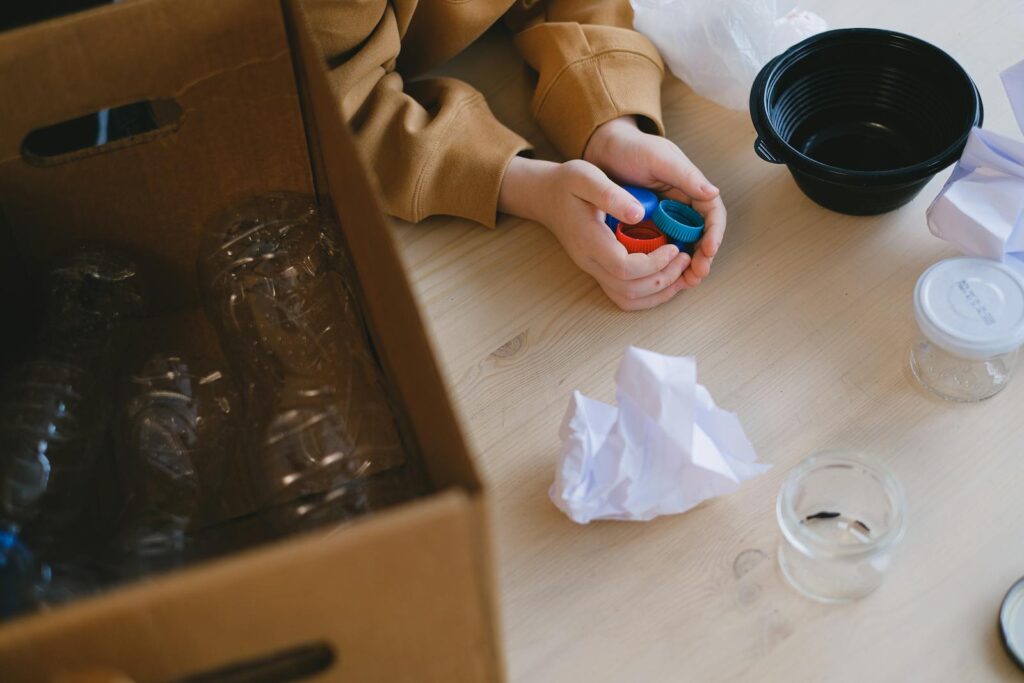
Recycling — “empty, rinse, separate” is the core rule
Basic principles (official summary)
- Empty — finish or dump the contents
- Rinse — remove food and contamination
- Separate — peel off labels, lids, and other materials
- Don’t mix — sort by material
Seoul has “vinyl & clear PET bottle day-of-week” rules in some areas
Seoul has expanded clear PET bottle separate disposal even to detached-housing areas on a day-of-week schedule (Seoul press release). The recommended method is to remove the label, leave the cap off, and crush the bottle before disposal (Seoul environment policy).
Top 7 “fake recyclables” foreigners often mis-sort
- Food-stained paper / plastic → general waste
- Coated paper cups / receipts → general waste
- Mirrors, ceramics, heat-resistant glass → special bag, or wrapped in newspaper for general
- Vinyl strings, rubber bands, tape → general waste
- Ice packs (gel type) → general waste (or district collection bin)
- Toothpaste / cosmetic tubes → general waste when fully used
- E-cigarette cartridges, batteries → dedicated collection bins
Korean recycling rules: enforcement points where foreigners get caught

#1: Using a non-standard bag (regular plastic bag)
Putting general waste in a black supermarket bag or a thin white bag is the fastest way to get caught. Non-jongnyangje bags are subject to refused pickup plus a fine (Guro-gu Office).
#2: Wrong time / wrong place
Putting bags out in the morning or middle of the day, or leaving them outside the designated drop point. Many districts list this as a fineable offense (e.g., Guro-gu announces KRW 100,000, Guro-gu; Seocho-gu publishes a violation table, Seocho-gu).
#3: Mixed disposal (food / recycling / general in one bag)
One bag with food, recycling, and general waste mixed together. This is the most common mistake and triggers refused pickup, a corrective order, or a fine.
#4: Illegal dumping (cigarette butts, throwing bags, vehicle dumping)
Throwing bags from a vehicle or littering cigarette butts has separate fines, with CCTV monitoring and citizen reward programs (National Legal Information Center).
Top 10 mistakes foreigners make
- Putting general waste in a supermarket plastic bag.
- Mixing plastic, bones, or shells into food waste.
- Using a bag from a different district.
- Ignoring time rules and putting bags out during the day.
- Leaving bulky furniture on the street with no registration (illegal dumping).
- Ignoring apartment-complex sorting rules.
- Recycling cardboard boxes without flattening them.
- Putting food-stained plastic / paper in recycling.
- Leaving the label and cap on a clear PET bottle.
- Putting batteries, fluorescent lamps, or electronics into a regular bag.
How to find your neighborhood rules in 3 minutes
- Visit your district (gu) office website → Environment / Cleaning menu and search for “separate disposal guide.”
- Apartment residents: check the management office or building bulletin board for in-complex rules (day-of-week, sorting area).
- For questions, call 120 Dasan Call (Seoul) or your district’s environment department.
- Public-transport rules and basics are on Korea’s subway and bus etiquette.
Korean recycling rules FAQ — practical questions for foreigners
Q1. Where do I buy jongnyangje bags?
Per district guidance, official bags are sold at large supermarkets, convenience stores, and authorized neighborhood shops (Jung-gu Office).
Q2. Should I put recyclables inside the jongnyangje bag too?
No. Recyclables usually go in dedicated bins, clear bags, or apartment sorting areas; mixing them with general waste counts as contaminated disposal (Jung-gu Office).
Q3. Which items must NOT go in food waste?
Bones, clam/crab/shrimp shells, eggshells, tea bag / herbal-medicine residue, plastic, straws, and foil go in general waste (jongnyangje), per district guidance (Seocho-gu).
Q4. Are there fines for breaking food-waste rules?
Gwanak-gu lists fines up to KRW 200,000 for contaminated or unsorted food waste (rules vary by district, Gwanak-gu).
Q5. Why are clear PET bottles collected separately?
National policy expanded separate collection of clear PET bottles, and Seoul rolled out a day-of-week schedule even to detached-housing areas (Seoul).
Q6. Can I really get fined for putting trash out in the daytime?
Many districts explicitly list time/place violations as fineable (e.g., Guro-gu announces KRW 100,000; Seocho-gu publishes its violation table, Guro-gu).
Q7. After moving, can I still use bags from my old district?
According to a Korea.kr briefing, yes — but you must get a “certified bag sticker” at your new community service center to attach to the old bag (rules vary by district, Korea.kr).
Q8. Can fines really reach 1,000,000 won?
Seocho-gu states that under the Waste Management Act, time-violation and illegal dumping can be fined up to KRW 1,000,000, with actual amounts varying by violation type, history, and district (Seocho-gu).
K-Name Studio: Create your perfect Korean name based on your personality and style.
What’s My K-Beauty Personal Color?
WeBring Service : Provides personalized services to foreigners living in Korea
Exclusive offer: Introducing foreign car rental in Korea, WeBring-SoCar
Living in Korea? You don't have to figure it out alone
Insurance, visas, jobs and hospital interpretation — WeBring supports every step of settling in Korea, in your language.