Forest Healing Travel Korea: Complete Guide to Natural Recreation Forests, Booking & Seasonal Picks

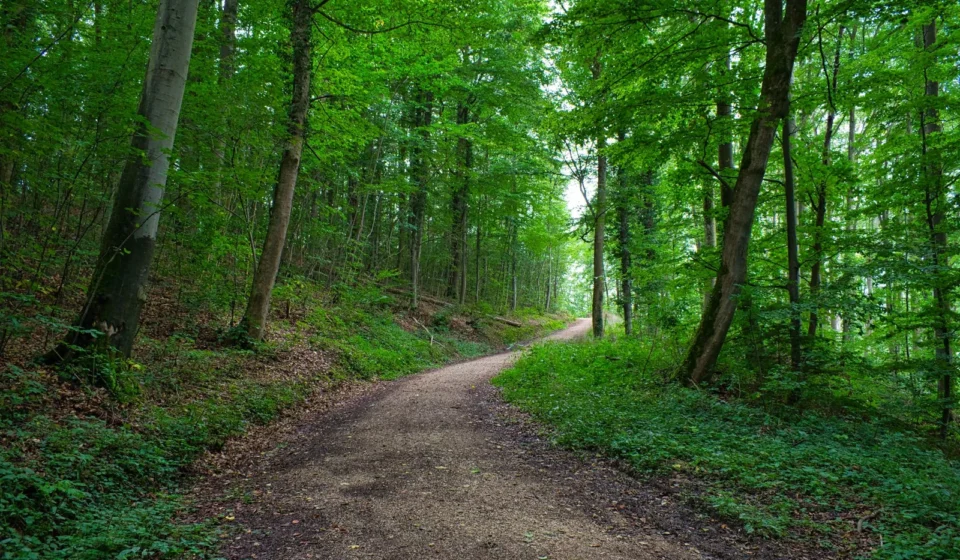
Forest healing travel in Korea is one of the fastest ways to shake off urban fatigue. If you spend every day surrounded by concrete buildings and traffic noise, the fresh air of a green forest becomes essential. Forest bathing sites and natural recreation forests offer a phytoncide-rich healing space, where sunlight filtering through dense trees, the sound of leaves rustling in the wind, and the soft feel of earth underfoot gently unwind the deep fatigue in your mind.
This guide covers forest healing travel courses from the Seoul metro area to Gangwon, Chungcheong, and Jeolla, plus natural recreation forest booking methods, seasonal landscapes, and tips tailored to families, couples, and solo travelers — all in one place.
Why Forest Healing Travel Works: Phytoncide and Forest Bathing Benefits
Forest bathing means resting while inhaling the phytoncides released by trees. In a 2007 study by Dr. Qing Li’s team at Nippon Medical School, 12 adult men who took a three-day, two-night forest trip showed NK (natural killer) cell activity roughly 50% higher on average, and the effect lasted more than 30 days. (Li et al., 2007) With only 12 participants, the figures shouldn’t be generalized too far — treat them as the reason forest healing is studied as more than an ordinary walk.
Forest bathing sites are equipped with flat walking paths, benches, and deck rest areas, so even trekking beginners can enjoy the forest comfortably. You can sit on a deck and read a book, chat with companions, close your eyes and doze off — all of these count as good rest. Observing how the forest changes through four seasons lets you notice subtle natural details that everyday life often hides. Operating hours and bookings can be checked at Korea National Park Service and the National Natural Recreation Forest Management Office.
Forest Healing Travel Courses Near Seoul: Healing Meets Easy Access
Just 30–60 minutes outside the city, there are places where you can fully enjoy green healing. Cheonggyesan and Gwanaksan connect to Subway Line 4 and the Sinbundang Line, so they are easy to reach even without a car, and even a short course from the entrance is enough to get the benefits of forest healing travel. The Cheonggyesan entrance has a 1–2 hour trekking course, with pavilions and rest stops scattered along the way for a low-effort walk.
Heading toward Namyangju and Gapyeong, hidden forest bathing sites with clear stream valleys and lush trails make for great weekend drives. Many people cycle along the Jungnangcheon bike path and then stop by a nearby mountain for some forest bathing.
| Course | Distance | Access | Recommended For |
|---|---|---|---|
| Cheonggyesan Oknyeobong | 4 km round / 2 hr | Sinbundang Line Cheonggyesan Ipgu | Beginners, families |
| Gwanaksan Jaunam | 5 km round / 3 hr | Line 2 SNU Stn + bus | Intermediate |
| Gapyeong Jathyanggi Pureunsup | 2 km deck path | Gapyeong Stn + 20-min taxi | With toddlers, wheelchair |
| Namyangju Chungnyeongsan Forest | 3–6 km | Car recommended | Overnight stay |
Regional Natural Recreation Forests: Slow Forest Healing Travel With Overnight Stays
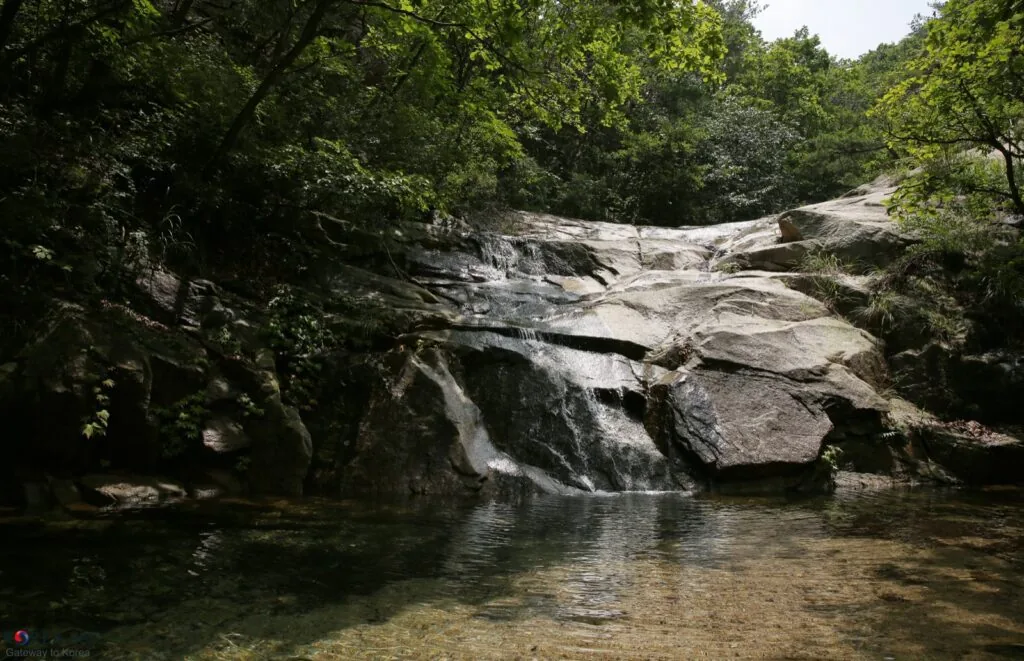
If you want a more relaxed forest healing travel schedule, book a night at a natural recreation forest. Compared to standard forest bathing sites, natural recreation forests come with lodging and camping facilities, letting you stay for a day or two and fully surrender to the forest. Gangwon Province’s Pyeongchang, Hongcheon, and Inje are home to many recreation forests thanks to their dramatic ridges and clean streams.
At Pyeongchang’s Baekdudaegan natural recreation forest, you can walk trekking courses lined with fir and pine trees and enjoy the cool wind. At night you can fall asleep under a star-filled sky from your lodge, and in the morning go jogging to the sound of birdsong. Families can give kids hands-on nature lessons, and couples can quietly recharge with private time.
Chungcheong and Jeolla regions also have distinctive natural recreation forests. The Jirisan-area recreation forests host Korea’s largest mountain ecosystem and are very popular, while Damyang and Suncheon recreation forests in South Jeolla pair well with nearby attractions like Juknokwon Bamboo Garden and Suncheonman Wetland. For more on getting around Korea, see the Korea transportation guide.
Natural Recreation Forest Booking Process at a Glance
National natural recreation forests open the next month’s reservations on the Korea Forest Service integrated booking site (foresttrip.go.kr) at 9 AM on the 1st of each month. Public and private recreation forests are run separately on each local government website or their own page, so check in advance.
- Sign up at foresttrip.go.kr → identity verification
- Search by recreation forest, date, and party size
- Pick a room type (Forest House, Forest Culture Lodge, camping deck)
- Pay and save the confirmation email
- Pick up the key at the info desk one hour before check-in
Peak seasons (July–August, October fall foliage) sell out within minutes of opening, so set an alarm. On weekdays or off-season, same-day booking is often possible at many sites.
Seasonal Landscapes and How the Forest Changes
Forest bathing sites show a different face in every season. In spring, young leaves emerge and the forest fills with light green, and bird songs ring out more vividly in the morning. In summer, phytoncide levels peak inside the dense green canopy, and you can feel as if you are submerged in a sea of green. Sitting in the shade beside a stream with your feet in the water, or reading with the sound of a waterfall in the background, makes the heat fade away.
In autumn, the entire forest turns red and gold, making it a worthy fall foliage destination. The sound of leaves under your feet feels familiar, and the cooler breeze at your nose captures the unique sentiment of autumn. In winter, the stillness of a snow-covered forest is striking. White snow piles on branches, the days are short, so the whole forest carries the look of early evening even at midday. A walk in the winter forest is cold, but the crisp air brings deep refreshment to your chest.
Forest Healing Travel Tips: Clothing, Water, and Safety
If it is your first forest visit, choose a short course or a low mountain so your body and mind can adapt naturally, rather than tackling a long course right away. Comfortable walking shoes, easy clothing, more than 500 ml of water, and a light snack will make the trip more pleasant. Always check summer downpour or winter heavy snow forecasts on the Korea Forest Service or Korea Meteorological Administration app before leaving.
- Shoes: ankle-supporting light hiking shoes or trail runners
- Clothes: moisture-wicking shirt + thin windbreaker
- Water: 500 ml–1 L per person (up to 2 L in midsummer)
- Safety: phone battery 80%+, share start and return times
- Bugs: tick/mosquito repellent (must-have May–October)
If you plan to stay overnight at a natural recreation forest, the most popular sites sell out early on weekends and holidays, so book ahead. Each recreation forest offers different lodging — pension-style units, bungalows, camping grounds — so pick what fits your taste, party size, and budget. Some forests also run forest interpretation programs, woodworking classes, and natural dyeing workshops. To pair this with a Gangwon trip, see the Gangwon leisure sports guide.
Empty Your Mind and Step Into the Forest
Forest healing travel is a time when the simplest face of nature, rather than flashy activities, offers real comfort. As you walk a tree-scented forest path, the clutter in your head clears and your body feels lighter. Travel often centers on experience — but travel in the forest can center on emptiness instead.
You do not need to do much; simply looking at the forest and listening to nature is enough. When you return to the city, the quiet ease the green gave you will softly wrap a corner of your mind for a long time. Mark your next forest healing travel date on the calendar and start by booking a recreation forest near you.
K-Name Studio: Create your perfect Korean name based on your personality and style.
What’s My K-Beauty Personal Color?
WeBring Service : Provides personalized services to foreigners living in Korea
Exclusive offer: Introducing foreign car rental in Korea, WeBring-SoCar
- Gyeonggi Valley Day Trip Near Seoul: BEST 10 Summer Courses Within 1 Hour
- Gyeonggi Valley Day Trip Best 10: 1-Hour Summer Escape from Seoul
- Urban Park Healing: Discovering Nature Escapes in Seoul
- Korea Hot Spring Guide: Asan & Bugok Itinerary
Last updated: 22 September 2026
Prices, opening hours and transport schedules change with the season and the operator. Check the official channel again before you go.
WeBring operates its own Korea tour and vehicle services. The following is a promotion for that service.
Explore Korea's mountains — guides in your language
Courses, transport and seasonal tips for 30 mountains, from Bukhansan to Hallasan, available in 11 languages. Pick up essential travel Korean and find events for the global community, too.