


This guide covers F-4 application preparation and administrative steps after settling in Korea. Distinguish visa validity from the period of stay, and initial domestic residence reporting from reporting a later move. Banking and health insurance have their own eligibility requirements; there is no universal 14-day post-arrival deadline for every task.
F-4 overseas Korean visa — what it is and what it unlocks
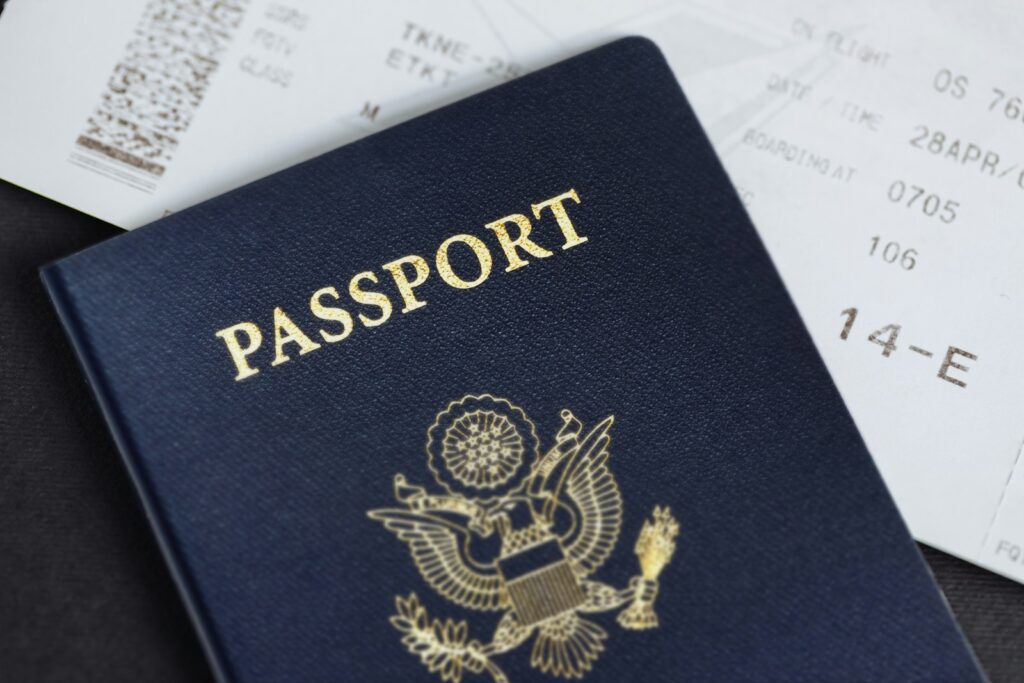
The F-4 overseas Korean visa is issued under the Act on the Immigration and Legal Status of Overseas Koreans. It targets people who lost Korean nationality through naturalization or hold Korean lineage but a foreign passport, and its activity scope is dramatically broader than other foreign visas.
- Period of stay: distinguish visa validity from the period of stay actually granted, and check your authorized expiry date.
- Economic freedom — virtually all professions except a narrow simple-labor list
- Real estate — purchase and lease on equal terms with Korean nationals
- Finance — local bank accounts, credit cards, loans on Korean-resident terms
- Health insurance — eligible for NHIS after 6 months of residency
- Education — public school enrollment, special university admission tracks possible
F-4 overseas Korean visa — three eligibility categories
| Category | Who qualifies | Documentation |
|---|---|---|
| 1st gen | Former ROK citizen who acquired foreign citizenship | Loss-of-nationality record + foreign citizenship cert |
| 2nd gen | Direct descendants of former ROK citizen parent | Parent’s family relations cert, applicant’s birth cert |
| 3rd gen | Direct descendants of former ROK citizen grandparent | Three-generation family-relations chain |
Heads-up: applicants of Chinese or former-Soviet (CIS) heritage often face additional Korean-language or eligibility requirements. Implementing rules change frequently, so confirm at Hi Korea or your local Korean consulate before applying.
F-4 overseas Korean visa — application steps and documents
You can apply at a Korean consulate abroad (overseas application) or at the Immigration Office inside Korea (status change). The document set is nearly identical, but watch the 3–6 month validity window of source documents.
- Step 1 — Identity and lineage: foreign passport, family relations certificate proving Korean parent/grandparent, birth certificate
- Step 2 — Criminal record check: issued in country of residence, apostilled or consular-legalized
- Step 3 — Photo and forms: passport-size photos, visa application form (consulate template)
- Step 4 — Status change in Korea: residential proof, optional sponsor information
- Step 5 — Fees: roughly KRW 60,000–120,000 depending on consulate
Processing typically runs 2–4 weeks at consulates and 4–8 weeks for inside-Korea status changes. Avoid the weeks before Lunar New Year, Chuseok, and end-of-year — backlogs noticeably extend timelines.
F-4 overseas Korean visa — first 14 days after arrival
Once the visa is issued, five administrative tasks set the pace for the first months. Run them in order; later finance and education steps depend on the early ones.
- Alien Registration Card (외국인등록증) — apply within 90 days at the Immigration Office; this card unlocks essentially all later admin
- Bank account — open at any major Korean bank with the ARC, passport, and a Korean phone number
- Health insurance — employer-based via your job, or self-enroll at the NHIS branch after 6 months of residency
- Domestic residence change: a domestic-residence reporter must report within 14 days of moving to the new address. This is distinct from Korean resident registration.
- Mobile plan — postpaid lines available with the ARC; some MVNOs restrict foreigner plans
F-4 overseas Korean visa — frequently asked questions
Q1. Can I run a business or freelance under F-4?
Yes. F-4 covers nearly all economic activity except some simple-labor jobs. Sole-proprietor registration, corporate establishment, and freelance work all follow the same procedures as Korean nationals. Confirm your specific industry classification before launch.
Q2. Can my children enroll in Korean public schools?
Yes. Public elementary, middle, and high schools accept children with the parent’s ARC and proof of address. Grade placement is typically decided after a school interview. Look for schools with multicultural / overseas-Korean Korean-language adaptation programs if your child’s Korean is limited.
Q3. How long until I can transition F-4 to F-5 permanent residency?
F-5 eligibility depends on the specific permanent-residence category. There is no single residence period or income multiple that applies to every F-4 holder, and permanent residence is not automatic after a set period. Confirm the applicable residence, livelihood, conduct and documentation requirements with 1345 or the competent Korean immigration office.
F-4 overseas Korean visa: the fastest start to long-term Korean life
F-4 overseas Korean visa carries the broadest activity rights of any foreigner visa in Korea, and it’s the most direct legal foundation for long-term settlement. Issuance itself is relatively simple — five or six document categories — but the real determinant of how fast settlement clicks is finishing the post-arrival five-step chain (ARC, bank, health insurance, district registration, mobile) inside the first month.
If this is your first time settling in Korea, treat the first month as administrative-priority time, then layer in employment, education, and asset decisions on top of a stable base. F-4 also opens forward paths to F-5 permanent residency or even nationality restoration — worth thinking long-term from the day the visa is issued.
K-Name Studio: Create your perfect Korean name based on your personality and style.
What’s My K-Beauty Personal Color?
WeBring Service : Provides personalized services to foreigners living in Korea
Exclusive offer: Introducing foreign car rental in Korea, WeBring-SoCar
Government24 domestic residence-change reporting · Official overseas Korean residence guidance
What F-4 Does Not Allow: Check the Restricted Sectors First
The F-4 opens employment broadly, but it is not unlimited. The overseas Korean legislation restricts simple manual labor and work contrary to public morals, and people run into trouble by not knowing this before taking a job.
- Simple manual labor is restricted. Exactly which occupations fall into that category is set by notification and revised over time, so verify a specific job at Hi Korea rather than assuming.
- Gambling and entertainment-adjacent sectors are also restricted.
- Working in a restricted sector can affect your residence status and counts against you in a later F-5 permanent residence review.
- Self-employment and starting a business are generally possible, though some sectors need separate licensing. Business registration and residence status are two different procedures.
Where it is ambiguous, the rule is simple: ask 1345 before you start the job. Checking afterwards means the record already exists.
Proving Korean Descent
The slowest part of the application is establishing lineage. Your own documents are not enough; you need papers showing the link to Korea.
- If you once held Korean nationality — the removed family register showing the loss of nationality, or equivalent family relation documents, is the core item.
- If you are establishing it through a parent or grandparent — their removed family register, plus birth and marriage documents connecting them to you. The further back the generation, the more paperwork.
- Documents issued abroad usually need translation plus an apostille or consular authentication. Requirements differ by country, so confirm in advance.
- Not being able to find the family register is a genuinely common obstacle. Tracing it through relatives in Korea or the office covering the registered domicile takes time, so start with this item first.
Do not abandon the application when a document is missing. There is rarely only one way to establish descent, so consulting the mission or immigration office about acceptable alternatives is the fastest route.
Q4. Does military service affect this?
For men it is worth checking. How military obligation is assessed depends on when Korean nationality was lost, your age, and how your current nationality was acquired, and certain age brackets can face constraints on residence or nationality procedures. Do not guess — describe your specific circumstances to both the Military Manpower Administration and immigration. Outcomes vary enough by case that someone else’s experience does not transfer to yours.
Q5. Can I enroll in health insurance on F-4?
Yes. Employment makes you a workplace subscriber; otherwise check with NHIS whether you meet the regional enrollment conditions. What matters is that your coverage start date may not be your arrival date — treatment during that gap is paid in full. Call 1577-1000 soon after arrival to confirm your acquisition date, and cover any gap with a private product.
Q6. How does F-4 differ from F-5 permanent residence?
F-4 carries a period of stay requiring extension and comes with restricted employment sectors. F-5 has no period limit and far fewer activity constraints. F-4 is the starting line for settling; F-5 is closer to the finish.
Conversion requirements cover length of residence, means of livelihood, conduct and basic knowledge. Requirements and periods get revised, so confirm current standards — but in practice, steadily accumulating records of residence and income is the greatest asset later. Tax filings and health insurance payment history are exactly that.
Q7. What do I do as my F-4 period nears its end?
Apply for an extension before expiry. Applying after the date has passed puts you out of status, so put the expiry in your calendar and begin at least a month ahead. Many offices are appointment-only, and simply securing a slot can take days.
The extension review looks at what you have been doing in Korea. Income filings, health insurance payments and evidence of actual residence all serve here, so keeping those in order day to day is the preparation. If you have been out of the country for a long stretch, prepare material explaining why.
WeBring operates its own visa application and extension service. The following is a promotion for that service.
Don't let your visa expire
Check your remaining stay and extension deadline in 30 seconds with the WeBring visa calculator. Need help with the paperwork? Our experts speak your language.