
Raising a child in Korea as a foreign parent comes with numerous challenges, from selecting the right daycare center to helping your child adapt to the language and culture. Working parents or those less proficient in Korean may find the decision-making process particularly overwhelming. Fortunately, Korea has a well-developed childcare support system, with structured daycare centers and kindergartens.
In this guide, we will provide essential information on Daycare in Korea centers and kindergartens, helping foreign parents make informed decisions about early education options, including international daycare centers.
Differences Between Daycare Centers and Kindergartens
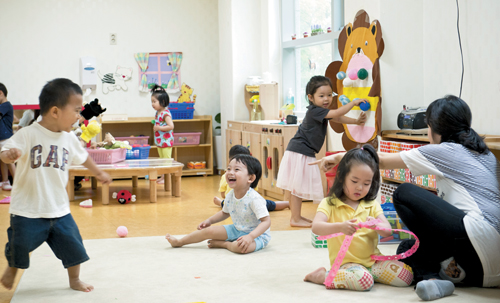
In Korea’s childcare and education system, daycare centers (어린이집) primarily cater to infants and children aged 0–5, providing both care and education. Kindergartens (유치원), on the other hand, focus more on structured educational programs for children aged 3–5.
Daycare centers tend to offer longer hours, making them more suitable for working parents or single-parent households. Kindergartens, supervised by the Ministry of Education, follow a more structured curriculum and are sometimes referred to as “preschools” or “nursery schools.”
Your choice between a daycare center and a kindergarten depends on various factors, including your child’s age, work schedule, and educational preferences. If both parents work late, a daycare center with extended hours may be a better fit. Alternatively, if you want your child to experience structured learning, including Korean language and basic academics, a kindergarten might be the ideal choice.
Public vs. Private Daycare Centers
Korean daycare centers can be broadly categorized into public (국공립) and private (사립) institutions.
- Public daycare centers are funded and operated by local governments or offered through private-public partnerships. They have lower tuition fees and maintain standardized quality levels. However, demand is high, and spots often fill up quickly, making entry highly competitive.
- Private daycare centers are run by individuals or organizations and offer a broader range of educational programs. Some may emphasize foreign language education, Montessori methods, or Reggio Emilia philosophies. However, tuition fees are typically higher, and program quality varies, meaning parents should research options carefully.
Choosing a Kindergarten and Understanding the Curriculum
Kindergartens in Korea can be public, private, or attached to elementary schools (병설유치원).
- Public kindergartens are generally more affordable and adhere to the government-mandated Nuri Curriculum (누리과정) for ages 3–5.
- Private kindergartens also follow the Nuri Curriculum but may offer additional specialized programs, such as English-focused lessons or arts and sports-centered courses.
Kindergartens attached to public elementary schools provide a seamless transition into formal schooling and are often preferred by parents for continuity. However, admission is competitive, and applications follow specific timelines and priority rules.
Admission Procedures and Waitlists
Public daycare centers and kindergartens typically require applications through government-run systems, such as the Childcare Subsidy Registration System or the Kindergarten Enrollment Management System.
For private daycare centers and kindergartens, applications can often be submitted online, but some require an in-person visit for consultation and document submission.
Once you apply, a waitlist number is assigned, and parents are notified when a spot becomes available. If you are unfamiliar with Korean, contacting your local childcare office or a multicultural family support center can help. Additionally, prepare necessary documents like child registration, vaccination records, and parental identification in advance for a smoother process.
Childcare Costs and Government Support Programs
In Korea, government subsidies help cover daycare and kindergarten tuition for children aged 0–5. The Nuri Curriculum support program provides standardized educational funding for children aged 3–5, with additional financial aid available for low-income or multicultural families.
For instance, the 아이행복카드 (Child Happiness Card) allows parents to pay childcare fees with automatic subsidy deductions.
Foreign families may also receive similar childcare support, depending on their residency status and whether their child is registered as a Korean resident or foreign national. Multicultural families may also qualify for additional language support programs, so it’s advisable to check with local authorities or daycare/kindergarten officials.
Daily Schedules and Educational Programs
Daycare centers and kindergartens generally operate between 9 AM – 2 or 3 PM as standard hours. However, many offer extended care, evening care, and weekend daycare for working parents. Extended care programs allow parents to drop off early and pick up late, making it easier to balance work schedules.
Most programs include:
- Basic daily routines (hygiene training, meal times)
- Play-based activities
- Early language and math introduction
- Arts and physical education
For children who do not speak Korean fluently, there may be language challenges or cultural adjustments. It’s beneficial to inform teachers in advance about your child’s needs so they can provide supportive learning strategies. Some teachers may use simple English expressions or encourage friendly peer interactions to help foreign children feel more comfortable.
Foreign Parent Communities and Information Sharing
As the number of foreign families in Korea increases, many online and offline communities have emerged to help parents navigate early childhood education.
Social media platforms, parenting forums, and local community groups provide valuable first-hand experiences on daycare and kindergarten options, including costs, curriculum reviews, and teacher attitudes.
In cities with large expat populations—Seoul, Incheon, and Busan—English-speaking communities often organize educational discussions or weekend playgroups. Utilizing these networks can help parents gain insight into popular daycare centers/kindergartens, admissions timelines, and registration strategies.
Language Development and Cultural Adaptation for Your Child
A major concern for foreign parents is how their child will learn Korean. While young children tend to pick up the language quickly through social interactions, they may experience temporary confusion if exposed to a different language at home and in school.
Long-term bilingual education benefits cognitive development, but parents should monitor their child’s language progress and check whether communication barriers exist. If needed, multicultural support centers or language assessment programs can help evaluate development and offer resources for better adjustment.
Additionally, Korean daycare centers and kindergartens emphasize group-based activities like lining up for transitions and collective playtime, which may feel different from Western-style individualistic education. While this might take some getting used to, balancing both cultural approaches can provide a richer social experience for children.
Conclusion: Utilize Diverse Childcare Options and Support Programs
For foreign parents raising young children in Korea, selecting the right daycare center or kindergarten is a significant decision. Fortunately, Korea offers various public and private childcare institutions, along with financial support programs for children aged 0–5, reducing the economic burden for families.
Additionally, extra support for multicultural families is increasing, with more language and adaptation programs available.
Parents are encouraged to visit multiple childcare facilities, research online forums, and gather insights from other expat families. As both parents and children grow familiar with life in Korea, adapting to the language, cultural environment, and education system will become easier.
We hope that this guide helps foreign parents in Korea make informed and confident choices about their child’s early education, ensuring a positive experience for both the children and their families.

K-Name Studio: Create your perfect Korean name based on your personality and style.
What’s My K-Beauty Personal Color?
WeBring Service : Provides personalized services to foreigners living in Korea
Exclusive offer: Introducing foreign car rental in Korea, WeBring-SoCar
WeBring operates its own services for foreign residents in Korea. The following is a promotion for those services.
Living in Korea? You don't have to figure it out alone
Insurance, visas, jobs and hospital interpretation — WeBring supports every step of settling in Korea, in your language.