Korean Four Season Fashion: Tips and Trends

1) Understanding Korea’s Four Seasons Weather

Korea experiences a distinct four-season climate, with significant temperature and weather variations throughout the year. Spring, spanning from March to May, is typically warm and dry, making it an ideal season for outdoor activities. Summer, covering June to August, is characterized by high temperatures and humidity, with the monsoon season peaking in July, bringing frequent rain. Autumn lasts from September to November, offering clear, crisp weather, often considered the most comfortable season for activities. Winter, from December to February, can be freezing, especially in northern regions where snowfall is frequent.

Given these dramatic seasonal shifts, adjusting outfits accordingly is essential. Korean four season fashion reflects the climate changes, with layered clothing being a popular choice due to the significant temperature difference between indoor and outdoor environments. Koreans are also keen on matching their outfits to seasonal trends—opting for breathable, light fabrics in summer and wool or padded coats in winter.

2) Spring Fashion Tips: Dealing with Temperature Fluctuations and Fine Dust

Korean spring days are warm, but the temperature can drop significantly in the mornings and evenings. Layering is a practical solution, with lightweight sweaters, cardigans, or thin jackets offering easy adjustability throughout the day. As flowers bloom and the weather brightens, pastel and light-colored outfits become prevalent, reflecting the seasonal mood.

Spring in Korea also brings yellow dust and fine dust pollution, making masks a common accessory. Visitors unfamiliar with air pollution might be surprised, but wearing stylish masks that match outfits or opting for dust-resistant clothing materials can help. Choosing fabrics that don’t attract dust and shaking off clothes after going outside can also help maintain cleanliness.

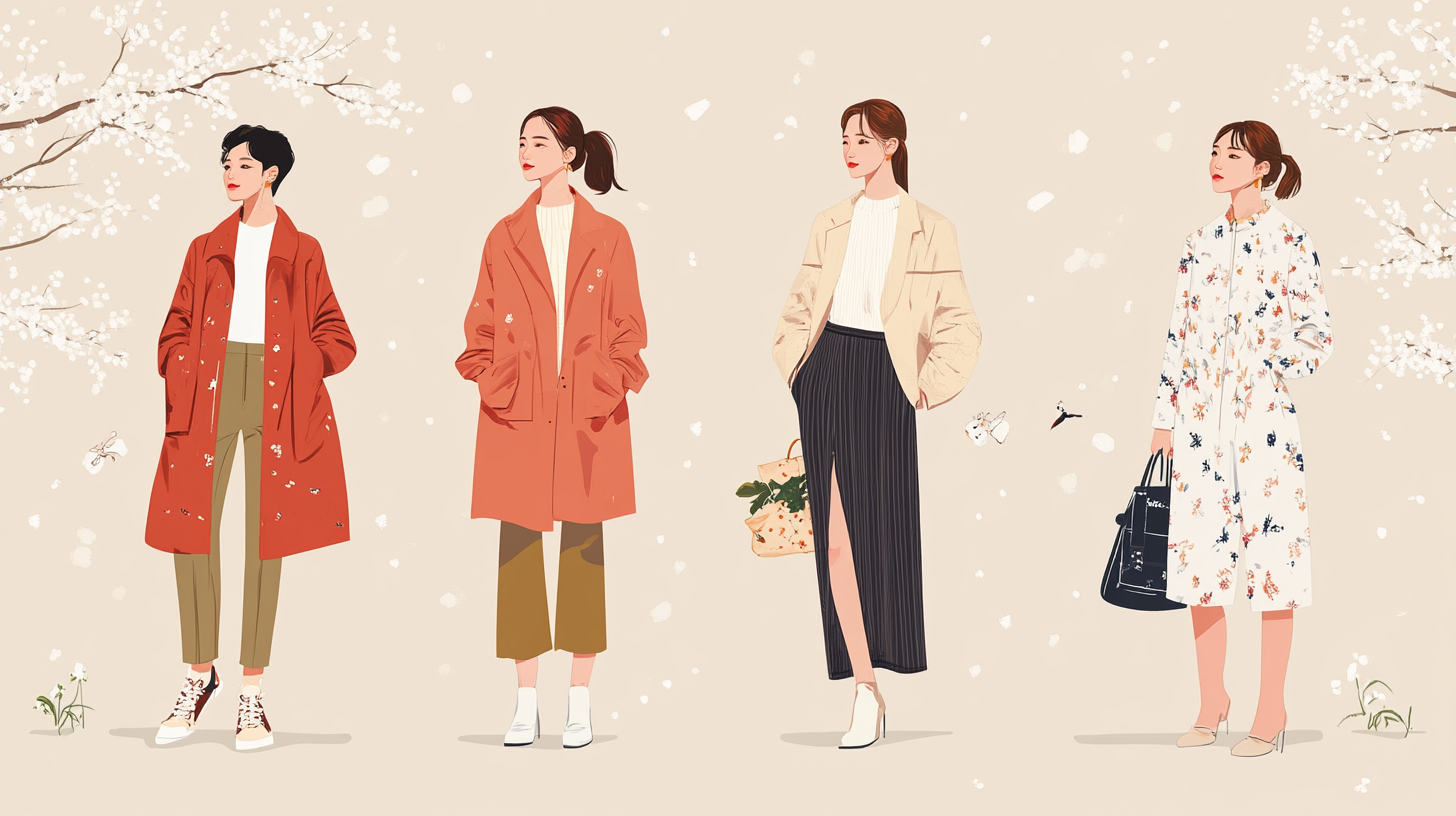
Korean Spring Fashion

3) Summer Fashion Tips: Preparing for High Humidity and Monsoon Season

Korea’s summer is hot and humid, with July’s monsoon season bringing persistent rain and sticky conditions. To combat this, breathable fabrics like linen, cotton, and rayon are preferred, along with light-colored outfits that reflect sunlight and help stay cool. While t-shirts, shorts, and summer dresses are popular choices, air-conditioned indoor spaces often require a light cardigan or shirt for extra warmth.

During the monsoon season, waterproof jackets, raincoats, or lightweight windbreakers provide protection from sudden showers. Breathable sandals or slides are ideal for daily wear, but non-slip sneakers or rain boots can be useful for rainy days. While wearing shorts to work remains restricted in many corporate settings, younger companies and startups are gradually embracing a more relaxed dress code.

4) Autumn Fashion Tips: Sophisticated and Stylish for the Crisp Weather

Autumn is considered the best season for fashion in Korea, thanks to its clear skies and refreshing breezes. Popular wardrobe choices include lightweight knits, sweatshirts, trench coats, and leather jackets. Warm tones such as beige, brown, and burgundy dominate seasonal trends. As evenings get cooler, layering or accessorizing with scarves enhances both style and warmth.

This season also sees an increase in weddings and corporate events, making formal or semi-formal attire more relevant. Korean professionals often opt for navy or brown suits, while women choose elegant dresses or tailored pants. Outdoor activities like foliage sightseeing call for trendy casual outfits such as denim jackets, sweatshirts, and sneakers for a stylish yet comfortable look.

Korean Four-Season Fashion

5) Winter Fashion Tips: Battling the Cold and Indoor-Outdoor Temperature Differences

Korean winters can be surprisingly harsh, with frequent subzero temperatures requiring thick padded coats or woolen overcoats. Accessories like hats, scarves, and gloves help retain body heat, and in snowy areas, waterproof boots are advisable. Layering is crucial to block out the cold, with thermal innerwear such as HeatTech providing additional warmth beneath outer layers.

Since indoor spaces tend to be well-heated, lighter inner layers are recommended to avoid overheating once inside. A practical winter outfit involves wearing a snug inner layer, a warm knit, and a thick coat that can be removed indoors. While neutral colors like black and gray dominate winter wardrobes, adding pops of red or navy enhances vibrancy.

6) Korean Workplace Dress Code: What to Expect

Korean workplaces exhibit a range of dress codes. Traditional large corporations maintain formal business attire—suits for men with dress shoes, and blouses or dresses for women. Some companies allow “casual Fridays” where more relaxed clothing is acceptable. In contrast, IT firms and startups often welcome jeans, sneakers, and even hoodies.

New employees and expats should observe office norms before settling on an outfit choice. For job interviews or the first day at work, a more formal approach is advisable. Once familiar with an office’s typical dress standards, employees can incorporate personal style within company guidelines. For work-related roles that require frequent movement indoors and outdoors, prioritizing functionality is key.

7) Accessories and Styling Tips

In Korea, accessories play a significant role in completing an outfit. Professionals often carry practical yet stylish bags to accommodate laptops and documents. Sneakers have gained popularity even with office attire, and many opt for comfortable shoes to ease long commuting hours.

When it comes to accessories, men favor wristwatches, while women often add simple jewelry like necklaces or earrings. Excessively flashy accessories may feel overwhelming in conservative workplaces, so starting with subtle items is a safe choice. Changing shoe or bag materials according to the season can also refresh one’s styling.

8) Finding Joy in Seasonal Fashion

Experiencing Korea’s four seasons through fashion is more than just dressing appropriately—it’s a way to embrace everyday joy. Spring brings fresh, light-colored outfits; summer calls for breathable, airy fabrics; autumn encourages layering with warm tones; and winter provides the comfort of cozy coats and sweaters. Adjusting one’s fashion to match the seasons enhances the appreciation of life in Korea.

Ultimately, fashion serves both as a form of self-expression and a practical tool for adapting to the weather. Staying attuned to seasonal changes allows for effortless style while maintaining comfort. By balancing seasonal trends, workplace culture, and personal taste, fashion can transform each day into an exciting new experience.

Korean Seasonal Fashion

Webring Newsletter

K-Name Studio: Create your perfect Korean name based on your personality and style.
What’s My K-Beauty Personal Color?
WeBring Service : Provides personalized services to foreigners living in Korea
Exclusive offer: Introducing foreign car rental in Korea, WeBring-SoCar
Share House vs. One-Room in Korea: Which Option is Best for Foreigners?

Living in Korea generally comes down to two main choices: renting an individual one-room apartment (원룸) or opting for a share house (쉐어하우스) with other residents. As a foreigner, which option suits you best? Cost considerations, privacy, and opportunities for social interaction all play a role in this decision. In this article, we’ll compare the features, pros, and cons of share houses and one-room apartments, helping you determine the best housing choice for your stay in Korea.


1) Share House: Affordable Living with a Social Atmosphere

The Basics: A Shared Living Space

A share house is a communal housing arrangement where multiple tenants live together in a single apartment or house, each having their own private bedroom while sharing common areas such as the living room, kitchen, and bathroom. Unlike dormitories, a share house offers some degree of privacy, but it is not a completely independent living situation. Some share houses are professionally managed by rental companies, while others operate more informally with individuals finding their own roommates.

Pros: Lower Costs & Social Opportunities

One of the biggest advantages of a share house is cost efficiency. Since tenants split the rent, utilities, and maintenance fees, individual expenses remain relatively low. For foreigners, this setup also provides a great way to make new friends and adapt quickly to Korean culture. Living with housemates facilitates language exchange, shared meals, and social events, making it easier to build a local support network. If you’re new to Korea, staying in a share house can significantly ease the transition.

Cons: Privacy Concerns & Potential Conflicts

The communal nature of a share house comes with potential downsides, including privacy limitations and conflicts over daily habits. Roommates may have different schedules and levels of cleanliness, leading to disagreements over noise, chores, or shared resources like bathrooms. If a housemate frequently uses the living space late at night or neglects cleanup duties, tensions may arise. It’s important to recognize that most share house conflicts stem from lifestyle differences.


2) One-Room Apartments: Independent Living with Full Privacy

The Basics: Designed for Solo Living

A one-room apartment (원룸) is a compact, self-contained unit that includes a bedroom, kitchen, and bathroom in a single living space. Some one-room units are fully furnished (풀옵션), meaning they come equipped with essentials like a bed, wardrobe, desk, refrigerator, and washing machine, helping tenants avoid extra setup costs.

Foreign residents can find one-room rentals through real estate agents, who will present listings based on budget and location preferences. Rent typically involves a deposit (₩5-20 million) and monthly rent (₩400,000-800,000). Prices are higher in popular areas such as near subway stations, universities, or business districts.

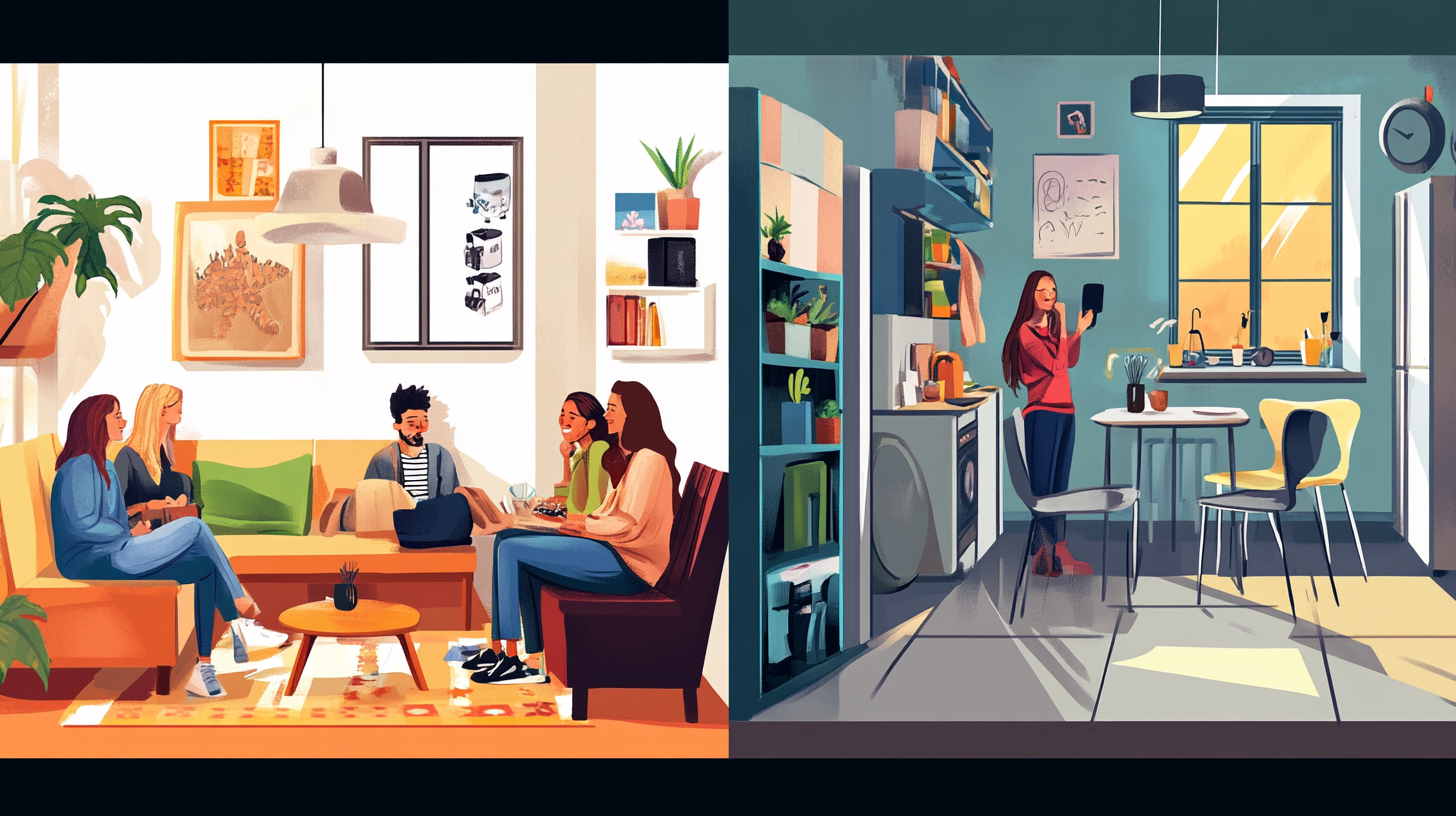
One-Room Apartment

Pros: Full Privacy & Lifestyle Freedom

With a one-room apartment, you enjoy complete independence. There’s no need to worry about noisy roommates or house rules—you can set your own schedule, host guests freely, and maintain your space as you like. Having a private kitchen and bathroom also ensures cleanliness and convenience.

Cons: Higher Costs & Potential Isolation

The price of independence is higher rent and utility costs. Tenants must cover electricity, gas, water, and internet bills on their own, which adds up quickly. Additionally, a one-room apartment doesn’t provide natural opportunities for social interaction, which can lead to feelings of isolation—especially for foreigners who are new to Korea.


3) Comparing Budget, Privacy, and Community Aspects

(1) Budget Considerations

  • Share House: Rent ranges from ₩300,000-500,000, depending on the location and room size. Shared utilities reduce costs, and some houses require little or no deposit, making it a budget-friendly choice.
  • One-Room Apartment: Typically requires a deposit of ₩5-20 million, with rent around ₩400,000-800,000+. Tenants pay full utility costs, but private amenities offer comfort and convenience.

(2) Privacy & Personal Freedom

  • Share House: Reduced privacy due to shared spaces. While private rooms offer some solitude, communal bathrooms can be an inconvenience. However, this option is great for those who enjoy socializing.
  • One-Room Apartment: Full independence. Ideal for those who prefer a quiet and self-sufficient lifestyle. However, daily responsibilities (cleaning, repairs) must be managed alone.

(3) Community & Social Interaction

  • Share House: Encourages social engagement, making it easy to meet both locals and fellow foreigners. It’s an excellent environment for language exchange and cultural adaptation.
  • One-Room Apartment: Limited interaction with neighbors. While ideal for focused work or study, forming personal connections may require additional effort.

4) Key Factors for Foreigners When Choosing a Housing Option

Length of Stay

  • Short-term (less than 6 months): A share house is often more practical. Flexible contracts and lower deposits minimize financial commitment.
  • Long-term (1 year or more): A one-room apartment provides a stable and independent living space, making it a preferable option for extended stays.

Student vs. Working Professional

  • Students: A share house near university areas fosters an active social life and study-friendly environment.
  • Working professionals: A one-room apartment may be better for workers with irregular schedules or long office hours.

Personality & Preferences

  • If you enjoy being around people and want to fully experience local culture, a share house is a great fit.
  • If you value peace and independence, or pursue hobbies that could disturb roommates (e.g., gaming, playing instruments), a one-room apartment is better.

5) Real-Life Case Studies: Two Foreigners’ Housing Choices

Case 1: M from France – Choosing a Share House for Community

M, a French exchange student at Seoul National University, planned to stay in Korea for a year. Initially, he considered a one-room apartment but was deterred by the high deposit (₩10 million+). Through a Facebook expat group, he discovered a foreigner-friendly share house requiring only a ₩500,000 deposit and ₩400,000 rent. Living with housemates from Korea and the UK allowed him to experience cultural exchanges, shared meals, and weekend outings together. However, the shared bathrooms often caused delays in the mornings.

Case 2: R from Canada – Choosing a One-Room for Private Comfort

R, an IT professional from Canada, secured a long-term job in Korea and preferred a personal retreat after work. He opted for a ₩10 million deposit and ₩600,000/month one-room apartment in a newly built villa. The fully furnished setup (bed, TV, washing machine) provided comfort and convenience. He enjoyed late-night gaming sessions and weekend relaxation without roommate interference, though he found handling all utility payments alone to be slightly inconvenient.


Conclusion: Finding the Best Housing Option for Your Lifestyle

When choosing between a share house and a one-room apartment, consider your budget, privacy needs, personality, and length of stay.

  • A share house is budget-friendly and great for meeting new people but comes with privacy limitations and potential conflicts.
  • A one-room offers full independence and comfort but can be costly and isolating.

If you’re uncertain, a good strategy is to spend the first 6 months in a share house to adjust to life in Korea, then move to a one-room once you’re financially stable and socially established.

Whichever option you choose, thoroughly review the rental contract, deposit terms, and additional costs to ensure a smooth and enjoyable stay in Korea! 🚪🏡

Share House

Webring Newsletter

K-Name Studio: Create your perfect Korean name based on your personality and style.
What’s My K-Beauty Personal Color?
WeBring Service : Provides personalized services to foreigners living in Korea
Exclusive offer: Introducing foreign car rental in Korea, WeBring-SoCar

Seoul City Parking Tips for Foreigners: Short-Term Rental and Smart Parking Strategies

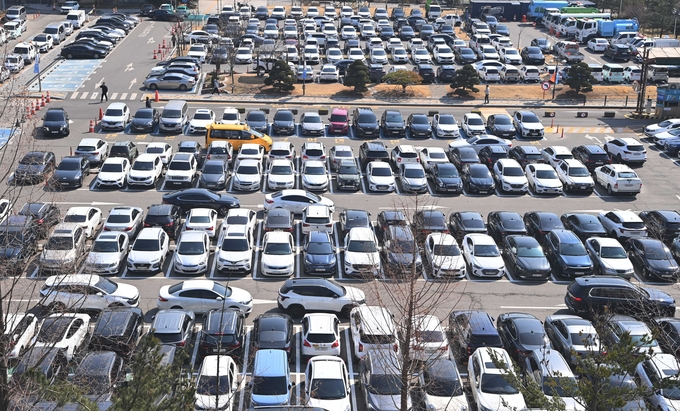
Seoul is one of the most densely populated cities globally and is well known for its heavy traffic. Particularly in the downtown areas, finding parking can be challenging, and traffic congestion worsens during peak hours. However, with the right information, short-term car rentals can still be a convenient way to navigate the city. In this guide, we’ll provide essential “Seoul City Parking Tips” for foreigners, along with useful “Short-Term Rental Driving Tips” to help make your trips more efficient.


Types of Parking in Seoul and Their Features

Seoul offers two main types of parking facilities: public (government-run) parking lots and private (commercial) parking garages.

  • Public parking lots are managed by the city or district offices, offering more affordable rates but often being small in size with limited locations. You can usually find them near City Hall, university areas, or cultural landmarks.
  • Private parking lots, on the other hand, are operated by businesses or building owners. These lots typically charge between 3,000 to 6,000 KRW per hour, but they offer better locations and well-maintained facilities.

On weekends, tourist attractions and shopping districts can get particularly crowded. To avoid unnecessary hassle, it’s best to check available parking options before heading out. You can find information on public parking lots via Seoul’s official website, district office websites, or mobile apps like Naver Maps and Kakao Maps. If you’re a foreigner, using an English-supported navigation app can be a great way to search for parking spots.

Seoul Parking Guide


Seoul City Parking Tip 1: Utilize Public Parking Discounts

While Seoul encourages the use of public transportation to ease traffic congestion, if you must drive, taking advantage of the public parking lot discount system can be highly beneficial.

  • Discounts are often available for disabled persons, compact cars, low-emission vehicles, or families with multiple children.
  • Foreigners may have limited eligibility for certain discounts, but if you’re renting a compact car (such as a Kia Morning or Chevrolet Spark), you may qualify for reduced parking fees.

Additionally, some public lots offer significant discounts during off-peak hours (usually from 10 PM to 7 AM). If you’re arriving late at night and leaving early in the morning, you can save on parking costs by taking advantage of these nighttime discounts. If your travel schedule is flexible, planning your parking around these discount periods can be a smart strategy.


Seoul City Parking Tip 2: Use Large Shopping Mall or Department Store Parking Lots

If finding parking in Seoul is difficult, consider using parking lots in large shopping malls, department stores, or supermarkets.

  • Many shopping malls provide free parking for 2–3 hours when you meet a minimum purchase requirement.
  • If you plan to dine or shop in these locations, you can secure free parking for a certain period and only pay for additional time if needed.

However, it’s important to note that this method is meant for actual shoppers and visitors. Using these parking lots solely for parking purposes without visiting the establishment is not advisable and may result in penalties.


Seoul City Parking Tip 3: Take Advantage of Park-and-Ride Facilities

As you drive closer to central Seoul, parking costs increase significantly, and open spots become rarer. A practical alternative is utilizing park-and-ride facilities.

  • Large transfer parking lots are available at subway station hubs and major transit points.
  • For example, there are parking facilities near the outer zones of subway Line 2 and key stops on Line 1 where you can park your car and use the subway to reach downtown Seoul.

If you’re a foreign visitor, purchasing a transportation card (T-Money, Cashbee, etc.) can be convenient for seamless subway and bus transfers. Since transfer parking lots are designed to encourage public transportation use, they generally offer lower rates than regular lots, with the possibility of additional discounts during certain hours. Using these facilities can save time, cut parking costs, and avoid traffic congestion in the city center.


Car Rental Tip 1: How to Use Hi-Pass (Electronic Toll System)

If you’re planning to drive beyond Seoul and use expressways, knowing about Hi-Pass, Korea’s automated toll collection system, will be beneficial.

  • Hi-Pass lanes require a special device and card installed in the car.
  • Some rental car companies provide vehicles pre-equipped with Hi-Pass devices, allowing you to pay tolls automatically and settle the fees upon return.

If your rental car doesn’t have a Hi-Pass device, you’ll need to use cash or a credit card at regular toll booths. Entering a Hi-Pass lane by mistake without the necessary equipment can cause confusion, so double-check your rental features and set your GPS accordingly before driving on highways.


Car Rental Tip 2: Avoid Rush Hour Driving in Seoul

Seoul’s traffic congestion can be overwhelming, especially during rush hours:

  • Weekday peak traffic hours: 7–9 AM and 5–8 PM
  • Weekend traffic hotspots: Myeong-dong, Itaewon, Hongdae, and Gangnam areas

For foreigners unfamiliar with Seoul’s road system, getting caught in these congestion periods can be frustrating. It’s best to avoid driving during peak hours and plan for extra travel time if visiting crowded areas.

Also, apps like Naver Maps and Kakao Maps provide real-time traffic updates. Using these can help optimize your route and avoid unnecessary delays.


Car Rental Tip 3: Use Mobile Navigation and GPS Efficiently

Seoul’s road layout includes radial and circular road structures, which can be difficult for first-time visitors to navigate. To simplify driving, take full advantage of mobile navigation apps or built-in vehicle GPS systems.

  • Recommended apps: Kakao Navi, TMAP (both commonly used by locals with real-time traffic updates).
  • Language support: Some apps may not have English options, so if you’re not comfortable with Korean, consider navigation apps with English settings.

While Google Maps can also be used, its real-time traffic data in Korea is limited compared to local apps. For the best navigation experience, it’s wise to use a combination of GPS tools.


Short-Term Rental and Parking: Planning Equals Savings

When using short-term rentals in Seoul, parking fees can add up quickly.

  • Parking in major commercial areas can cost over 5,000 KRW per hour, and leaving your car all day may exceed 50,000 KRW.
  • Researching your destination’s parking options in advance is key to selecting the most cost-effective solution.

If you need to park for an extended period, consider factoring in parking costs and accessibility into your travel plans. Since Seoul’s public transportation system is highly developed, a hybrid approach—driving only when necessary and utilizing subways or buses for other parts of your trip—can optimize both time and expenses.


Conclusion: With the Right Information, Driving in Seoul is Easy!

At first, Seoul’s heavy traffic and limited parking might seem intimidating. However, with the right strategies, including public parking discounts, transfer parking lots, and shopping mall parking, you can cut costs and save time.

When renting a car in Seoul, checking for Hi-Pass devices, using mobile navigation, and avoiding congestion will make your trip much smoother. With a little preparation, even foreigners driving in Seoul for the first time can navigate the city with confidence.

If you’re visiting Korea and considering driving, be sure to follow these parking and rental tips. Once you get familiar with the rhythm of the city, you’ll enjoy the freedom of exploring Seoul beyond public transport routes at your own pace! 🚗

Seoul City Parking

Webring Newsletter

K-Name Studio: Create your perfect Korean name based on your personality and style.
What’s My K-Beauty Personal Color?
WeBring Service : Provides personalized services to foreigners living in Korea
Exclusive offer: Introducing foreign car rental in Korea, WeBring-SoCar

Korea Visa Insurance: Understanding Requirements for Foreigners

When foreigners stay in Korea, the obligation to enroll in insurance may vary depending on the type of visa they hold. For example, a long-term student visa (D-2) is automatically enrolled in the National Health Insurance (NHI), whereas a short-term work visa (E-2) may have different requirements. This raises the question: “Does mandatory insurance coverage differ by visa type?” In reality, the legal regulations can be complex.

In this article, we’ll focus on key visa types, including E-2 (English teachers), D-2 (international students), and F-4 (Overseas Koreans), to clarify which Korea visa insurance policies are mandatory and what additional coverage should be considered.


E-2 Visa: English Teacher Visa

Characteristics of the E-2 Visa

The E-2 visa, commonly referred to as the “native English teacher visa,” is issued for employment in language institutions or public schools for teaching foreign languages. Typically, this visa is renewed on a yearly basis. Since E-2 holders stay in Korea for over six months, they are generally required to be enrolled in the National Health Insurance.

National Health Insurance Enrollment

Since July 2019, a revised law mandates that all foreigners staying in Korea for more than six months must enroll in the National Health Insurance (NHI). Therefore, E-2 visa holders are automatically registered for NHI upon reaching six months of residence in Korea (they may also be enrolled earlier under an employer-sponsored plan). Institutions such as language academies or schools may require additional proof such as proof of employment or income verification during enrollment.

In some cases, employers provide private group health insurance for E-2 visa holders, but this is not legally required. Some private academies opt for “foreigner-exclusive private insurance” instead of NHI, though this coverage differs from public insurance. Since NHI is now mandatory, E-2 visa holders should check whether any supplemental private insurance overlaps with mandatory health coverage.

Additionally, many E-2 visa teachers purchase private health insurance (e.g., accident or dental insurance) in addition to NHI. Why? The National Health Insurance does not fully cover dental, traditional Korean medicine (acupuncture), or certain non-covered treatments, making an additional private policy beneficial. Young professionals typically seek coverage for accidents, dental treatments, or outpatient services rather than major illnesses.

E-2 Visa Insurance


D-2 Visa: International Students

Mandatory NHI for D-2 Students

Foreign students with a D-2 visa (long-term study visa) are automatically enrolled in National Health Insurance after six months in Korea. Those pursuing degree programs or long-term exchange programs are required to pay a monthly NHI premium (approximately 50,000 KRW, subject to change). Some universities offer partial financial assistance or use scholarships to help offset the costs.

One issue is that NHI does not cover dental care or expensive medical exams, leading some universities to recommend private student insurance policies in addition to NHI. If you are a D-2 student planning frequent hospital visits or considering orthodontic treatments, a private insurance plan with dental or hospitalization riders may be worth considering.

Short-term Exchange Students (D-2-6 and Similar)

Students on a short-term exchange program (under six months) are not required to enroll in National Health Insurance. Instead, they must purchase private student insurance, travel insurance, or short-term health coverage at their own expense. Many universities offer packages that combine tuition + private student insurance.

Even if you seldom visit the hospital, an accident or emergency situation could occur unexpectedly. To stay protected, short-term exchange students should consider purchasing a temporary health insurance plan before arriving in Korea.


F-4 Visa: Overseas Korean Visa

Overview of the F-4 Visa

The F-4 visa is designated for Overseas Koreans (ethnic Koreans with foreign citizenship). It provides greater flexibility for employment, business activities, and long-term stays. Many F-4 holders resemble permanent residents, with few restrictions on work and residence. As a result, they are subject to taxation and insurance obligations similar to Korean nationals.

Health Insurance Requirements & Private Insurance Options

F-4 visa holders residing in Korea for more than six months are automatically enrolled in National Health Insurance. They may be registered as either:

  • Employer-insured (if working for a company)
  • Self-employed or regionally insured (if unemployed or self-employed)

Those frequently traveling between Korea and their home country should pay attention to residency duration calculations, as leaving Korea for extended periods may affect insurance eligibility and premium payments.

Additionally, F-4 visa holders can enroll in private insurance (accident, hospitalization, auto insurance, etc.) under nearly the same conditions as Korean nationals. However, note that treatment costs incurred overseas do not qualify for NHI coverage, and private insurance policies may only cover medical care provided within Korea. Always verify insurance coverage areas before purchasing a plan.


Other Visa Types: E-7, D-4, F-6 & More

  • E-7 (Visa for Professionals & Skilled Workers): Required to enroll in NHI if staying beyond six months. Enrolled through employer or as an individual.
  • D-4 (Language Training Visa): Not required to enroll in NHI for stays under six months. Recommended to purchase private student insurance or travel insurance.
  • F-6 (Marriage Visa): Spouses of Korean nationals are fully covered under National Health Insurance, with options to purchase private health insurance if needed.

Checklist: What to Consider for Insurance Based on Your Visa

  1. Is my visa subject to mandatory National Health Insurance? (Most long-term visas require it after six months; short-term visas generally do not.)
  2. Will my employer provide NHI coverage? (Employer-sponsored or self-enrolled insurance determines how payments are made.)
  3. Do I need additional private insurance? (Consider coverage for dental, non-covered treatments, accidents, and international travel.)
  4. Does my insurance coverage remain valid after visa renewal? (Some policies require adjustment after extension or changes in status.)
  5. Am I bringing dependents? (Spouses or children may need family insurance plans or dependent coverage.)

Real-Life Case: D-4 Language Student B’s Experience

B was an international student enrolled in a five-month Korean language course under the D-4 visa. Because National Health Insurance was not mandatory for stays under six months, B decided not to purchase private insurance. However, in the third month, B suffered a broken ankle from a traffic accident, resulting in hospital bills of 1.5 million KRW (approx. $1,100 USD). Since B lacked insurance, the cost had to be paid entirely out of pocket.

Later, B purchased a short-term study abroad insurance plan, but it did not retroactively cover the past accident. If B had enrolled in a private student insurance policy from the start, the out-of-pocket cost could have been reduced to just 300,000–400,000 KRW (approx. $220–300 USD).

B regretted not arranging coverage early on, proving that medical emergencies can happen regardless of visa type.


Conclusion: Secure the Right Health Insurance Based on Your Visa

Korea offers various visa types, each with different residency periods and insurance requirements. Long-term visa holders such as E-2, D-2, and F-4 must enroll in National Health Insurance after a specified period. Meanwhile, short-term visa holders or those outside NHI regulations may need alternative private insurance.

Since National Health Insurance may not cover all medical expenses (e.g., dental, non-covered treatments), foreigners should consider supplemental private insurance. The best plan should account for: visa duration, purpose of stay, family members, and potential medical needs.

If unsure, consult resources such as:

  • Embassies or Immigration Offices
  • National Health Insurance Service (NHIS)
  • Private Insurance Firms

Ignoring mandatory insurance requirements can lead to fines or unexpected medical expenses. By carefully reviewing your visa status and insurance options, you can ensure a smooth and financially secure stay in Korea.

Korea Visa Insurance

Webring Newsletter

K-Name Studio: Create your perfect Korean name based on your personality and style.
What’s My K-Beauty Personal Color?
WeBring Service : Provides personalized services to foreigners living in Korea
Exclusive offer: Introducing foreign car rental in Korea, WeBring-SoCar
Business Korean: Mastering Professional Communication in Korea

Introduction: The Difference Between “Knowing Korean” and “Using Korean”

Have you ever felt confident in your ability to converse in Korean during daily interactions, only to struggle when composing a business email or participating in a formal meeting? While casual greetings and ordering food might be easy, many learners face unexpected difficulties in professional settings. This is because conversational Korean and business Korean use significantly different language registers.

In this article, we’ll explore how to distinguish between the two, strategies for studying them effectively, and common expressions frequently used in professional environments.


Characteristics of Conversational Korean: Natural and Spontaneous

Conversational Korean is primarily used in casual contexts, such as chatting with friends, ordering food, shopping, or discussing hobbies. Fluency and natural speech matter more than rigid structure, and sentences tend to be loosely formed. For example, phrases like “밥 먹었어?” (“Did you eat?”) or “어제 영화 봤는데 진짜 대박이더라!” (“I watched a movie yesterday, and it was amazing!”) adopt a relaxed, friendly tone. The primary language distinction in casual speech is between informal speech (반말) used with friends and polite speech (존댓말) used with elders or strangers.

Additionally, minor grammar mistakes are easily overlooked in daily conversations as context, facial expressions, and gestures help convey meaning. Even if pronunciation or grammar is slightly off, communication is rarely hindered. Instead, the key to effective conversational Korean is quick comprehension and response, as native speakers often speak rapidly. Developing the ability to catch essential words and respond fluidly is crucial.


Characteristics of Business Korean: Formality and Precision

In contrast, business Korean is used in companies, academic discussions, and official settings where precision in word choice and sentence structure is essential. Even when using polite speech, casual expressions are often inadequate in professional environments. Statements like “~해주시면 감사하겠습니다” (“I would appreciate it if you could…”) or “확인 부탁드립니다” (“Please check and confirm.”) emphasize respectful and formal language patterns essential in workplace communication.

Moreover, communication styles vary based on hierarchical structures and company culture. For example, when speaking to a senior manager on the phone, it’s customary to use highly respectful phrases like “~하셨습니까?” (“Did you do…?”) or “도움이 필요하신 부분 있으면 말씀해 주십시오” (“Please let me know if you need any assistance.”). In contrast, when addressing colleagues or juniors, the tone can be slightly more relaxed, such as “이 부분은 어떻게 생각하세요?” (“What do you think about this?”). However, using overly casual language or informal speech in professional settings can come across as disrespectful, so cultural awareness is key.

Business Korean Communication


Example Situation 1: Writing a Business Email

In casual conversations, a message like “ㅇㅇ님, 저녁에 시간 되면 영화 볼래요?” (“Hey, are you free for a movie this evening?”) is perfectly acceptable. However, in a professional email, a more structured and polite tone is essential:

“○○님 안녕하세요. ○○ 부서 ○○입니다. 다름이 아니라 다음 주 월요일까지 보고서를 제출해주실 수 있을지 여쭙고자 연락드립니다.”
(“Hello, ○○. This is ○○ from the ○○ department. I’m reaching out to ask if you would be able to submit the report by next Monday.”)

Business emails prioritize clarity and professionalism over personal sentiment, ensuring structured communication.

In closing, it’s common to include expressions of gratitude such as “회신 기다리겠습니다. 항상 협조해 주셔서 감사합니다.” (“Looking forward to your reply. Thank you for your cooperation.”). While seemingly minor, these phrases help establish trust and professionalism. However, in personal communication, excessive formality may create an unintended sense of distance.


Example Situation 2: Speaking in a Business Meeting

In daily conversations, informal expressions like “아, 그거 완전 괜찮은 아이디어 같아. 나도 해볼래!” (“Oh, that sounds like a great idea! I want to try it too!”) are perfectly natural. However, in a formal meeting, a more structured and analytical approach is required:

“제가 보기엔 이 아이디어가 시장성을 확보하기에 충분히 매력적이라 생각합니다.”
(“I believe this idea is sufficiently attractive to secure marketability.”)

Similarly, a phrase like:
👉 “결국 비용 대비 효과를 분석할 필요가 있는데, 담당 팀과 협의 후 다시 보고드리겠습니다.”
(“Ultimately, we need to analyze the cost-effectiveness. I will coordinate with the relevant team and provide further updates.”)
demonstrates a logical flow in professional discussions.

Avoiding vague expressions like “할 것 같아요” (“It seems like it might work.”) and opting for clearer statements like “~을 제안합니다” (“I propose…”) ensures precise communication. Concise and structured articulation tailored to the audience (managers or colleagues) is key to effective business discussions.


Example Situation 3: Phone Conversations

In casual settings, phone calls sound like:
👉 “어, 지금 바빠? 시간 되면 우리 만나서 얘기하자.” (“Hey, are you busy? Let’s talk when you’re free.”)

However, in business calls, a more formal tone is necessary:
👉 “○○님, 안녕하십니까? ○○사 ○○팀의 ○○입니다. 지금 통화 가능하신가요?”
(“Hello, Mr./Ms. ○○. This is ○○ from ○○ Team at ○○ Company. Do you have a moment to talk?”)

Similarly, structuring the conversation with key phrases like:
👉 “본론을 간단히 요약하겠습니다. 현재 안건에 대해 확인이 필요해서 연락드렸습니다.”
(“I’ll briefly summarize the key points. I’m calling to confirm details regarding the current agenda.”)
helps maintain professionalism.

The call should also end with polite expressions such as:
👉 “귀중한 시간 내주셔서 감사합니다. 좋은 하루 되세요.”
(“Thank you for your valuable time. Have a great day.”)


Effective Study Strategies: Role-Playing and Pattern Recognition

Since conversational and business Korean differ in form and vocabulary, learners should focus on memorizing key sentence patterns and practicing through role-playing. For example, learners can prepare common meeting phrases, such as:

“의견을 여쭙고 싶습니다.” (“I’d like to ask for your opinion.”)
“이제 안건을 정리하겠습니다.” (“Let’s summarize the agenda.”)

Additionally, keeping a notebook of commonly used business expressions, such as “협조 요청드립니다” (“We request your cooperation.”) or “첨부 파일 참조해주시기 바랍니다” (“Please refer to the attached file.”), helps reinforce learning. Observing how native Korean colleagues write emails and reports can also provide valuable insights.


Language Is More Than Just Words—It’s About Context and Attitude

Mastering business Korean isn’t just about grammar—it’s about understanding subtle cultural nuances and appropriate response timing. For instance, knowing when to respond with “예, 알겠습니다” (“Yes, I understand.”) versus when to request more time demonstrates familiarity with workplace etiquette.

Similarly, recognizing the appropriate tone for social vs. professional interactions ensures smoother communication. Ultimately, Korean proficiency isn’t just about accuracy—it’s about using the right expressions in the right context.


Final Thoughts: Adapting Language Based on Context Is a Key Skill

Using the same Korean expressions in all situations can lead to unintended misunderstandings. Business Korean requires more structure and formality, whereas daily conversations are more flexible and spontaneous.

Successfully distinguishing between these two registers demonstrates a high level of Korean fluency. By practicing contextual language use, learners can achieve effective communication that fosters trust and professionalism in professional settings—and stronger relationships in personal interactions.

By continuously refining your Korean in real-world scenarios, you’ll not only enhance your experience living in Korea but also thrive in international business environments as a confident and respected communicator. 🚀

Webring Newsletter

K-Name Studio: Create your perfect Korean name based on your personality and style.
What’s My K-Beauty Personal Color?
WeBring Service : Provides personalized services to foreigners living in Korea
Exclusive offer: Introducing foreign car rental in Korea, WeBring-SoCar