

Korean Housing Types Explained Your Essential Guide to One-Room Officetel Villa & Apartment
From a foreigner’s perspective, the differences between Korean Housing Types Explained of real estate can look complicated in several ways. To start with the conclusion: one-room/two-room refers to the “room layout (floor plan)”, while officetel/villa/apartment refers to the “building type.” When you browse real estate apps, you’ll see mixed phrases like “a one-room officetel,” “a two-room villa,” or “a one-room apartment.” The reason this is confusing is because these terms are not on the same axis.
- One-room · Two-room (Three-room…): How many rooms the home has inside (floor plan/layout)
- Officetel · Villa · Apartment: What the building’s form/legal classification/management system is (building type)
In other words, in real life you’ll see combinations like these.
- One-room officetel(= studio layout + officetel building)
- Two-room villa(= 2-bedroom layout + villa (multi-family/row house) building)
- Small apartment two-room(= apartment complex + 2 rooms)
If you remember just this one sentence, listing descriptions suddenly start to make sense.
Meanings by term and a summary of the “differences you actually feel when living in them”
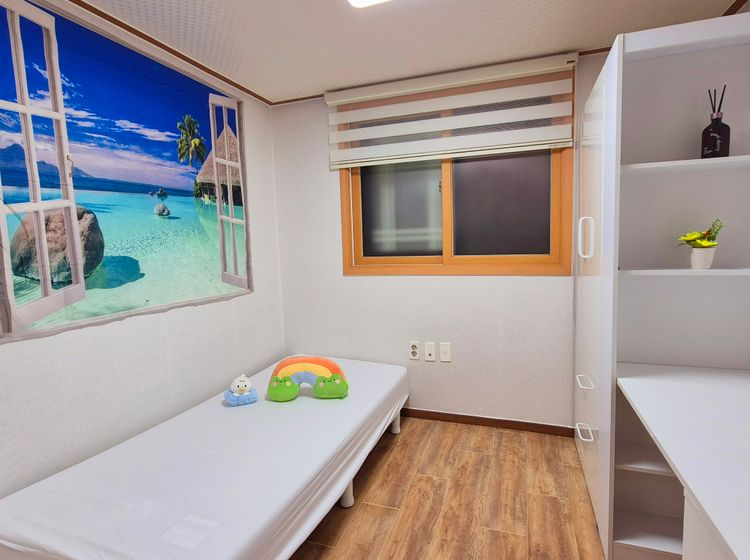
1) One-room (One-room, Studio)
A one-room is literally a layout centered around “one room.” Usually, the bedroom and living room functions are combined into one space, and the kitchen is often open-plan (inside the room) or lightly separated (e.g., a sliding door).
- Pros: relatively lower monthly rent/deposit burden, easy to maintain, many are near subway stations for commuting
- Cons: disadvantages with smells (cooking), noise, storage, and movement flow; hosting guests/working from home can be inconvenient
- Checkpoints:
- “Open kitchen vs. separated kitchen” (a big difference if you cook often)
- Window direction/ventilation, storage (built-in closet), signs of mold
For reference, since “one-room” refers to the layout, you can find one-room units in any kind of building—officetel/villa/multi-household, etc.
2) Two-room (Two-room)
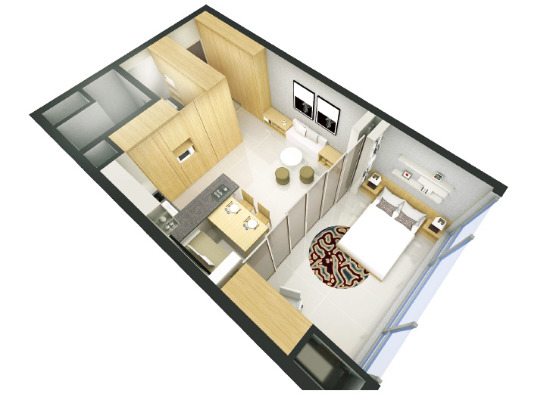
A two-room generally means a layout with two rooms. However, in practice, the wording gets mixed a bit.
- Some listings call two bedrooms (2 bedrooms) a two-room,
- while others even call 1 bedroom + 1 living room a “two-room.”
So when viewing two-room listings, it’s safer to ask “How many bedrooms are there in practice? Is the living room separated?” rather than just “Is it a two-room?”
- Pros: good for two people, working from home, and storage
- Cons: rent is often higher than a one-room in the same location
- Checkpoints:
- “Are the two rooms truly separated?”
- Windows/ventilation in each room, noise through walls
3) Officetel (Officetel) — “Originally an office facility, but a type where living is also possible”
An officetel is classified under the law as a “business facility.” In the use classification in the Enforcement Decree of the Building Act, an officetel is defined as “a building mainly used for business, with some sections arranged so that lodging and meals are possible.” (Law.go.kr)
At the same time, the Enforcement Decree of the Housing Act includes officetels within the category of “quasi-housing”. In other words, it’s operated as an area where “it’s not a full-fledged house, but its residential function is acknowledged.” (Law.go.kr)
From a living standpoint, officetels generally have these characteristics.
- Pros: many are near subway stations/business districts; lots of new buildings; conveniences like security/lobby/parcel delivery tend to be good
- Cons (the #1 thing you feel): maintenance fees can come out higher than expected, so it’s important to calculate total monthly living costs
- Checkpoints:
- Whether resident registration (address move-in report) is allowed (be sure to check “move-in registration allowed” on the listing)
- What’s included in the maintenance fee (shared/common, electricity/water/gas/heating, etc.)
- Since many officetels are mixed-use (residential/business), there may be floor-by-floor noise and elevator congestion
One more practical tip: sometimes you’ll see special clauses like “move-in registration not allowed” in certain local governments/listings, but resident registration is often key for lease protection (opposability, etc.). I’ll revisit this in the “checklist” below. (Easy Law)
4) Villa (Villa) — In Korea, “villa” usually means multi-family/row house (low-rise multi-unit housing)
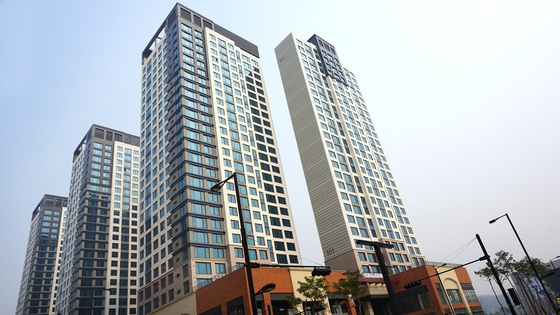
Many people think “villa = luxury detached home?” but in Korean real estate, “villa” is not an official legal term.
In practice, it’s commonly used as an umbrella term for multi-family housing/row houses (low-rise multi-unit housing). (OpenGov Seoul)
Organized by legal/administrative explanations:
- Multi-family housing: (excluding underground parking) total floor area 660㎡ or less + 4 floors or less (Seocho Housing)
- Row house: (excluding underground parking) total floor area over 660㎡ + 4 floors or less (Seocho Housing)
And what people commonly call an apartment is classified as 5 floors or more. (Easy Law)
- Pros: in the same area, rent is often more reasonable than apartments; two-room/three-room layouts are also common
- Cons: elevators/parking/management systems vary widely by building (there’s a big “luck of the draw” factor)
- Checkpoints:
- Parking capacity (parking per household), whether there’s an elevator
- Building management condition (shared stairs/mailboxes/signs of leaks)
- If the deposit is large, check the registry/consider deposit protection measures
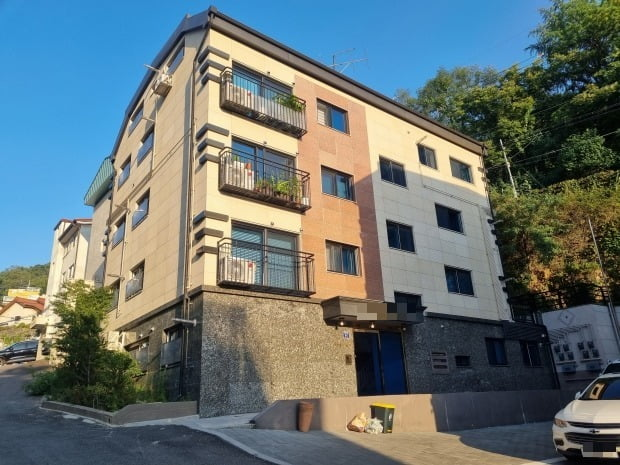
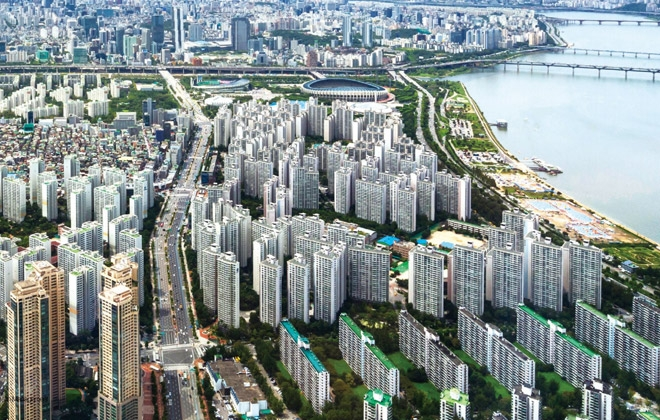
5) Apartment (Apartment) — In Korea, an “apartment” is multi-unit housing with 5 floors or more
Under Korean legal standards, an apartment is “multi-unit housing with five or more floors used as housing.” (Easy Law)
(For reference, guidance is also provided for exceptions in counting floors—such as pilotis structures where the entire first floor is used as a parking lot.) (Easy Law)
- Pros: tends to have a stable management system (management office/security/community facilities), and parking/complex infrastructure are often good
- Cons: higher entry cost (deposit/purchase price); popular complexes can be very competitive
- Checkpoints:
- Maintenance fee level (varies by complex size/building age)
- Noise between floors, sunlight by building/block/line
- School commute/transportation/local living amenities
At-a-glance comparison table: focusing on “the differences you actually feel”
| Category | One-room/Two-room | Officetel | Villa (Multi-family/Row house) | Apartment |
|---|---|---|---|---|
| What this term represents | Layout (number of rooms) | Building type (business-facility-based + quasi-housing) (Law.go.kr) | On-site term (low-rise multi-unit housing) (OpenGov Seoul) | Multi-unit housing with 5 floors or more (Easy Law) |
| Supply near subway stations | Varies by building type | Relatively abundant | Varies by area | By complex |
| Management system | Varies by building type | Maintenance fee perception depends a lot on manager/facilities | Huge variation by building | Relatively systematic (management office, etc.) |
| Total monthly living cost | It’s important to add rent + maintenance fee | Checking maintenance fees is essential | Even if fees are low, there may be individual out-of-pocket costs | Fee items tend to be clearer |
| Recommended for | Choose based on a 1–2 person lifestyle | Downtown office workers/short-term stays/security preference | Value seekers/1–3 people looking for 2+ rooms | Families/infrastructure/stable management preference |
Here’s the key point:
Don’t just look at “one-room vs. two-room.” You should also look at what kind of building (officetel/villa/apartment) that one-room is in.
If you choose based on your situation, the chance of failure drops sharply
For solo office workers/students: “one-room officetel vs. one-room (villa/multi-household)”
- If your priority is near-subway access, security, parcel delivery, new building → one-room officetel
- If your priority is minimizing fixed monthly costs (including maintenance fees) → one-room (villa/multi-household type)
For couples/two people working from home: “two-room villa vs. small apartment”
- If you need two rooms (separating work/sleep), the two-room itself increases satisfaction.
- However, if you value parking/elevator/management, a small apartment is often more convenient.
Families (kids/pets): why apartments are often preferred
Because of complex infrastructure (playgrounds/schools/walking paths) and the management system, the longer you live somewhere, the more likely an apartment becomes the easier option.
(Including foreigners) 7 must-check items before signing a contract
1) “Move-in registration allowed” is almost a must-check
In housing leases, protection mechanisms such as opposability/prior repayment are typically linked to requirements like delivery of the house + resident registration (move-in report), as well as a fixed date. (Easy Law)
There are also cases 안내되는 where it’s explained that officetels can be covered by lease protection if you actually live there and file resident registration. (OpenGov Seoul)
2) For maintenance fees, what matters is not “how much” but “what’s included”
These days, listing ads for one-rooms/officetels, etc. are operated under standards that encourage more detailed disclosure of maintenance fees (e.g., itemized fee categories). (Law.go.kr)
➡️ Rather than a single line like “maintenance fee 100,000 KRW,” be sure to ask whether common-area fees/electricity/water/gas/heating/internet are included.
3) Registry (title)/senior claims (when the deposit is large)
Especially for villa-type properties, since building-by-building differences are large, if the deposit is big, checking the registry/senior claims is basic. (This varies by case, so it’s recommended to confirm with an agent/professional.)
4) Elevator, parking, and where trash/recycling is disposed
These are three major factors that build up stress over time. “Yes/no” matters, but also check realistic figures like parking per household.
5) Whether options (appliances) are included
One-rooms/officetels are often fully furnished, but for two-rooms/villas/apartments, many places come with no options.
Whether a fridge/washer/air conditioner is included changes your upfront costs.
6) Noise (roads/shops/construction) & neighborhood livability
If you only view during the day and sign, you may regret it at night. If possible, view once more during after-work hours/at night.
7) Heating/hot water system (what you feel in winter)
It varies by home, so it’s hard to generalize in one sentence, but the heating system greatly affects winter satisfaction. It’s also good to confirm “how heating bills are charged.”
Mini glossary of “essential real estate terms” that often appear together
- Deposit: money you get back when the contract ends (the refund structure is the key)
- Monthly rent: the rent you pay every month
- Maintenance fee: common-area costs/cleaning/security/elevator/electricity·water, etc. (check what’s included) (Law.go.kr)
- Resident registration (move-in report): registering your address (often connected to lease protection) (Easy Law)
- Fixed date: officially assigning a date to the contract (linked to priority repayment) (Easy Law)
FAQ (Korean Housing Types Explained)
Q1. If it’s a “one-room,” is it always a small place?
A one-room refers to a layout with one room, so even among one-rooms, the perceived size can vary a lot depending on net area, ceiling height, and storage. Look at “pyeong (㎡)” together with the layout (like whether the kitchen is separated).
Q2. I’ve seen places that are one-rooms but also called officetels—which one is correct?
Both can be correct. Since one-room = layout and officetel = building type, they can both apply at the same time, like “one-room officetel.”
Q3. Are villas always worse than apartments?
You can’t conclude that. However, in Korea, “villa” often refers to low-rise multi-unit housing like multi-family/row houses, and the variation in management/parking/elevators from building to building is large. (OpenGov Seoul)
There are plenty of good villas, but since it can be a “luck of the draw,” the checklist matters.
Q4. How are apartments legally defined?
Under legal standards, an apartment is multi-unit housing with five or more floors used as housing. (Easy Law)
Q5. Why are officetels classified as business facilities?
In the use classification under the Enforcement Decree of the Building Act, officetels are placed under business facilities and defined as buildings “mainly for business, with lodging possible in some sections.” (Law.go.kr)
Q6. Are officetels housing or not?
Legally, it’s a mixed character. It’s a business facility under the Building Act, but the Enforcement Decree of the Housing Act includes officetels within the category of “quasi-housing”. (Law.go.kr)
Q7. The standard for “two-room” seems vague—how do I confirm?
Instead of “Is it a two-room?” ask: “How many bedrooms are there, and is the living room separated?” In practice, mixed labeling is common.
Q8. Is it okay if the maintenance fee is vaguely written in the listing?
These days, standards have been established so that listing ads disclose maintenance fees more specifically (such as itemization), and it’s important to confirm what’s included. (Law.go.kr)

K-Name Studio: Create your perfect Korean name based on your personality and style.
What’s My K-Beauty Personal Color?
WeBring Service : Provides personalized services to foreigners living in Korea
Exclusive offer: Introducing foreign car rental in Korea, WeBring-SoCar
Living in Korea? You don't have to figure it out alone
Insurance, visas, jobs and hospital interpretation — WeBring supports every step of settling in Korea, in your language.