
Korea Four Seasons Clothing: Tips for Adapting to Seasonal Weather and Fine Dust

When arriving in Korea for study abroad or long-term stay, one of the first things people often notice is that Korea has very clearly defined four seasons. Spring, summer, autumn, and winter each have distinct characteristics, and because seasonal changes happen relatively quickly, preparing the right clothing is essential. In recent years, worsening fine dust pollution has become as impactful as the seasons themselves, influencing not only what people wear but also how they take care of their health. In this article, we’ll explore the appropriate Korea four seasons clothing, key features of Korea’s seasonal climate, and how to deal with fine dust throughout the year.

Spring: Wide Temperature Swings, Pollen, and Fine Dust

Spring in Korea lasts from March to May. It’s a time when flowers bloom and temperatures begin to rise, but the wide range between daytime and nighttime temperatures makes it unique. Mornings and evenings can still be chilly, while afternoons often feel mild and pleasant. Therefore, layering is the key to staying comfortable during spring. Consider wearing a light sweater topped with a thin jacket or cardigan, so you can remove or add layers easily based on the temperature throughout the day.

Between late March and early April, cherry blossoms reach full bloom, creating stunning sceneries across the country. However, this time also often brings yellow dust and fine dust — pollution that travels from China across the Korean peninsula. Fine dust levels can rise significantly during spring, so it’s wise to check weather and air quality forecasts before going outside. Wearing a KF94 mask or above is recommended to protect your respiratory health. Those with pollen allergies should stock up on antihistamines and take showers or wash their faces thoroughly after coming home to reduce allergic reactions.

Korea Four Seasons Clothing

Summer: Heat, Humidity, Monsoons, and Typhoons

Korean summers (June to August) are characterized by high temperatures and high humidity. During the monsoon season, typically in July and early August, it can rain for several days straight and humidity levels can soar above 90%. Typhoons are also common during this time. Naturally, clothing should be light and breathable — think shorts and short-sleeved shirts. However, since many indoor spaces have powerful air conditioning, it’s also a good idea to carry a light jacket or cardigan.

An umbrella is a must-have item during the rainy season. Choose footwear that is water-resistant and has slip-resistant soles, as areas like subway entrances and bus stops can become dangerously slippery on rainy days. Due to the heat and humidity, sweat becomes an issue, so it’s important to pay attention to hygiene and body odor management. While fine dust levels are generally lower in summer, stagnant air following typhoons can cause temporary spikes, so it’s good to stay alert.

Autumn: Crisp Weather and Light Outerwear

Autumn in Korea (September to November) is relatively short but widely loved for its clear skies and comfortable temperatures. With average temperatures hovering around 20°C (68°F), a light jacket or sweater is often sufficient. Mornings and evenings can be cool, calling for a light coat, but daytime temperatures can still accommodate short sleeves. Koreans often refer to this time as the “golden age of fall fashion,” making it an ideal season to experiment with your wardrobe.

One beloved activity during fall is going to see the foliage. From late October to early November, Korea’s mountains and parks become vivid with autumn colors. If you plan on spending time outdoors, bring comfortable sneakers and light autumn gear like scarves or thin gloves. In recent years, some fall days have experienced higher fine dust levels, so it’s best to check the forecast and carry a mask if needed.

Winter: Bitter Cold, Dry Air, and Fluctuating Fine Dust

Korean winters (December through February) frequently experience sub-zero temperatures, and biting winds can make it feel even colder. While indoor spaces are well-heated, you’ll need thick coats or padded jackets, scarves, gloves, and hats when going outside. On windy or snowy days, roads can become icy and slippery, so insulated boots or shoe grips (known as “ice cleats”) are helpful for safety.

Due to the dry indoor and outdoor conditions, skin can easily become dehydrated and nasal passages can become irritated. Using a humidifier and staying hydrated is vital, as is applying moisturizer to your hands and face. A phenomenon known as “Samhansami” (three cold days followed by four milder days) illustrates how cold spells and fine dust often alternate in winter. During warmer intervals, air stagnation may occur, increasing dust levels. Be sure to keep a fine dust tracking app handy and wear a KF94 mask if needed.

Coping with Fine Dust in Korea

Fine dust is a recurring issue in Korea, regardless of the season. When yellow dust from China combines with local industrial pollution, air quality can decline to dangerous levels. On such days, check real-time air quality levels via apps or official government platforms like Air Korea. When air quality is rated “bad” or “very bad,” it’s best to limit outdoor activities and stay indoors as much as possible.

If you must go outside, wear a certified mask — KF80 or KF94. Regular paper or cotton masks are almost ineffective at filtering fine particles. Inside the home, use an air purifier and keep windows closed while maintaining proper humidity levels. After coming home, wash your hair and skin thoroughly, and rinse your nose with saline to remove any lingering dust particles.

Balancing Fashion and Personal Style Across Four Seasons

Of course, just because there are seasonal clothing guidelines doesn’t mean everyone must dress the same. Some people feel comfortable wearing shorts and flip-flops even in early summer, while others can tolerate winter with just a light coat. Some, sensitive to fine dust, may prefer to keep windows open for ventilation even in winter. The important thing is to consider environmental factors like temperature, humidity, and fine dust levels — but also adapt your clothing to your own physical constitution and lifestyle.

Newcomers to Korea can easily find a wide variety of seasonal clothing at online shops or large retail stores. Many shops offer seasonal discounts around the time of weather transitions — such as from spring to summer or autumn to winter — making it cost-effective to stock up on basics. If clothes from your home country don’t suit Korea’s climate, take this as an opportunity to explore new styles through local shopping.

Real-life Story: How Seasonal Preparation Made a Difference

Chris (alias), a study abroad student, arrived in Korea during the spring. He thought, “It’s warm now,” and only packed a few light jackets. But from late April to early May, the sharp temperature swings and yellow dust made things difficult. Some afternoons were hot, but it would quickly get cold by late evening — and Chris caught a cold. From that point on, he made sure to buy long sleeves and light jackets before fall, along with a scarf. He borrowed an air purifier from a friend to help with respiratory issues. In winter, he found second-hand padded coats and an electric blanket online for a budget-friendly way to stay warm.

In the end, Chris said: “Korea is definitely a country with beautiful seasons, but ignoring weather changes can quickly affect your health.” He also developed the habit of checking air quality apps every morning.

Korea Four Seasons Clothing, Final Thoughts

Korea is a country where you can truly experience the richness of all four seasons. However, the same diversity can make staying healthy and appropriately dressed a bit more complicated for foreigners. Spring and autumn’s temperature fluctuations, summer’s humidity, and winter’s dry cold each require their own approach. Add yellow dust and fine dust pollution into the mix, and respiratory protection and good hygiene practices become essential.

That said, with a clear understanding and some preparation, you can fully enjoy each of Korea’s unique seasons. The cherry blossoms of spring, vibrant fall colors, summer night festivals, and snow-covered winter landscapes each bring their own charm. Use the clothing tips and dust protection strategies in this guide to stay healthy and discover the beauty of Korea season by season.

Seasonal Outfits in Korea

Webring Newsletter

K-Name Studio: Create your perfect Korean name based on your personality and style.
What’s My K-Beauty Personal Color?
WeBring Service : Provides personalized services to foreigners living in Korea
Exclusive offer: Introducing foreign car rental in Korea, WeBring-SoCar

Gyeongju Historical Tour: Explore Silla’s Ancient Capital

Gyeongju is a historic city that served as the capital of the Silla dynasty for over a thousand years. For Koreans, it’s one of the top destinations that comes to mind when thinking about historical and cultural tourism. It’s also recognized by international travelers as one of the best places to experience Korea’s ancient past firsthand. Home to ancient tombs, traditional houses, stone pagodas, and Buddhist heritage sites, Gyeongju offers a rich blend of cultural treasures that together create a unique atmosphere found nowhere else. In this blog post, we’ll explore the ultimate “Gyeongju Historical Tour” — how to experience the city in one or two days, including the must-visit highlights and cultural activities you shouldn’t miss.

Traces of the Silla Royal Palace: Wolseong District and Cheomseongdae

Many Gyeongju historical tours begin at the Wolseong District. Once the site of the Silla royal palace, the area now resembles a peaceful park covered in expansive green lawns. However, beneath the surface lie remnants of the former royal compound. A slow walk through Wolseong invites you to imagine where Silla kings and courtiers once strolled. Occasional archaeological digs are still underway in parts of the area, offering a fascinating glimpse into Korea’s ongoing discovery of its own history.

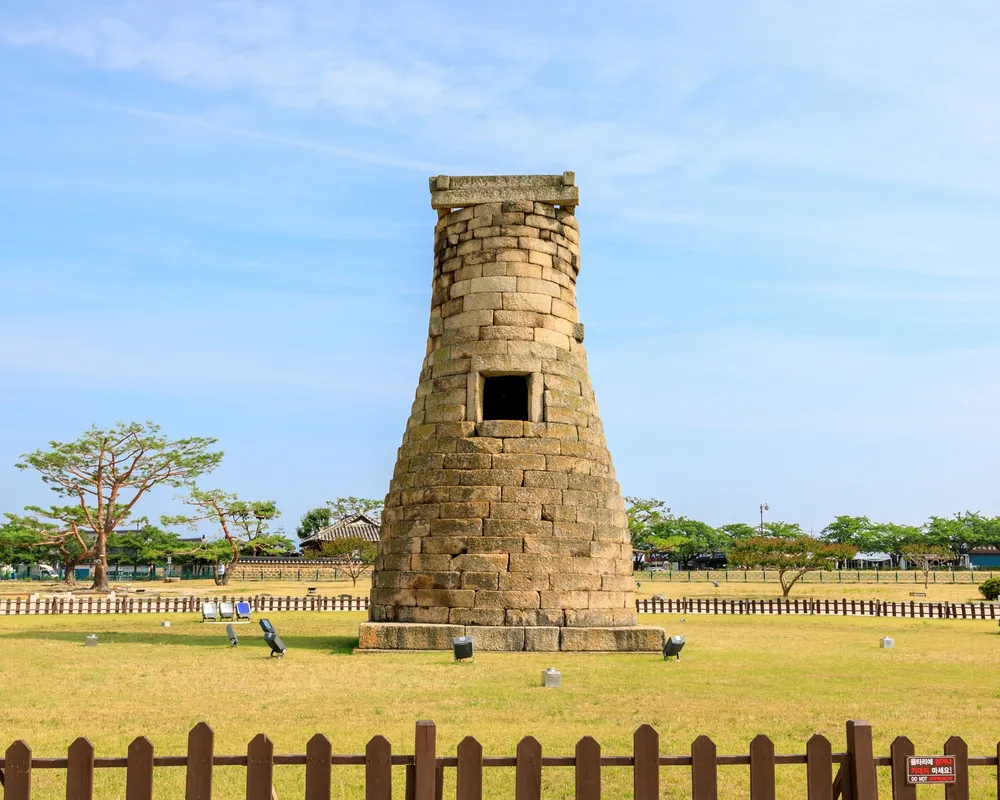
Located just nearby is the iconic Cheomseongdae, one of the oldest observatories in East Asia. This stone tower, built during the Silla period to observe the movements of stars and the moon, stands out with its unique structure made from carefully stacked granite blocks. Silla astronomers reportedly used this observatory to determine agricultural cycles and guide state affairs, showcasing their deep interest in science and the cosmos. On a warm afternoon, people often sit on the surrounding grass, letting their imaginations drift back in time — one of the simple but enriching pleasures of visiting Gyeongju.

Gyeongju Historical Tour

Daereungwon and Hwangnam Bread: A Harmony of Tombs and Local Delicacies

As you stroll through downtown Gyeongju, you’ll notice grassy mounds sprouting between homes and shops. These are actually ancient burial sites—clustered royal and noble tombs from the Silla era, collectively known as Daereungwon. Though they resemble small hills, they are graves, many of which have revealed golden crowns and bronze artifacts. Among them, the Cheonmachong (Heavenly Horse Tomb) is open to the public, allowing you to step inside and observe the internal structure of a Silla tomb.

While exploring Daereungwon, you’ll also find numerous stores selling the beloved local pastry known as “Hwangnam Bread.” Round and filled with sweet red bean paste, these treats feature a slightly crispy outer layer and a soft, sweet interior. Originating in the 1930s, Hwangnam Bread has become a signature snack of Gyeongju and is perfect for recharging after your historical stroll. The area also boasts many other bakeries, making it easy to combine a historical tour with a delicious dessert hunt.

The Pinnacle of Buddhist Culture: Bulguksa Temple and Seokguram Grotto

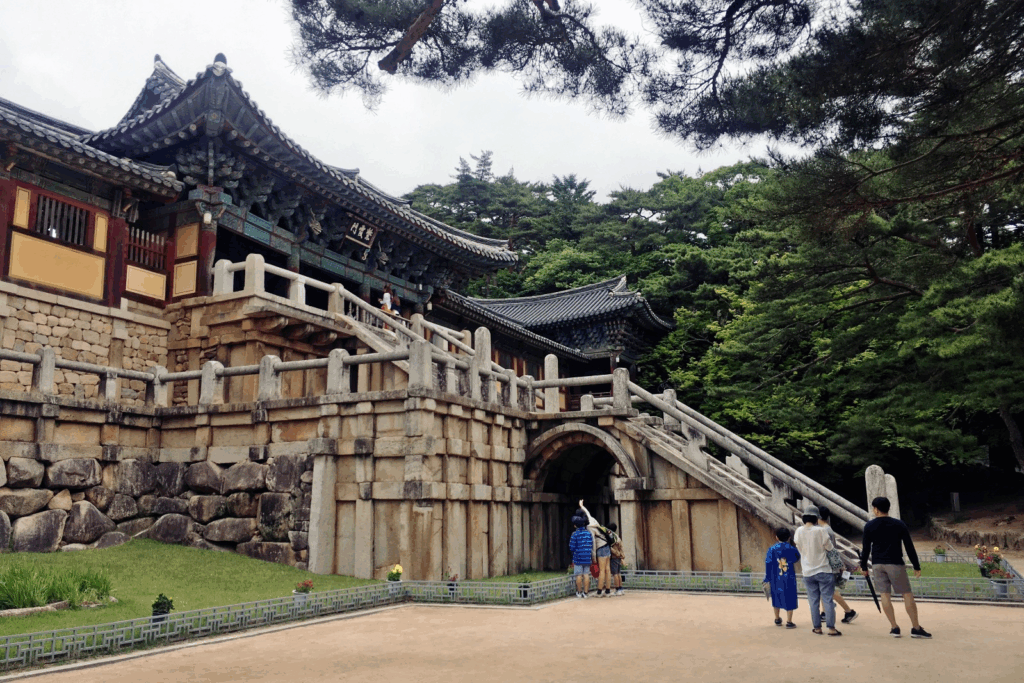
No trip to Gyeongju is complete without visiting Bulguksa Temple and Seokguram Grotto. Bulguksa is a UNESCO World Heritage site that showcases the pinnacle of Silla-era Buddhist architecture and artistry. The moment you enter, the elegant staircases Cheongungyo and Baegungyo catch the eye. Throughout the temple grounds, majestic structures like Daeungjeon Hall, Geungnakjeon Hall, Dabotap Pagoda, and Seokgatap Pagoda exude timeless elegance and spiritual significance. Carved from granite and refined over centuries, these architectural gems remain as commanding and beautiful as ever.

A short bus ride up the mountain from Bulguksa leads you to Seokguram Grotto, another highlight of Gyeongju. This artificially constructed stone grotto houses a magnificent Buddha statue at its center. As soon as you step inside, you’re struck by the intricate artistry and serene atmosphere. The temple’s centerpiece, a solemn and graceful Buddha, greets visitors from the end of a narrow passageway. Although photography is prohibited inside, this actually enhances the experience, allowing complete immersion in the craftsmanship and spiritual essence that have endured for a millennium.

불국사

Donggung Palace and Wolji Pond: Evening Romance and Reflections

Your Gyeongju itinerary doesn’t need to end when the sun sets. As dusk falls, head toward Donggung Palace and Wolji Pond (formerly Anapji). This site once housed the Silla royal palace’s secondary residence and a large, artificial pond. By night, it’s transformed into a stunningly lit location perfect for a romantic walk. The reflections of the palace lights dancing on the water create a postcard-worthy scene that photographers love.

Surrounding the pond are several traditional tea houses and Korean restaurants, ideal for relaxing after a long day of sightseeing. While strolling along the calm pond, it’s easy to imagine Silla royalty gazing at the same stars and sharing stories centuries ago. Many travelers recommend paying the entry fee for the night viewing experience—without question, Donggung and Wolji’s nighttime scenery enriches any visit to Gyeongju.

Hands-On Experiences: Silla Costumes and Craft Workshops

Looking to take your trip to the next level? Rent traditional Silla-era clothing and capture some historic-themed photos near tombs and palaces, or take part in a hands-on craft workshop. Activities like pottery making, herbal sachets (hyangnang) sewing, and traditional knotting give you a feel for Silla people’s artistry. Some tours even offer Silla or Hanbok costume experiences for foreigners—be sure to check ahead for available programs and times.

In downtown Gyeongju, several cultural centers and craft studios offer workshops that anyone can join with a reservation. These interactive activities go beyond sightseeing by allowing you to directly engage with the artistry and craftsmanship that defined Korean life in ancient times.

Final Thoughts: Breathing in a Thousand Years of History

As the former capital of Silla, Gyeongju is steeped in a legacy that spans more than 1,000 years. From Wolseong and Cheomseongdae to Daereungwon, Hwangnam Bread, Bulguksa, Seokguram, and the romantic nighttime views of Donggung and Wolji, the entire city feels like a bridge to the past. Whether you’re wandering narrow streets or feeling the breeze between tombs, you can almost hear the whispers of a civilization long gone—but not forgotten.

Visiting Gyeongju adds a new dimension to how we perceive history. No longer just textbook facts or museum artifacts, Silla-era life becomes tangible as we walk through palaces, inspect ancient architecture, and trace the roots of Buddhist faith. Even a half-day or two-day visit can leave lasting impressions. If time permits, consider extending your stay to explore more hidden gems throughout the city.

Walking through the old streets of Gyeongju is a journey through time, revealing how Korea’s ancient heritage lives on in modern surroundings. From awe-inspiring monuments like Bulguksa to charming alleys and local cafés, the distinct “Gyeongju vibe” is like nowhere else. Use this guide to plan your own Gyeongju historical tour and you’ll leave with memories—and perhaps a longing to return—etched with the breath of a thousand years.

Webring Newsletter

K-Name Studio: Create your perfect Korean name based on your personality and style.
What’s My K-Beauty Personal Color?
WeBring Service : Provides personalized services to foreigners living in Korea
Exclusive offer: Introducing foreign car rental in Korea, WeBring-SoCar
E-7 Visa Korea: The Ultimate Guide for Foreign Professionals

To work in Korea as a foreigner, you need a working visa—primarily categorized as professional (E-7) or field-specific (E-1 to E-6). Among them, the E-7 is the most widely used due to its broad qualifying job categories. However, the application process is complicated, with many documents to submit. If not properly prepared, you risk a rejection. In this post, we’ll walk you through the E-7 visa requirements, required documents, and employer sponsorship procedures to help you prepare successfully.


1) What is the E-7 Visa?

Covers a Wide Range of Professional & Technical Jobs

The E-7 (Specific Activities) visa is a professional work visa for foreigners hired by Korean companies. It covers a wide range of occupations, including researchers, engineers, designers, chefs, translators, and more (as outlined by the Ministry of Justice). Jobs that don’t fall under other categories like E-1 (Professor) or E-2 (English Teacher) generally default to E-7. In short, if a foreigner plans to work in Korea for pay, the E-7 visa is often the appropriate choice.

Company Acts as Sponsor (Employer Role)

To get an E-7 visa, a Korean company must act as the applicant’s “sponsor.” The company must justify to the immigration office why this foreign national is necessary for the position and prove that the job requires specialist skills. They also need to submit documents like an employment contract and their financial statements to demonstrate stable employment conditions. Since individuals may find it difficult to compile everything on their own, cooperation with the HR department or a licensed immigration expert is essential.

Visa guide illustration


2) Eligibility Requirements: Education, Experience & Salary

Educational Background

A bachelor’s degree or higher is generally favorable. However, for certain technical or vocational positions, an associate’s degree, a national license, or substantial work experience may qualify. The exact requirements vary by field. Therefore, the applicant may need to submit either a diploma from an accredited university (domestic or international) or a combination of a vocational license and work history. For instance, chefs may qualify without a degree if they hold a national culinary certificate and have several years of experience.

Work Experience & Salary

One of the crucial factors in E-7 screening is the applicant’s annual salary. The offered salary must exceed a minimum set by the government each year (e.g., approximately 23–24 million KRW in 2023). This aims to prevent foreign workers from being underpaid compared to Korean employees. Immigration officers will also assess whether the applicant has sufficient experience for the position, or, if a newcomer, whether their degree is relevant to the field.

Additional Industry Restrictions

Some fields—such as engineering, design, IT, culinary arts, and culture—may require point-based evaluations, licenses, or extra proof. For example, chefs usually need a national culinary certification from their home country and at least five years of experience. The company must also explain why it is difficult to fill the position with a Korean candidate.


3) Required Documents: From Both Company and Applicant

Employer Documents

  • Copy of Business Registration Certificate
  • Signed Employment Contract (including salary and conditions)
  • Company Introduction & Overview (scale, financial status, number of employees, etc.)
  • Statement of Reasons for Hiring a Foreigner
  • National Insurance Registration Certificate (to prove employee status)

Applicant Documents

  • Passport and Passport-sized Photo
  • Diploma or Qualified License (original or apostilled copy)
  • Certificate of Career/Work Experience (relevant to the job)
  • Criminal Background Check (for select fields)
  • Health Examination Report (if applicable)
  • Resume (in Korean or English)

Additional documents may be required depending on the applicant’s nationality and job type. For example, translated and notarized copies of original certificates might be needed. Some companies may work with immigration lawyers or administrative experts to collect and submit everything on behalf of the applicant.


4) Application Process: Step-by-Step

1) Job Offer Confirmation

First, the foreign applicant must secure a confirmed job offer from a Korean company. Once verbal or written agreement is reached via email or contract, the company must formally agree to sponsor the E-7 visa. If the company has no prior experience hiring foreigners, mutual coordination is crucial for navigating immigration procedures.

2) Visa Issuance Approval Number (CoE) Application

The employer submits an application for a “Visa Issuance Approval Number” at the local immigration office. This includes both company and applicant documents. The review process typically takes 2 to 4 weeks. Once approved, the number (also known as a Confirmation of Visa Issuance, or CoE) is issued.

3) Embassy Visa Application (Outside Korea)

The applicant brings their CoE to a Korean embassy or consulate in their home country (or country of residence) to apply for the E-7 visa. Required items include the CoE, passport, photo, and application fee. The visa is usually issued within 1 to 2 weeks. If the applicant is already in Korea (e.g., on a student D-2 visa), they can apply to change their visa status to E-7 within the country.

4) Alien Registration After Entry

Once entering Korea with the E-7 visa, the applicant must apply for an Alien Registration Card (ARC) within 90 days. This requires visiting the immigration office to register biometric data and residential address. Once registered, the applicant can officially begin working and receive salary per the signed contract.


5) Additional Notes: Visa Renewal, Job Change & Risks

Visa Renewal (Extension)

E-7 visas are usually granted for 1 or 2 years, depending on the case. If the company wishes to continue employing the person and the person has worked responsibly, they can apply for an extension through the same screening process. Authorities may reassess the company’s financial status and the foreign worker’s performance at this time.

Changing Jobs (Transfer of Sponsorship)

If the applicant wants to move to another company in Korea while on an E-7 visa, they must apply for a change in visa sponsorship. The new company must act as the sponsor, and approval must be granted before the applicant can begin working. Failing to follow procedure can result in illegal employment status.

Reasons for Visa Cancellation

The E-7 visa can be revoked if the company shuts down, the employee leaves the company without notice, or if it’s revealed that false documents were submitted. Crimes or overstaying one’s visa period may also result in cancellation. Any major change in employment status must be reported to immigration immediately.


Bonus: Overview of E-1 to E-6 Visa Types

In addition to the E-7 visa, Korea offers various job-specific visas:

  • E-1 (Professor): For university-level professors and researchers.
  • E-2 (Foreign Language Instructor): For teaching English or other foreign languages.
  • E-3 (Research): For researchers in accredited institutions.
  • E-4 (Technological Guidance): For technical advisory roles.
  • E-5 (Professional): For licensed professionals like doctors, lawyers, etc.
  • E-6 (Arts & Culture): For work in the arts, performance, or sports industries.

Each has clearly defined occupational boundaries. If none apply, E-7 is the general alternative.


Conclusion: Preparation & Employer Collaboration Are Key

Obtaining an E-7 or other work visa involves joint efforts from both employer and job applicant. Meeting eligibility criteria (education, experience, salary) and correctly submitting documents (employment contract, financial data, degree certificates, etc.) are essential to pass immigration screening. Though the process may feel challenging, following the steps carefully allows you to legally work and build your career in Korea.

Depending on your nationality and job sector, preparation needs will vary. For instance, a non-IT professional may have to emphasize technical certifications or experience, while those aiming for trading companies may need to prove their language skills. If the employer has never sponsored a foreign employee, hiring an administrative consultant may be helpful.

Ultimately, with South Korea’s growing global presence, the demand for foreign professionals continues to rise. If you’ve reviewed the process and paperwork clearly in this guide, your next step is to finalize sponsorship during your job search. With proper preparation and employer collaboration, building a career in Korea will be within reach.

E-7 visa

Webring Newsletter

K-Name Studio: Create your perfect Korean name based on your personality and style.
What’s My K-Beauty Personal Color?
WeBring Service : Provides personalized services to foreigners living in Korea
Exclusive offer: Introducing foreign car rental in Korea, WeBring-SoCar

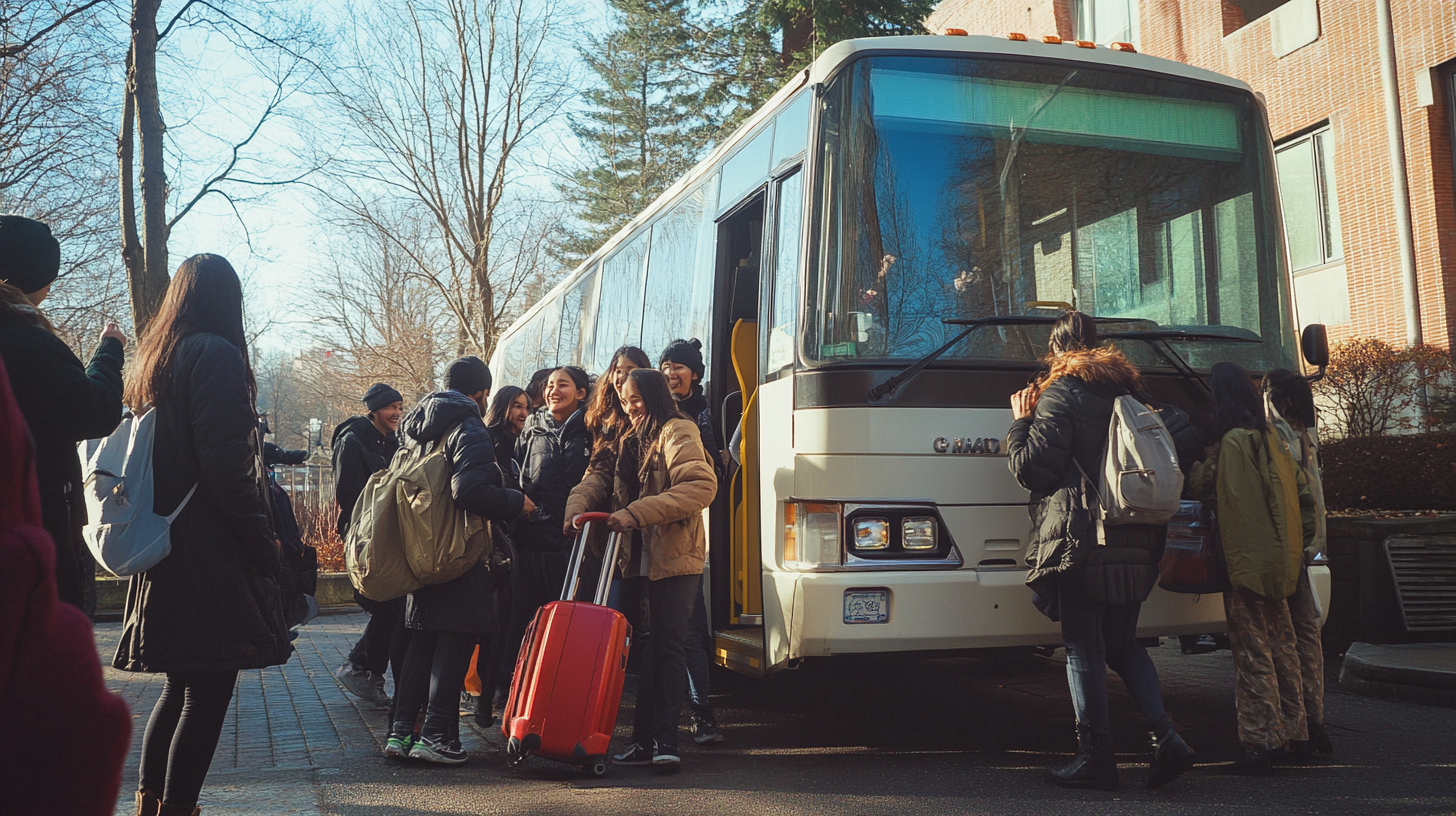
Charter Buses: International Student Event Guide in Korea

When attending a university in Korea, international students often participate in various group events such as orientations (OT), membership training (MT), and department outings. For organizers, one recurring challenge is figuring out “how to move large groups efficiently.” With large numbers of students—many unfamiliar with Korea’s geography—public transportation alone isn’t always a practical solution.

This is precisely where charter buses for international student events become a game-changer. Student councils or universities frequently rent one or more buses to conveniently transport students to event venues and back. In this article, we’ll explore effective ways to utilize charter buses for events involving international students, including practical tips and usage guidelines.


Distinct Features of Events for International Students

Language and Cultural Barriers, and Unfamiliar Routes

International students may not be fluent in Korean or well-acquainted with Korean geography. Asking them to navigate public transportation individually—especially to unfamiliar locations—could increase the risk of getting lost or delayed. Situations like “missing a bus stop and arriving late” or “misinterpreting subway directions and heading the wrong way” are commonly reported.

Therefore, Korean universities often support group transportation for OT or MT events. Utilizing a charter bus means gathering all students at one designated location at the scheduled time and heading straight to the destination—minimizing security risks and delays.

Events Involving Heavy Luggage and Group Travel

Events like OT and MT typically involve overnight stays (1–2 nights), so participants tend to carry clothing, toiletries, team games equipment, or even bedding. For international students, the load may be heavier due to off-campus accommodations. Without personal cars, moving such baggage through public transportation can be challenging.

Charter buses, with their ample trunk and under-seat storage, make it easier to accommodate bulky luggage for multiple participants. Event organizers can load team supplies efficiently and unload them directly at the venue.


How to Effectively Use Charter Buses for University Events

Estimate Number of Participants and Travel Distance to Decide Bus Type

The first critical step is identifying the expected number of participants and calculating travel distance. For instance, if you expect 30 international students and five staff members (35 people total), one large 45-seater bus may suffice. Alternatively, two 25-seater buses can offer more comfort. For short trips, a mid-size bus may be enough, but for longer distances, a full-size bus is typically better for comfort.

You also need ample buffer time when planning departure and arrival times. Locations such as dormitories or main university buildings can be traffic-prone, making it essential to pre-check bus entry routes and parking spaces.

Charter Bus

Announce Details and Confirm Attendance

It’s crucial to provide clear transportation details to international students, such as charter bus schedules, departure times, and meeting points. To minimize language barriers, provide notices in English or relevant native languages. Confirm the number of participants in advance to secure appropriately sized buses and finalize the budget.

If you’re collecting participation fees, explain how transport costs are included. Clarifying whether the fee “covers the bus fare” or “no individual transport costs are needed” improves student understanding and trust.

Booking Contracts and Ensuring Safety

When selecting a bus rental company, always gather multiple quotes to compare costs and service scope. Be sure to double-check items like “round-trip pricing,” “whether toll fees and driver meals are included,” or “lodging arrangements for drivers, if needed.” Also look for clauses that confirm valid vehicle insurance and regular safety inspections.

Since university funds may be involved, follow transparent accounting procedures, such as obtaining formal quotes and documenting payments. Ensure that you receive itemized estimates covering labor, fuel, insurance, and tax—this avoids complications down the line.

Day of the Event: Coordination and Efficiency

On the day of the event, assign staff to check attendance at the meeting spot. Help load luggage into the bus storage to smooth boarding. Once the bus departs, if there are scheduled stops (rest areas or scenic detours), ensure the driver is informed in advance.

You can also utilize travel time for engagement—play games, introduce school resources, or allow international students to introduce themselves and their cultures. If the ride is about two hours, it’s a perfect opportunity to build camaraderie and provide helpful information about student life.


Save on Costs: How to Get Group Discounts

Score Discounts Through Group Bookings

Events like international student OT or MT typically involve high headcounts, which makes your group an appealing customer for bus operators. Some companies offer “university special discounts” or “international student event rates,” so comparing various quotes could uncover cost-saving opportunities.

If nearby departments or clubs are heading to similar locations on the same date, consider co-renting a bus and splitting costs. Bear in mind, however, that joint reservations require careful scheduling and participant confirmation to avoid issues.

Use Government or University Support Funds

Many Korean universities offer subsidies for transportation costs during international student activities, including OT or MT events. Additionally, regional governments or tourism organizations may provide coupons or grants for foreign visitor programs. Proactively researching such institutional support can significantly reduce charter bus expenses.

Consult university international exchange offices or student affairs departments to ask whether internal budgets or special funds are available for international event support. If the event’s scale and purpose are clear, you may be eligible for substantial financial aid.


Real-Life Success Stories: Charter Buses for International MT Programs

Case 1: Orientation Event by Department F at a Seoul-Area University

Department F at a university in the Seoul metropolitan area holds a two-day orientation every year at Elysian Gangchon Resort for new international students. The department reserved two charter buses, departing from the main campus building at 9 a.m. Funding came from a mix of student fees and the student council’s budget. Lodging for bus drivers was arranged via the resort’s on-site employee accommodations to cut costs.

Fifty students boarded the buses, and during the journey, they watched an intro video and had casual team introductions, making good use of the two-hour ride. Lunch followed upon arrival, and recreational activities kicked off on time. The student council reported that while the two buses cost around 800,000 KRW in total, the per-person transport cost was only about 16,000 KRW, calling it a successful and cost-effective choice.

Case 2: Cultural Experience Trip for Exchange Students at a Regional University

A regional university organized a three-day cultural trip for international exchange students, facilitated by a large charter tour bus supported by the university. The itinerary included historical and cultural sites in a nearby city. The university’s international office confirmed attendance and assigned field staff to manage 40 participants.

Most participants had never visited these destinations before, so games and brief local introductions were held on the bus to enhance engagement. All students completed the trip without delays or incidents, and feedback indicated high satisfaction: “It was a comfortable way to see Korea’s regional cities.” Even the driver enhanced the experience by sharing recommendations for rest stops and local food along the route.


Final Thoughts: Charter Buses—A Safe and Efficient Option for International Student Events

Transportation logistics for international student events like OT, MT, or academic outings in Korea are not simple. Cultural barriers, unfamiliar transport systems, heavy baggage, and group dynamics can all lead to chaos when unmanaged.

Charter buses offer a smart solution by enabling collective travel, reducing accident risk through professional drivers, and providing ample seating and luggage space. Event organizers benefit from simplicity and control, while students can focus solely on bonding and enjoying the experience.

Worried about costs? Discounts and institutional support options are available, and comparing quotes might show that it’s more affordable than expected. If you’re planning an international student event, seriously consider the power of charter buses—a reliable way to introduce students to Korean group travel culture while creating a safe and memorable experience.

Charter Bus for International Students

Webring Newsletter

K-Name Studio: Create your perfect Korean name based on your personality and style.
What’s My K-Beauty Personal Color?
WeBring Service : Provides personalized services to foreigners living in Korea
Exclusive offer: Introducing foreign car rental in Korea, WeBring-SoCar

Airport Pickup Service: The Best Choice for Foreigners Landing in Korea

When a foreigner first arrives in Korea, the very first hurdle they often encounter is getting from the airport to their accommodation or the city center. Upon landing at major international airports like Incheon or Gimpo, travelers are immediately greeted by sprawling terminals, crowds of people, and a complex network of transportation options. In a familiar country, one might simply hop onto a subway, bus, or taxi without a second thought. However, the initial moments in a completely foreign country naturally come with a mix of anxiety and apprehension — and if you’re traveling with lots of luggage, the hassle only increases.

This is where an “airport pickup service” becomes an incredibly appealing choice for foreigners. By pre-booking a car through a travel agency or dedicated service provider, travelers can have a professional driver waiting for them at a designated meeting point, often holding a sign with their name. Upon arrival, travelers can immediately get into a clean, private vehicle and be transported directly and comfortably to their hotel or destination. In this article, we’ll explore what an airport pickup service entails and why it’s highly favored by international visitors.


Definition and Features of Airport Pickup Services

Customized Travel Based on Advance Reservation

An airport pickup service typically refers to a pre-reserved vehicle waiting to meet the traveler upon arrival. These services are offered by hotels, travel agencies, or specialized providers. By entering flight details and arrival time during booking, real-time flight tracking ensures that even if flights are delayed, schedules are adjusted to minimize unnecessary waiting time. Unlike simply renting a car, airport pickup includes personalized service like greeting the client inside the airport or at a nearby meeting point and assisting with luggage — a major differentiator from general public transportation.

Setting the Tone for the Trip

Imagine completing a pleasant flight only to get lost trying to find transportation at the airport, or wandering around with heavy luggage in search of a bus stop — an exhausting ordeal for anyone. For foreigners arriving for business appointments, exhibitions, or events where time and energy are precious, such inconveniences can be highly disruptive. Using an airport pickup service ensures a smooth transition from the moment of arrival. Simply follow the driver’s guidance, relax in the vehicle, and head directly to your destination, drastically reducing stress and leaving a positive first impression of the trip.

Airport Pickup


Why Foreign Visitors Prefer Airport Pickup Services

1) Reducing the Burden of Foreign Language and Environment

Language is one of the biggest challenges for foreigners upon arriving in Korea. While large international airports like Incheon provide English signage and announcements, negotiating a taxi fare or navigating bus routes can still be intimidating. Not being familiar with payment systems or transportation cards adds to the confusion. Airport pickup services simplify all of this. You can request language assistance when booking or choose an English-speaking driver, minimizing communication barriers. There’s no need to worry about navigating roads or calculating fares, as the driver already knows the destination.

2) Convenient Travel with Heavy Luggage

Most international travelers arrive with multiple pieces of luggage, including large suitcases. For families, add to that a child’s gear, strollers, and numerous bags, making movement even more challenging. While the airport railroad and limousine buses are convenient transport options, traveling with excessive luggage may make it difficult to even find a seat, and standing amid crowds can be very uncomfortable. Airport pickup services solve this by bringing the vehicle directly to the customer and helping load luggage into the trunk. Options such as vans or large SUVs offer spacious interiors perfect for travelers with lots of baggage or group travelers.

3) Optimal for Immediate Long-Distance Travel

Some foreigners need to travel directly to local cities, resorts, or industrial complexes outside of Seoul immediately after landing. Finding appropriate public transportation in these cases isn’t always easy. Moreover, transferring between trains and intercity buses can require multiple burdensome moves with heavy luggage. Airport pickups enable direct, uninterrupted travel to the final destination, saving valuable time and energy. For business travelers or anyone with tight schedules, the efficiency is unparalleled.

4) Comfortable and Safe Travel Environment

Although the traffic systems around Incheon and Gimpo airports are well-organized, foreigners still face unfamiliar road signs and driving customs. Renting a car and driving yourself is an option, but doing so after a long flight, while unfamiliar with local roads, can be stressful and risky. With an airport pickup service, a professional driver handles everything, allowing the passenger to relax comfortably in the back seat, set up a local SIM card or Wi-Fi device, and enjoy safe travel managed by experienced drivers familiar with Korean roads. Even unexpected traffic becomes less of a hassle.


Key Components and How to Book an Airport Pickup Service

What to Consider When Booking

When reserving an airport pickup, it is important to check a few critical points. First, input the exact arrival time and flight number, and review the policy regarding flight delays. Some providers may charge extra, but many offer free schedule adjustments or waive waiting fees for up to 1–2 hours. It’s also crucial to select a vehicle type based on the number of people and baggage volume. Larger groups may require a minivan or large SUV; smaller cars may not accommodate all the luggage. Checking cancellation policies, tipping practices, and any additional fees like tolls in advance can also avoid surprises later.

The Pickup Process

Typically, the pickup process follows these steps: After disembarking and clearing immigration, the traveler retrieves their luggage and proceeds to a prearranged meeting spot (e.g., arrival hall gate or a designated café). Oftentimes, the driver will be holding a sign with the traveler’s name. Immediately after meeting, the driver assists with moving the luggage to the car, and the trip proceeds straight to the destination. Service language ability varies, so it’s advisable to request a driver who can communicate in your preferred language at booking time. During the ride, you may rest or enjoy provided amenities such as bottled water or light refreshments. Upon arrival, assistance with unloading at the hotel entrance or accommodation finalizes the service.


Added Value Provided by Airport Pickup Services

Peace of Mind Regarding Language and Cultural Differences

First-time travelers or non-fluent speakers inevitably feel tension in unfamiliar environments. Difficulties like conveying an address properly to a non-English-speaking taxi driver can lead to unnecessary stress. Airport pickup services prevent these issues by confirming the destination in advance and standardizing communication methods. Additionally, drivers often act as friendly local guides, offering useful tips and information during the journey.

Personalized Services

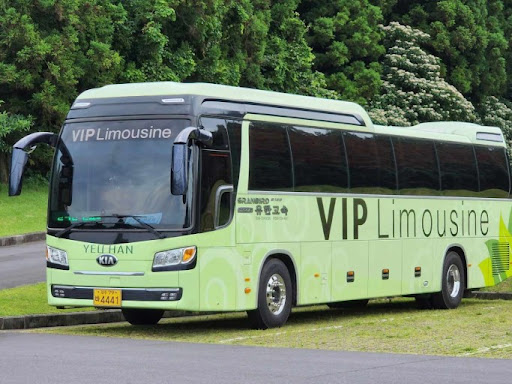
For those seeking a more luxurious experience, VIP airport pickup or limousine services are available. These options often involve premium sedans and may include pre-arranged welcome gifts like flower bouquets or beverages. Businesses hosting VIP clients or couples starting their honeymoon trip can customize a special welcome event, creating a truly personalized and memorable experience.


Conclusion: When Convenience and Stability Matter, Airport Pickup Is the Answer

For foreigners, “airport pickup service” is no longer a luxury, but an essential option that offers comfort and security immediately upon landing in a new country. It allows convenient luggage transport, eliminates complicated transportation changes, and reduces stress caused by language or navigation challenges. For those landing at major airports like Incheon or Gimpo, airport pickup services offer a psychological sense of relief from the very start of the trip. Especially when traveling with children, seniors, or in VIP hosting situations, the value of this service becomes even more pronounced. Ultimately, airport pickup services offer steadfast support for making the first steps in an unfamiliar environment safer and more enjoyable.

Airport Pickup Service

Webring Newsletter

K-Name Studio: Create your perfect Korean name based on your personality and style.
What’s My K-Beauty Personal Color?
WeBring Service : Provides personalized services to foreigners living in Korea
Exclusive offer: Introducing foreign car rental in Korea, WeBring-SoCar