
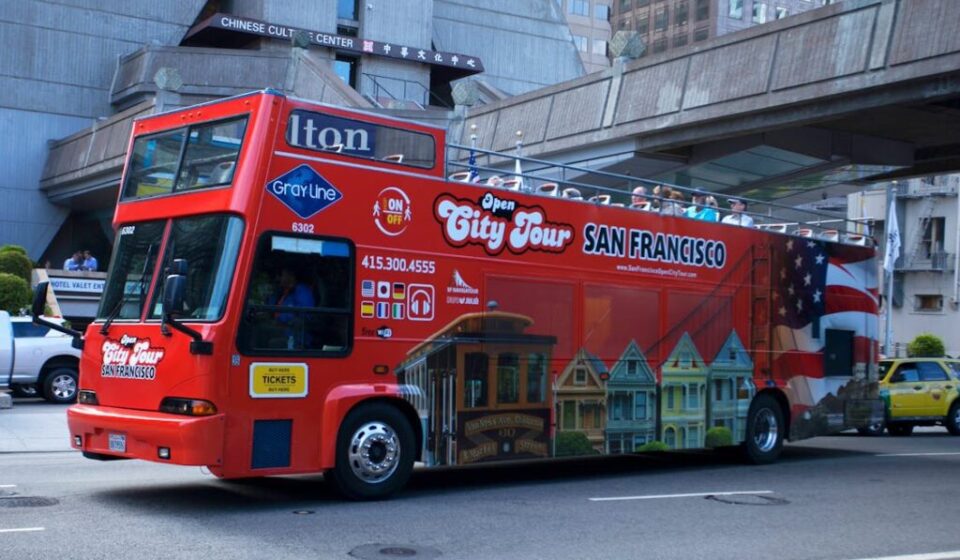
Korea City Tour Bus Guide: Cover Korean Cities on a Short Trip
The Korea city tour bus is the fastest way to bundle a Korean city’s core landmarks on a short itinerary. A fixed loop lets you hop on and off at museums, palaces, observation decks and shopping streets without memorizing transfers or walking routes. Each stop comes with a four-to-five-language audio guide that explains city history and culture, so the ride itself doubles as a compact city lecture.
What is a Korea city tour bus? Hop-on Hop-off in one line
A Korea city tour bus is a Hop-on Hop-off loop bus that each city runs for tourists. A fixed route covers 8 to 12 stops, and a bus comes by every 10 to 30 minutes. A 1-day or 2-day ticket lets you get on and off freely at any stop during operating hours — the same structure as European Hop-on Hop-off buses. The vehicles carry a multilingual audio guide in English, Chinese, Japanese and Korean so you hear short narrations at each stop. You can confirm routes and fares at the official Seoul tourism site.

Four reasons the Korea city tour bus fits short trips
- Simple movement — the loop already strings together museums, palaces, malls and parks, so you just watch for the stop sign.
- Audio guide adds context — each stop comes with a short narration, turning travel time into a mini city lecture.
- Easy cost control with a single day pass — much clearer than paying for subway and taxi separately; a city tour bus day pass costs about KRW 15,000-20,000.
- Routes are pre-curated — the city has already plotted the best path, so first-time visitors rarely miss the headline sights.
If you want to combine the bus with the subway, check the Korea Public Transport Complete Guide for T-money cards and transfer rules.
Limits of the Korea city tour bus: fixed routes and early last bus
Because the Korea city tour bus runs on a fixed loop and schedule, anywhere off the route still needs a separate ride. Inner-city loops run every 10 to 30 minutes, but outer-area lines stretch to 30 to 60 minutes, so missing one bus means a long wait. The last bus usually departs between 5 and 7 p.m., which makes night sights (N Seoul Tower at night, Busan Gwangan Bridge night view) hard to finish with the bus alone. On a packed day, check the next departure time before stepping off at any stop.
Seoul city tour bus routes: palace, panorama, night
Seoul runs three main city tour bus routes. Pick by how your one-day plan, route and budget line up.
| Route | Key stops | Frequency | Best for |
|---|---|---|---|
| Downtown Palace | Gwanghwamun, Gyeongbokgung, Changdeokgung, Myeongdong, N Seoul Tower | 10-30 min | History and culture day |
| Panorama | Yeouido, Gangnam, COEX, Lotte Tower | 30-40 min | Modern landmarks, half day |
| Night View | Hangang Bridge, Banpo Bridge, N Seoul Tower | 40-60 min (seasonal) | 2-3 hour evening |
Tickets cost about KRW 15,000-20,000 per route for the day pass. You can buy on-site at the Gwanghwamun or Dongdaemun information booths, or book ahead through the official city tour bus website. Plug in earphones inside the bus and the system auto-plays English, Chinese, Japanese and Korean narration at each stop.

Busan, Daegu and Gwangju city tour bus routes compared
| City | Main route | Key stops | Day pass |
|---|---|---|---|
| Busan | Coastal loop / Night view | Haeundae, Gwangalli, Taejongdae, Seomyeon | About KRW 15,000 |
| Daegu | Downtown loop / Palgongsan theme | Modern Alley, 83 Tower, Kim Kwang-seok Street, Palgongsan | KRW 10,000-15,000 |
| Gwangju | History / Arts and nature | 5.18 Memorial Sites, Mudeungsan, Gwangju Biennale | About KRW 10,000 |
Busan plays to the coastline and night views, while Daegu is the most efficient choice if you want to combine the Modern Alley with Palgongsan in one go. Gwangju runs a culture and arts route linking the 5.18 democracy memorial sites with Mudeungsan and the Gwangju Biennale, so the ride covers city identity as much as landmark spotting.
How to finish a Korea city tour bus loop on a tight schedule
If you only have one day in Seoul, take the Downtown Palace route from Gwanghwamun through Jongno, Namdaemun, Myeongdong and Namsan in one chain. Spend 30 to 45 minutes at each stop and then hop the next bus — you can clean up 4 to 5 sights in 4 to 5 hours. Cities that run double-decker open-top buses give you the bonus of riding upstairs in the breeze. If the weather cooperates, the upper deck is worth trying. In summer, watch for direct sunlight, and in winter pack a hat, jacket and hand warmers. After finishing the Seoul loop, the Seoul Must-See Course Guide covers extra spots worth adding.
Korea city tour bus checklist before you board
- Check the timetable — many loops only run 5 to 10 times a day or finish by 6 to 7 p.m., so confirm the schedule on the official site or at an info booth before you leave.
- Keep your ticket safe — day passes often come as a wristband or QR code; tuck them into a wallet or phone case so you don’t lose them.
- Watch the stop time — staying too long at one stop pushes back the rest of the loop. Use 30 to 45 minutes per stop as a default.
- Check language support — most buses offer four to five audio languages, but supported languages vary by city, so check before boarding and bring earphones.
- Plan for the weather — open-top upper decks get strong sun in summer and cold wind in winter, so pack hats, sunglasses and a jacket.
Who the Korea city tour bus suits — and who it does not
Because the Korea city tour bus loops core landmarks on a pre-set route, it fits first-time visitors and travelers on a one-to-two-day schedule best. The audio guide adds background that makes a place you would have walked past feel new. On the other hand, slow travelers who want to stay half a day at one spot, or anyone built around night-only sights, will outgrow the bus and should pair a T-money card and the subway instead. If you want to cover a Korean city’s core spots without missing them on a short trip, the Korea city tour bus is the sensible first card to play.
Image credits
- Body image: Photo by Exj / Wikimedia Commons (CC BY-SA 4.0) — Seoul City Tour Bus, Gwanghwamun Stop
K-Name Studio: Create your perfect Korean name based on your personality and style.
What’s My K-Beauty Personal Color?
WeBring Service : Provides personalized services to foreigners living in Korea
Exclusive offer: Introducing foreign car rental in Korea, WeBring-SoCar
Explore Korea's mountains — guides in your language
Courses, transport and seasonal tips for 30 mountains, from Bukhansan to Hallasan, available in 11 languages. Pick up essential travel Korean and find events for the global community, too.

