

Korean Dating Culture Differences: A Foreigner’s Guide
This guide breaks down Korean dating culture differences from the perspective of foreigners, gyopos, and working-holiday makers in Korea. Korean dating isn’t unusually hard — but the default settings (expectations) are different, and that’s where most misunderstandings come from. Korea has well-developed vocabulary for relationship stages and anniversaries (some ‘crush stage,’ gobaek ‘confession,’ Day 1, Day 100), and foreigners who aren’t fluent in those labels often read the same situation completely differently. For broader life-in-Korea differences, see 20 ways long-term living in Korea differs from travel. The relationship-stage vocabulary is also discussed in this Donga Ilbo column.
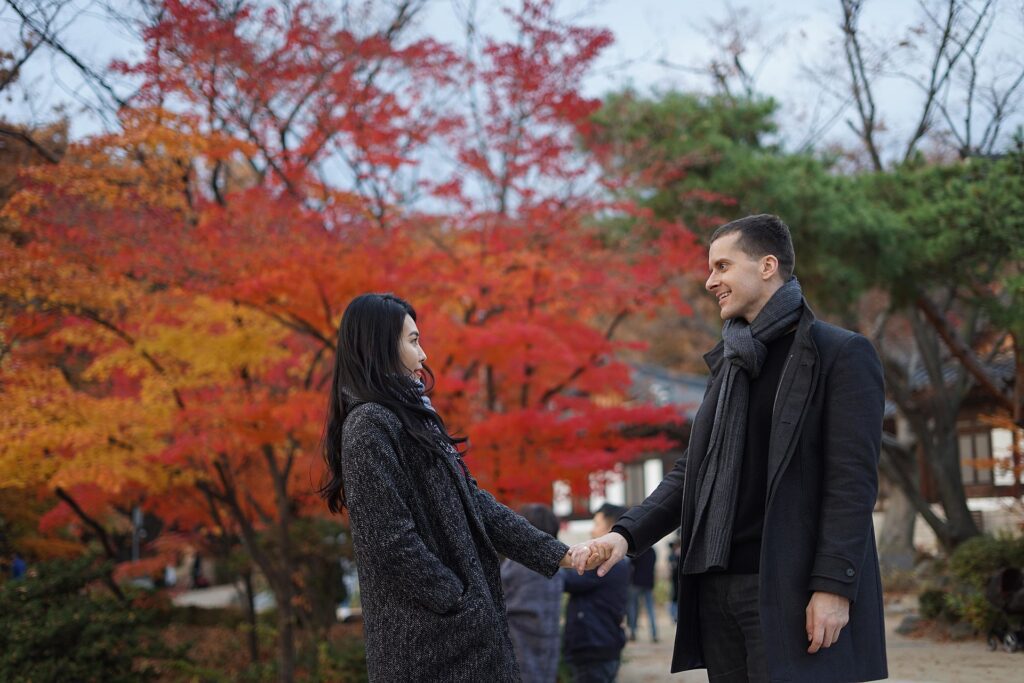
Important caveat: this article isn’t saying “all Koreans behave like this.” It’s a survival guide on frequently observed Korean dating culture differences. Individual variation is always large.
Korean Dating Culture Differences: One-Sentence Defusing Formula
When Korean dating culture differences create friction, the safest move isn’t “raising a problem” — it’s “building an agreement.” This one-sentence structure keeps emotions in check while still getting your point across.
(Fact) “___ has been happening a lot lately.” → (Feeling/Need) “I felt a bit ___ (tired / anxious / confused) about it.” → (Question) “How do you see ___? How should we settle this together?”
The key is the order: state the fact briefly without judgment → speak feelings/needs from “I” → close with an agreement question. In Korea, your delivery is read as politeness itself, so keeping this order makes the same words land much more softly.
8 Korean dating culture differences with misunderstanding-prevention scripts
The table below condenses 8 frequent Korean dating culture differences into a one-line agreement question foreigners can use right away.
| Topic | Korean pattern | Misunderstanding signal | One-sentence agreement question |
|---|---|---|---|
| Relationship label | Clear “some → gobaek → dating” stages | Close but unsure if dating | “What should we call us right now?” |
| Confession (gobaek) | “Let’s date” is the start line | No confession, status unclear | “Want to define us this weekend?” |
| Anniversaries | Day 1, Day 100, birthday celebrated | Skipping = read as indifference | “Should we pick our Top 3 anniversaries?” |
| KakaoTalk replies | “Read” status and reply speed are signals | Late reply = “they cooled off” | “When you’re busy, can we just send ‘busy’?” |
| Paying | Host/elder pays vs. Dutch — both exist | Awkward every time | “My treat today, yours next time?” |
| Speech style | Switching from jondaetmal to banmal needs consent | Going casual first reads as rude | “Comfortable to drop the formal speech?” |
| Friends/family intro | Introduction signals seriousness | Casual mood → unexpectedly heavy | “What’s the vibe of this meet-up?” |
| Boundaries | Physical, drinking, alone time vary individually | Blamed on “culture” | “Want to set our own rules instead?” |
1) “Some” vs. “dating” labels
In Korea, the labels some → gobaek → sagwim (crush phase → confession → dating) are baked into everyday language. Drag out the unlabeled “some” phase too long and one side reads it as “no progress” while the other reads it as “we’re already basically dating.”
The misunderstanding-prevention question is “What should we call us right now?” — it asks for agreement on a label rather than forcing a yes/no answer, so it’s low-pressure.

2) Gobaek (confession): one sentence starts the relationship
In Korean dating, the relationship transition often begins with an explicit agreement: “Let’s date.” If the confession step is fuzzy, the time you’ve spent together can stay in a “not yet officially dating” zone. Coverage is also available in this Korea Herald article.
For foreigners, the safer phrasing is “Want to define us this weekend?” — propose only the timing. If the word “confession” feels heavy, swap it for “our label.”
3) Anniversaries: Day 1 and Day 100
Anniversaries are what foreigners most often miss. Couples in Korea routinely mark Day 100 / Day 200 milestones with a small gift or a couple ring — the trend appears in Korea JoongAng Daily.
The realistic agreement is “Should we pick our Top 3 anniversaries?”. You don’t need to celebrate every Day 100 / 200 / 300. Decide which dates matter to both of you, and the “you didn’t care, you didn’t even celebrate” misunderstanding goes away.
4) KakaoTalk culture: how “read” status creates misunderstandings
KakaoTalk basically exposes “read” status by default, so reply speed reads as an interest signal. Foreigners often come from a culture where “read but answered later” isn’t a bad sign — and that mismatch is one of the most common things Korean couples fight about.
- Set the reply expectation in hours, not minutes — “within a few hours” works.
- While in meetings, driving, or sleeping, agree on a one-word “busy” ping.
- Reserve important decisions for calls or in-person, never KakaoTalk.
5) Paying: Dutch vs. taking turns
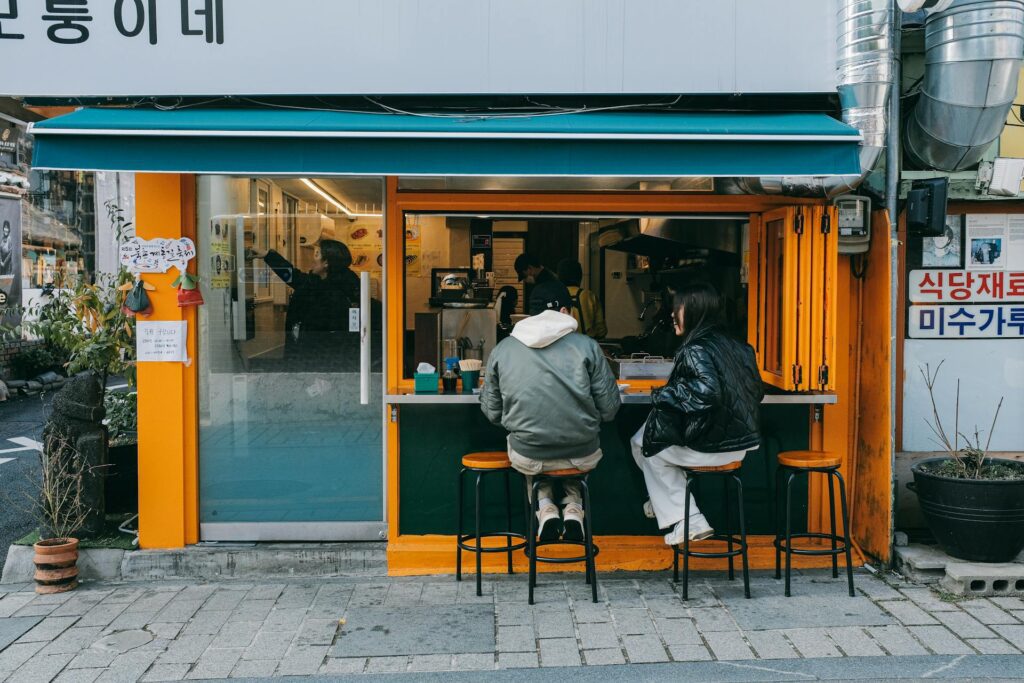
There’s no single right answer for paying in Korea. Traditionally the host or the older person picks up the bill, but younger generations increasingly accept Dutch-style as natural. Cases are documented in Korea JoongAng Daily.
The smoothest foreigner-friendly routines are one of these three:
- Take turns — “today me, next time you.” Lowest friction.
- Split by venue — the bigger bill goes to whoever has more room, the cafe goes to the other.
- Itemized Dutch — split based on what each person ordered.
6) Speech style: jondaetmal ↔ banmal
Korean encodes formality and intimacy in speech itself, so the switch from jondaetmal (formal) to banmal (casual) is read as consent about how close the relationship is, not just a casual habit. The system is documented on Wikipedia.
The safest question is “Comfortable to drop the formal speech?” One side switching to banmal first usually reads as rude in Korean etiquette, so ask first and switch together.
7) Friend / family introductions = a signal
In Korea, introducing a partner to friends and family is often read as “this relationship is serious.” Foreigners sometimes show up expecting a casual hangout and then feel ambushed by the energy. Asking “What’s the vibe of this meet-up?” before going removes most of that pressure.
8) Boundaries (physical, drinking, alone time)
Boundaries are less a “Korea vs. abroad” issue and more an agreement between the two of you. Open with one respect-first sentence — “I’m comfortable / uncomfortable with ___, how about you?” — and most clashes shrink. If conflict is wearing you down, see stress counseling routes for foreigners in Korea.
6 Ready-to-Use Korean Dating Culture Scripts
The 6 situations below are where foreigners, gyopos, and working-holiday makers most often hit the wall in Korean dating. Memorize the lines and you can use them on the spot.
- Confirm the relationship label — “I’d call us ___, what about you?”
- Agree on contact frequency — “When busy, can we just send ‘busy’?”
- Agree on paying — “My treat today, yours next time?”
- Switch to banmal — “Comfortable to drop the formal speech? No rush if not.”
- Pick Top 3 anniversaries — “Let’s celebrate the 3 dates that matter most to us.”
- Express disappointment with I-message — “___ happened. I felt ___. How do you see it?”
Turn Korean dating culture differences into agreements: 7-point checklist
Final self-check: 7 items for handling these culture differences without conflict. If any line is still “not agreed yet,” bring it up using the one-sentence formula on the next date.
- Relationship label (some / dating) is verbally agreed.
- Contact frequency and reply expectations are spelled out.
- A default paying rule exists (turns / Dutch / situational).
- Both sides agreed on when to switch to banmal.
- Top 3 anniversaries to celebrate are decided.
- Disappointment is voiced as I-message, not attack.
- Boundaries are framed as “our rule,” not “blame the culture.”
Korean Dating Culture Differences: FAQ
Q1. Why is “some” so important in Korea?
“Some” is a particularly distinctive Korean dating concept because the label itself is a fixed Korean word, so the stage is unusually clear. The same period of time gets read as “just close friends” by a foreigner and “in some” by a Korean. Aligning on the definition once removes about half the misunderstandings.
Q2. Do you really need a confession to start dating?
Not always, but in Korean dating “Let’s date” is often treated as the official starting line of the relationship. The safest move is for the two of you to agree on the definition directly.
Q3. Does a slow KakaoTalk reply mean they’re not interested?
Not necessarily. KakaoTalk is an environment where “read” status and reply speed easily turn into signals, so it helps to swap minute-by-minute expectations for a rule like “reply within a few hours” set in advance.
Q4. Do you have to celebrate Day 100 in Korean dating?
Not required. But Day 100 / Day 200 milestones are widely recognized as couple anniversaries, so if your partner cares, agreeing on a “Top 3 anniversaries” set is the realistic compromise.
Q5. Is Dutch the polite move, or should one person pay?
There’s no single answer. Traditionally the host or older person paid; younger Koreans lean more toward Dutch. Whatever works for the two of you is fine.
Q6. When is it natural to switch from jondaetmal to banmal?
Timing matters because it’s tied to intimacy and politeness. The smoothest move is to ask “Comfortable to drop the formal speech?” and switch together once both agree.
K-Name Studio: Create your perfect Korean name based on your personality and style.
What’s My K-Beauty Personal Color?
WeBring Service : Provides personalized services to foreigners living in Korea
Exclusive offer: Introducing foreign car rental in Korea, WeBring-SoCar
Living in Korea? You don't have to figure it out alone
Insurance, visas, jobs and hospital interpretation — WeBring supports every step of settling in Korea, in your language.