
Island Travel: Exploring Namhae and Jeju Islands in Korea

South Korea is surrounded on three sides by the sea and dotted with numerous islands. Among them, Namhae and Jeju Island are two of the most beloved destinations, known for their breathtaking scenery and unique culture. From Namhae in Gyeongsangnam-do, which can be reached by car, to Jeju Island, accessible only by plane or ferry, island travel offers a sense of freedom that comes from being “disconnected from the mainland.” In this post, we provide a detailed guide to island travel in Korea — focusing on Namhae, Jeju, and more — covering transportation booking, car rentals, and accommodation recommendations.


Namhae: An Island Connected by Bridges, A Paradise for Driving

Transportation: Highways + Namhae Bridge & Changseon-Sacheonpo Bridge

Namhae-gun in Gyeongsangnam-do is technically an island but is connected to the mainland via Namhae Bridge and Changseon-Sacheonpo Bridge, making it accessible by car. For instance, those departing from Seoul can take the Gyeongbu Expressway and Tongyeong-Daejeon Expressway, then head toward Sacheon or Samcheonpo and cross the bridge into Namhae. Public transportation is available, but it’s much more convenient to have a car due to long intervals between buses and limited access to remote areas.

Namhae is famous as a scenic driving destination. The coastal roads offer stunning views, especially in spring and autumn, when rolling down your windows reveals scenes where the blue sea and green mountains intersect. It’s also enjoyable to stop along the way at small fishing ports or lookouts to take photos and soak in the atmosphere.

Namhae Bridge

Attractions and Accommodations

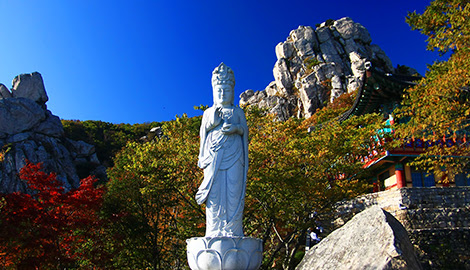
One of the most iconic spots is “Boriam Temple on Geumsan.” Located near the 681-meter-high summit of Geumsan, this hermitage is famous for its sunrise views. From the cliffside, you can witness a magnificent view of the sea and surrounding islands, offering a tranquil peace of mind. Since the trail from the parking lot is steep, comfortable footwear is recommended.
For accommodations, there are many options near Namhae-eup, including cozy pensions and seaside resorts. Recently, aesthetic and “emotional” lodgings have gained popularity on social media. For example, staying at a hanok guesthouse in a small fishing village lets you hear seagulls and waves outside your window. If modern amenities are preferred, stylish pool villas are also available—just choose based on your taste and budget.


Jeju Island: The Pinnacle of Island Travel via Plane or Ferry

Flights: The Fastest Way to Travel

To reach Jeju, most travelers choose domestic flights. The flight from Gimpo Airport to Jeju Airport takes about an hour. Avoiding rush hours and booking midweek during the off-season can save money. Budget airlines like T’way, Jin Air, and Jeju Air offer various options. Foreign travelers can use domestic flights with just a passport. However, during peak seasons (summer holidays, end-of-year celebrations, holidays), prices rise sharply and seats sell out quickly, so it’s best to book early.

Ferries: A Unique Voyage by Sea

If you prefer a more relaxed pace or wish to bring your car, ferries are an alternative. Ferries to Jeju operate from Incheon, Busan, Yeosu, Wando, and more. The journey can take over 10 hours but offers the romance of sea travel. You can transport your car aboard, which is convenient for getting around the island. However, since rough weather can cancel sailings, your schedule should remain flexible.


Rental Cars: Essential for Freedom on the Islands

While both islands offer public transit, rental cars provide significantly greater convenience. In Namhae, since it’s connected to the mainland, you can drive your own vehicle. If long-distance driving isn’t ideal, local rental agencies in Namhae offer compact and affordable options. Jeju Island features a robust rental car infrastructure, with large rental hubs near the airport. Typically, you’ll take a shuttle bus to the rental agency, complete the contract, and return via shuttle after your trip.

What to Know When Booking

Rental cars may sell out quickly on weekends or during peak seasons, so book in advance along with your flight. You need a valid Korean or international driver’s license. Foreign visitors must present their passport with an international license. Be sure to check insurance options like loss damage waivers to reduce costs in case of accidents. If you’re a beginner driver, opt for a compact or subcompact car—easier to navigate narrow island roads.


Must-Visit Spots in Namhae and Jeju

Namhae: German Village and Daraengi Village

The German Village in Namhae was founded by Korean nurses and miners who returned from working in Germany in the ’60s and ’70s. It features European-style houses overlooking the sea and offers German-style beer and sausages, making for a unique experience. The colorful buildings are perfect for photo ops.

Meanwhile, Daraengi Village boasts terraced rice paddies against a seaside backdrop. In summer, green rice fields blend harmoniously with the blue ocean; in autumn, golden waves of rice make for a picturesque scene. You can shop for regional specialties like bracken or anchovies at local markets and relax with a cup of tea at a village café.

Daraengi Village

Jeju: Seopjikoji, Udo Island, and Oreum Hiking

One of Jeju’s most scenic spots, Seopjikoji, lies on the eastern coast and is known for its surreal harmony of blue sea and open fields. Walking along the coastal trail feels like stepping onto a movie set. Nearby lies Seongsan Ilchulbong (Sunrise Peak), and at the tip of Seopjikoji, you’ll find the glass-walled “Glass House” and a quaint lighthouse.

Oreum hiking

Nearby Udo Island, just 15 minutes by ferry from Jeju’s main island, offers white coral beaches and emerald seas. It’s perfect for a day trip, with electric cars and scooters available to tour the island. Jeju’s oreum (volcanic cones) also provide excellent hiking opportunities. Trails like Saebyeol Oreum and Yongnuni Oreum are relatively easy, making them suitable for all ages.


Accommodations: From Peaceful Pensions to Luxury Resorts

Namhae: The Rise of Pensions and Guesthouses

Namhae has fewer large resorts and a greater focus on sea-view pensions and farmstay guesthouses. Amenities may include BBQ grills, private terraces, and even swimming pools. Some hosts offer breakfast with toast or local specialties, creating a warm “homestay” feel. Many of these aesthetic lodgings are popular on social media. Prices increase during peak weekends, so early planning is ideal.

Jeju: Diverse Options from Hotels to Guesthouses

On Jeju, accommodation options are endless. From luxury hotels like Shilla, Lotte, and Hidden Cliff, to family-friendly condo resorts, solo-traveler guesthouses, and private pensions — there’s something for everyone. Coastal resorts offer stunning scenery and superior facilities but come at a higher price. City areas like Jeju City and Seogwipo offer easier access to food and transport, but less sea view. Choose based on your itinerary, location preferences, and budget.


Conclusion: The Essence of Island Travel in Korea — Namhae & Jeju

Namhae, being connected to the mainland, is perfect for road trips and offers serene vistas blended with traditional villages. On the other hand, Jeju, accessible by plane or ferry, captivates with its volcanic landscapes, coastal drives, café culture, and oreum hikes. Each island has a unique charm, so it’s worth taking time to experience both in turn.

The essential question for island travel is “Where will you relax, and how will you connect with nature?” Namhae’s rural tranquility and Jeju’s exotic seascapes both offer healing experiences. Whether by ferry or plane, rental car or public transport, once you set foot on one of these islands, you’ll find yourself enjoying a world apart from your daily routine.

As a final tip, both Namhae and Jeju have unpredictable weather, so check forecasts and pack emergency raincoats, sunscreen, and hats. Temperature differences can make mornings and evenings chilly, so bring a light outer layer. Traveling with respect for locals and the environment will ensure a warm welcome and memorable journey.

Island Travel

Webring Newsletter

K-Name Studio: Create your perfect Korean name based on your personality and style.
What’s My K-Beauty Personal Color?
WeBring Service : Provides personalized services to foreigners living in Korea
Exclusive offer: Introducing foreign car rental in Korea, WeBring-SoCar
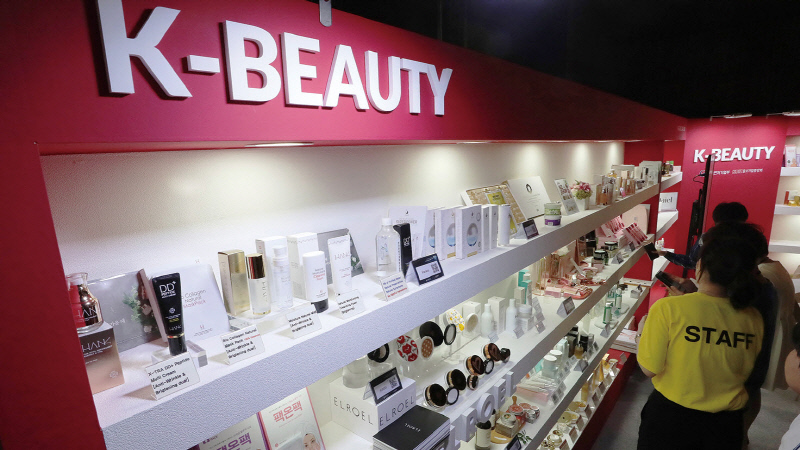
K-Beauty makeup classes: Discover your personal style

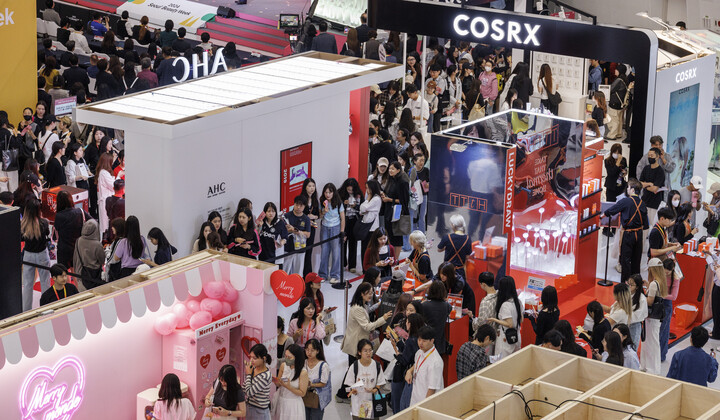
The Korean beauty industry, widely known as K-Beauty, has transcended its origins in Asia and is now globally recognized and adored across Europe and the United States. With trend-setting innovations like BB creams, cushion foundations, and sheet masks, K-Beauty has quickly earned its place as a global beauty trendsetter. Influenced by the flawless skin and chic makeup of K-dramas and K-pop idols, more and more international travelers to Korea are eager to experience the magic firsthand—many expressing a desire to join K-Beauty makeup classes to understand the principles behind the look. In this article, we’ll explore what a K-Beauty makeup class involves and how it helps participants discover their own personalized beauty style.

K-Beauty Makeup: What Makes It Unique

K-beauty makeup is known for its emphasis on achieving “clear and radiant skin.” Instead of bold colors or heavy layers, the focus lies in creating a natural glow with well-balanced tones. Key characteristics of this approach include subtle eyeshadow with defined lips, or light contouring and highlighting to gently enhance facial structure. Recently, the trend has shifted toward achieving “glass skin” or dewy finishes over matte textures, with lip products often utilizing a gradient effect for a natural-looking tint.

This pursuit of a “clean, trendy, yet understated” finish has struck a chord with beauty enthusiasts worldwide. It’s also why K-Beauty’s well-known multi-step skincare routines—the famous “10-step skincare regimen”—have gone viral on platforms like Instagram and YouTube, deepening trust and interest in Korean beauty techniques.

K-Beauty

Class Structure: Starting with Skin Type Diagnosis

Most K-beauty makeup classes begin with a detailed skin type analysis. Whether you have dry, oily, or combination skin, understanding your skin’s specific needs is fundamental to selecting the right products—a core philosophy in K-Beauty. For instance, those with dry skin may use hydrating essences and glow foundations, while individuals with oily skin are recommended matte finishes and sebum-control powders. The personalized nature of this approach sets K-Beauty apart.

Participants often assess their own skin condition with the guidance of an instructor, applying skincare step-by-step to build a strong foundation. Afterwards, the class moves on to the makeup stage—starting with base application using foundation or cushion compacts, and practicing how to conceal blemishes effectively. The key takeaway is mastering “thin and even layering,” a defining trait of K-beauty base makeup. Rather than caking on product, the technique involves lightly layering small amounts to enhance texture and natural finish.

Color Makeup Tips and Techniques

After perfecting the base, K-beauty classes move into color makeup—eyes, cheeks, and lips. A common tip here is to “highlight only one or two areas of the face.” For example, use soft brown tones for a natural eye look and then add a bold pop of red or pink lipstick. Alternatively, glitter shadow can be used for a more vibrant eye, balanced by nude lips. Minimal eyeliner and mascara, often applied just to the waterline for definition, are also popular techniques that align with the understated K-Beauty philosophy.

Instructors or makeup artists typically perform live demonstrations, showing how to hold brushes and gently apply products at optimal angles and pressure. Students then replicate these techniques by looking into the mirror and adapting them to their own facial features, all while receiving real-time feedback. This hands-on practice helps individuals discover the best color palettes suited to their skin tone and face shape, leading to more confident and customized makeup application.

K-Beauty Trends and Popular Products

One-day classes also offer opportunities to experiment with trending beauty items. A perfect example is the cushion foundation—a Korean innovation that quickly swept the globe. Participants get to compare cushion products from various brands, testing textures and shades to find their ideal match. Korean lip tints and balms are also popular, known for their vivid pigmentation and lasting power. Many students end up purchasing their favorite items on the spot.

Moreover, viral products like glitter gels, and shades famously used by celebrities like IU or Jennie from BLACKPINK, are often included in these sessions. For anyone passionate about beauty, getting hands-on with hype-worthy products makes the class even more enjoyable.

Post-Class Transformation: Building Your Unique Beauty Routine

After the session, many attendees report eye-opening realizations, such as how much easier and more flattering the new techniques are compared to their previous routines. It’s common to correct old habits—like applying makeup too thickly or layering skincare out of order. With newfound knowledge, participants often reorganize their beauty shelf at home, replacing mismatched products with ones better suited to their actual skin type.

A small discovery like “pearl eyeshadow actually brightens my eyes when used correctly” can reignite excitement in someone’s daily routine. Many continue using their new skills after returning home, proudly sharing with friends or on social media, “I learned this from a K-Beauty lesson!” As they incorporate meticulous skincare methods and appropriate product choices, it’s not uncommon to see noticeable improvements in skin clarity and brightness. These classes prove to be more than just momentary experiences—they often spark long-term changes in one’s beauty habits.

Final Thoughts: Redefining Beauty for Yourself

K-Beauty makeup classes go far beyond typical sightseeing—they allow you to experience and personalize the Korean sensibility of aesthetics. You don’t have to mirror your favorite idol perfectly, but learning techniques like natural base application and subtle points of emphasis helps you uncover what suits your unique features. Even after your trip ends, you’ll find yourself recalling the tips as you stand before the mirror, letting your inner glow take center stage.

If you’re curious about the charm of K-Beauty or looking to refresh your makeup look, why not dedicate a day to trying out a class? Adjusting your beauty routine in an unfamiliar city might just give you the confidence boost you didn’t know you needed. That small change could bring light not only to your travel memories but also to your daily life—leaving you delighted to realize just how well the techniques you learned in Korea suit you.

K-Beauty

Webring Newsletter

K-Name Studio: Create your perfect Korean name based on your personality and style.
What’s My K-Beauty Personal Color?
WeBring Service : Provides personalized services to foreigners living in Korea
Exclusive offer: Introducing foreign car rental in Korea, WeBring-SoCar

Internships in Korea for Foreign Students: A Step-by-Step Guide to Opportunities and Employment

Gaining internship experience in South Korea can be a valuable opportunity for international students. These internships can offer academic credit and hands-on work experience, while also serving as a potential gateway to full-time employment. But for many foreign students, accessing reliable information on internship openings can be difficult—especially when they’re unsure which companies accept international applicants. In this guide, we introduce key paths for finding internships in Korea, focusing primarily on programs connected to universities and supported by government initiatives.


1) University-Sponsored Internships: The Easiest Route Provided by Schools

(1) For Exchange or Enrolled International Students

Internship matching programs operated by universities—particularly through international offices—can serve as excellent entry points for foreign students. These typically take place during school vacations (summer and winter), allowing students to intern at Korean companies or research institutes. Some of these programs also offer academic credit. Internships range from short-term (4–8 weeks) to long-term placements (4–6 months).

(2) How the Program Works

Students receive a list of companies partnered with the university, submit applications, go through interviews, and begin the internship upon admission. While some companies offer a salary or training stipend, others may be unpaid. However, non-monetary benefits like dormitory housing and meal allowances can be included. A certain level of Korean language proficiency (or English in some cases) is typically required.

(3) Example: K University’s International Internship Program

For instance, K University’s international office offers a summer internship program each year, partnering with start-ups and cultural organizations based in Seoul. Students apply based on their major or interests, undergo interviews, and upon selection, engage in hands-on work for two months. After submitting a final report, participants earn three academic credits and receive a certificate. In some cases, students are even hired full-time by their host companies.

Internship in Korea


2) Government-Supported Internships: KOICA, Ministry Programs, and Local Governments

KOICA Internships and Exchange Programs

KOICA (Korea International Cooperation Agency) is mainly known for sending Korean volunteers abroad, but it also offers occasional exchange programs that international students—particularly those from developing countries—can participate in. While the names of these programs may vary, KOICA has initiated internships and training programs in Korea aimed at students from partner countries. If you’re interested in international development, be sure to check KOICA’s website regularly.

Industry and SME Ministry Support

Government departments such as the Ministry of Trade, Industry and Energy, and the Ministry of SMEs and Startups sometimes offer internships with pathways to employment for international students. These may be labeled as “Industrial Internships” or “Trade Internships” and often place students within small-to-medium enterprises (SMEs) or companies affiliated with trade associations. To apply, check the respective ministry websites or consult with your university’s international affairs office.

Local Government Exchange Programs

Some local governments, such as those in Seoul or Busan, run exchange programs inviting students from sister cities overseas. Participants intern at local companies or public organizations, and receive assistance for accommodation and living expenses. These programs often include cultural experiences as well. If you are from a sister city, it’s worth making a direct inquiry.


3) Pathways to Employment from Internships

1) Conversion to Full-Time Employment

Some Korean companies offer full-time positions after assessing an intern’s capabilities and adaptability. Startups may sponsor an E-7 visa, allowing the intern to transition to a full-time role, while large corporations may provide additional points during entry-level recruitment processes. International students should be prepared for potential visa changes (e.g., D-2 → E-7 or D-4 → E-7).

2) Showcasing Internship Accomplishments

Even if the internship doesn’t directly lead to a job offer, it can significantly strengthen your resume and portfolio when applying to other Korean companies. Experience in Korean workplace culture and operations is highly valued, often giving applicants an edge in interviews. Make sure to include specific projects and key takeaways in your cover letter.


4) How to Apply: Where to Find Internship Opportunities

University International Offices and Career Centers

The most direct route is to consult your university’s international office, student support division, or career development center. These departments often have exclusive access to program information and can guide you based on previous student experiences. Pay close attention to announcements and emails to avoid missing deadlines.

National Research Institutes and Public Institutions

Korea’s government-run research institutes (e.g., Korea Institute of Science and Technology, Korea Development Institute) and public organizations (KOTRA, Korea International Trade Association, KOICA) occasionally open internship positions for foreign students. Check the recruitment sections on their websites, or search on local job portals like Saramin and JobKorea.

Private Internship Placement Agencies

Some private companies arrange internship programs in Korea for a fee. These packages may include internship placement, accommodation, and cultural activities. However, as these are paid services, always verify the agency’s credibility and assess whether the internships offered are truly valuable.


5) Success Story: International Student N Lands a Job After Interning in Korea

Background of Student N

Student N, originally from Southeast Asia, was majoring in Korean language and had achieved TOPIK level 5. Upon joining a Korean university as an exchange student for a language program, N discovered a government-funded internship opportunity (linked with the Ministry of Trade, Industry and Energy) provided through the school. After submitting documents and completing an interview, N was accepted for an internship at a trade company in Seoul.

Internship Experience

For three months, N managed trade documentation, handled English-Korean email communications, and liaised with overseas clients. Thanks to N’s strong Korean language skills, in-person collaborations with colleagues were smooth, and the company saw potential for expanding into N’s home market. In the final week of the internship, the company offered N a full-time position. N successfully transitioned from a D-2 (student) visa to an E-7 (employment) visa and began working full-time. N remarked, “Without the internship, I would never have been given this job opportunity. I’m so glad I didn’t miss out.”


Conclusion: University and Government Internship Programs Are Open to International Students

Finding an internship in Korea isn’t always easy, but leveraging university-affiliated and government-sponsored programs makes the process much more manageable. If you’re currently enrolled, your school’s international office or exchange division can connect you with credit-based internships offering professional experience across various industries. Don’t overlook government-run internships hosted by ministries (e.g., MOTIE, KOICA) or local municipalities; these are transparent, sometimes include living stipends, and reduce your financial burden.

Of course, language skills (Korean and/or English) play a critical role throughout the process, and applicants must prepare strong documents and interviews. But with the right approach, internships can open doors to meaningful work experience, career opportunities, and enhance your professional network. Ultimately, these programs serve as one of the best ways to settle into life—and work—in Korea.

We hope this guide has provided helpful and detailed information on how to secure an international student internship in Korea. Explore the programs that align with your university, region, and major. Furthermore, take initiative in preparing your application documents and interviews. Through an internship, you can experience Korean workplace culture first-hand and potentially take the next step toward a full-time job or even launching your own business in Korea.

Foreign Internships in Korea

Webring Newsletter

K-Name Studio: Create your perfect Korean name based on your personality and style.
What’s My K-Beauty Personal Color?
WeBring Service : Provides personalized services to foreigners living in Korea
Exclusive offer: Introducing foreign car rental in Korea, WeBring-SoCar

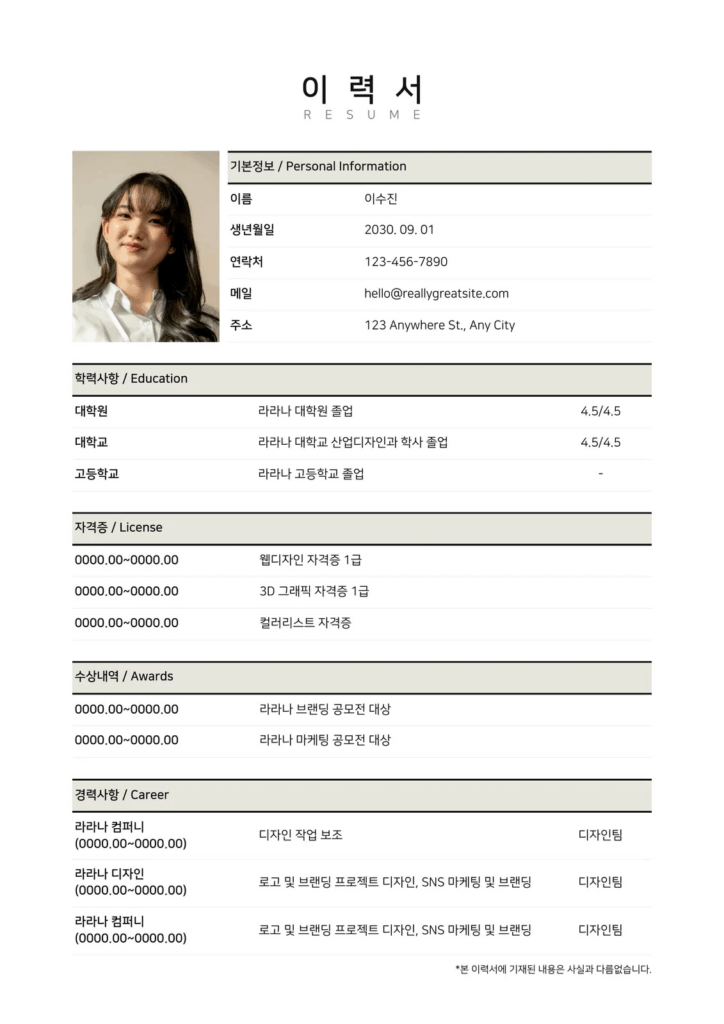
Korean Resume for Foreigners: How to Write and Succeed

In Korea, it is well known that submitting a resume and cover letter is the essential first step to getting a job. However, for foreigners, the Korean-style resume format can be unfamiliar, and the approach to writing a self-introduction (cover letter) may differ significantly from that of their home country. Korean companies typically expect applicants to organize their photo, education, work experience, and self-introduction in a structured, Korean-language layout. Failure to meet these formatting expectations can often lead to being screened out in the initial document review.

In this article, we’ll provide useful tips on how to prepare a Korean-style resume and cover letter specifically for foreigners. From attaching a photo to choosing the right writing tone, we’ll walk you through every essential detail.


1) Basic Structure of a Korean-Style Resume

Photo: Is it Really Necessary?

Most Korean resumes require a formal ID photo. While Western countries avoid photos due to discrimination concerns, in Korea, including a photo has traditionally been the norm. Some large conglomerates have recently moved away from this, but many SMEs and conventional companies still expect it.

If you’re a foreigner, this might feel awkward. However, since many companies still expect this format, it’s generally advisable to attach a passport-style photo (3.5×4.5cm) in neat business attire. If you’re uncomfortable with this, consider applying to companies that don’t require photos, such as global businesses.

Personal Details: Name, Contact Info, Date of Birth

In Korean resumes, personal information is often listed at the top. Foreign applicants should provide their name (in English or with Korean phonetic spelling), email, phone number, and current residence. Including a Korean name pronunciation can help HR recognize your name more easily. While some templates ask for date of birth or gender, these details are increasingly being omitted for privacy reasons. Include only what is required and avoid excessive personal data.

Education, Work Experience, Certifications

The education section usually starts from the university level. Pre-college education is often omitted. Korean companies place high importance on your degree and major. Clearly indicate your attendance period and degree, for example: “2015.09~2019.06, Bachelor of Computer Science, University of XXX”.

List your work experience in reverse chronological order, clearly stating company name, role, employment period, and responsibilities. When possible, include both the English and Korean name of the company. Briefly highlight achievements such as projects and contributions to revenue. Create a separate section for certifications (e.g., TOEIC, TOPIK) and language proficiency.

Additional Information: Military Service, Awards, Hobbies/Special Skills

Some Korean resumes have a section for military service. If you’re not subject to this, you can leave it blank or write “Not applicable” if it’s a required field. You can also include awards, volunteer work, and projects—make sure to translate and explain any foreign experience appropriately.

Hobbies and special skills are common in Korean resumes but may feel unfamiliar to foreigners. Aim for a balance—don’t be too casual or overly dramatic. Including sincere hobbies like “jogging, photography, learning Korean cooking” can give a positive impression.

Korean Resume Format


2) How to Structure a Korean-Style Self-Introduction (Cover Letter)

Why Do You Need a Cover Letter?

Korean companies use cover letters to assess a candidate’s personality, values, and cultural fit with the company. While a resume shows your academic and professional background, the cover letter is a narrative of your personal growth. For foreign applicants, recruiters are especially curious about motivations like “Why do you want to work in Korea?” or “How did you learn Korean and adjust to its culture?”

Typical Paragraph Structure

  1. Growth Background: A short summary of your background—family, education, personality, and challenge-driven mindset.
  2. Strengths and Weaknesses: Emphasize teamwork and communication skills.
  3. Motivation and Job Fit: This is the key part. Clearly explain how your experience and skills will contribute to the company.
  4. Aspirations and Vision: Share your future goals and express your willingness to grow together with the company.

Tone and Length

If you’re fluent in Korean, avoid using honorifics and instead write in a natural, first-person narrative style typical of Korean cover letters. Phrases like:
“I learned [something] through [an experience]. I believe this will be helpful for [specific job functions].”
The length should match the company’s specifications (e.g., 3,000 characters). Too short may seem careless, while overly long may be tiring to read.

Unique Strengths for Foreign Applicants

  • Language & Cultural Advantage: “As a native English (or Spanish, Chinese, etc.) speaker, I am strong in international sales.”
  • Global Perspective: “My deep understanding of foreign markets and cultures can help in both the Korean and global market expansion.”
  • Connection to Korea: “I studied Korean hard and passed TOPIK Level 5. As a fan of K-POP, I have a deep appreciation of Korean pop culture.”
  • Adaptability: “Having studied/lived abroad, I am quick to adapt to new environments and challenges.”

3) Details: Photos, Formats, Fonts, and More

Photo Background & Attire

Choose a clear white or pastel background for your application photo. Standard attire includes formal tops such as blouses, shirts, or jackets. Hair should be neat, and flashy accessories avoided. A clean, passport-style photo is sufficient—even for foreigners.

File Format: HWP vs. MS Word (.docx) vs. PDF

Korean companies often prefer HWP (Hangul Word Processor) files. As a foreigner, you may not be used to this format, so consider installing the software or using a converter. Some companies accept Word or PDF, but always follow the application instructions carefully.

Fonts & Layout

Stick to standard fonts in black (10–11 pt), like “Malgun Gothic” or “Gulim”. Avoid background colors or elaborate decorations. Maintain readability throughout your documents. Use translation and proofreading tools to minimize awkward phrasing, or consider having a native Korean friend or professional proofreader review your application for natural flow.


4) Preparing for the Interview: Keep Your Story Consistent

Interviews Verify Resume Content

Korean interviewers often ask questions directly tied to your submitted documents. For example, “You mentioned a project in your cover letter—could you elaborate?” Any misinformation or exaggeration in your resume could lead to serious consequences during the interview, so ensure your story is consistent and work hard to prepare your explanations.

Korean vs. English Interviews

Some companies may hold the interview in English considering your background, but others may still ask Korean questions to gauge basic communication skills. If you claim to have TOPIK Level 4, they may test your speaking ability. Practicing common questions such as self-introduction, work history, and reasons for applying—in Korean—can help you leave a strong impression.


5) Final Checklist: Common Mistakes and How to Fix Them

Mistake 1: Date Inconsistencies in Work or Education

Inconsistent timelines or missing dates confuse HR managers. Double-check your resume and clearly differentiate between part-time, internship, and full-time positions.

Mistake 2: Plagiarized or Machine-Translated Cover Letters

Copy-pasting cover letter examples or submitting poorly translated documents creates a bad impression. Every company has different questions. Craft your own story tailored to each role. Never submit machine translations without proper review.

Mistake 3: Inappropriate Photos (Casual Clothes, Party Backgrounds)

Attaching selfies from nightclubs or travel photos can be seen as unprofessional. Make sure your photo resembles a simple ID picture taken in formal attire.


Conclusion: Korean-Style Applications Are Challenging, But Worth the Effort

While some roles in Korea may only require English, many companies still expect resumes and cover letters in traditional Korean formats. Even if customizing your documents—adding a photo, tailoring your work history, writing a detailed cover letter—feels tiresome, skipping these steps can easily lead to rejection.

Companies value consistent formatting and use the cover letter to evaluate a candidate’s personality, passion, and cultural fit. However, if you get the right translation and proofreading support and present your personal story sincerely, you have an excellent opportunity to showcase your strengths as a foreign applicant.

Explain clearly: “I had this unique experience abroad” or “This is why I love Korea and can contribute to your company.” HR managers will take notice. Lastly, make sure your interview responses align with your written documents—it’s key to leaving a great impression.

If you’ve read through this guide and now understand how to create a Korean-style resume and cover letter, we encourage you to try drafting your documents and seek Korean language review or feedback from a friend. These small details will significantly increase your chances of passing the document screening stage at Korean companies.

Korean Resume Guide for Foreigners

Webring Newsletter

K-Name Studio: Create your perfect Korean name based on your personality and style.
What’s My K-Beauty Personal Color?
WeBring Service : Provides personalized services to foreigners living in Korea
Exclusive offer: Introducing foreign car rental in Korea, WeBring-SoCar

Korean Road Traffic Laws: A Comprehensive Guide for Foreign Drivers

If you’re driving in Korea, you might notice that the traffic signs, speed limits, and traffic light systems feel different from those in other countries. For foreign drivers, these differences can be even more noticeable. To drive safely, it’s important to understand and follow the basics of Korea’s Road Traffic Act. In this post, we’ve compiled frequently asked questions about Korean Road Traffic Laws—covering everything from signal violations and speeding cameras to seatbelt rules—in this essential safe driving guide for foreigners.

What Makes Korean Road Traffic Laws Unique?

If you’ve driven in other countries, you might find that traffic signs and safety rules are fairly consistent. However, Korea’s road traffic system has some unique features. For example, in some countries, turning right on red is freely permitted, while others have more relaxed rules on speed limits or seatbelt usage. In Korea, the following are heavily emphasized:

  1. Strict adherence to traffic lights.
  2. Speed enforcement cameras are widely installed across the country.
  3. Seatbelt use is mandatory for all passengers.
  4. Drivers must slow down in designated zones such as school zones.

These aspects reflect the Korean legal framework’s strict enforcement of safe driving, often resulting in a reputation for being highly rigorous.

Korean Road Traffic Laws

Q1. What Counts as a Signal Violation in Korea?

Stopping at a Red Light

The golden rule is: always stop at a red light. While many countries allow right turns on red after a brief stop, Korea permits it under the condition that it does not interfere with pedestrians or other traffic. Importantly, a complete stop and a careful check in both directions are mandatory before making the turn. Failing to stop fully can result in a signal violation if caught on camera.

What Does the Yellow Light Mean?

A yellow light signals that the light is about to turn red, advising drivers to prepare to stop safely. One common misunderstanding among foreign drivers is interpreting a yellow light as a prompt to speed up. While it’s acceptable to proceed if already within the intersection, it’s safer to stop before entering. This is particularly important in busy intersections or pedestrian-heavy areas, where aggressive driving during a yellow light can easily lead to accidents.

Automated Traffic Signal Enforcement

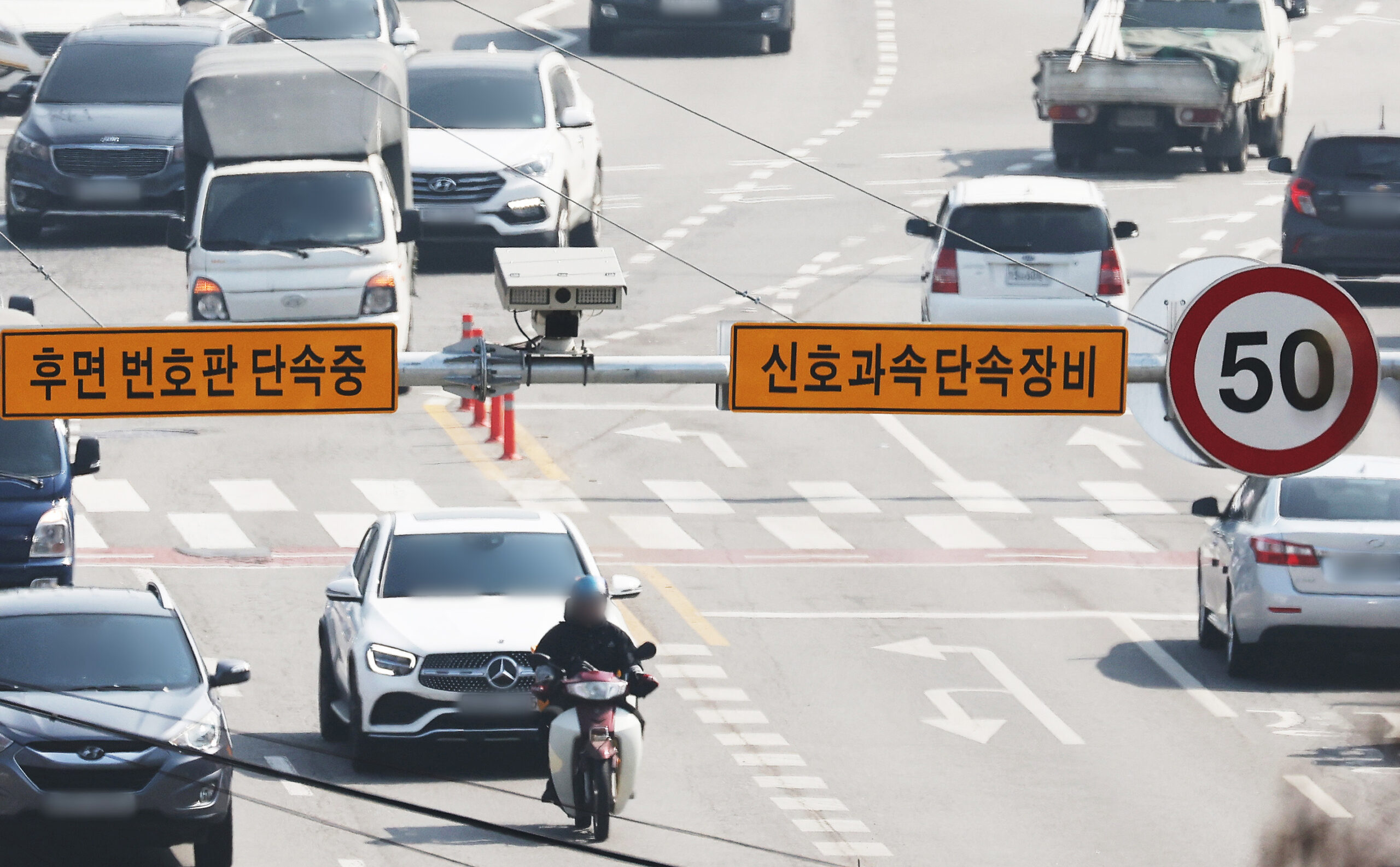
Korea has a highly developed automated traffic enforcement system, with red light cameras installed nationwide. These automatically record violations. Foreign drivers, especially those using rental cars, may receive fines mailed to their rental company or registered residence. Because infractions can lead to costly penalties, it’s best to avoid even minor mistakes.

Q2. How Strict Are Speed Cameras in Korea?

Speed Limits and Camera Zones

In Korea, general speed limits are as follows: 50–60 km/h in urban areas, 70–80 km/h on peripheral roads, and 100–120 km/h on expressways. Recently, stricter speed laws have extended 50 km/h zones within city areas. Many speed enforcement cameras are calibrated to record vehicles that slightly exceed the limit. The tolerance margin may be around 5–10 km/h, but exact thresholds depend on the police and camera type. To stay safe, always follow posted speed limits.

Mobile and Section Speed Enforcement

In addition to fixed cameras, mobile enforcement units may park at the roadside using radar guns for spot checks. These are common on suburban roads where drivers may unconsciously speed. There’s also “section speed enforcement,” where average speed is measured between two camera points. Slowing down at the start but speeding up before the end will still get you penalized, so maintain the speed limit through the entire zone.

Fines and Penalty Points

Speeding violations result in fines and, in some cases, penalty points. For foreigners, fines are usually the main consequence, but extreme speeding or reckless behavior may lead to harsher penalties. In rental car cases, the company often pays the fine first and bills the driver later, sometimes adding service fees—so be sure to check the company’s policy in advance.

Q3. How Important Is Wearing a Seatbelt?

Mandatory Seatbelts for All Seats

Korean law requires that all vehicle occupants wear seatbelts. This applies not only to the driver and front-seat passenger but also to passengers in the back seats. Although this rule was only recently strengthened, and some locals remain unfamiliar with it, foreign drivers—who often have higher traffic safety awareness—should make sure everyone in the vehicle fastens their seatbelt.

Child Safety Seats

Children under 6 years old must be seated in an approved child car seat. Most rental car companies in Korea offer baby seat rentals upon request. Failure to comply may result in fines, but more importantly, a child safety seat is a life-saving necessity.

Q4. How Do I Follow the Pedestrian Priority Rule?

Stop at Crosswalks

Korea has significantly tightened its pedestrian safety laws. Even at crosswalks without traffic lights, drivers must stop if pedestrians are waiting to cross. Foreign drivers might wonder, “Can’t I just pass before they step onto the road?” The answer is no—Korean law prioritizes pedestrian safety, and vehicles must yield. In school zones, rules are even stricter, requiring speeds under 30 km/h and extra caution.

Driver Responsibility in Pedestrian Accidents

In most incidents involving pedestrians, drivers are held primarily responsible. Korea emphasizes pedestrian protection, and accidents in school zones or elderly/disabled care areas result in more severe penalties. Always slow down and scan the surroundings in crosswalks, residential alleys, and neighborhood roads to prevent accidents.

Q5. Safe Driving Tips for Foreign Visitors in Korea

Use Mobile Navigation Apps

Even if you’re well-versed in traffic laws, driving in unfamiliar environments can lead to mistakes. If you’re not fluent in Korean, use mobile GPS apps with English support—such as Google Maps or international navigation apps—that offer real-time traffic updates and route suggestions. These can help you avoid traffic violations and stay on a safe path.

Familiarize Yourself with Local Signage

Most road signs in Korea include international symbols alongside Hangul, so they’re generally understandable. However, you should still learn markings used only in specific zones, such as “Bus Only Lane” signs or road markings for school zones. Entering a bus-only lane by mistake can result in fines, so check for blue road lines and corresponding signs in advance.

What to Do in Case of an Accident

If you’re involved in a traffic accident, first move your vehicle to a safe location, turn on your hazard lights, and call the police (112) and your insurance provider. Foreigners who face language barriers should know that police and emergency responders have access to on-site interpretation services. If someone is seriously injured, also call emergency services (119) immediately.

Conclusion: Following the Road Traffic Law Is the First Step to Safer Driving

Safe driving in Korea starts with obeying the Road Traffic Act. Following basic rules such as signal obedience, speed limits, and seatbelt use protects not only you but also those around you. As a foreigner, Korean traffic laws may seem strict at first, but you’ll soon realize that these regulations foster a safer driving environment.

Now that you’re familiar with the core principles and frequently asked questions about Korean traffic laws, hit the road with confidence and responsibility. By practicing empathy and following the rules, we can all contribute to safer, more comfortable roads. Drive smart, stay safe, and enjoy your road trip in Korea.

Webring Newsletter

K-Name Studio: Create your perfect Korean name based on your personality and style.
What’s My K-Beauty Personal Color?
WeBring Service : Provides personalized services to foreigners living in Korea
Exclusive offer: Introducing foreign car rental in Korea, WeBring-SoCar