
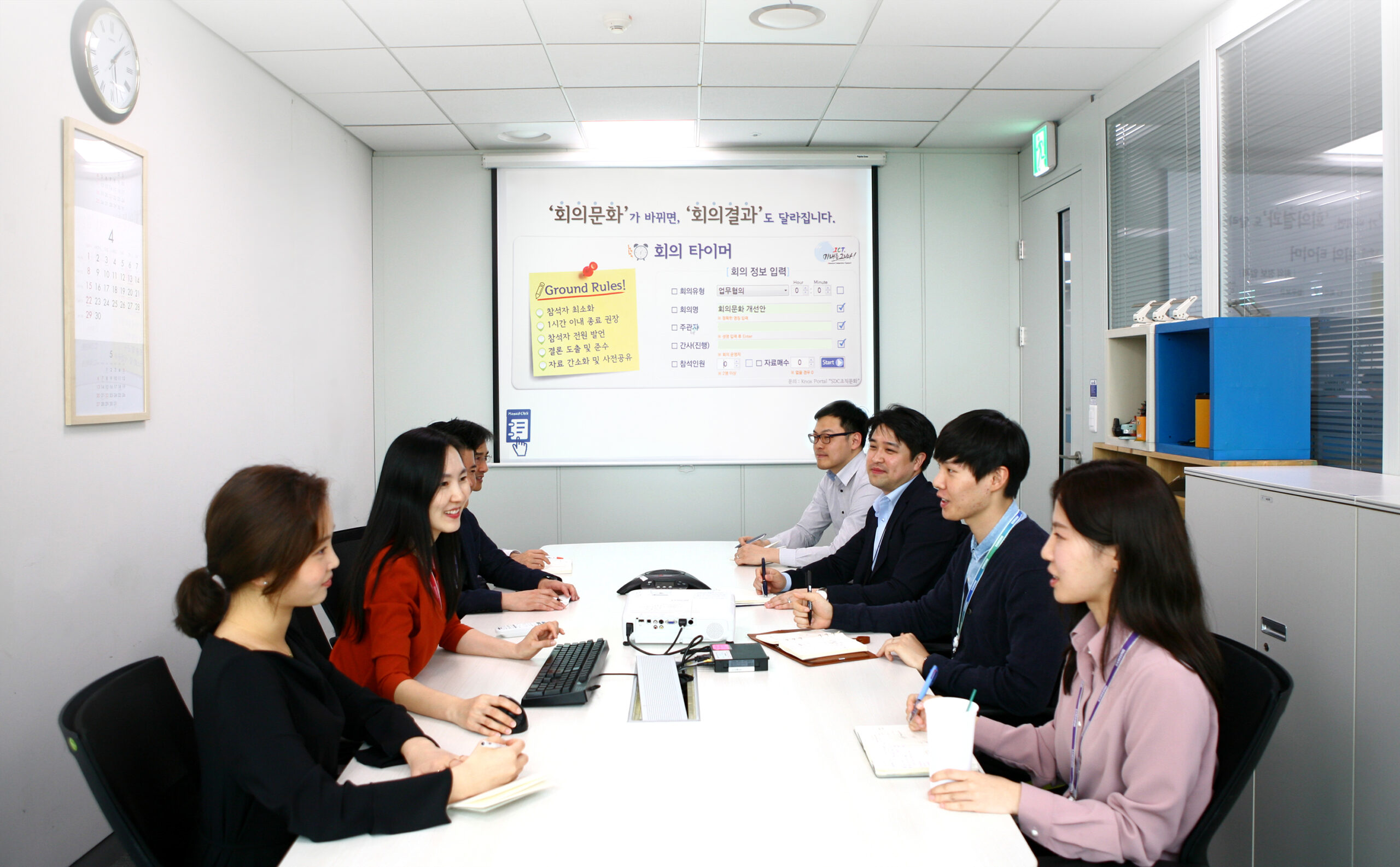
Korean Meeting Culture: A Guide to Presentations and Discussions
One of the most nerve-wracking moments when working at a Korean company is surely “when you have to give a presentation or share your opinion during a meeting.” From business meetings and reporting sessions to project kick-offs, if you are not familiar with Korean meeting culture and presentation style, it’s easy to get confused or make mistakes. That’s why preparation and understanding the context are crucial.
Particularly for those from different cultural backgrounds, questions might arise such as: “Why is the meeting so quiet?”, “Why doesn’t anyone speak until the boss does?”, or “Why does the presentation design matter so much?” The reason lies in Korea’s unique mix of collective culture and hierarchical decision-making, which creates a distinctive atmosphere during meetings and presentations.
In this article, we’ll take a closer look at Korean meeting culture, key points for presentations, and how to structure your slides. While it may feel unfamiliar at first, especially for foreigners, learning a few strategies will help you adapt more easily and communicate more effectively.
Meeting Style: Building Consensus vs. Direct Debate
Traditional Korean meetings have often leaned toward being “one-way reports.” Typically, a manager or senior leader dictates the flow of discussion, while team members take notes or ask only brief questions. In such settings, heated debates or spontaneous brainstorming sessions are relatively rare.
However, with the rise of global practices and younger generations, more meetings today encourage freer expression. Still, in conservatively structured companies or departments, subordinates may hesitate to speak until a senior figure sets the tone. In these cases, if a foreign presenter encourages discussion early on, signaling, “We want to share ideas in this way,” it can help open up the atmosphere.
For example, if an American planner organizes a brainstorming session for a new project, starting with a clear statement such as, “Today I’d like everyone to freely suggest ideas. This meeting is focused more on process than on outcomes, so even out-of-the-box thoughts are welcome,” helps participants feel more comfortable speaking up. In Korean workplace culture, attendees often prioritize what the leader expects. By clarifying your expectations in advance, you’ll pave the way for smoother discussions.

Presentation Style: Concise Slides, Visuals, and Emphasizing the Conclusion
One of the most notable traits of Korean presentations is the strong emphasis on visual aids such as PowerPoint slides, charts, and graphs. While PowerPoint is used globally, Korean companies often pay particular attention to fonts, design details, and well-structured slide organization. Instead of minimal slides with short bullet points, it’s common to see denser slides packed with information.
That said, it’s not always about creating more slides. With exposure to global presentation trends, many Korean professionals now prefer delivering a clear message through 10 or fewer focused slides. What matters most is structuring your presentation around the conclusion-first approach—stating your key point up front, then walking the audience through supporting evidence step by step. Expressions like “To begin with the conclusion…” are often heard, as knowing the end point helps the audience better follow the data and charts that come afterward.
Additionally, speaking clearly and making eye contact with the audience is critical. Korean audiences respond better when they feel the presenter is engaging directly with them. On the other hand, if you stare only at your slides or read in a low monotone, it will be difficult to capture attention.
Politeness and Honorifics: Referring to Others During a Presentation
If you are presenting in Korean, or mixing English and Korean with a Korean audience, you’ll need to note how to properly refer to senior staff or departments. For example, you might say, “We have reinforced the point raised by our CEO-nim” (title + ‘nim’ as a sign of respect), or “This analysis was kindly provided by the Development Team,” adding honorific expressions when referring to people or groups.
While using honorifics sets a formal, respectful tone, it may seem complicated for foreigners. Don’t worry: even if your usage of titles is slightly awkward, Koreans are usually very forgiving. Simply asking a colleague beforehand, “How should I address this person in the presentation?” and jotting down notes will be sufficient preparation.
Q&A Time: Silence or Sharp Feedback
After a presentation in Korea, the Q&A session can go in one of two extreme directions. One possibility is complete silence, leaving an awkward atmosphere. This usually stems not from a lack of questions but from the cultural tendency to wait for the manager or senior figures to speak first, or from reluctance to raise questions publicly. In such cases, it helps if you invite someone directly: “Mr. ○○, do you have any additional thoughts on what I just mentioned?” Or make a light remark to ease the audience into conversation.
The other possibility is immediate, sharp, and highly specific feedback. Particularly in technical or sales strategy presentations, you may face tough questions focused on data accuracy and statistical sources. Koreans may appear quiet but often scrutinize presentations very thoroughly. To prepare, organize your numbers and references in advance, and add a phrase like, “I can provide additional materials if needed,” which helps you maintain confidence while responding.
Pre-Alignment Culture: Sharing Information Beforehand
In Korean workplaces, “pre-alignment” is crucial. Instead of revealing everything for the first time on the day of the presentation, it’s more effective to share core information with key stakeholders or senior leaders in advance. For instance, you might send a brief email summary of your slides to the team leader the day before, or arrange a one-on-one mini briefing.
This practice helps reduce the chance of public clashes or strong opposition, while also showing respect to senior colleagues. Foreigners may think, “Can’t we just share and discuss everything at the meeting itself?” But in Korea, meetings often function more as a formality to confirm an already aligned decision, rather than as the primary place for open debate. Keeping this in mind will greatly improve your effectiveness.
Case Study: How a German Manager Successfully Led a Product Launch Meeting
C, a German marketing manager at a Korean IT company, once prepared for a new product launch presentation. Based on his experience, he tried to share all materials upfront and encourage open debate from the start. To his surprise, his team members quietly listened throughout. Then, as soon as the presentation ended, an executive demanded detailed market analysis, sharply questioning, “Is this figure based on accurate data?”
After the meeting, a colleague advised C that “if you share the big picture in advance with team leaders or executives, the actual meeting runs far more smoothly.” Following this tip, C sent his core slides and marketing strategy summary to executives the day before his next presentation. As a result, the live meeting focused only on refining implementation plans since the overall direction had already been agreed upon.
This experience taught C firsthand why “pre-alignment and awareness of Korean meeting culture” are critical. From then on, whenever he prepared for major events or projects, he applied this approach and successfully collaborated with his team.
Conclusion: Korean Meetings and Presentations Are Not Difficult Once You Know the Essentials
When leading meetings or giving presentations in Korea, the key question is: “How can I understand what team members and seniors expect, and how can I share that effectively?” By aligning key points in advance, presenting your conclusion first with logical reasoning, and preparing supporting evidence for Q&A, you can build confidence and avoid major issues.
Of course, no one can perfectly understand cultural nuances at first. With practice, feedback, and experience, you’ll adapt smoothly. While Korean presentations may feel overly formal and hierarchical at first, more companies are embracing global standards and active debate. Bringing your unique approach and strengths can even help enrich the culture.
Above all, what matters is the commitment to boost collaboration through effective communication. Meetings and presentations are not merely about delivering information—they reflect teamwork and organizational culture. With preparation and an open mindset, even foreign professionals can be recognized and thrive as key contributors in Korean companies.


K-Name Studio: Create your perfect Korean name based on your personality and style.
What’s My K-Beauty Personal Color?
WeBring Service : Provides personalized services to foreigners living in Korea
Exclusive offer: Introducing foreign car rental in Korea, WeBring-SoCar