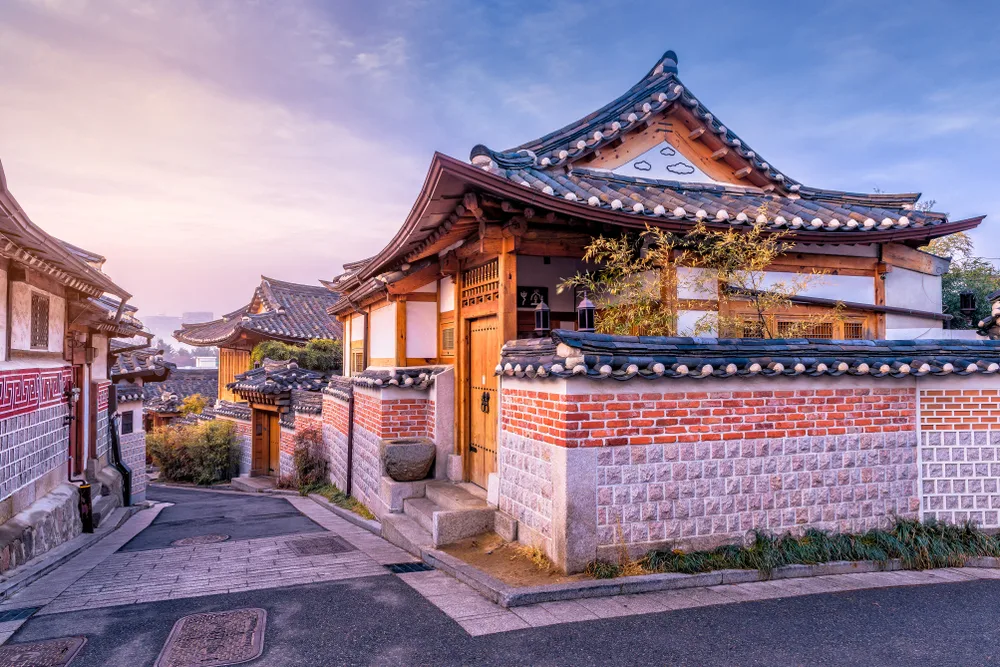
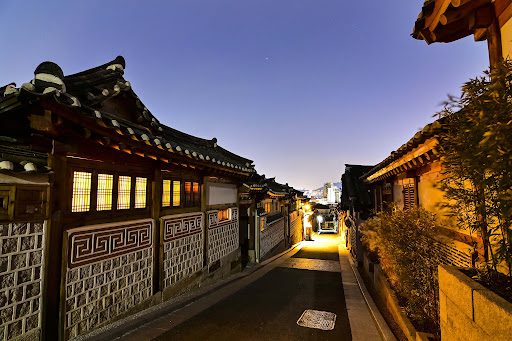
Jeonju Hanok Village hanbok route The Ultimate Guide for Perfect Photos and Food

Jeonju Hanok Village hanbok route? If you walk into Jeonju Hanok Village with no plan… your hanbok looks great but your photos are packed with people, the food ends with nothing but standing in lines, and it’s easy to miss points like Omokdae and Hanbyeokdang thinking, “Oh right, that was there.” Today’s post is just one thing.

I’ll neatly organize only the route that lets you “look the prettiest in hanbok at Jeonju Hanok Village, eat the tastiest, and walk the least.”


30-Second Summary: Today’s “Optimal Route” in One Line

(Hanbok rental) → Jeondong Cathedral → Gyeonggijeon Shrine (Bamboo Forest) → Hanok alleys (snacks·cafés) → Jaman Mural Village Rooftop Garden → Hanbyeokdang Pavilion (Jeonjucheon Stream) → Omokdae (sunset) → (Return hanbok) → Nambu Market Night Market (Fri·Sat)

Jeonju Hanok Village is known as the largest hanok village in Korea, with around 700 traditional houses. According to the tourist information center, it’s also 안내 as open 24/7 year-round. (Jeonju Hanok Village)


Why this order is a win for “photos + food + stamina”

  1. Start with Jeondong Cathedral
    It’s near the entrance of the Hanok Village, so it’s a great starting point—and if you shoot before the crowds pile in, your background stays clean. Jeondong Cathedral lists open hours 09:00–17:00 (subject to change depending on the parish). (Jeonju Tourism)
  2. Do Gyeonggijeon between morning and lunchtime
    Gyeonggijeon is famous for photo spots like the bamboo forest and stone wall path, and its operating hours vary by season. (There’s also a last entry time.) (Jeonju Tourism)
  3. Save the uphill (Jaman·Omokdae) for the “late push”
    If you tackle hills early in hanbok, your energy—and your facial expression—collapses first.
    Recharge with snacks/café stops in the alleys, then head up later and your photo quality changes.
Jeonju Hanok Village hanbok


Before You Go: Checklist

1) Parking: “Free + shuttle” is the safest choice

  • Hanok Village Public Parking Lot No. 4 (formerly Daeseong Parking): 636 spaces, free (Jeonju Hanok Village)
  • Shuttle bus (free): year-round, 10:00–18:40 (last bus) / Public Parking Lot No. 4 ↔ Taejo-ro stop (Jeonju Hanok Village)

On weekends, it gets truly crowded inside the Hanok Village. “Free parking + shuttle” is the smart way to protect your sanity.

2) Always confirm visiting hours/fees

  • Hours: Mar–May 09:00–19:00 / JunAug 09:0020:00 / Sep–Oct 09:00–19:00 / Nov–Feb 09:00–18:00 (last entry: 1 hour before closing) (Jeonju Tourism)
  • Fees: for adults, categories include General 3,000 KRW (Jeonju residents/Wanju residents have separate rates), etc. (Jeonju Tourism)
  • Guidance includes free admission on “Culture Day” (the last Wednesday of every month) and 50% off on “Jeonju Hanbok Day” (the 4th Saturday of every month). (Jeonju Tourism)

3) At Jeondong Cathedral, etiquette comes before “sightseeing”

  • Mass times/open hours are organized, and it clearly states that open hours may change depending on the parish. (Jeonju Tourism)
  • Indoor photography may be restricted depending on the situation, so recommended: stay quiet, flash OFF.

Hanbok Rental: How to Choose the Right Time Pass (Avoid Regrets)

With hanbok rental, more than “looking pretty,” choosing the time pass is 80% of the game.

  • Half-day (just the highlights): 2–3 hour pass
    → Jeondong Cathedral + Gyeonggijeon + alley photos + a snack or two
  • Full photo course (all the way to Jaman/Hanbyeokdang/Omokdae): 4-hour pass or all-day pass

For example, among Jeonju Hanok Village hanbok rental tickets, you can find options like
1 hour 30 min 7,000 KRW / 2 hours 30 min 10,500 KRW / 4 hours 14,000 KRW / all-day 21,000 KRW (varies by seller/promotion). (NOL)

Practical tips for foreigners/travelers

  • Some experiences/reservation products require an ID (passport or ID). (Trazy)
  • Many places charge extra if you return late (e.g., in 10-minute increments) (Tripadvisor)
    so keep in mind that the “return → fix hair/accessories” time takes longer than you think.

Food Route: Put the “line-up items” early—this is the answer

1) Gilgeoriya baguette burger (early or before lunch)

It’s often mentioned as one of the most famous snacks inside the Hanok Village.

  • Location: inside Jeonju Hanok Village (listed as a 3-minute walk from Jeondong Cathedral) (Triple Guide)
  • Signature menu example: baguette burger 5,500 KRW (Triple Guide)
  • Operating example: 09:30–20:30, closes early when ingredients run out (Triple Guide)

Tip: If you’re eating in hanbok, bring tissues/wet wipes to prevent sauce splatter disasters.

2) PNB (Pungnyeon Bakery) handmade choco pie (gift/snack)

In its official introduction, PNB explains that it is a bakery passed down through three generations since 1951, and highlights its signature product, the original handmade choco pie. (PNB Co., Ltd.)
In the choco pie product description, you can also find details such as a cream + strawberry jam filling and a 15-day best-before period (may vary by product/season). (PNB Co., Ltd.)

Tip: Pack 1–2 to eat the same day separately from the gift box—things get less crushed in your bag.

3) Nambu Market Night Market (evening finale)

This is a great course to attach to the very end of your Hanok Village route.

  • Jeonju’s culture & tourism info/announcements confirm guidance that it operates every Friday and Saturday 17:00–23:00 (there are also special extended-hours notices). (Jeonju Tourism)

Tip: To avoid the busiest hours (usually around 19:00–21:00), it’s easier to go right after opening or 1 hour before closing.


Photo-Spot Route: Only the “Best Order for Hanbok Photos”

1) In front of Jeondong Cathedral (a quick 10–20 minutes at the start)

  • With red bricks and a dome shape, it contrasts beautifully with hanbok, giving you an “exotic + traditional” composition.
  • Open hours guidance: 09:00–17:00 (Jeonju Tourism)

Pose tip:
If you stand dead center in front of the cathedral, tourists tend to crowd in—so a 45-degree side angle + walking shot looks cleaner.

2) Gyeonggijeon bamboo forest/stone wall path (today’s main shot)

Even the Gyeonggijeon introduction mentions points like the bamboo forest famous as a K-drama filming location and the stone wall path. (Jeonju Tourism)

Time tip:

  • In summer (Jun–Aug), it’s open until 20:00 so you have more room, but last entry is 1 hour before closing—so it’s safest to place it mid-route. (Jeonju Tourism)

3) Jaman Mural Village rooftop garden (views + vibes)

Jaman Mural Village sits on a hillside across just one road from the Hanok Village,
and it’s noted for murals plus a “rooftop garden” viewpoint overlooking all of Jeonju. (Visit Korea)

Tip:
Hanbok skirts/robes can catch on stairs, so hold the fabric lightly as you go up.

4) Hanbyeokdang Pavilion (Jeonjucheon Stream + sunset)

Hanbyeokdang is introduced as a pavilion by Jeonjucheon Stream, and its address is 안내 as 2 Girin-daero, Wansan-gu, Jeonju-si. (Jeonju Tourism)

Photo tip:
At sunset, rather than portraits, a frame with hanok roofs + the stream + the sky looks prettier.

5) Omokdae (hanok rooftop view)

Omokdae and Imokdae are introduced as points you’ll reach by following Taejo-ro from the Hanok Village tourist information center, along with location information. (Tour Jeonbuk (Jeonbuk Culture & Tourism))

Best timing:
Go up around sunset (golden hour) and the “waves of rooftops” come alive.


Suggested Schedule: A “6-Hour Golden Route” with No Backtracking

Bottom line: If you want to do hanbok + photos properly, a 4-hour pass (or all-day pass) is the most stress-free.

TimeSpotWhat to doPhoto pointFood
10:00Hanbok rentalCheck whether hair/styling & props are includedOne mirror shot
10:30Jeondong CathedralFocus on exterior shots; be quiet insideFront/side walking shot
11:10GyeonggijeonBamboo forest · stone wall pathYour best bamboo forest shot
12:30Move through the alleysBrowse souvenirs/workshopsAlley depth/leading linesGilgeoriya (depending on the line)
13:30Jaman Mural VillageRooftop garden viewCity/rooftop viewCafé/dessert
15:00HanbyeokdangWalk along JeonjucheonGet ready for sunset
16:30OmokdaeViewpoint + final shotsWaves of rooftops
17:30Return hanbokHead back with buffer time
18:00~Nambu Market(Fri·Sat) Night marketNight snapsNight-market food crawl

Quick Guide for Foreign Travelers (English labels)

  • Jeonju Hanok Village = 전주한옥마을
  • Jeondong Cathedral = 전동성당 (open hours guidance 09:00–17:00) (Jeonju Tourism)
  • Gyeonggijeon Shrine = 경기전 (seasonal hours & ticket) (Jeonju Tourism)
  • Jaman Mural Village = 자만벽화마을 (rooftop garden viewpoint) (Visit Korea)
  • Hanbyeokdang Pavilion = 한벽당 (Jeonju Tourism)
  • Nambu Market Night Market = 남부시장 야시장 (Fri/Sat operating guidance) (Jeonju Tourism)

On map apps, searching in Korean is the most accurate. Example: “전동성당”, “경기전”, “오목대”, “한벽당”.


FAQ (Jeonju Hanok Village Hanbok)

Q1. What time is Jeonju Hanok Village open until?

Based on the Hanok Village tourist information center, there is guidance that it’s open 24/7 year-round. However, Gyeonggijeon/the cathedral/shops each have different hours. (Jeonju Hanok Village)

Q2. What are the visiting hours and admission fee?

Operating hours vary by season (e.g., 09:00–20:00 for Jun–Aug), and last entry is 1 hour before closing. Fees are also 안내 by adult/teen/child and whether you’re a local resident. (Jeonju Tourism)

Q3. What time can I enter Jeondong Cathedral?

There is guidance for open hours 09:00–17:00, and it states that hours may change depending on the parish’s situation. (Jeonju Tourism)

Q4. How much does hanbok rental usually cost in Jeonju Hanok Village?

It depends on the seller/promotion, but as an example, tickets are listed with options from 1 hour 30 minutes at 7,000 KRW up to all-day at 21,000 KRW. Be sure to confirm prices/conditions on the day you visit. (NOL)

Q5. Among Jeonju Hanok Village foods, what’s “worth lining up for”?

As the top snack pick, Gilgeoriya baguette burger is mentioned a lot, and since it closes early when ingredients run out, I recommend placing it early in your route. (Triple Guide)

Q6. When is the Nambu Market Night Market open?

Based on Jeonju’s culture & tourism guidance/announcements, it’s 안내 as operating Fri·Sat 17:00–23:00, and special extended-hours notices are sometimes posted separately as well. (Jeonju Tourism)

Q7. Where is the most convenient place to park?

According to official guidance, there is Public Parking Lot No. 4 (free), and a free shuttle (Parking Lot No. 4 ↔ Taejo-ro stop) operates. (Jeonju Hanok Village)


If you’d like, I can also create a more compressed route as a “half-day (3–4 hours) course” version (two options: photo-focused / food-focused).

Jeonju Hanok Village hanbok route

Webring Newsletter

K-Name Studio: Create your perfect Korean name based on your personality and style.
What’s My K-Beauty Personal Color?
WeBring Service : Provides personalized services to foreigners living in Korea
Exclusive offer: Introducing foreign car rental in Korea, WeBring-SoCar
Gyeongju 2 days 1 night public transport: UNESCO Sites and Downtown Delights

Gyeongju 2 days 1 night—follow this route and you can’t go wrong. Gyeongju is a city where “UNESCO-level history” and “trendy, aesthetic streets” coexist, so one day isn’t quite enough.
The itinerary I recommend most often to my international clients is built around these four key spots.

  • Mountain-side UNESCO duo: Bulguksa Temple + Seokguram Grotto
  • Downtown essentials: Daereungwon Tomb Complex + Hwangridan-gil

Bulguksa and Seokguram are on the Tohamsan side (east), so you’ll spend time getting there, while Daereungwon and Hwangridan-gil are walkable and right next to each other in the city center. If you split it into “one day in the mountains, one day downtown,” the route becomes really clean and efficient. (VISITKOREA – Imagine Your Korea)


Option 1: Best Route for Walkers/Public Transportation

Day 1 (Downtown)

  • Check-in → Daereungwon walkHwangridan-gil café hop & dinner

Day 2 (Mountain side)

  • Bulguksa Temple → (bus transfer) → Seokguram Grotto → head back to downtown/station and depart

Option 2: If You Arrive in the Morning

Day 1 Bulguksa & Seokguram first → Day 2 finish with Daereungwon & Hwangridan-gil

Gyeongju 2 days 1 night


Key Hours & Fees (Quick Summary)

PlaceEnglish NameHoursAdmissionNotes
Bulguksa TempleBulguksa Temple09:00-18:00 (exit by 19:00)FreeListed as open year-round (VISITKOREA – Imagine Your Korea)
Seokguram GrottoSeokguram Grotto09:00-18:00 (viewing until 19:00)FreeGuidance: 3km on foot trail / 9km by car from Bulguksa (VISITKOREA – Imagine Your Korea)
DaereungwonDaereungwon Tomb Complex09:00-22:00Daereungwon: FreeCheonmachong is paid separately (VISITKOREA – Imagine Your Korea)
Hwangridan-gilHwangridan-gilAlways openFreeIntroduced as an “aesthetic street” around Hwangnam-dong (Visit Korea)

※ Hours and fees for temples/tourist sites may change, so it’s recommended to check once more before you go. (Gyeongju City Hall)


How to Get to Seokguram Grotto (Even Without a Car)

The Key Is: “Bus 10 (or 11) + Transfer to Bus 12”

  • Gyeongju Bus No. 10 is presented as a “golden route” that departs from the terminal → passes major downtown heritage sites → Bomun Tourist Complex → and goes to Bulguksa. (Gyeongju City Hall)
  • Terminal → Bulguksa takes about 35–45 minutes, with service about every 20 minutes, and first/last bus times are also provided. (Gyeongju City Hall)
  • There is no direct bus from downtown to Seokguram; the official guidance 소개 says to go to Bulguksa first and then take Bus No. 12 in front of Bulguksa to Seokguram. (GJ Smart Tour)
    • Bus 12: first bus 05:30, last bus 22:30, interval about 1 hour (GJ Smart Tour)

Tip: Check Buses in Real Time

The City of Gyeongju advises checking real-time bus info via the Bus Information System (BIS) and a smartphone app (“Nationwide Smart Bus”). (Gyeongju City Hall)

City Bus Fare

  • From July 1, 2025, Gyeongju city bus fares are provided as a unified guide: Adult 1,500 KRW / Youth 1,200 KRW / Child 800 KRW (Gyeongju City Hall)
  • There is also guidance that using a transit card gives a 50 KRW discount. (its.gyeongju.go.kr)

Day 1 Downtown Course: Start with Daereungwon and Hwangridan-gil

Why It Works Even If You Arrive in the Afternoon

Daereungwon is listed as operating 09:00-22:00, so “a loop walk even if you arrive late” is possible. (VISITKOREA – Imagine Your Korea)

  1. Hotel check-in (recommended: near Hwangridan-gil/Daereungwon)
  2. Walk around Daereungwon
  3. Cheonmachong is “optional” if you’re interested
  1. Around sunset, head to Hwangridan-gil
    Hwangridan-gil is introduced as a street in the Hwangnam-dong area where cafés, shops, and hands-on craft studios are clustered. (GJ Smart Tour)

If You Came by Car (Parking/Drive)

  • Daereungwon: public parking information is provided together. (Gyeongju City Hall)
  • Hwangridan-gil: guidance is provided for Nodong Public Parking Lot (paid) and Hwangridan-gil Public Parking Lot (temporarily free). (Gyeongju City Hall)

Day 2 UNESCO Course: Bulguksa and Seokguram in One Go

Why This Order Works Well

Bulguksa and Seokguram are introduced together as one UNESCO World Heritage site (inscribed in 1995), notable for being a “religious architectural complex.” (UNESCO World Heritage Centre)

  1. Bulguksa Temple
  1. Move from Bulguksa → Seokguram
  • Guidance says about 3km via the walking trail (hiking path), or 9km by car. (VISITKOREA – Imagine Your Korea)
  • If you’re relying on public transport, transferring to Bus No. 12 (explained above) is the standard route. (GJ Smart Tour)
  1. Seokguram Grotto

Tips for Visiting Seokguram

  • UNESCO materials also note that Seokguram’s interior is protected by a glass barrier for preservation. (UNESCO World Heritage Centre)
  • Many travel guides also note that photography may not be allowed, so please follow on-site signs/staff guidance. (Lonely Planet)

Parking Summary


Tips Especially Useful for International Visitors

Temple Etiquette: This Is All You Need

  • It’s explained that it’s polite to remove your shoes when entering buildings such as the main hall. (Visit Seoul)
  • Rather than very revealing outfits, clothing that covers shoulders and knees to some extent is a safe choice (especially in summer).

For Transportation, “Transit Card + Real-Time Bus App” Dramatically Lowers the Difficulty

  • Since there’s guidance about transit card discounts, using a card is more convenient than cash. (its.gyeongju.go.kr)
  • Bus No. 10 is introduced as the golden route linking the downtown core and Bulguksa, and interval/travel time are provided, making “time planning” easier. (Gyeongju City Hall)

2 Days 1 Night Budget Guide

Your travel budget will vary far more by meals, cafés, and accommodation than “admission fees.” Still, if you frame the basics like below, budgeting becomes straightforward.


One-Line Closing Recommendation

If you split a Gyeongju 2 days 1 night trip into “UNESCO (Bulguksa & Seokguram) + downtown essentials (Daereungwon & Hwangridan-gil),” you won’t burn out from transit—and you’ll get a perfectly full, satisfying trip. (UNESCO World Heritage Centre)


FAQ

Is Bulguksa Temple admission really free?

Yes. According to VisitKorea, Bulguksa is listed as Fees: Free. (VISITKOREA – Imagine Your Korea)

Is Seokguram Grotto free too?

Yes. Seokguram is also listed as Fees: Free. (VISITKOREA – Imagine Your Korea)

Can you enter Daereungwon at night?

According to VisitKorea, Daereungwon’s hours are listed as 09:00-22:00. (VISITKOREA – Imagine Your Korea)

Is there anywhere in Daereungwon where you have to pay?

Daereungwon itself is listed as free, but Cheonmachong inside is paid separately (3,000 KRW for adults). (VISITKOREA – Imagine Your Korea)

Is it difficult to get to Seokguram without a car?

There’s no direct bus from downtown to Seokguram; the guidance is to go to Bulguksa first, then transfer to Bus No. 12. Since the interval is about 1 hour, it’s absolutely doable as long as you plan your timing well. (GJ Smart Tour)

Where exactly is Hwangridan-gil?

Hwangridan-gil is an “aesthetic street” area around Hwangnam-dong, Gyeongju, and address/parking guidance is provided. (Visit Korea)

How much is the Gyeongju city bus fare?

According to the City of Gyeongju official notice, from July 1, 2025, it’s listed as Adult 1,500 KRW / Youth 1,200 KRW / Child 800 KRW. (Gyeongju City Hall)

Can you take photos inside Seokguram?

Many travel information sources note that photography is not allowed. On-site rules take priority, so please follow the posted signs. (Lonely Planet)

Gyeongju 2 days 1 night walking itinerary

Webring Newsletter

K-Name Studio: Create your perfect Korean name based on your personality and style.
What’s My K-Beauty Personal Color?
WeBring Service : Provides personalized services to foreigners living in Korea
Exclusive offer: Introducing foreign car rental in Korea, WeBring-SoCar
Your Ultimate Gangneung Itinerary for Foreigners: 1 Night 2 Days Ocean Coffee Market Trip

A 1-night, 2-day trip to Gangneung has the lowest chance of disappointment when you stick to the “Ocean (Gyeongpo · Anmok) + Coffee + Traditional Market Eats” combo. In particular, if you properly bundle just these three—Anmok Beach Coffee Street (ocean-view cafes), Gyeongpodae Pavilion · Gyeongpoho Lagoon (walk/bike), and Jungang Market (local eats/night-market route)—your satisfaction level jumps. The itinerary below is the same “no-getting-lost route” I use as-is when I’m showing around foreign friends (living in Korea).


Save First! 5 Map Search Keywords


Key point: If you plan it as “Anmok (cafes) around sunset + the market (food) at night,” you get both the vibe and the flavor.

Day 1 (Ocean · Walk · Coffee · Market)

  • Arrive in the afternoon → Jungang Market (snacks/dinner)
  • Sunset time → Anmok Beach Coffee Street ocean-view cafe
  • If you have extra time → Gyeongpoho Lakeside Trail (walk or bike around dusk)

Day 2 (Morning scenery + wrap up with shopping)

  • Morning → Gyeongpodae · Gyeongpoho (calm scenery)
  • Before lunch → Revisit Jungang Market/Seongnam Market (souvenirs · packed-to-go foods)
  • Before you leave → One last cup of coffee at Anmok Beach
Gangneung Itinerary


Day 1: Jungang Market → Gyeongpoho (optional) → Anmok Beach Coffee Street → (If there’s a night market) Wolhwa Street

1) Why you should hit Jungang Market before check-in

Gangneung Jungang Market sits in the “dead center” of downtown, and the market itself is large, making it perfect for taking care of snacks → a full meal → to-go packing all in one go.

  • Location: 21 Geumseong-ro, Gangneung-si, Gangwon Special Self-Governing Province (Seongnam-dong) (Gangneung City Hall)
  • Layout (summary): B1 (fish market) / 1F (food, dried seafood, general goods, etc.) / 2F (restaurant area) (Gangneung City Hall)

In particular, the official info says the underground fish market is “one of the largest in Yeongdong,” and it also notes that the 2nd floor has restaurants serving spicy fish stew, samsugi fish soup, pollock roe soup, and more. (If you love seafood, your satisfaction skyrockets here.) (Gangneung City Hall)

Jungang Market parking (by car) — this part really matters

On weekends in Gangneung, parking is half the itinerary. The official parking guidance for Jungang Market is summarized like this. (Gangneung City Hall)

  • Geumseong-ro curbside parking (paid)
  • Jungang Market public parking lot: 62 spaces (paid)
  • Nearby: Wolhwa Street curbside / Seongnaedong Plaza / Namdaecheon riverside / Jungang-dong Embankment Road (free sections marked), etc. (Gangneung City Hall)

Tip: Markets are not the kind of place where you can “just pop in and leave.” Parking somewhere with quick turnover—like the Namdaecheon riverside—and walking over feels far less stressful (especially in peak season).


2) Gyeongpodae · Gyeongpoho: Gangneung’s “scenery” spot

Gyeongpodae and Gyeongpoho are Gangneung’s 대표 natural landscape, introduced as a “scenic site” on the National Heritage Portal.

  • Name: Gangneung Gyeongpodae Pavilion and Gyeongpoho Lagoon
  • Category: Natural Heritage / Scenic Site
  • Date designated: 2013.12.30
  • Location: 94 Jeodong, Gangneung-si, Gangwon-do (CULTURAL HERITAGE ADMINISTRATION)

Gyeongpoho Lakeside Trail (walk/bike): just the essentials

According to a Korea Tourism Organization (Visit Korea) travel feature, the Gyeongpoho Lakeside Trail is about 4.3 km and is mostly flat, making it comfortable for both walking and biking. (Visit Korea)

  • If you bike “just one loop,” it takes 15–20 minutes
  • If you take photos and look around slowly: 1 hour 30 minutes–2 hours (Visit Korea)
  • It’s listed as open year-round (daily), with no admission fee. (Visit Korea)

Best timing (in practice):

  • On Day 1, go around dusk (around sunset) and the lake’s colors look unreal.
  • On Day 2, early morning means fewer people and better photos.

3) Anmok Beach Coffee Street: “If you’re in Gangneung, coffee is here”

Anmok Beach Coffee Street isn’t just a place with lots of cafes—according to the Korea Tourism Organization’s “Open Tourist Destination” info,

  • Selected as an Open Tourist Destination in 2020
  • Accessible facilities such as disabled parking/restrooms, barrier-free paths, and tactile/voice guidance boards were installed (Visit Korea)
    And it also summarizes the story that it has been known as a coffee hotspot since the early 1980s, and after the 1990s, as roasting culture took root, more coffee shops emerged. (Visit Korea)
  • Address: 20-1 Changhae-ro 14beon-gil, Gangneung-si, Gangwon Special Self-Governing Province (Visit Korea)

Three criteria for “choosing a cafe” in Anmok

  1. If you’re going for sunset/night views, pick a place with a rooftop or plenty of window seats
  2. If it’s a busy weekend, choose a large venue with fast turnover (ordering/pickup flow)
  3. If photos are the goal, go for a spot with a straight-on ocean view + a location that gives you sculptures/street depth in the frame

Tip: You can go to Anmok just for cafes, but even a 10-minute beach walk with your coffee completes that “I’m in Gangneung” feeling.


4) (If it’s in season) Be sure to check Wolhwa Street Night Market

The area that comes alive at night near Jungang Market and Seongnam Market is Wolhwa Street.
Gangneung City’s notice (No. 2026-21) has been posted, and the search info for that notice lists the 2026 Wolhwa Street Night Market operating period as 2026.5.1–10.31 (planned), Fridays and Saturdays (around 55 times total, planned). (Gangneung City Hall)

Note: Night markets can change depending on weather (rain, etc.) and event schedules. To be safe, check “Gangneung City notices” or on-site guidance once the day before you leave.


Day 2: Morning walk at Gyeongpodae · Gyeongpoho → market packing & shopping → wrap up with Anmok coffee

1) Morning at Gyeongpo is “Gangneung without the crowds”

On Day 2, you’ll be more than satisfied even if you use the Gyeongpoho Lakeside Trail only “briefly.”

  • Even with just a 30–60 minute walk, you can capture “lake + pine trees + the seaside city of Gangneung” in a single shot. (Visit Korea)

2) Jungang Market/Seongnam Market to-go shopping route

Seongnam Market is attached to Jungang Market, so the right move is to see them “as one bundle.”
The Seongnam Market guide explicitly lists items sold such as ox head soup and rice, dakgangjeong (sweet crispy fried chicken), an oil mill, assorted fried foods, agricultural/seafood/livestock products, and general goods. (Gangneung City Hall)
Its introduction also includes the phrase night market operation (Fri · Sat 19:00–22:00). (Gangneung City Hall)
(However, the actual night-market format may be linked to / vary with Wolhwa Street operations, so follow on-site guidance.)


Transportation Tips: Public Transit (especially for foreigners)

Gangneung city bus fares/transfers (practical info)

According to the Gangneung Bus Information System,

  • Regular (adult) cash 1,700 KRW / card 1,530 KRW
  • Up to 2 free transfers within 1 hour after getting off
  • Accepted transit cards include T-money, Cashbee, etc. (Bus Information System)

Bus route hint for getting to Anmok Beach (Anmok Coffee Street)

In the Gangneung Bus Information System route search results, routes that terminate at or pass by Anmok Coffee Street (e.g., 300-1 (marked as Gangneung Station), 302-1, 314-1, 225-1, etc.) appear. (Bus Information System)
→ Since actual timetables and real-time arrivals can vary, checking “real-time search in the Bus Information System” on the day is the most accurate.

Getting to the Gyeongpo area (public transit)

In a Korea Tourism Organization (Visit Korea) travel feature, it suggests travel examples like:

  • From Gangneung Station bus stop, take bus 202-1 → get off at Gyeongpo Beach
  • From the Gangneung Intercity/Express Bus Terminal stop, take bus 202 → get off at Gyeongpo Beach
    (Visit Korea)

7 “Small Details” That Upgrade Your Trip Quality

  1. Split roles: sunset at Anmok, quiet scenery at Gyeongpoho
  2. Use the market not just for “one meal,” but for snacks/to-go packing/souvenirs for higher satisfaction
  3. At the coffee street, instead of “two cafes,” go longer at one place (seat/view/walk)
  4. If you hate parking stress, for the Day 1 market the answer is a large parking lot + walking (Gangneung City Hall)
  5. Biking isn’t about saving time—it’s content (photos + experience) (Visit Korea)
  6. If you’re traveling with foreigners, card acceptance can differ by stall at the market, so prepare small cash
  7. In winter or on windy days, use an ocean-view cafe like an “indoor observatory”

Frequently Asked Questions (FAQ) — 1 Night, 2 Days in Gangneung

Q1. With 1 night and 2 days in Gangneung, can I see Anmok Beach, Gyeongpodae, and Jungang Market all?

Yes. Since all three are easy to move between within central Gangneung, if you split it into Day 1: market + Anmok, and Day 2: Gyeongpo (lagoon/Gyeongpodae), you can get around at a relaxed pace.

Q2. Why is Anmok Beach Coffee Street so famous?

According to the Korea Tourism Organization’s Open Tourist Destination introduction, Anmok has been known as a coffee hotspot since the 1980s, and as coffee culture spread, more cafes opened. It was also selected as an Open Tourist Destination in 2020, so convenience facilities such as barrier-free paths have been improved. (Visit Korea)

Q3. How long does the Gyeongpoho Lakeside Trail take?

Based on a Korea Tourism Organization travel feature, the trail is about 4.3 km. It’s guided as around 15–20 minutes by bike, or 1 hour 30 minutes–2 hours on foot. (Visit Korea)

Q4. Where is the best place to park for Jungang Market?

Gangneung City Hall’s guidance lists options such as the Jungang Market public parking lot (62 spaces), Geumseong-ro curbside parking, Wolhwa Street curbside parking, Seongnaedong Plaza, Namdaecheon riverside, and Jungang-dong Embankment Road. On weekends, consider places with many spaces—like the Namdaecheon riverside—first. (Gangneung City Hall)

Q5. When does the Wolhwa Street Night Market open?

The search info for Gangneung City’s notice (No. 2026-21) shows 2026.5.1–10.31 (planned), operating on Fridays and Saturdays (planned). Since it may change depending on events/weather, checking before departure is recommended. (Gangneung City Hall)


강릉 1박2일

Webring Newsletter

K-Name Studio: Create your perfect Korean name based on your personality and style.
What’s My K-Beauty Personal Color?
WeBring Service : Provides personalized services to foreigners living in Korea
Exclusive offer: Introducing foreign car rental in Korea, WeBring-SoCar
First-Timer’s Guide Your Ideal Jeju 2-night 3-day itinerary East West City

Planning a 2-night, 3-day trip to Jeju? If it’s your first time in Jeju (like most international travelers), the least tiring and lowest-fail “standard route” is: 1 day in the East + 1 day in the West + 0.5 day in Jeju City. The itinerary below is a ready-to-follow route designed with attraction hours and fees in mind.


Jeju 2-Night, 3-Day Standard Route at a Glance (East → West → Jeju City)

Assumption: Based on rental car/private car travel (most common).
Accommodation recommendation (standard): Night 1 in Seogwipo (Jungmun/Seogwipo Downtown), Night 2 in Jeju City (near the airport) or stay in Seogwipo both nights (if you don’t want to move luggage).

DAYRegional ThemeKey Route (Summary)Highlight
Day 1East (Eastern Jeju)Airport → Hamdeok/Woljeongri → Seongsan (Seongsan Ilchulbong) → Seopjikoji → Overnight in SeogwipoBinge the “most Jeju-like” scenery
Day 2West (Western Jeju)(Depart Seogwipo) Jusangjeolli → O’Sulloc → Hyeopjae/Hallim → Aewol → Overnight in Jeju CityOcean + cafes + vibes
Day 3Jeju City/NorthDongmun Market → Yongduam/coast → AirportFinish with shopping & food
Jeju


DAY 1. Jeju East (Eastern Jeju) Standard Course

Jeju Airport → Hamdeok Beach (or Woljeongri) → Seongsan Ilchulbong → Seopjikoji → (Optional) Seongeup Folk Village → Check in to Seogwipo

1) Morning/Lunch: Get “used to Jeju’s sea” at Hamdeok or Woljeongri

  • On day one, your energy drops from flying + picking up the rental car, so starting with a beach walk is the safest move.
  • Hamdeok/Woljeongri tends to deliver high satisfaction as your “first Jeju ocean.”
함덕 해수욕장

2) Afternoon Must-Do: Seongsan Ilchulbong (Paid Summit Course)

  • If it’s your first visit, it’s non-negotiable #1. The hike to the top usually takes around 20 minutes, but since there are stairs, it’s better to allow extra time.
  • Hours vary by season, and it’s listed as closed for regular maintenance on the first Monday of every month, so make sure you check your date. (Visit Jeju)
  • Admission (paid section/summit course): Adults KRW 5,000 / Youth·Soldiers·Children KRW 2,500 (separate group rates). (Visit Jeju)

3) Near Sunset: Seopjikoji Walk (Vibe Point)

  • It’s one of the easiest places near Seongsan to enjoy wind + dramatic coastal scenery, which makes it a great last stop for day one.

4) ⚠️Manjanggul, often added by first-timers, is currently closed—check before you go!

  • A lot of people add Manjanggul to their itinerary, but there is a notice that it’s closed due to safety inspections and environmental improvement work until March 2026 (upon completion). (Schedule may change.) (Visit Jeju)
  • Recommended alternatives (East): Switching to Bijarim / Gimnyeong Maze Park / Sehwa·Gujwa cafe route makes the east-side day much smoother.

✅ DAY 1 Accommodation Tip (Standard)

  • If you stay 1 night in Seogwipo (Jungmun/Seogwipo Downtown), it’s easier to access the west on day two.
  • If you “don’t want to move luggage,” staying both nights in Seogwipo also works (just head to the airport a bit earlier on day three).

DAY 2. Jeju West (Western Jeju) Standard Course

Jusangjeolli Cliffs (Jungmun) → O’Sulloc Tea Museum → Hyeopjae Beach → Hallim Park → Aewol Coastal Road (cafes/sunset) → (Recommended: stay in Jeju City)

1) Morning: Jusangjeolli Cliffs (Jungmun Daepo Coast)

  • If you catch the waves at the right time, this is where you feel Jeju’s “natural power” most directly.
  • Admission: Adults KRW 2,000 / Youth·Children KRW 1,000 (separate group/exemption rules). (eticket.seogwipo.go.kr)
  • Entry hours: 09:00–17:50 (may change depending on sunset), and it may be restricted depending on weather conditions. (eticket.seogwipo.go.kr)

2) Lunch–Early Afternoon: O’Sulloc Tea Museum (Signature West-Side Vibe)

  • A representative west-side spot where you can do photos + a walk + dessert all in one.
  • Hours: Summer 09:00~19:00 / Winter 09:00~18:00 (may change in severe weather). (Visit Korea)
  • Admission: Free (paid programs separate). (Visit Korea)

3) Afternoon: Hyeopjae Beach + Hallim Line (Best ocean color zone)

  • If the weather cooperates, the west side delivers extremely high satisfaction with its “emerald sea.”
  • If you add Hallim Park, you’ll neatly complete a “light 1.5–2 hour course.”
    • Hallim Park hours (based on ticketing cut-off, seasonal changes):
      2~May 09:00~17:00 / 6~Aug 09:00~17:30 / 9~Oct 09:00~17:00 / 11Jan 09:0016:30 (±30 min possible). (Hallim Park)
    • Hallim Park admission (individual): Adults KRW 15,000 (separate senior/youth/child rates). (Hallim Park)

4) Near Sunset: Aewol Coastal Road (Cafes/Sunset)

  • Day two involves a lot of driving, so wrapping up with “cafe + sunset” boosts overall satisfaction.
애월 해안도로

✅ DAY 2 Accommodation Tip (Standard)

  • Since day three is an airport/market route, moving your second night to Jeju City (near the airport) makes the last day much easier.

DAY 3. Jeju City (North) + Return Route

Dongmun Market → (Optional) Yongduam/Coastal Drive → Airport

1) Dongmun Market (Breakfast/Lunch/Souvenir Shopping)

  • If it’s your first time in Jeju, “at least one market visit” is a must.
  • Dongmun Market hours (average): 07:00–21:00 (varies by store). (Visit Jeju)
  • Dongmun Night Market: Winter (11~Apr) 18:00~24:00 / Summer (5~Oct) 19:00~24:00 (closes when sold out). (Visit Jeju)
  • Parking also has guidance for 30 minutes free at the public parking lot. (Visit Jeju)

2) If You Have Time: Yongduam/Coastal Walk (Short and Strong)

  • It’s close to the airport, so it’s great to add when “your flight time is awkward.”
용두암


(Optional) Want to Add “Udo”? — It’s Possible, But There Are Conditions

  • Udo is about a 15-minute ferry ride from Seongsan/Jongdal Port, so it’s highly satisfying as a day trip. (VISITKOREA – Imagine Your Korea)
  • However, ferries are often canceled due to wind/weather, so for the “2-night, 3-day standard route,” I recommend adding it only on the morning of DAY 1 (it’s easier to swap plans if canceled).
  • Also, some tourist information notes restrictions on bringing external cars (rental cars), with exceptions for transportation-vulnerable visitors (people with disabilities, age 65+, pregnant women, etc.), so confirm vehicle entry on-site based on current rules. (Jeju DSI Tour)

A Clean Ending with a Seogwipo “Night Walk”: Cheonjiyeon Waterfall (If You Still Have Energy)

  • Admission: Adults KRW 2,000 / Youth·Children KRW 1,000 (eticket.seogwipo.go.kr)
  • Standard hours: 09:00–22:00 (last entry 21:20) (eticket.seogwipo.go.kr)
  • Important: There is a notice that in 2026, February–May, night viewing will be suspended due to lighting maintenance (09:00–18:00 operation only). (eticket.seogwipo.go.kr)

If It’s Your First Jeju Trip, Why This Route Is Reliable (From Experience)

  • East = Jeju’s symbol (Seongsan line), and West = vibes/ocean color (Hyeopjae·Aewol line), making it the best balance for 2 nights and 3 days.
  • If you try to do both east and west in one day, you’ll end up just driving—this route reduces fatigue by grouping by region.
  • By placing places with earlier closing/last-entry times (Jusangjeolli, Hallim Park, etc.) during the daytime first, you reduce the risk of missing out. (eticket.seogwipo.go.kr)

5 Common Mistakes (Avoid These and You’ll Succeed)

  1. Trying to do Udo + Seongsan + Manjanggul all on DAY 1 (→ 반드시 Manjanggul closure check). (Visit Jeju)
  2. Watching the sunset in the west and then driving back down to Seogwipo (fatigue explodes depending on where you stay)
  3. Adding coastal points like Jusangjeolli without considering possible weather restrictions (eticket.seogwipo.go.kr)
  4. Assuming Dongmun Night Market hours are “the same every day” (start times vary by season) (Visit Jeju)
  5. Going without knowing Seongsan Ilchulbong’s regular closure (first Monday) (Visit Jeju)

FAQ

Q1. On a first-time Jeju trip, can I do both the east and west in 2 nights/3 days?

Yes. If you split it into DAY 1 East, DAY 2 West, DAY 3 Jeju City, you can cover the major highlights without overdoing it.

Q2. What are Seongsan Ilchulbong’s hours/closed days?

Hours vary by season, and there is guidance that it’s regularly closed on the first Monday of every month. Make sure you check your visit date. (Visit Jeju)
Admission is listed at KRW 5,000 for adults. (Visit Jeju)

Q3. Can I visit Manjanggul right now?

Currently, there is a notice that it is closed due to safety inspections and interior construction, and it’s listed as closed until March 2026 (upon completion) (subject to change). (Visit Jeju)

Q4. Is O’Sulloc Tea Museum free? What are the hours?

Admission is listed as free (paid programs separate), and there is an operating-hours notice of Summer 09:00~19:00 / Winter 09:00~18:00. (Visit Korea)

Q5. What are Jusangjeolli’s admission fee/operating hours?

It’s KRW 2,000 for adults, and the hours are listed as 09:00–17:50 (may change depending on sunset). It may be restricted depending on weather. (eticket.seogwipo.go.kr)

Q6. What time does Dongmun Market’s night market open?

It’s listed as Winter (11~4) 18:00~24:00 and Summer (5~10) 19:00~24:00 (closes when sold out). (Visit Jeju)

Q7. Can I see Cheonjiyeon Waterfall at night?

Standard hours are listed as 09:00–22:00. However, in 2026, February–May there is a notice of night viewing suspended (09:00–18:00 operation) due to lighting maintenance. (eticket.seogwipo.go.kr)

Q8. Is it a good idea to add Udo to a 2-night, 3-day itinerary?

You can add it, but due to cancellation risk, I recommend it only on the morning of DAY 1. Udo is accessible via a ~15-minute ferry from Seongsan/Jongdal Port. (VISITKOREA – Imagine Your Korea)

제주 2박3일

Webring Newsletter

K-Name Studio: Create your perfect Korean name based on your personality and style.
What’s My K-Beauty Personal Color?
WeBring Service : Provides personalized services to foreigners living in Korea
Exclusive offer: Introducing foreign car rental in Korea, WeBring-SoCar
Busan Uncovered: Your Perfect Haeundae one day walking itinerary for First-Timers

Here’s a Haeundae one day walking itinerary, Busan. If it’s your first time in Busan, the most satisfying plan is to cover “the sea + a walk + city night views” all in one go. The Haeundae–Dongbaekseom–Marine City line is connected by a walkable route, packed with free/low-cost spots, and best of all, it delivers sunset to night views in one shot. Haeundae Beach is large, with a sandy stretch of about 1.5 km, and the view of the ocean together with downtown high-rises creates that very Busan-like “first impression.” (Visit Korea)


At-a-Glance Timetable (Walk-Focused)

TimeRouteHighlights
09:30–11:00Walk along Haeundae BeachSea + downtown skyline, a great photo spot
11:00–12:30Lunch/Cafe (around Haeundae)Wide range of options: market, local eats, cafes
12:30–15:00Loop around Dongbaekseom (Dongbaek Park) + NurimaruCoastal walking path + exhibits/viewpoints
15:00–17:30The Bay 101 (break/drinks)Grab a spot before sunset
Sunset–20:00Marine City night-view walkReflection shots, the ultimate city nightscape
After 20:00Dinner/Head back around HaeundaeWrap up based on where your accommodation is

1) Morning: Capture Busan’s “First Impression” at Haeundae Beach

If you arrive in Haeundae in the morning, the ocean looks its “cleanest” in tone.
Haeundae Beach is broad—about 1.5 km long and 30–50 m wide—so even when it’s crowded, you can still enjoy a refreshing walk. (Visit Korea)

  • 40–60 minutes round trip walking along Haeundae Beach
  • For photos, frame it so the ocean + buildings are both in the shot—that “Busan vibe” instantly comes alive.

Tips for International Travelers (Practical)

  • In Korea, Naver Map/KakaoMap is often more convenient for navigation (especially for accurate walking directions).
  • Most cafes/convenience stores accept cards, but having a little cash helps at markets/street stalls.
Haeundae one day walking itinerary


2) Afternoon: Walk Dongbaekseom (Dongbaek Park) + Nurimaru APEC House

Dongbaekseom (Dongbaek Park), which connects from the southern end of Haeundae, is all about a “coastal path walk.” Dongbaek Park blends camellia trees with pine forest, and points like Nurimaru APEC House are included right along the walking route. (Visit Korea)

How long is the Dongbaek Coastal Promenade?

The Dongbaek Coastal Promenade is introduced as a route of a little over about 1.5 km, with ocean scenery 펼쳐지는 throughout the entire section. (Visit Busan)
If you take your time for photos and breaks, 6090 minutes is typical; if you walk quickly, even 30–40 minutes is possible.

Nurimaru APEC House (A Must-Check Spot)

If it’s your “first time in Busan,” be sure to include Nurimaru. The indoor exhibits are well done, and the building itself feels like it’s floating over the sea, so satisfaction is high.

  • Hours: 09:00–18:00 (last entry 17:00)
  • Regular closure: First Monday of every month
  • Admission: Free (Busan Metropolitan City)

If you check the operating notice just once the day before or the morning of your visit, your itinerary becomes much safer (hours may change due to events/venue rentals, etc.).


3) Around Sunset: Prep for “Golden Hour → Blue Hour” at The Bay 101

The Bay 101, near the entrance to Dongbaekseom, is often mentioned as one of the easiest places on the Haeundae line to capture night views.
The key here is “timing.”

  • Recommended arrival: 40–60 minutes before sunset
  • Best timing: 10–30 minutes after the sun has fully set (blue hour)
  • Hours (facility 기준): 08:00–24:00
  • Closed: Open year-round
  • Address: 52 Dongbaek-ro, Haeundae-gu, Busan (Visit Korea)

Photo Tips (Reflection Shots)

  • If you shoot near the waterfront/surface of the water, Marine City’s lights reflect on the water, creating shots with a “Hong Kong vibe.”
  • Even with a smartphone, night mode + stabilization (railing/tripod) is enough to get beautiful results.

4) Night: Wrap Up the Day with a Marine City Night-View Walk

Marine City truly comes alive at night.
According to the Korea Tourism Organization (Open Tourism) introduction, Marine City is explained as a new city built on reclaimed land from the sea, and it’s guided as a place where, at night, building lights turn on densely to reveal a beautiful nightscape. (Visit Korea)

  • Hours: Always open (walking/night view) (Visit Korea)
  • Address (as 안내): 1411 U-dong, Haeundae-gu, Busan (Visit Korea)

Busan tourism information also 소개 that Marine City’s night view is a famous photo spot, and the shimmering lights on the night sea add to the atmosphere. (Visit Busan)

Marine City Walk: “Core Route”

  • From around The Bay 101 → slowly move toward Marine City
  • Walk closer to the waterfront to get better reflection (reflection) shots

Getting Around/Transportation Tips (For First-Time Busan Visitors)

  • The subway Busan Line 2 matches this area’s route well (Haeundae/Dongbaek area).
  • For Dongbaekseom (Nurimaru), the guidance suggests a route using Line 2 Dongbaek Station. (Busan Metropolitan City)
  • If you want to save energy:
    • The combo “Morning Haeundae (walk)” + “Dongbaekseom (walk)” + “Night Marine City (one taxi ride)” is also great.

Today’s Budget (Rough)

  • Admission: mostly free (Nurimaru is free) (Busan Metropolitan City)
  • Transportation: subway/bus + taxi as needed
  • Food/cafes: lots of options, so it’s easy to control your budget (for one person, you can adjust comfortably within about 20,000–50,000 KRW)

Rainy/Windy Day Alternative (Haeundae Area)

If the weather is uncertain, reduce the outdoor portion and compress it to indoor viewing at Nurimaru + a cafe + a short night-view stop in the evening.
If the wind is strong at the beach, the feels-like temperature drops sharply—bringing a light windbreaker makes a big difference in satisfaction.


Wrap-Up: A One-Day Route That Finishes “Busan-Like Busan”

If it’s your first time in Busan, rather than trying to hit everywhere, walking one area deeply tends to stick in your memory.
See the sea in Haeundae, stroll Dongbaekseom, catch the moment the sky turns deep blue at The Bay 101, and end the night in Marine City—this is an almost perfect composition for a “first day in Busan.”

부산 해운대 하루 코스


FAQ (Haeundae one day walking itinerary)

Q1. How big is Haeundae Beach?

Haeundae Beach is 안내 as about 1.5 km long and 30–50 m wide. (Visit Korea)

Q2. How many kilometers is the walking trail at Dongbaekseom (Dongbaek Park)?

The Dongbaek Coastal Promenade is introduced as a little over about 1.5 km. (Visit Busan)

Q3. What are the visiting hours and closure day for Nurimaru APEC House?

The visiting hours are 안내 as 09:00–18:00 (last entry 17:00), the regular closure day is the first Monday of every month, and admission is free. (Busan Metropolitan City)

Q4. What are The Bay 101’s operating hours?

The Bay 101 is 안내 as open year-round, with hours of 08:00–24:00. (Visit Korea)

Q5. Is it safe to walk around Marine City at night?

Marine City is introduced in 관광 guidance as always open, and as a place many people visit for night views/walking. (Visit Korea)
(However, late at night, it’s recommended to stick to the waterfront/main roads rather than quiet alleys.)

Q6. Can you do this entire route on foot?

Yes. Haeundae–Dongbaekseom–The Bay 101–Marine City are all in the same area, so it’s great to bundle as a walk-centered route. Depending on your stamina, adding one taxi ride in the middle makes it even easier.

Q7. When is the best time for sunset?

It varies by season, so search “Busan sunset time” on the day, then plan to arrive at The Bay 101 40–60 minutes before sunset (to secure a spot + nail the photo timing).

Q8. What time is best for taking good photos?

Haeundae: morning (with clean light) The Bay 101/Marine City: 10–30 minutes right after sunset (blue hour)—this is when reflections/night views look the prettiest.

부산 해운대 하루 코스

Webring Newsletter

K-Name Studio: Create your perfect Korean name based on your personality and style.
What’s My K-Beauty Personal Color?
WeBring Service : Provides personalized services to foreigners living in Korea
Exclusive offer: Introducing foreign car rental in Korea, WeBring-SoCar