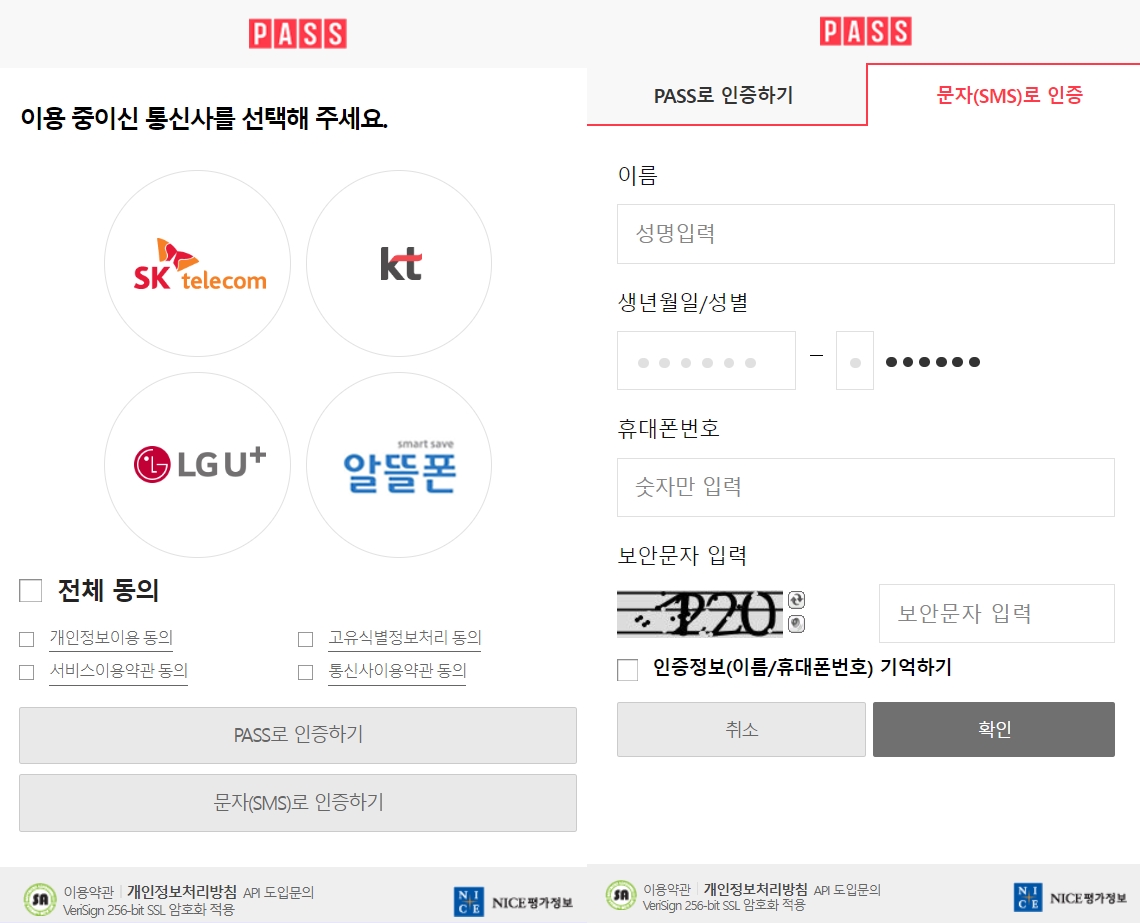
Top 10 Korean Apps Blocking Foreigners’ Mobile Phone Verification and Complete Solution Checklist

To live in Korea, you often need to use a variety of mobile apps. However, foreigners are surprisingly often unable to use them due to issues with mobile phone verification. So today, we’ll look at the Top 10 apps that get blocked because of “identity verification” and a checklist to fix the problem. In real life in Korea, the #1 source of stress isn’t the app—it’s “identity verification.” You install a delivery app and registration gets blocked, a payment app blocks you at login, and government sites demand a certificate from the start.

The key point is this:

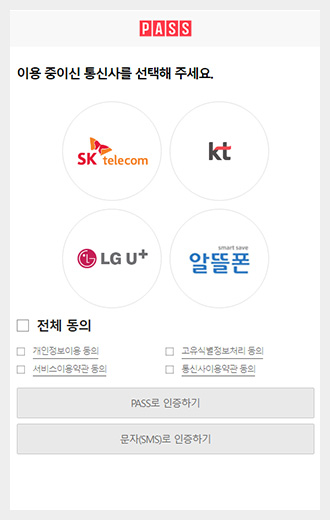
  • Korea’s “mobile phone identity verification” is linked to your carrier information under your name. In other words, it’s not just a problem of receiving a text—it’s a structure where name/identity information matching issues can occur. (Minwon)
  • PASS is ultimately based on “a line that can perform mobile phone identity verification.” Official guidance says foreigners can use it too if they meet the conditions. (PassAuth)

Below are the Top 10 apps foreigners especially often get blocked on, and a checklist for “where to fix first” when you’re stuck.
Foreigners’ mobile phone identity verification


Top 10 Apps Blocked by Identity Verification (For Foreigners)

How to read this: If you look at the “moment you get stuck,” it will match your situation immediately.

1) Baedal Minjok (Baemin)

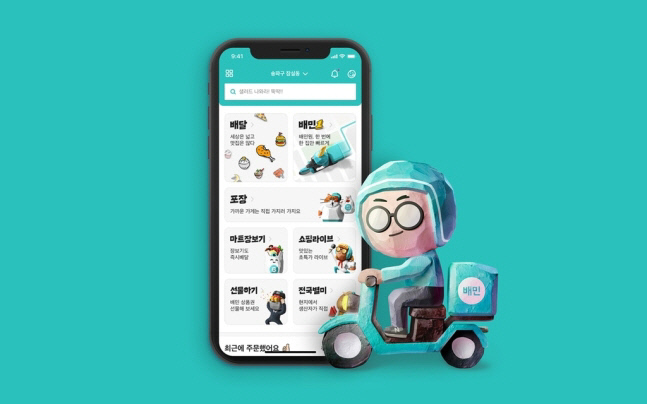
  • When you get stuck: During sign-up, it asks for name/resident registration number (or real-name info)/mobile number/carrier selection and proceeds with verification
  • Why it gets stuck: If the name/owner formatting registered with the carrier differs from what you enter, it’s easy to fail
  • Source: Baemin’s easy-use guide clearly lists the sign-up flow including entering name·resident registration number·mobile number + selecting a carrier + entering the SMS verification code. (easybaemin.com)

Fix tip:

  • A line under your name (ideally postpaid) + entering your name exactly as registered with the carrier (spelling/spacing) is the most important
Baedal Minjok (Baemin)


2) Coupang

  • When you get stuck A: During the first purchase/payment, an additional identity check pops up
  • When you get stuck B: When finding your ID/password, it asks you to “verify with a mobile phone under your name”
  • Source (1): Coupang states in its privacy policy that for identity verification at purchase, it collects a resident registration number or alien registration number once (first time only). (Coupang Privacy Center)
  • Source (2): On the account info recovery screen, it also instructs you to verify whether your name + registered mobile number match. (login.coupang.com)

Fix tip:

  • Before focusing on “receiving SMS,” check whether the name/number registered in Coupang = the carrier account holder information

Coupang


3) Yogiyo

  • When you get stuck: It requires “mobile phone identity verification” for sign-up/coupons/membership/some services
  • Source: In Yogiyo’s privacy policy
    • For email sign-up, a mobile phone number is required, and
    • Under “Identity Verification,” it states that when using [mobile phone identity verification], it collects DI/date of birth/gender/Korean or foreigner status, etc. (Yogiyo)

Fix tip:

  • Foreigners often fail especially at Korean/foreigner selection or due to mismatched carrier registration information (standardizing name formatting is key)

4) Kakao T (Kakao Mobility)

  • When you get stuck: The mobile number verification step at the start of sign-up
  • Source: Kakao Mobility’s support guidance includes wording that “verification is required with the mobile number you will use.” (Kakao Mobility)

Fix tip:

  • If you need a taxi urgently, check SMS reception first before signing up (carrier blocking/spam inbox/number input format)

5) NAVER Account

  • When you get stuck: Sign-up/account protection measures/SMS verification reception issues
  • Source: NAVER’s Help Center states that there is a limit to how many IDs you can create within a certain period via mobile number verification. (Naver Help Center)

Fix tip:

  • If verification texts don’t arrive, don’t suspect only “carrier issues”—also suspect attempt limits/issuance limits

6) Naver Pay (Npay)

  • When you get stuck: During payment, a “security procedure 강화” pop-up appears requiring ARS verification (phone call verification)
  • Source: In Naver Pay Help
    • It says ARS verification may be required if suspicious activity is detected, and
    • That you can use the service normally only after completing ARS verification with a mobile phone under your name. (Naver Pay Help Center)

Fix tip:

  • If you have a data-only eSIM or a plan that only receives texts, you may get stuck at ARS → a line that can receive voice calls is safer

7) KakaoPay

  • When you get stuck: During identity verification, you see “Carrier information does not match” / verification fails
  • Source: KakaoPay Support notes that identity verification can be difficult if there is a mismatch in entered info or if the phone is temporarily suspended, and recommends checking the carrier-registered information/status. (KakaoPay Support)

Fix tip:

  • Before thinking “Did I type it wrong?”, check whether the name/date of birth/gender/residency info registered with your carrier is accurate

8) Toss

  • When you get stuck: Sign-up/login itself is blocked (especially for short-term stays or lines under someone else’s name)
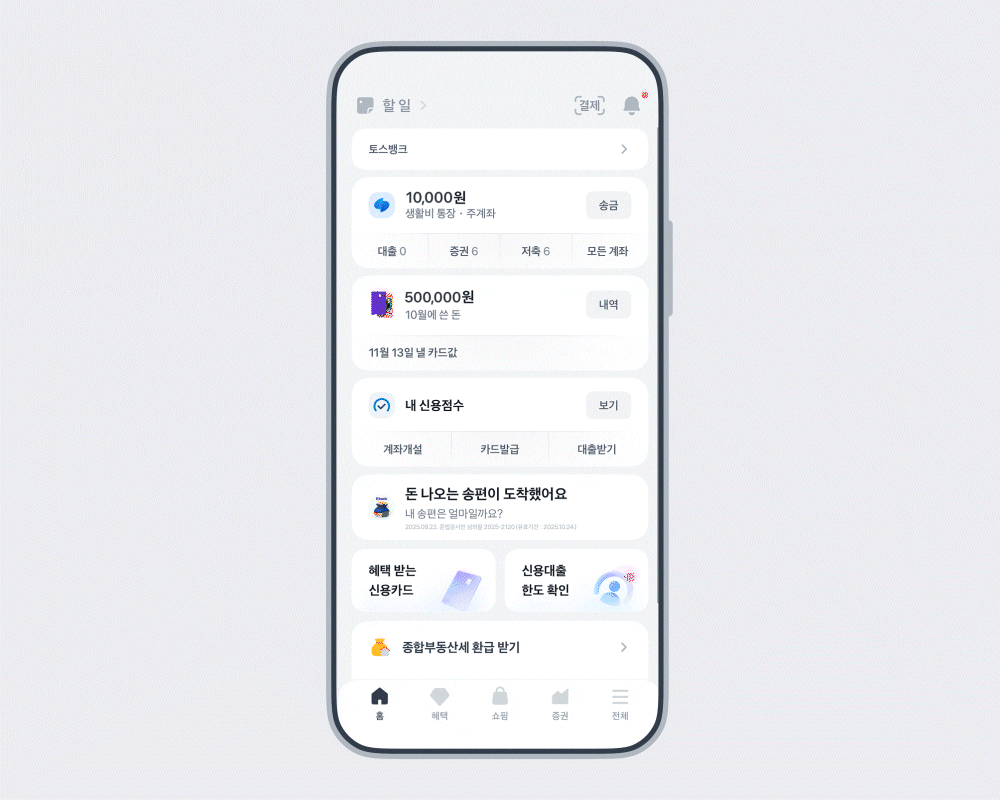
  • Source: Toss FAQ states that starting October 23, 2023, sign-up/login requires mobile phone identity verification under your own name. (Toss Support)
  • Extra: If you changed your number, you must complete a new-number verification process in Toss. (Toss Support)

Fix tip:

  • Toss offers little room for “alternative verification” → the correct answer is to set up a line under your own name from the start
Toss


9) Gov 24

  • When you get stuck: During sign-up/login/civil service processing, at the simple 인증 or mobile phone identity verification step
  • Source: In a Toss Payments guide, during the Gov 24 sign-up process
    • After checking “I will use simple verification,”
    • It instructs you to proceed with mobile phone identity verification. (Toss Payments)
  • Reference (official context): Government portals also display notices requiring certificate/simple verification registration. (Gov 24)

Fix tip:

  • To use simple verification like PASS/Naver/Kakao, in many cases that authentication app is itself based on mobile phone verification under your name (meaning you must fix the “phone issue” first)

10) HomeTax (SonTax)

  • When you get stuck: The identity verification step during sign-up
  • Source: HomeTax usage guidance states that individuals can sign up via identity verification using a joint certificate/mobile phone/credit card. (HomeTax)

Fix tip:

  • If mobile phone identity verification doesn’t work, consider using a joint certificate or credit card verification as a workaround route (feasibility varies by situation)

Foreigner “Identity Verification” Fix Checklist (Follow this and your success rate goes way up)

This checklist is a cause classification table made so you can review it “at a glance.” As you check each item, fix only what applies to you.


1) First, identify which type of verification you’re stuck on

A. SMS verification (receiving a 6-digit text)

  • The text arrives but the app fails → likely mismatched account holder info
  • No text arrives at all → possible spam blocking/overseas device/number input format/carrier outage

B. Mobile phone identity verification (carrier/KCB/NICE integration)

  • Typical signs: A screen asking for name/date of birth/gender/carrier selection, etc.
  • Core principle: It’s an identity verification service linked to a carrier line registered under your name. (Minwon)

C. ARS verification (pressing numbers on a phone call)

  • Often appears during enhanced security, like with Naver Pay (Naver Pay Help Center)
  • If you have a data-only eSIM / no-voice plan, you often get stuck here

2) Is it a “line under my name”? (80% of foreigners’ verification issues end here)

  • Some services, like Toss, explicitly require “identity verification under my name.” (Toss Support)
  • Coupang also guides users that the name/mobile number must match the member information. (login.coupang.com)

✅ Check

  • Is the number opened under my name? (If it’s under a company/friend/family member’s name, it usually gets blocked sooner or later.)
  • Is it not data-only—can it receive SMS + voice calls? (for ARS)
  • If it’s an MVNO, did you check in advance whether PASS is supported / identity verification is possible? (PASS certificate FAQ also mentions MVNO support) (PassAuth)

3) Match the “name format” registered with your carrier 100% with what you enter in the app

This is the classic pattern of verification failure:
Your passport/ARC/carrier/bank/app all store your name differently.

✅ Check

  • Is the name registered with the carrier (English/Korean, spacing, hyphens) the same as your ID documents/app input?
  • If you see “carrier information mismatch” like in KakaoPay, check carrier-registered info/suspension status first (KakaoPay Support)
  • Services that use DI/Korean-foreigner status like Yogiyo can fail if even one input option is off (Yogiyo)

Fastest fix route (practical tip)

  • Check your “subscription information (account holder/DOB/status)” at a carrier store/customer center → enter it in the app exactly as shown

4) Set up PASS first, and identity verification becomes much easier afterward

The PASS certificate FAQ also states that “foreigners can use it too (if conditions are met).” (PassAuth)

✅ Check

  • Can you sign up for the PASS app?
  • Does PASS authentication (push/biometrics) work?
  • If not: it’s highly likely a line ownership/registered information problem (go back to #2/#3)

5) If you get stuck at ARS (phone): secure “voice call reception” first

Naver Pay notes that ARS verification may be required, and that it must be done with a mobile phone under your name. (Naver Pay Help Center)

✅ Check

  • Can my line receive voice calls?
  • Are calls being blocked due to an overseas device or blocking apps?
  • Are call forwarding/spam blocking settings too aggressive?

6) Government/tax sites may allow “workarounds” via alternative verification methods

  • HomeTax states there are options such as a joint certificate/mobile phone/credit card. (HomeTax)
  • Gov 24 frequently uses flows involving simple authentication/mobile phone identity verification. (Toss Payments)

✅ Check

  • If mobile verification doesn’t work, did you try alternatives like a joint certificate or card verification?
  • If the authentication app (Kakao/Naver/PASS) itself is “based on a mobile phone under your name,” the conclusion is that you must normalize your phone info first

7) “Shortcuts” you should never take

While searching, you may come across risky posts about “010 verification” or “proxy services”, but these can lead to account suspension, payment issues, and legal problems.
Identity verification is literally based on the “person themself,” and many services like Toss and Socar explicitly require “under my name.” (Toss Support)


(For saving) Foreigner identity verification problem—“What to bring” checklist

If you prepare the items below when contacting customer service or visiting a carrier, resolution will be faster.

  • Passport, Alien Registration Card (ARC)
  • A mobile phone under your name (including SIM)
  • Screenshots of the blocked screen (including the error message)
  • Which type of verification it is: notes on SMS / mobile phone identity verification / ARS / simple authentication (PASS, etc.)
  • Proof to confirm whether it’s a “line under my name” (check carrier subscription information)

FAQ (Foreigners’ mobile phone identity verification)

Q1. Can foreigners do mobile phone identity verification in Korea?

Yes. However, mobile phone identity verification is structured to be linked to a carrier line subscribed under your own name, so ownership/registered information is the key. (Minwon)

Q2. Can foreigners use PASS?

According to the PASS certificate FAQ, it states that foreigners can use it if they can receive mobile phone identity verification and can sign up for the authentication app. (PassAuth)

Q3. Why is Toss so strict?

Toss announced that starting October 23, 2023, sign-up/login requires mobile phone identity verification under your own name. (Toss Support)

Q4. What’s the most common reason sign-up gets blocked on delivery apps (Baemin/Yogiyo)?

In most cases, it’s a mismatch in carrier-registered information (name formatting/account holder). Baemin’s sign-up flow includes carrier selection + SMS verification (easybaemin.com), and Yogiyo also specifies an identity verification item based on mobile phone identity verification. (Yogiyo)

Q5. If ARS verification appears during a Naver Pay payment, do I have to do it?

Naver Pay explains that ARS verification may be required for risky transactions/suspicious activity, and that you can use the service normally after completing ARS verification with a mobile phone under your name. (Naver Pay Help Center)

Q6. Coupang shows a message saying “Check whether your name/mobile number match.” Why?

Coupang provides guidance during identity verification that requires the member information to match the name/mobile number you enter. (login.coupang.com)

Q7. Does Gov 24 always require mobile phone identity verification?

It depends on the task/login method, but in real sign-up guides, the flow of choosing simple authentication and then proceeding to mobile phone identity verification is frequently shown. (Toss Payments)

Q8. If KakaoPay says “Carrier information does not match,” what should I do?

As KakaoPay Support explains, it may be due to mismatched entered information or a temporarily suspended phone, so checking your carrier-registered information/status comes first. (KakaoPay Support)

Foreigners’ mobile phone identity verification

Webring Newsletter

K-Name Studio: Create your perfect Korean name based on your personality and style.
What’s My K-Beauty Personal Color?
WeBring Service : Provides personalized services to foreigners living in Korea
Exclusive offer: Introducing foreign car rental in Korea, WeBring-SoCar


Yeosu Night Sea Course: The Complete Guide Marine Cable Car, Romantic Food Stalls, and Tips for Foreign Visitors

For foreign visitors, the Yeosu Night Sea course is also a great way to experience the scenery of Korea’s southern coast. Yeosu is pretty in the daytime too, but night is where the real game begins. Catch the sunset → night view in one go on the marine cable car that crosses over the sea, then wrap it up with seafood and drinks at the Romantic Pocha Street under Geobukseon Bridge… and you’ll instantly understand why “Yeosu Night Sea” became a song. In today’s post, I’ll organize everything at once—timetable, fares, parking, and transportation tips—so even first-timers to Yeosu (especially car-free travelers/foreign residents) can follow along exactly.

Yeosu Night Sea


Key point: Dolsan (start) → Jasan (arrive) → 15-min walk → Romantic Pocha
This is the cleanest route for the night view.

TimeScheduleGetting Around / Tips
16:30~17:30Arrive at Dolsan Park (Dolsan Station)Lines grow around sunset; leave extra time for parking and tickets
17:30~18:10Ride the Yeosu Marine Cable CarRecommended for sunset timing (about 13 minutes one-way) (Visit Korea)
18:10~18:30Viewpoint at Jasan Park (Jasan Station)Take photos and enjoy the breeze
18:30~18:50Move to Romantic Pocha StreetAbout a 15-minute walk from the Jasan boarding area (Triple Guide)
19:00~21:00Dinner & drinks at Romantic Pocha StreetTo avoid waiting, 18:00-ish or after 21:00 is easier
21:00~Walk: Hamel Lighthouse / Maritime Park → return to 숙소Perfect as a night-view stroll route

1) Yeosu Marine Cable Car: “Timing” is Half the Night View

The Yeosu Marine Cable Car is Yeosu’s night-view course, operating on a 1.5km section connecting Dolsan (island) and Jasan (mainland). (Yeosu City)
If you ride during the sunset-to-night-view window, you get to watch the sky’s color change right over the sea.

Operating Hours (Check This First)

  • Standard hours: 09:30 ~ 21:30 (subject to change depending on conditions) (Yeosu Cable Car)
  • Operations may change depending on wind/weather on the day. Before you go, checking the “operation status” notice is recommended. (Yeosu Cable Car)

Fare Table (As of 2026, Official Info)

CategoryRound tripOne way
Standard cabin (8 pax shared) Adult17,000 KRW14,000 KRW
Standard cabin (8 pax shared) Child12,000 KRW9,000 KRW
Crystal cabin (6 pax shared) Adult24,000 KRW19,000 KRW
Crystal cabin (6 pax shared) Child19,000 KRW14,000 KRW

These are based on the official fares. (Yeosu Cable Car)

Station Locations (Dolsan/Jasan: Where Should You Board?)

  • Dolsan Station: 3600-1 Dolsan-ro, Dolsan-eup, Yeosu-si, Jeollanam-do (Yeosu Cable Car)
  • Jasan Station: 116 Odongdo-ro, Yeosu-si, Jeollanam-do (across from Sono Calm Hotel) (Yeosu Cable Car)

For today’s course (cable car → Romantic Pocha), the easiest flow is boarding at Dolsan and crossing over to Jasan.
On the Jasan side, it connects well to Romantic Pocha and the Maritime Park (walkable). (Triple Guide)

Parking (1 Hour Free, Then 200 KRW per 10 Minutes)

  • Both Dolsan Station and Jasan Station give 1 hour free + then 200 KRW per 10 minutes guidance (Yeosu Cable Car)
    During Yeosu night-view hours, parking fills quickly, so arriving around sunset is recommended.

Before Boarding: “Surprisingly Often Missed” Notes

The cable car feels like the kind of mood where you’d want to bring snacks—but drinks and food are not allowed inside the cabin. (Finish them before boarding.) (Yeosu Cable Car)

One more:

  • Pets may ride if placed in a fully enclosed carrier/bag (do not take them out inside the cable car) (Yeosu Cable Car)
  • Crystal cabins, due to the tempered-glass floor structure, may have restrictions on bringing in wheelchairs/strollers/suitcases/trekking poles, etc. (If you have such gear, a standard cabin is safer.) (Yeosu Cable Car)
Yeosu Marine Cable Car


2) Romantic Pocha Street: The Most “Yeosu” Way to Eat the Yeosu Night Sea

If the cable car warmed you up for the night sea, now it’s time to finish at Romantic Pocha. Yes—it’s that place under Geobukseon Bridge where red tent covers and lights line up all the way down.

Location

  • 102 Hamel-ro, Yeosu-si, Jeollanam-do (under Geobukseon Bridge) (Visit Korea)

Hours (Varies by Season)

  • Winter season (Nov–Feb): 17:00 ~ 24:00
  • Summer season (Mar–Oct): 18:00 ~ 01:00 (Visit Korea)

One more checkpoint:

  • Typically, it’s posted as closed on the first Wednesday of every month, and there may be exceptions depending on periods/holiday schedules. (Visit Korea)
  • Yeosu City notices have included guidance about changes/reopenings in operating periods, so if your travel date is uncertain, checking the notices is the safest option. (Yeosu City)

Tips to Reduce Waiting and Grab a Seat

  • The easiest way: enter during opening hours (around 17:00–18:00)
  • Or avoid peak time (19:00–21:00) and go after 21:00 like a second round
  • If your goal is a “sea-view seat,” check the seating direction first before you go in (each pocha has a slightly different view)

What Should You Eat to Look Like You “Really Came to Yeosu”?

At Romantic Pocha, the correct answer is basically seafood + alcohol. Even a Korea Tourism Organization travel article guide Romantic Pocha as a 대표 course of the Yeosu night sea, mentioning various seafood and samhap-style menus. (Visit Korea)

My recommended “first-visit for 2 or 3 people” combo is this:

  • Stone octopus / seafood samhap (1 main) + seafood ramyeon or a soup/stew (1 broth dish)
  • If you’re hungrier, add fried rice (1 finish)

Prices vary a lot depending on the pocha and what you order, but based on traveler reviews:

Do They Take Cards?

A Korea Tourism Organization travel article highlights as a benefit that they’re equipped with cleanliness, friendliness, and card payment. (Visit Korea)
However, payment methods can vary by pocha/extra items/situations, so bringing a little cash as well makes the trip much easier.


3) Photo Spot Recommendations: Your “I Came to Yeosu” Proof Ends Here

The cable car + Romantic Pocha course photographs incredibly well. If you lock in just a few key points, your results will look like a “travel pro.”

  1. Inside the cable car: from the start of sunset to the moment the sun goes down
  • The best timing is when the sky shifts from blue → orange → purple.
  1. Dolsan Park side: bridge + city lights
  • Before/after riding, take a shot at the Observation Deck.
  1. Jasan Station
  • The view opens wide toward downtown Yeosu, so the night view is beautiful.
  1. From the entrance of Romantic Pocha Street to under Geobukseon Bridge
  • The red tent covers and lighting themselves create that “Yeosu night sea vibe.” (Triple Guide)
  1. The walking path near Hamel Lighthouse
  • Great for a post-meal walk, and the night view comes out clean in photos.

4) Budget Guide (For 2 People, Realistic Version)

ItemBudget (approx.)Notes
Cable car (standard round trip)34,000 KRWFor 2 people, official fares (Yeosu Cable Car)
Romantic Pocha (food + drinks)60,000~120,000 KRWWide range depending on menu/alcohol/add-ons
Transport (taxi/bus)10,000~40,000 KRWDepends on how you move around
Parking (car)0~a few thousand KRWCharged after 1 hour free (Yeosu Cable Car)

5) Transportation Tips for Car-Free Travelers/Foreigners (Read Just This and You Won’t Get Lost)

Arriving in Yeosu by KTX (Yeosu-Expo Station 기준)

  • Jasan Station (Odongdo side): From Yeosu-Expo Station, guidance says to take Bus No. 2 → get off at Odongdo Entrance (Kric)
  • Dolsan Station (Dolsan Park side): From Yeosu-Expo Station, it guidance using Bus No. 2 → transfer mid-way (111/115/999, etc.). (Kric)

In Yeosu, movement集中 around night-view hours, so
mixing in taxis to save travel time can be quite efficient.

City Tour (Sightseeing Bus) Is Also Worth Considering

Yeosu Tourism’s double-decker bus (city tour) route includes a stop called “Cable Car Parking Tower.” (Yeosu City)
If you want to bundle daytime sightseeing + an evening cable car ride, it’s a good option.

One-Line Orders Especially Useful for Foreigners (On-Site, Practical)

  • Dolmuneo samhap hana juseyo” (One stone octopus samhap, please.)
  • Haemul ramyeon chugayo” (Add seafood ramyeon, please.)
  • “Kadeu dwaeyo?” (Do you take cards?)
  • Byu joheun jari isseoyo?(Can we sit with a view?)”

(If you order alcohol, some places may check ID, so bringing your passport/ARC is the safe move.)


6) Plan B for Rainy or Windy Days

The sea in Yeosu can get windy. Since cable car operations can change depending on weather conditions (checking day-of operation status recommended) (Yeosu Cable Car)
having just one Plan B ready will put your mind at ease.

  • Plan B: (indoors) aquarium/cafe → (if the rain stops) Maritime Park walk → Romantic Pocha
  • Many pochas operate even in the rain, but always keep in mind that changes are possible in severe weather. (Visit Korea)

FAQ (Yeosu Night Sea Course

Q1. What time is best for the Yeosu Marine Cable Car night view?

The most satisfying time is around sunset as it transitions into the night view. The cable car is 안내 as running about 13 minutes one-way, which makes it easy to time. (Visit Korea)

Q2. Are the Yeosu Marine Cable Car operating hours the same every day?

The standard operating hours are listed as 09:30–21:30, but they may change depending on 상황. Checking the day-of “operation status” is recommended. (Visit Korea)

Q3. Can I eat snacks or drink coffee inside the cable car?

No. It is 안내 that drinks and food are not allowed inside the cabin. Please finish them before boarding. (Yeosu Cable Car)

Q4. What’s the difference between the crystal cabin and the standard cabin?

The crystal cabin has a transparent (tempered glass) floor for more thrill and costs more. However, due to the floor structure, there is 안내 of restrictions on bringing in wheelchairs, strollers, suitcases, etc., so choose based on your situation. (Yeosu Cable Car)

Q5. What are the operating hours for Romantic Pocha Street?

It’s guide as winter season (11–2 months) 17:00–24:00, summer season (3–10 months) 18:00–01:00. (Visit Korea)

Q6. Where is Romantic Pocha Street located?

It is guide as 102 Hamel-ro, Yeosu-si (under Geobukseon Bridge). (Visit Korea)

Q7. Can I walk from the cable car to Romantic Pocha Street?

Yes. Based on a travel app, it’s guide as about a 15-minute walk from the Jasan (Odongdo side) boarding area. (Triple Guide)

Q8. Is parking expensive?

Both the Dolsan and Jasan sides are guide as 1 hour free, then 200 KRW per 10 minutes. (Yeosu Cable Car)

Yeosu Night Sea Course

Webring Newsletter

K-Name Studio: Create your perfect Korean name based on your personality and style.
What’s My K-Beauty Personal Color?
WeBring Service : Provides personalized services to foreigners living in Korea
Exclusive offer: Introducing foreign car rental in Korea, WeBring-SoCar

Your Ultimate Korea F-3, F-6 Visa Guide: Prepare for a Smooth Stay & Avoid Common Mistakes

Today, we’ll walk through the preparation process for Korea F-3, F-6 visas. I’ve summarized only the essentials, so please refer to the following.

1) First, lock in “your track” (F-3 vs F-6—this is where half the battle is decided)

Preparing family accompaniment/spouse stay documents may look like a lot, but in reality, once you categorize your case properly, the schedule becomes very clean.

✅ Track A: If your spouse is a “Korean national” → usually F-6 (Marriage Immigration)

  • In the Ministry of Justice guide (Visa Navigator), F-6 is defined as a person married to a Korean national.
  • Overseas mission guidance states that you may apply only if the marriage is validly established in Korea (marriage registration). (Ministry of Foreign Affairs)

✅ Track B: If the primary resident is a “foreigner (long-term stay such as D/E categories)” and brings a spouse/minor children → usually F-3 (Accompanying)

  • Per the Visa Navigator, F-3 is introduced as the spouse or minor child of a D-1 to E-7 status holder (accompanying).
  • Also, F-3 is 안내 as not permitted to work (if you plan part-time work/employment during your stay, you must design a separate status strategy).

✅ Track C: If you “enter Korea first on tourism/visa-free (B-1/B-2/short-term visa)” and then try to switch to accompanying (F-3)

  • In content shared as an implementation notice effective 2025.4.1 (posted by InvestKorea), it states that the principle is that F-3 visas are issued at overseas Korean missions, and
    exceptions are narrowly guided, such as cases where you objectively prove that departure is extremely difficult due to pregnancy/childbirth/serious illness, etc. (InvestKorea)
    → In this case, the schedule often shifts from “solving it inside Korea” to “departing + applying at a mission,” so you need a separate backward-planning timeline.
Korea F-3, F-6 Visa


2) Two deadlines you must never miss (post-entry matters more)

(1) Foreigner Registration (= ARC) deadline: within 90 days from the date of entry

  • Ministry of Justice (Korea Immigration Service) guidance: To stay longer than 90 days, you must register within 90 days of your entry date (Immigration Department)

(2) If you entered on F-6 (Marriage Immigration): within 90 days after entry, complete Foreigner Registration + apply for the initial extension of stay

  • Consulate General in Chicago guidance: the F-6 visa is a multiple-entry visa valid for 3 months, allowing a 90-day stay, and
    it explicitly states that you should complete Foreigner Registration and apply for an extension of stay within 90 days after entry. (chicago.mofa.go.kr)

In other words, it doesn’t end with “getting the visa and entering Korea.” You must stabilize your stay by securing your ARC/period of stay within 90 days after entry to complete your residency.


3) The key to document prep: Overseas documents come as a 3-step set—“original + translation + apostille/consular legalization”

Documents proving family relationships/marital relationships are usually issued in your home country (overseas).
The most common point of failure here is an apostille or consular legalization.

  • There is guidance from a related government agency (Overseas Koreans Agency) stating that to use overseas public documents in another country, you need apostille or consular legalization procedures to have the document’s official validity recognized. (oka.go.kr)
  • And in the F-3-related guideline notice (posted by InvestKorea), it specifically lays out a structure requiring, for public documents issued by the home country (marriage/birth, etc.), a certified translator’s confirmation + (treaty countries) apostille or (non-member countries) consular legalization. (InvestKorea)

✅ Practical conclusion

  • Marriage certificates/birth certificates/family relationship proof are not just “documents”—you must plan them end-to-end as
    (1) original → (2) translation (and translator certification if required) → (3) apostille/consular legalization so your schedule doesn’t blow up.

4) Consult/confirm “where to start?” (the time-saving order)

  1. 1345 Immigration Contact Center: Quickly confirm whether your case is F-3/F-6/F-1, the jurisdiction, and the intake flow
  • Consultation hours: Weekdays 09:00–22:00 (after 18:00 mainly Korean/English/Chinese) (Immigration Department)
  1. Overseas Korean mission (Embassy/Consulate General) or visa application center (KVAC, etc.):
  • Your “country/mission” can differ significantly in document validity periods (e.g., issued within 3 months), whether interviews are required, and submission methods (mail/appointment).
  • As an example, one mission’s guidance indicates the processing time may be at least 10–14 business days (subject to change depending on visa type/additional documents). (Ministry of Foreign Affairs)
  1. Your local immigration office (post-entry ARC/extension part):

5) Backward schedule table provided: a “one-page roadmap” based on D-day (entry date)

The table below sets “your desired entry date = D-day” and plans backward from today.
(※ Since document issuance/apostille/mission appointments vary greatly by country, I tend to build in a large buffer (extra time) in practice.)


5-1) Common backward schedule: applies to both F-3/F-6 (copy-paste ready)

Timing (backward)What to doOwnerDeliverable (definition of done)What blows up if delayed
D-16 weeksConfirm track (F-3/F-6), check mission submission method/appointment, validate case via 1345You/CoupleFinalize “required documents list”Preparing the wrong documents from the start
D-14 weeksBegin issuing overseas public documents (marriage/birth/family relationship, etc.)Overseas familySecure original documentsApostille timeline collapses
D-12 weeksFinalize translation plan (language/translator/whether translator certificate is required) + finalize apostille/consular legalization routeYouTranslation templates/term consistency sheetSupplementation due to name spelling mismatches
D-10 weeksProceed with apostille/consular legalization + (if needed) start criminal record check/medical examYou/SpouseApostille/consular stamped copies completedMission submission itself is delayed
D-8 weeksUpdate Korea-side (inviter) documents (various certificates, housing/finance/invitation documents, etc.)InviterComplete “submission-day packet”Re-issuance due to “expired issue date”
D-6 weeksConfirm mission/application center appointment + fill out application + prepare photo specsYouAppointment confirmation/document binder completedAppointment scarcity/missing documents
D-4 weeksSubmit visa application (mail/in-person) + prepare “extra documents” in case of requests for supplementationYouSubmission completed/receiptTime-out if supplementation is requested
D-2 weeksVisa issuance/collection + finalize flight/housingYouVisa affixed/confirmed in passportEntry date gets pushed back
D-dayEnter KoreaFamilyEntry completed
D+1~D+14Finalize actual residence lease/move-in (prepare address documents for ARC application)Family in KoreaProof of residence documentsARC application gets delayed
Within D+90Apply for Foreigner Registration (ARC)YouSubmission completedRisk of exceeding 90 days (Immigration Department)

5-2) F-6 (Marriage Immigration) only: “additional backward planning” (the biggest time sink)

Two common reasons the F-6 timeline gets longer

  1. Medical certificate + criminal record certificate (related to the parties to the marriage)
  • Guidance states that from 2023.4.13, when applying for the Marriage Immigration (F-6) visa, submission of a medical certificate and a criminal record certificate for the marriage parties is required (separate grounds for exemption also exist). (Ministry of Foreign Affairs)
  1. Variability due to mission screening (interviews/additional documents/site checks, etc.)
  • Depending on the mission, there may be requests for supplementation/interview guidance, and processing time can increase. (Example: guidance indicating about one month) (chicago.mofa.go.kr)

F-6 backward schedule (additional)

Timing (backward)Additional tasks for F-6Deliverable
D-12~10 weeksFinalize the issuance route for criminal record certificate & medical certificate (overseas vs. Korea, check validity period)Issued copies completed
D-8 weeksFinalize Korea marriage status (marriage registration/update certificates)Confirmation that marriage is validly established (Ministry of Foreign Affairs)
D-6~4 weeksComplete the mission-required document packet (invitation letter/guaranty of identity, etc.) based on mission formsSubmission bundle

5-3) F-3 (Accompanying) only “key caution”: in many cases, the principle is to apply at an overseas mission—not change status inside Korea

  • Guidelines have been shared stating that the principle for F-3 is visa issuance at an overseas Korean mission, and
    exceptions are narrowly guided to cases such as pregnancy/childbirth/serious illness where you prove that departure is extremely difficult. (InvestKorea)

So for F-3, it’s safer to build the backward plan as a plan that includes “departure/mission submission”.


6) Post-entry (after arriving in Korea) checklist: this is where your stay gets “completed”

6-1) Preparing for the ARC application (90-day countdown after entry)

  • The principle is that Foreigner Registration must be done within 90 days of the entry date (Immigration Department)
  • It is commonly 안내 that you make a HiKorea appointment and then apply in person at your local immigration office. (Immigration Department)
  • There was a notice that the Alien Registration Card fee increased from 30,000 KRW → 35,000 KRW starting 2025.1.1. (Immigration Department)

6-2) Reporting a change of address/residence is also a “deadline game”

  • If your place of stay changes due to moving, etc., guidance states you must report it within 15 days of the move-in date (appears across Gov.kr civil service info/laws/guides). (Government 24)

7) Top 10 mistakes that lead to failure (avoid these and the perceived difficulty drops fast)

  1. Assuming that because it’s F-3, you can enter Korea as a tourist and then change status domestically (principle: issuance by an overseas mission) (InvestKorea)
  2. Missing apostille/consular legalization for overseas marriage/birth documents (oka.go.kr)
  3. Mismatch in English name spelling vs. passport in the translation (especially spacing/hyphens)
  4. Missing the document validity period required by the mission (e.g., issued within 3 months, etc.)
  5. Starting medical certificate/criminal record prep too late for F-6 (Ministry of Foreign Affairs)
  6. Your housing contract in Korea is delayed after entry, so you lack proof of residence and your ARC application gets delayed
  7. Missing Foreigner Registration within 90 days after entry (Immigration Department)
  8. For F-3, misunderstanding that your spouse can work right away in Korea (in principle, work is not permitted)
  9. “I have all the documents but they’re not organized,” leading to missing items/supplement requests at the counter (→ folder organization decides success)
  10. Proceeding without confirming with 1345/the mission when the case is ambiguous (the most expensive mistake) (Immigration Department)

FAQ (Preparing Korea F-3, F-6 Visas)

Q1. Who can get the F-3 (Accompanying) visa?

According to the Ministry of Justice Visa Navigator, F-3 is introduced as a status of stay applicable when the spouse or minor children of a D-1 through E-7 status holder accompany them.

Q2. Can an F-3 accompanying dependent work (employment/part-time) in Korea?

The Visa Navigator indicates that F-3 is not permitted to work.
(If work is necessary, you need a separate status strategy.)

Q3. Before applying for F-6 (Marriage Immigration), does the marriage registration have to be completed in Korea?

Overseas mission guidance states that you may apply only if the marriage is validly established in Korea (marriage registration). (Ministry of Foreign Affairs)

Q4. If I enter Korea on an F-6, does it immediately become long-term stay?

In an example of mission guidance, the F-6 visa allows a 90-day stay, and it instructs you to complete Foreigner Registration and apply for an extension of stay within 90 days after entry. (chicago.mofa.go.kr)

Q5. For overseas marriage/birth certificates, is translation alone enough?

To use overseas public documents in Korea, an apostille or consular legalization is often required, and the F-3 guideline notice (posted by InvestKorea) also specifies translator confirmation + apostille/consular legalization requirements for public documents. (oka.go.kr)

Q6. By when do I need to complete Foreigner Registration (ARC) after entering Korea?

According to Ministry of Justice guidance, Foreigner Registration is required within 90 days from the date of entry. (Immigration Department)

Q7. How much is the fee to issue the Alien Registration Card (ARC)?

According to an immigration notice, there was guidance that the fee increased from 30,000 KRW → 35,000 KRW starting 2025.1.1. (Immigration Department)

Q8. My case is unclear—F-3 or F-6. Where should I start for consultation?

The fastest first check is efficiently done via the 1345 Immigration Contact Center (weekdays 09:00–22:00). (Immigration Department)
Next, you should confirm in order with the “place that accepts applications,” i.e., the overseas mission/application center (overseas application) or your local immigration office (post-entry ARC/extension).

한국 F-3 F-6 비자 준비

Webring Newsletter

K-Name Studio: Create your perfect Korean name based on your personality and style.
What’s My K-Beauty Personal Color?
WeBring Service : Provides personalized services to foreigners living in Korea
Exclusive offer: Introducing foreign car rental in Korea, WeBring-SoCar
Caught in a Korea illegal stay? Your Urgent 3-Step Guide to Action Now

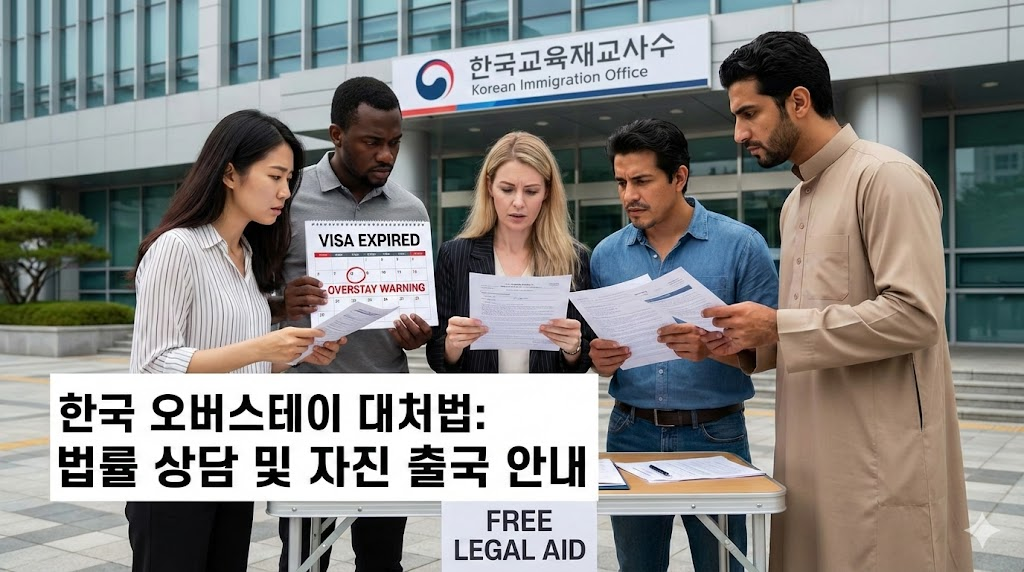
Korea illegal stay? The post below is a practical, real-world guide for foreigners staying in Korea (international students, workers, dependent family members, working holiday makers, etc.) who are at risk of “overstaying their period of stay (Korea overstay).” It focuses on helping you quickly understand what the problem is and where (who) to consult / what to do first. (※ Outcomes can vary depending on personal circumstances, visa type, and the length of the violation, so the final decision is based on your competent Immigration Office.)


Why an Overstay (Exceeding Your Period of Stay) Is “Really” a Problem

If your period of stay passes by even one day, you generally face the risk of being classified as an illegal overstay (violation of status/period of stay). What makes this scary is not just a “fine,” but the fact that it can continue to affect your future re-entry to Korea, visas, and stay history.

  • Criminal penalty provisions: Under the Immigration Control Act, some violations may be subject to up to 3 years’ imprisonment or a fine of up to KRW 30 million. (law.go.kr)
  • The possibility of deportation (removal measures) and entry restrictions (entry ban, etc.) is also discussed. (Especially if you’re caught in an enforcement crackdown) (Easy Law)

In reality, many cases are resolved through an “administrative fine (notice of penalty),” but the key point is that “I’ll just deal with it later anyway” is the most dangerous choice.

Korea illegal stay


How “Risky” It Is Ultimately Comes Down to Two Things

  1. How long you overstayed (duration)
  2. What you did while overstaying (whether there were additional violations)
  • Examples: unauthorized employment, activities outside your permitted status, failure to report address change, passport issues, failure to comply with a departure order, etc.

Overstay Administrative Fine (Notice of Penalty) Standard: The Longer the Overstay, the Faster It Grows

A representative standard directly tied to overstaying is “continuing to stay after exceeding the period of stay without obtaining permission to extend the period of stay” (based on the Enforcement Rules’ annexed table).
The amount by period (summary) increases as follows.

  • Less than 1 month: KRW 500,000
  • 1 to less than 3 months: KRW 1,000,000
  • 3 to less than 6 months: KRW 2,000,000
  • 6 months to less than 1 year: KRW 5,000,000
  • 1 to less than 2 years: KRW 10,000,000
  • 2 to less than 3 years: KRW 15,000,000
  • 3 to less than 5 years: KRW 20,000,000
  • 5 to less than 7 years: KRW 25,000,000
  • 7 years or more: KRW 30,000,000

Point: If you leave it thinking, “It’s only a few days, it’ll be fine,” the moment you pass 1 month, it feels drastically different.


3 Steps to Take Right Now (Only What You Can Do Today)

1) Re-check the Expiration Date Using an “Exact Source”

  • ARC (Alien Registration Card) expiration date, the period of stay stated on your passport/sticker/permit, etc.
  • If you’re unsure like “Was it today? Was it tomorrow?”, the document—not your calendar—is the answer.

2) Call First to Confirm “Jurisdiction / Available Actions”

For the fastest first consultation, the 1345 Immigration Contact Center is realistically the most efficient.

  • Hours: Weekdays 09:00–22:00 (after 18:00 mainly Korean/English/Chinese)
  • From overseas: +82-2-1345
  • Consultations available in 20 languages (Immigration Office)

What to confirm here: “What options are possible right now under my visa type (extension/change/departure/voluntary departure procedures, etc.)”, “my competent Immigration Office”, and “required documents / whether a reservation is needed.”

3) Gather “Evidence You Can Submit to Immigration” First

Especially if any of the reasons below apply, they become key materials for reduction/mitigating circumstances.

  • Hospitalization/medical certificate, proof of flight cancellation/delay, documents related to accidents/disasters, official letters from your company/school, etc.
  • (If there are unavoidable reasons such as disasters/war, there are also provisions that serve as grounds for an “emergency extension of period of stay.”) (Easy Law)

10 “High-Risk Overstay Scenarios”: What’s the Issue, and Who Do You Contact First?

Below is a summary of the most common patterns seen in real consultations, organized from the perspective of risk level / priority contact point.


Scenario 1) Overstaying by “1 Day to a Few Days” (Simple Mistake Type)

  • Issue: Even if the period is short, a record may remain, and it could work against you during extension/change applications
  • Top-priority consultation: 1345 → competent Immigration Office (if possible, check whether a quick visit / e-application is available) (Immigration Office)
  • Tip: Prepare a one-line explanation of “why you overstayed” + evidence (calendar misunderstanding, unable to book an appointment, etc.) in advance

Scenario 2) You Can’t Get a HiKorea Appointment and the Expiration Date Is Right Around the Corner

  • Issue: “I couldn’t book an appointment, so they’ll let it slide” is not automatically recognized
  • Top-priority consultation: Call 1345 to confirm how your competent Immigration Office actually handles it (including whether e-application is possible) (Immigration Office)
  • Reference: Guidance generally states that extensions can be applied for from 4 months before expiry up to the expiry date (for e-application, up to the day before).

Scenario 3) You Tried to Extend, But “The Expiration Date Has Already Passed”

  • Issue: You shift into overstay status, with possible administrative fines/disadvantages
  • Top-priority consultation: Competent Immigration Office (whether they can accept your case in practice / required documents / how the penalty is handled)
  • Second priority: Your sponsor (school/company/spouse) — submitting core documents proving employment/enrollment/marriage quickly can speed up resolution

Scenario 4) Overstay + Unauthorized Work / Activities Outside Status (Multiple Violations)

  • Issue: Considered far more serious than a simple overstay (additional sanctions possible)
  • Top-priority consultation: Immigration + (if possible) an immigration/stay specialist certified administrative scrivener or attorney
  • Warning: “Let’s hide it for now” usually comes back as an even bigger risk (can lead to records/reports/employer issues).

Scenario 5) Getting Caught in Enforcement/Inspection While Overstaying (Caught Type)

  • Issue: Unlike voluntary reporting, the likelihood of “strong measures” such as deportation and entry bans increases significantly
  • First priority: Immediately整理 the facts + request an interpreter
  • Second priority: (If possible) consult a professional representative
  • Real-world tip: At this stage, what matters is not “speaking well,” but whether your documents and facts are organized.

Scenario 6) Passport Expired/Lost + Overstay (Document Breakdown Type)

  • Issue: Departure/identity verification can get tangled, delaying resolution
  • Top-priority consultation: Your country’s embassy/consulate (passport/travel document) + Immigration (run procedures in parallel)
  • Tip: Passport issues are handled by the “embassy,” stay issues by “Immigration,” so you need to move both in parallel to save time.

Scenario 7) Overstay Due to “Unavoidable Reasons” Such as Health Issues/Hospitalization/Accidents

  • Issue: The overstay itself is still an issue, but with evidence, there may be room for consideration
  • Top-priority consultation: Immigration + hospital documents (medical certificate/admission-discharge confirmation/treatment record summary)
  • Related: For unavoidable reasons such as disasters/war, guidance is provided on the legal basis for emergency extensions. (Easy Law)

Scenario 8) Thinking “I’m Leaving Soon Anyway,” and Just Toughing It Out

  • Issue: You may still be able to depart, but during departure the case may be processed (penalties/restrictions), affecting future re-entry
  • Top-priority consultation: Immigration (voluntary departure procedure / whether prior reporting is needed)

Scenario 9) The Current Period Falls Under a “Special Voluntary Departure” Window (2025.12.1–2026.2.28)

This is a very important point as of January 2026.
The Ministry of Justice is operating a time-limited program for 90 days (2025.12.1 ~ 2026.2.28) that grants penalty exemption + postponement of entry restrictions to illegally staying foreigners who voluntarily report and then depart.

  • Excluded: illegal entry, use of forged/altered passports, criminal offenders, those subject to deportation such as failure to comply with a departure order, those who became illegal stayers on/after 2025.12.1, etc.
  • Procedure: Prior reporting 3–15 days before departure (including how holidays are counted) → re-check for criminal records/warrants on the day of departure → depart
  • Important: Enforcement continues during the period, and if caught, authorities maintain a strict response policy including deportation and entry bans

Top-priority consultation: 1345 → competent Immigration Office (how to file prior report / documents / flight schedule)


Scenario 10) You Didn’t Know About the “Prior Reporting for Voluntary Departure” System (General Voluntary Departure)

Even outside a special period, the Ministry of Justice operates a standing voluntary departure system for illegally staying foreigners, and
it specifically states that since October 2019, the system has been operated not as “same-day processing at departure,” but as departing after filing a prior report 3–15 days before departure. (Immigration Office)

Top-priority consultation: competent Immigration Office or HiKorea prior report + confirm via 1345 (Immigration Office)


“Where Should I Consult First?” Priority Order (Practical)

  1. 1345 (Immigration Contact Center): Identify your options/jurisdiction/procedure “the fastest” (Immigration Office)
  2. Competent Immigration Office / Foreigners Office: Actual filing/decision/document submission/prior reporting process
  3. Sponsor/Institution (company HR, school international office, spouse, etc.): Provide core documents proving the reason for stay
  4. Professional (certified administrative scrivener/attorney): When violations overlap (unauthorized work/long overstay/caught) or the matter is serious
  5. Embassy/Consulate: If a passport is lost/expired or repatriation documents are needed

7 Mistakes You Must Never Make

  • Thinking “It’s only a few days,” and taking no action at all
  • Assuming it will reset once you leave, and going to the airport without prior reporting/closing things out
  • Continuing illegal work/unauthorized part-time jobs while overstaying
  • Trying to resolve it with false documents/fake reasons and adding the risk of forgery and false statements
  • Missing the submission deadline given by 1345/Immigration
  • Ignoring passport issues (embassy processes can take longer than you think)
  • Believing only “my friend did it this way,” and not confirming how your competent Immigration Office actually operates

FAQ (Korea illegal stay)

Q1. If I overstay by just one day, is it considered illegal stay?

In general, once you exceed your period of stay, you face an illegal stay risk. If you overstayed even by one day, it’s safest to check immediately with 1345 or your competent Immigration Office. (Immigration Office)

Q2. How much does the overstay penalty start from?

It varies by period, and for “overstaying without permission to extend the period of stay,” a standard is presented starting from KRW 500,000 for less than 1 month.

Q3. If you overstay, are you automatically deported?

You can’t state it as automatic, but if the unextended status continues, the possibility of deportation and punishment increases, and especially if you are caught in enforcement, strong measures may be taken. (Easy Law)

Q4. What kind of help does 1345 provide?

It provides immigration-related consultation, daily life information, and multilingual interpretation services (weekdays 09:00–22:00). From overseas, you can use +82-2-1345. (Immigration Office)

Q5. Until when should I apply for an extension of stay?

Based on guidance materials, foreigners who need an extension can apply starting 4 months before expiration, and are instructed to apply by the expiration date (for e-application, by the day before).

Q6. Is there a special voluntary departure program right now (January 2026)?

Yes. From 2025.12.1 to 2026.2.28, a time-limited program is announced that applies penalty exemption and postponement of entry restrictions when you voluntarily report and depart (however, exclusions apply).

Q7. For voluntary departure, can I just go to the airport?

In general, it is announced that the system operates as departing after filing a prior report 3–15 days before departure (the special period follows the same procedure). (Immigration Office)

Q8. Is there any option if I couldn’t leave due to hospitalization/accident/disaster?

For unavoidable reasons (disasters/war, etc.), guidance is provided on the legal basis for emergency extensions of stay. As much as possible, collect medical certificates/proof and consult Immigration immediately. (Easy Law)


How to respond to a Korea overstay

Webring Newsletter

K-Name Studio: Create your perfect Korean name based on your personality and style.
What’s My K-Beauty Personal Color?
WeBring Service : Provides personalized services to foreigners living in Korea
Exclusive offer: Introducing foreign car rental in Korea, WeBring-SoCar

Foreign National’s Change of Residence Report: Avoid Fines & File Easily in Korea (2026 Guide)


1) What is a foreign national’s change of residence report? (Why you “must” do it when your address changes)

If a registered foreign national who has completed Alien Registration moves, they must report their new address within the prescribed deadline. This is not a simple “change of mailing address”; it’s closer to a statutory reporting obligation that is reflected in the immigration stay management (visa/stay permit) system. (Easy Law)


2) Reporting deadline: “Within 15 days from the move-in date” (F-4: note 14 days)

✅ Registered foreign nationals (ARC holders)

  • In principle, you must report within 15 days from the move-in date (the day you actually moved into the new home). (Easy Law)

✅ Overseas Koreans (F-4), etc. (Domestic Residence Report filers)

  • Based on local government notices and immigration guidance materials, there are cases where it is separately 안내ed as within 14 days. (Yeongdeungpo City)

Field tip: If you look at online/institutional materials, you’ll see some posts that say “14 days” mixed in (sometimes because old guidance remains). For the current 기준, set your baseline as ‘Registered foreign national = 15 days,’ and if you’re F-4 (residence), it’s safer to move more tightly with 14 days. (Easy Law)


3) Three ways to report: Online (HiKorea) / Community Service Center·District Office / Immigration

Use the table below to choose the “fastest route for your situation” first.

MethodRecommended forProcessing speedProsNotes
HiKorea online reportWithin the deadline (within 15 days) + able to prepare documentsTypically within 3 days (excluding weekends/holidays) (Guro City Hall)Can be done at home, no waitingOnline not possible after the deadline (15 days) (Guro City Hall)
Visit a community center/district officeWhen you want the simplest/fastest “same-day processing”Usually immediate (on-site)No reservation battle, easier to reflect same-dayIf documents are incomplete, you must revisit
Visit an Immigration Office/Foreigner OfficeWhen online is blocked (deadline passed), or special casesDepends on the casePossible to handle jurisdiction decisions/additional requestsFor stay-related civil services, guidance generally indicates a visit-by-appointment system, so check in advance (Easy Law)

4) Required documents: “ID + application form + proof of residence” are key

Common essentials (almost all cases)

  • Alien Registration Card (ARC) (Easy Law)
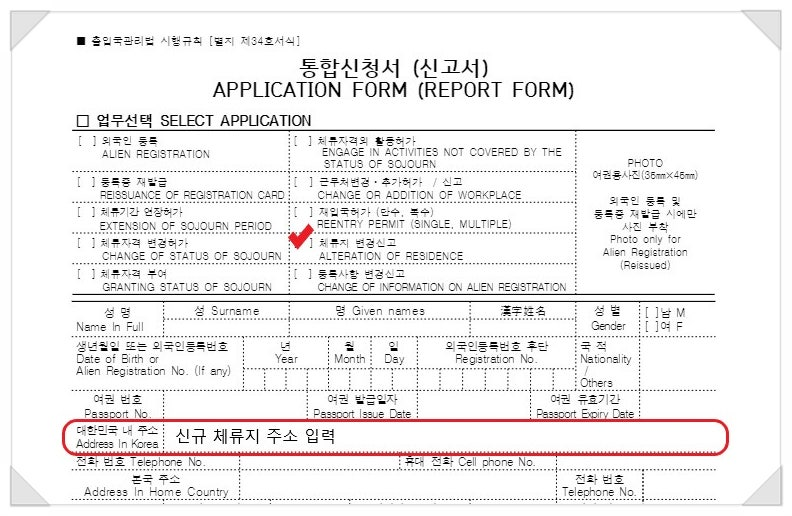
  • Report of Change of Residence (Integrated Application/Report Form, Annex Form No. 34) (Easy Law)
  • Proof of residence (contract/receipt/confirmation letter, etc.) (Easy Law)

Your passport may be requested depending on the situation (especially when visiting Immigration). The most dangerous thought is “I probably don’t need it,” so if possible, it’s safest to bring your passport too. (Sungkyunkwan Language Institute)

Residence Report

Examples of proof of residence by case (commonly used combinations)

Housing typeExamples of documents typically accepted
Lease in my nameLease contract (in my name) (Yeongdeungpo City)
Lease not in my name (spouse/friend/company)Confirmation of Accommodation Provision (signature/seal) + contract + (if required) copy of the contract holder’s ID + documents proving the relationship (Yeongdeungpo City)
DormitoryDorm residence confirmation (issued by school/institution) (Sungkyunkwan Language Institute)
Goshiwon / one-room-telPayment receipts, move-in confirmation documents, etc.—materials that prove “actual residence” (Yeongdeungpo City)
Free stay (living without paying rent)Confirmation of Free Residence, etc. (Gyeongju City Hall)

Point: The 담당자 is trying to confirm “you actually live at this address,” so if your contract/confirmation clearly shows the address (road name), move-in/start date, and the provider’s signature, your success rate goes way up. (Yeongdeungpo City)


It is only possible within the deadline (15 days), and if you miss it, you’ll be blocked online. (Guro City Hall)

The online procedure in Guro District’s guidance is the most detailed, so I’ll整理 it exactly as-is.

Online reporting steps (summary)

  1. Sign up for HiKorea
  2. e-Civil Service → select Report Change of Residence / Report Transfer of Place of Residence
  3. Identity verification (joint/authorized certificate, etc.)
  4. Enter your new address (road name/lot number) → submit
  5. Check the processing result in My Page (if there’s a request for supplementation, supplement and re-apply) (Guro City Hall)

Online processing time

  • There is guidance stating online reports are processed within 3 days (excluding Sat/Sun/holidays). (Guro City Hall)

One “unexpected pitfall” of online reporting

  • If you report online, the new address may not be written on the back of your registration card, and guidance says that if you want it printed, you need to request a visit to Immigration. (Guro City Hall)
  • However, there is also an explanation that if you have a mobile Alien Registration Card, recording the change via e-civil service can substitute for “card notation.” (Easy Law)

6) Method B: Report in person at a community center/district office (when aiming for same-day processing)

As in Yeongdeungpo District’s guidance, you can handle it at the district office or community service center with jurisdiction over your new address. (Yeongdeungpo City)

What to bring (in-person visit)

  • Foreign national change-of-residence report form (integrated application form)
  • Alien Registration Card (or Residence Card)
  • Proof of residence documents (contract/accommodation confirmation/receipts, etc.) (Yeongdeungpo City)

Fee

  • Based on local government civil service manuals, it is commonly 안내ed as no fee. (Gyeongju City Hall)

7) Method C: Visit an Immigration/Foreigner Office (online unavailable/deadline passed/special cases)

  • If you exceed the online deadline (15 days) and see “online reporting unavailable,” you may need to visit the Immigration Office (or branch office) with jurisdiction over your new place of residence as directed. (Guro City Hall)
  • Since stay-related civil services are generally 안내ed as being under a visit-by-appointment system, it’s safest to check the jurisdiction’s 운영 (whether 예약 is required) before you go. (Ministry of Justice)

8) Top 8 common mistakes (this is why people most often have to go back)

1) Mistake: calculating based on “the date you signed the contract”

The deadline is not based on the document 작성일, but in principle the date you moved in (actually moved). In practice, the contract start date/move-in date can also be used as evidence, so if it’s ambiguous, calculate based on the earlier date. (Easy Law)

2) Mistake: trying online after 15 days and getting blocked

It is explicitly stated that online reporting is not possible after 15 days. If you’re late, switch to an offline route (Immigration, etc.) immediately to avoid wasting time. (Guro City Hall)

3) Mistake: assuming your address changes automatically when your Korean spouse files a move-in report

Immigration guidance materials include cases where someone “thought their address had changed because their Korean spouse filed a move-in report, only to check later.” Foreign nationals must file a separate change-of-residence report.

4) Missing signature/seal on the ‘Confirmation of Accommodation Provision’

When the home is in someone else’s name (spouse/friend/company), requests for a signature or seal on the accommodation confirmation are very common. If missing, it’s the #1 reason for a supplementation request. (Yeongdeungpo City)

5) Mistake: bringing only weak “proof of residence” documents

The more it’s a goshiwon/short-term stay, the more you may need materials that prove actual residence—such as receipts, business registration information, and documents showing the period of stay. (Yeongdeungpo City)

6) Mistake: missing a ‘request for supplementation’ after applying online

Online reporting doesn’t end at submission—you must check My Page for supplementation requests (guidance says to re-apply after supplementing what’s requested). (Guro City Hall)

7) Mistake: double-reporting because you don’t know how to change your family’s (accompanying F-3) address at once

If you are registered as the head of household, there is guidance that you can file a combined report for yourself + accompanying family. (Guro City Hall)

8) Mistake: thinking “if it’s online, the address on the back of the card changes automatically too”

With an online report, the notation on the back of the registration card may be omitted, and it states that if you want it printed, you need to request a visit to Immigration. (Guro City Hall)


9) What happens if you don’t report? (Fines/penalties)

  • Easy Law (government-provided 생활법령정보) 안내s that if you do not report a change of residence, you may be subject to a fine of up to 1,000,000 KRW. (Easy Law)
  • Immigration guidance materials also 안내 the possibility of sanctions such as up to a 1,000,000 KRW misdemeanor fine or up to a 2,000,000 KRW administrative fine, depending on the case.

Conclusion: “I’ll handle it all at once later” is high-risk. Moving happens once, but reporting your residence is a ‘deadline game’—the moment you postpone, costs/time can explode.


10) 1-minute checklist (copy & paste)

  • Check whether you are within 15 days of the move-in date (residence/F-4: note 14 days) (Easy Law)
  • Prepare your Alien Registration Card (ARC) (Yeongdeungpo City)
  • Check the integrated application form (Annex Form No. 34) (Gangnam City Hall)
  • Prepare proof of residence documents such as the contract/accommodation confirmation/receipts (Yeongdeungpo City)
  • If online, check My Page for supplementation requests (Guro City Hall)
  • If you need the address printed on the back of the card, consider whether an Immigration visit is necessary (Guro City Hall)

FAQ (Foreign national residence)

Q1. Within how many days do foreign nationals have to report an address change?

For registered foreign nationals, the general guidance is to report within 15 days from the move-in date. (Easy Law)
However, for F-4 (Overseas Koreans) and other residence-report filers, it may be 안내ed as 14 days, so be careful. (Yeongdeungpo City)

Q2. Can I change my address online via HiKorea?

Yes. Online reporting is available, and the processing time is 안내ed as within 3 days (excluding weekends/holidays). (Guro City Hall)
However, online reporting is not available after 15 days, so in that case you may need to visit the Immigration office with jurisdiction. (Guro City Hall)

Q3. Can I do it at a community service center too?

Yes. Local governments 안내 that you can file the report at the district office or dong (neighborhood) community service center with jurisdiction over your new address. (Yeongdeungpo City)

Q4. Which required documents are the most important?

There are three 핵심 items: (1) Alien Registration Card (2) Integrated Application Form (Annex Form No. 34) (3) Proof of residence documents (contract/accommodation confirmation/receipts, etc.) (Easy Law)

Q5. If my spouse (Korean) filed a move-in report, does mine change automatically?

Official guidance materials introduce cases where people mistakenly assume it’s done automatically. Foreign nationals must separately file a change-of-residence report.

Q6. If I report online, does the address on the back of my Alien Registration Card (card) change automatically too?

With online reporting, the back-of-card notation may be omitted, and guidance says that if you want it printed, you need to request a visit to Immigration. (Guro City Hall)
Also, there is an explanation that mobile Alien Registration Card holders can substitute this by recording the change via e-civil service. (Easy Law)


외국인 전입신고

Webring Newsletter

K-Name Studio: Create your perfect Korean name based on your personality and style.
What’s My K-Beauty Personal Color?
WeBring Service : Provides personalized services to foreigners living in Korea
Exclusive offer: Introducing foreign car rental in Korea, WeBring-SoCar