Korea Foreigner Re-entry Permit: Your Essential Checklist to Avoid Visa Issues & Master 3 Key Dates

Conclusion First: If You Don’t Get These “3 Dates” Wrong, You’re Halfway to Success

In foreigner re-entry permit cases, most incidents where your status of stay becomes unstable between departure and re-entry start with a miscalculation of deadlines.

  1. Stay expiration date (= period of stay expiry)
  2. Passport validity period (often, your stay permission is granted only within the passport’s validity range)
  3. The period recognized as “re-entry permission exemption/permission” (typically 1 year; for permanent residents (F-5), 2 years, etc.)

This post organizes a checklist centered on the three items above—from before departure / while staying overseas / after re-entry—from the perspective of “maintaining your immigration status.”


0) 30-Second Self-Check: Do I Need Re-entry Permission?

Under Korean law, the basic principle is: “If you leave Korea and want to re-enter under the same status of stay, you must have re-entry permission (or qualify for an exemption).”

A. If You’re a Long-Term Resident with an ARC (Alien Registration Card)

  • Principle: You are subject to re-entry permission (however, if you meet the exemption criteria, you may re-enter without permission)
  • Exemption (most long-term residents): within 1 year from the date of departure (however, if your remaining period of stay is shorter than 1 year, only until that remaining period)
  • Permanent resident (F-5): exempt if re-entering within 2 years from the date of departure

B. If You Have an F-4 (Overseas Korean) “Residence Card (Domestic Residence Report Certificate)”

  • No re-entry permission is required as long as you re-enter within your period of stay (based on the Overseas Koreans Act)

C. If You “Plan to Stay Overseas for More Than 1 Year”

  • (For registered foreigners) If you want to re-enter after staying overseas for 1 year or more ~ up to 2 years (or exceptionally longer) after departure, the usual flow is that you need to apply in advance for a multiple re-entry permit.

Foreigner Re-entry Permit


1) Pre-Departure Checklist (Print-Friendly)

Below is a “core checklist” that includes only items that directly affect maintaining your immigration status.

1-1. Check Mandatory Expiration Dates / Validity Periods

  • Confirm your stay expiration date (whether your departure date + return date fall within your permitted period of stay)
    • Even with the “exempt within 1 year” rule, if your remaining period of stay is shorter, you can re-enter only until that remaining period.
  • Confirm your passport validity (if it’s short, your stay permission may be limited to that range)
  • Classify whether you fall under “1-year exemption,” “2-year exemption (F-5),” or “Residence Card (F-4)”

1-2. Final Check: Are You Eligible for “Re-entry Permission Exemption”?

Re-entry permission exemption criteria (as of the enforcement rules effective 2025.11.6):

  • Permanent resident (F-5): re-enter within 2 years after departure
  • Many statuses of stay (A-1F-3, F-6G-1, etc.): within 1 year after departure (however, if the remaining period of stay is shorter, only until that remaining period)
  • However, cases such as entry bans / visa issuance restrictions may be excluded from the exemption, so case-by-case confirmation is needed.

1-3. If Not “Exempt” → Prepare Re-entry Permission (Single/Multiple)

  • Re-entry permission is divided into single (one time) / multiple (two or more times).
  • The re-entry permission period cannot exceed your authorized period of stay (remaining period of stay).
  • Commonly known maximum periods (principle): Single 1 year / Multiple 2 years
    • However, for some cases (e.g., investment / large-scale investment, etc.), the maximum period may differ according to official guidance.

2) Practical Checks “1–2 Weeks Before Departure” (Key Points to Avoid Issues at the Airport)

2-1. On HiKorea, Check at Least These Items

Based on guidance materials from Seoul Immigration, HiKorea allows the following lookups/confirmations (identity verification required):

  • Validity check for your registration card / residence card
  • Lookup of your stay expiration date
  • (Some) various information lookups

Also, the e-government (online civil service) service hours (example) are guide as weekdays 07:00–22:00.

2-2. When You Should Update Your Address Before You Leave

  • If you moved (reported move-in): you must report within 15 days from the move-in date (for F-4, separately guide as within 14 days)
    When people move right before departure, they often postpone it thinking “I’ll do it after I return,” and end up missing the deadline.

2-3. It’s Risky to Depart When Your Visa (Period of Stay) Is Close to Expiry

  • In general, you can apply to extend your period of stay starting 4 months before expiration (for online civil petitions, separate limitations are guide, such as being allowed until the day before the expiration date, etc.)
  • If it expires while you are overseas, the “1-year re-entry exemption” becomes meaningless. (Because even the exemption cannot exceed the remaining period of stay.)

3) Checks for Those Planning “Long-Term Overseas Stay (1 Year or More)”: This Is Where Problems Happen Most

“I think I’ll be overseas for more than a year” is the point where the game changes from the perspective of maintaining your status of stay.

3-1. For Registered Foreigners (ARC): If You’ll Be Overseas for 1 Year+, Consider a “Multiple Re-entry Permit”

Key points based on the Ministry of Justice notice (Notice on Re-Implementation of Re-entry Permission Exemption):

  • If an exemption-eligible person (registered foreigner) wants to re-enter after staying abroad for 1 year or more ~ up to 2 years after departure, the flow is to apply for a multiple re-entry permit.
  • Fee guide for a multiple re-entry permit: KRW 50,000
  • When applying via HiKorea e-petition, a 20% fee discount is guide

Point: Rather than “I’ll be back within a year,” if there is even a 1% chance you’ll realistically exceed 12 months, setting a safety net from the start by going the “permission” route reduces accidents.

3-2. Application Timing (Miss This and Your Departure Itself Gets Complicated)

According to the same notice:

  • HiKorea e-petition: you can apply until 3 days before the departure date (excluding holidays)
  • Airport/port: in principle, only a single re-entry permit is possible (some exceptions are guide)

4) While Abroad: “What If Returning Within the Deadline Becomes Impossible?”

If, due to unavoidable reasons such as illness, it becomes difficult to re-enter within the re-entry permission period, you must obtain permission to extend the re-entry permission period before it expires.

  • The law provides a structure where you apply for an extension permission at an overseas diplomatic mission (a Korean embassy/consulate abroad).
  • Fee (example guide): USD 20

5) 10 Common Mistakes That Cause “Re-entry Failure / Unstable Status of Stay”

Here are the patterns that come up most often in practice.

  1. Leaving Korea trusting only “Within 1 year is OK,” even though your remaining period of stay is shorter
    → The exemption cannot exceed the remaining period of stay.
  2. Not counting the 1 year based on the “date of departure”
    → The rules/guidance explain it based on “from the date you departed.”
  3. Being a permanent resident (F-5) but planning a long stay without knowing the “2-year” rule
  4. Having F-4 (residence card) but mixing it up with ARC rules and making the wrong judgment
    → For F-4 residence reporters, the Overseas Koreans Act sets different re-entry permission requirements.
  5. Planning a long-term overseas stay (1 year+) but not securing a multiple re-entry permit
  6. Trying to file an online re-entry permit application right before departure and getting blocked by the “3 days before departure” restriction
  7. Mistakenly assuming exemption in an exceptional case such as an entry ban/visa issuance restriction
  8. Setting an aggressive departure (or return) schedule even though your passport validity is short
  9. Planning to “extend right after returning” while in arrears on taxes / health insurance premiums
    → There is guidance stating there may be disadvantages such as period-of-stay restrictions.
  10. Leaving Korea without reporting an address change after moving → exceeding the deadline after returning

6) After Entry (Return): Final Checks to “Maintain Your Status of Stay”

  • If you moved / changed your address, report within 15 days (F-4 is guide as 14 days)
  • Considering your next extension timing, pre-save in your calendar when you can apply to extend your period of stay (e.g., 4 months before expiration)
  • If you need departure/entry records, you can request issuance of a “Certificate of Entry & Exit Records” (institutional guidance exists)
  • If you’re unsure, call 1345 (Immigration Contact Center) for multilingual 상담 (operating guidance exists)

FAQ (Korea Foreigner Re-entry Permit)

Q1. Is the re-entry permission exemption “automatic,” or do I need to apply?

If you qualify for an exemption (e.g., many long-term residents within 1 year, permanent residents (F-5) within 2 years, etc.), the structure is that you do not need to obtain re-entry permission. However, since there may be exceptions such as entry bans / visa issuance restrictions, if you feel uncertain, it’s safest to confirm with the competent immigration office or official guidance.

Q2. What happens if I exceed 1 year after leaving Korea?

(For registered foreigners) If there is a possibility you will stay overseas for 1 year or more after departure, then based on the guidance notice, you may need to apply for a multiple re-entry permit.

Q3. What’s the difference between a “single” and “multiple” re-entry permit?

The law distinguishes between single (re-enter only once) and multiple (re-enter two or more times).

Q4. Can I extend the re-entry permission period while I’m overseas?

If re-entry within the period is impossible due to unavoidable reasons such as illness, you must obtain extension permission before the period expires, and regulations provide that the authority may be delegated to overseas diplomatic missions.

Q5. How much is the fee for a (multiple) re-entry permit?

According to the Ministry of Justice notice (guidance on re-implementation dated 2022.4.1), there is guidance stating KRW 50,000 for a multiple re-entry permit, and a 20% discount when applying via HiKorea e-petition.
(Single/other cases may differ depending on your status of stay and application channel, so it’s recommended to verify based on your specific case.)

Q6. Do F-4 (residence card) holders also need re-entry permission?

For foreign-national Koreans (F-4) who have filed a domestic residence report, the Overseas Koreans Act provides a basis stating that no re-entry permission is required when departing and re-entering within the period of stay.

Q7. What “online checks” should I 반드시 confirm before departure?

Based on HiKorea guidance materials, items introduced include validity checks for registration cards/residence cards and lookup of stay expiration dates.

Q8. Can I report an address change after I return?

There is a deadline. Based on guidance materials, registered foreigners / residence reporters (F-4) must report within 15 days (※ F-4 is guide as within 14 days) after moving (move-in).


외국인 재입국허가

Webring Newsletter

K-Name Studio: Create your perfect Korean name based on your personality and style.
What’s My K-Beauty Personal Color?
WeBring Service : Provides personalized services to foreigners living in Korea
Exclusive offer: Introducing foreign car rental in Korea, WeBring-SoCar
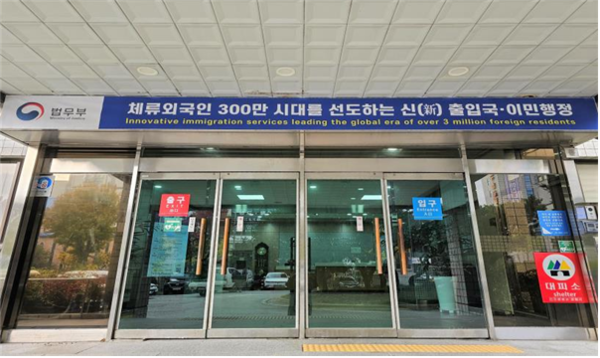
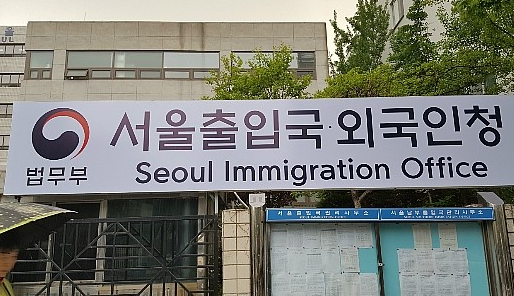
The Ultimate Guide to Immigration Document Organization: Prepare Flawlessly

If your documents get tangled even once at an immigration (Immigration · Foreign Resident Affairs Office) counter, the work for that day can easily fall into the “supplement request → revisit” route.
Do you know the most realistic way to prevent that? I’ll organize the key points that matter when preparing immigration documents.

It’s not so much “the documents themselves,” but the order you pull them out and how you bundle them.

Today, exactly the way I organize documents for my foreign clients in real life, I’ll walk you through—from A to Z—how to complete a “document folder” based on originals/copies/translations/apostille (or consular legalization).


1) Three “official principles” you should know first

① Documents issued overseas often require an “apostille or consular legalization”

In the immigration-related guidance on required supporting documents (Enforcement Rule appendix guidance), there is wording to the effect that documents issued overseas must be attached after receiving apostille verification from the issuing country’s government or consular legalization from a Republic of Korea diplomatic mission in the country of residence. (law.go.kr)

→ Conclusion: In many cases, overseas documents are not finished once you prepare only the “content”—the key is authenticity verification (apostille/consular).

② The principle is to submit originals, but they may be returned after verification

The same guidance also states that supporting documents should be submitted in original form as a principle, and that if unavoidable, the examiner may return them after confirming the originals, and may certify the copy as matching the original when necessary. (law.go.kr)

→ Conclusion: If you show up with “only a bunch of copies,” the flow at the counter can be interrupted by a request to present the originals.

③ Additional documents may arise during the review process

It also includes the point that, if deemed necessary during receipt/review, supporting documents may be added or removed. (law.go.kr)

→ Conclusion: That’s why your “document folder” should have a structure that can absorb what you prepared + on-the-spot supplements.

Immigration Document


2) Apostille vs. consular legalization: which applies to my documents?

There is government guidance stating that, in order to use overseas public documents in another country, apostille or consular legalization procedures are required to have the document’s official effect recognized. (Overseas Koreans Agency)

  • Apostille: A method that simplifies the consular legalization process among countries that are parties to the Hague Apostille Convention (Overseas Koreans Agency)
  • Consular legalization: For non-member countries of the Apostille Convention (embassy/consulate legalization procedures are required) (Overseas Koreans Agency)

And for reference, Korea is 안내 as having joined the Apostille Convention on October 25, 2006, and it entered into force on July 14, 2007. (Overseas Koreans Agency)

✅ Practical tip: If you’re unsure whether “my country is a member,” first check with the issuing country’s government/embassy about whether apostille issuance is available. (If it’s a member country, the apostille route is generally faster.)


3) Translation documents: in many cases, it doesn’t end with “just the translation”

In an immigration notice (an example 안내 for medical certificates upon re-entry), it states that, in principle, Korean/English documents are required, but if circumstances require the document to be issued in a third-country language, a Korean or English translation + a translation confirmation must be attached, and that notarization is not required. (Immigration Office)

→ In other words, in practice, the combo “translation + translator confirmation (or a translation confirmation form)” may come up.


4) Now the main part: Build your “document folder” like this (hands-on template)

Supplies (best value setup)

  • One 2-ring/3-ring binder (thick one recommended)
  • 8–12 index tabs (color-coded)
  • 15–25 transparent L-folders (to protect originals)
  • Clips/binder clips (safer than a stapler)
  • Post-its (labeling: “original/copy/for submission”)
  • 2–3 “empty pockets” for extra documents (for supplement requests)

Core folder structure: “one item = one pack (packet)”

At immigration, documents are ultimately reviewed by “item”.
So I create one bundle for each document type (e.g., a degree certificate) in the order below.

✅ Standard order for a 1-pack (packet)

  1. Check cover (a cover page I attach)
  2. Copy (for submission)
  3. Translation (if any)
  4. Translation confirmation / translator info (in case it’s requested)
  5. Apostille/consular legalization copy
  6. Original (kept in a transparent holder; marked “Do NOT submit / For presentation”)

Point: At the counter, the flow is usually smooth when “submission” is done with copies/in the file, and “verification” is done by presenting originals. (Some tasks still follow the principle of original submission, so structure it so you always bring the originals too!)


The structure below fits well for most tasks in common, such as foreigner registration, extension of stay, change of status of stay, etc.

Tab 0. Cover & today’s mission (1 page)

  • Purpose of visit: e.g., D-2 extension / E-7 change / address change, etc.
  • Reservation info (if any): date/time/office/task name
  • My contact number + email
  • “Today’s submission list” checkboxes

Tab 1. Identity

  • Passport original (holder)
  • Passport copy (photo page + visa/entry stamp-related pages)
  • ARC original/copy (if applicable)

Tab 2. Forms

  • Integrated application form (completed)
  • Fee preparation memo (card/cash, etc.)
  • ID photo meeting requirements (in an envelope)

Tab 3. Proof of residence (address)

  • Lease contract copy
  • Confirmation of residence/accommodation provision, etc. (if applicable)
  • Supplementary materials such as utility bills/registry, etc. (depending on situation)

Tab 4. Affiliation proof (school/company)

  • Certificate of enrollment / certificate of employment
  • Transcript / tuition payment (international students)
  • Employment contract / pay statements / four major insurances (workers)

Tab 5. Financial (balance · income) proof

  • Balance certificate / transaction history
  • Income-related documents (for visa categories that require it)

Tab 6. Overseas-issued documents (core apostille/legalization tab)

  • Criminal record certificate
  • Degree certificate / graduation certificate
  • Overseas family documents (marriage/birth, etc.)

Since the immigration Enforcement Rule appendix guidance also mentions the point that “documents issued overseas require an apostille or consular legalization,” this tab is the area where the most problems occur. (law.go.kr)

Tab 7. Translations

  • Align translations against the original text
  • Translator info / translation confirmation (in case it’s requested)
  • Terminology consistency sheet (name/school name/major name, etc.)

Tab 8. Other (for supplement requests)

  • Several empty holders
  • Extra printed copies of additional documents
  • Additional explanatory sheet (statement of reason/cover letter draft)

6) The most common mistakes when organizing “overseas documents (apostille/consular legalization)”

An apostille is basically the concept of “certifying that the document is genuine,” and it is explained as intended to replace/simplify the former consular legalization procedure. (Ministry of Foreign Affairs)
But in practice, mistakes almost always happen in the organizing method.

Checklist: For each overseas document, confirm this first

  • The apostille (or consular legalization) page is actually attached
  • Consistency OK on whether the apostille is attached to the original or attached to a notarized copy
  • You made and kept a separate copy of the apostille/legalization
  • If there is a translation, no omission of apostille details (authority/number/date, etc.) on the translation
  • Never remove staples/ribbons/seals (a key point for suspected tampering)

7) How to organize the “translation” folder to reduce supplement requests

As seen in immigration notice examples, in some cases they may require a translation + a translation confirmation while also stating that notarization is not required. (Immigration Office)
In other words, it’s safer to go with a translation credibility package rather than “just a translation by itself.”

  • Original-language copy
  • Translation
  • (If possible) Translator info/confirmation (signature, contact, date)
  • Terminology consistency memo (optional): name spelling, official English names of institutions, etc.

In particular, if you make a translation mistake in “identifying information” like your name (passport name in English), date of birth, or document number, you will immediately get a supplement request.


8) Labeling rules that create a “3-minute finish” at the counter on the day

Even if your documents are perfect, if it takes 10 minutes to find them, the counter flow breaks.

This is how I label.

Label color rules (simple but powerful)

  • Red = originals (for presentation, marked not to submit)
  • Blue = copies to submit
  • Yellow = translation
  • Green = apostille/consular legalization

Top post-it phrases (paste them as-is)

  • “ORIGINAL – DO NOT SUBMIT”
  • “COPY – TO SUBMIT”
  • “TRANSLATION ATTACHED”
  • “APOSTILLE / LEGALIZATION”

9) Final checklist for an “immigration document folder” you can print and use as-is

On the night before your visit, just checking the items below gets you halfway there.

A. Basics

  • Passport original + copy
  • ARC original + copy (if applicable)
  • Application form (integrated application form, etc.) completed
  • Photo (recent) stored in an envelope
  • Fee payment method prepared

B. Residence/Affiliation

  • 1–2 types of address proof documents
  • Affiliation proof such as enrollment/employment
  • Additional proof such as contracts/pay/tuition (if needed)

C. Overseas documents (most important)

  • Original overseas-issued documents
  • Apostille or consular legalization (attached/connected to the original) (law.go.kr)
  • Apostille/consular legalization copies stored separately
  • Translation + (as needed) translation confirmation/translator info (Immigration Office)

D. Folder structure

  • Documents are arranged by tab in the “search order”
  • At least 3 empty holders (to handle additional documents)
  • PDF backup on USB/cloud (apply filename rules)

FAQ (Immigration documents)

Q1. Do documents issued overseas always require an apostille?

It’s hard to say “always,” but the immigration submission document guidance (Enforcement Rule appendix) includes guidance to the effect that for overseas-issued documents, you should attach them after receiving apostille verification or consular legalization by a Republic of Korea diplomatic mission. (law.go.kr)
→ Realistically, it is often required for key overseas documents such as criminal records, degrees, and family relationship documents.

Q2. What’s the difference between an apostille and consular legalization?

The government provides comparative guidance: if it’s an Apostille Convention member country, the authentication process is simplified through an apostille, and if it’s a non-member country, you proceed with consular legalization. (Overseas Koreans Agency)

Q3. Do translations have to be notarized (notarized translation)?

It depends on the case. However, in an immigration notice example, for medical certificates in a third-country language, it was 안내 that a Korean/English translation + a translation confirmation is required, and notarization is not required. (Immigration Office)
→ That’s why, in practice, preparing the “translation + translation confirmation (translator info)” format first can help reduce supplement requests.

Q4. If I submit originals, will I get them back?

The Enforcement Rule appendix guidance includes the point that supporting documents should be submitted in original form as a principle, and that if unavoidable, the examiner may return them after confirming the originals. (law.go.kr)
→ So it’s more stable to design your folder so you “safely bring the originals, but keep the submission flow centered on copies.”

Q5. Do I really need to go this far with a folder? Can’t I just put everything in an envelope?

An envelope can work, but immigration is structured so that additional documents may arise during the review (documents can be added or removed if necessary). (law.go.kr)
On-site, “organization” often becomes “processing speed.”

출입국 서류 정리법

Webring Newsletter

K-Name Studio: Create your perfect Korean name based on your personality and style.
What’s My K-Beauty Personal Color?
WeBring Service : Provides personalized services to foreigners living in Korea
Exclusive offer: Introducing foreign car rental in Korea, WeBring-SoCar
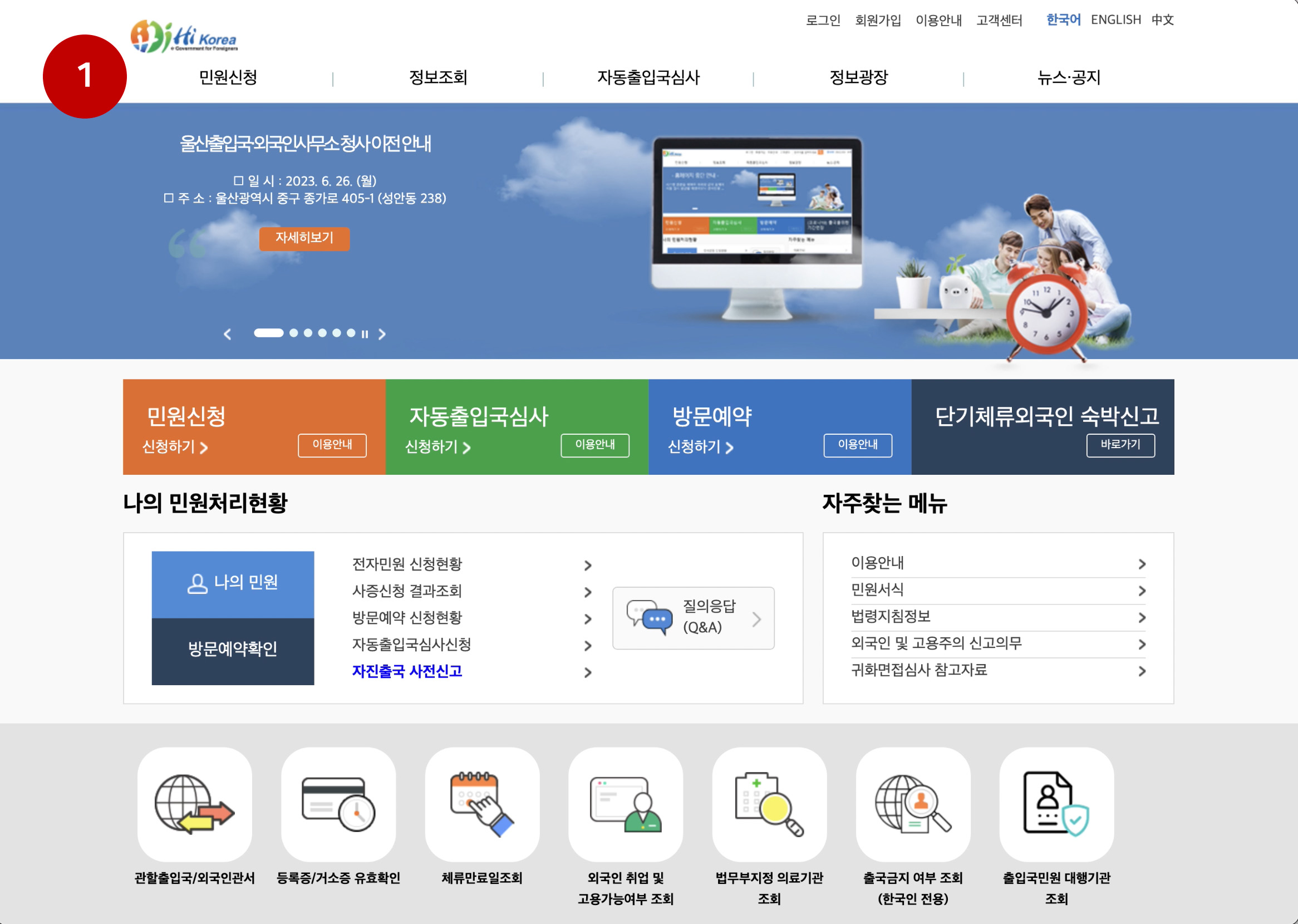
HiKorea Appointment Alternatives: Legal Ways to Solve Immigration Issues Without a Booking

When HiKorea (하이코리아) visit appointments are “fully booked” and you simply can’t secure one, I absolutely do not recommend paying money to buy an appointment (=potentially illegal), or grabbing a slot using someone else’s personal information. HiKorea explicitly warns that reserving an appointment using another person’s passport number/Alien Registration Number and other personal data may result in criminal punishment. (HiKorea)

Instead, if you apply the “legal routes” below in order, you’ll find that in quite a few cases you can avoid visiting altogether or get it done _even without an appointment_.

HiKorea


0) A 10-Second Check First: “Do I Really Need a Visit Appointment for My Task?”

According to Ministry of Justice notices, as of April 2021, in principle, stay-related immigration services are handled on the basis of visiting after making an appointment. (Ministry of Justice)
However, there are quite a few exceptions/alternative routes.

Common Cases You Can Resolve “Without” a Visit Appointment

  • Change of stay address (residence) report, passport change report → There is guidance saying these can be handled in person without a separate appointment. (Immigration Service)
  • Issuance of various certificates, picking up an Alien Registration Card, refugee application, extension of departure deadline, etc. are included as exceptions because on-site filing is unavoidable, according to the Ministry of Justice. (Ministry of Justice)

If you first check “Does what I’m trying to do fall under these?”, you can greatly reduce the stress of appointments.


1) Alternative 1: Finish via “e-Application (Online Filing)” Instead of Visiting

Just because you can’t get an appointment doesn’t mean you must go to immigration. HiKorea e-application offers quite a lot of tasks you can do online. For example:

  • Permission to extend period of stay for registered foreigners
  • Permission to change status of stay for registered foreigners
  • Permission/report for part-time employment for international students (D-2/D-4-1)
  • Change of stay address report, passport change report
    are included in the e-application list. (HiKorea)

Point: If “book an appointment and visit” is blocked, check first whether it’s possible via e-application.
(Especially for extension of stay/change of status, depending on circumstances there are cases that can be done online.)


2) Alternative 2: “Change of Stay Address (Residence)” Can Be Handled at the Community Service Center/District Office

This is something a lot of people truly miss.

  • Even local government guidance says that if a registered foreigner changes their place of stay, they can report it to the district office/eup-myeon-dong (community service center) or immigration. (gangnam.go.kr)
  • In principle, the reporting deadline is within 14 days from the date of moving in, under Article 36 of the Immigration Control Act. (Law.go.kr)

In other words, for many people who thought “I need a HiKorea appointment because of an address change,” it can be resolved by visiting the community service center.

Additionally, some local governments also 안내 online (HiKorea) reporting for change of stay address, while noting that

  • online reporting is usually processed within 3 days (excluding weekends/holidays),
  • if the deadline has passed, online reporting is not possible → a visit to the competent immigration office is required
    and they sometimes write this in detail. (Guro City Hall)

3) Alternative 3: “Certificates/Fact Certificates” Are Often Available Without an Appointment and Online

There are also many inquiries like “I need an immigration appointment because of documents to submit to my company/school.”

The Ministry of Justice explicitly listed issuance of various certificates such as the Certificate of Entry & Departure Records as an exception to the visit appointment requirement. (Ministry of Justice)
Also, the Ministry of Justice e-civil service (fact certificate issuance) guidance states that

  • Certificate of Entry & Departure Records, Certificate of Alien Registration, etc.
  • when applying online, an identity-verification certificate (public certificate, etc.) may be required
    and so on. (Minwon)

Point: “Appointment war because of a certificate” is often unnecessary in most cases.


4) Alternative 4: If “a Deadline Is Near and You Have No Appointment,” There Is an Official Route Explained by HiKorea

This is the most anxiety-inducing situation:
your period of stay expiration date / statutory reporting deadline is coming up, but you have absolutely no appointment.

The following wording appears in the HiKorea visit appointment notes:

  • If you visit after the deadline, a penalty/administrative fine may be imposed
  • Guidance that if there is no date available to book within the deadline, visit the competent office before the deadline passes (HiKorea)

In other words, it’s not “I have no appointment so I can’t do anything,” but rather
there is an official guide telling you to visit the ‘competent office’ within the deadline to receive guidance.

Preparation tips that work on-site (within legal/normal bounds)

  • A screenshot of the reservation screen showing no slots (with dates visible)
  • Documents that can show the expiration date/reporting deadline (stay expiry inquiry, notice, passport/ARC, etc.)
  • If possible, call 1345 first to have your case logged/get guidance

5) Alternative 5: If You Are an “Exception Category,” There Are Cases You Can Handle by Visiting Without an Appointment

In Ministry of Justice-related guidance posted on the Seoul Foreign Portal, it says that in principle a visit appointment is required, but exceptionally:

  • Pregnant women (including women who gave birth and spouses, within 1 year of childbirth)
  • Infants (applied by parents, within 1 year of birth)
  • Persons with severe disabilities
  • Seniors aged 70 or older
  • Cases where an appointment is impossible due to urgent hospital treatment (medical certificate/opinion letter, etc.)
    are 안내 that processing is possible even if you visit without an appointment. (Global Seoul)

Point: If you qualify, bringing supporting documents and going straight to your competent immigration office may be the legal shortcut.


6) Alternative 6: If You’re Blocked Due to Alien Registration (ARC) — Check for Notices on “Temporary No-Appointment Operation”

Major services like alien registration (report of domestic residence) tend to have especially severe appointment backlogs.
In HiKorea notices, it is stated that they will operate a “temporary no-appointment system for alien registration (report of domestic residence) applications”, and

  • Effective period: 2023. 1. 2. ~ until further notice
  • It says to check details via the attached file or by calling 1345. (HiKorea)

⚠️ Because this can vary by jurisdiction/eligibility/operating 방식, it’s safest to confirm with 1345 whether it actually applies to your competent office.


7) Alternative 7: Use an “Immigration Service Agency” Legally

If you truly don’t have time, or if language/documents are complicated, many people consider using an agent.

  • There is also a “Use Immigration Service Agencies” menu on HiKorea, and a related lookup menu exists. (HiKorea)
  • However, even with an agent, for services that require an appointment, guidance states that you must book it using the applicant’s (foreigner’s) personal details. (Immigration Service)

And to emphasize again,

  • Reserving a slot using someone else’s personal information → criminal punishment warning (HiKorea)
    Any place claiming it can “create an appointment for you” in this way carries major risk.

✅ To do it safely: verify it’s a registered agency that can be checked via HiKorea/official guidance → get the cost/scope/whether the applicant must appear in writing.


In HiKorea/immigration 안내 card news, it says

  • Appointment cancellations are possible up to 1 day before the visit
  • Same-day cancellation is not allowed
    as stated. (Immigration Service)

This means:

  • If someone cancels due to a schedule change, a slot (cancellation slot) may be released again.

Practical 운영 tips

  • There are cases where cancellations occur 1–2 days before your desired date, so checking frequently can be effective.
  • Since guidance also says appointments are not possible on the day of the visit, and that booking is available starting from the next day (i.e., don’t expect a spontaneous same-day appointment), it’s better to plan earlier. (Immigration Service)

9) Alternative 9: Use 1345 Not Just for “Information,” but “Strategy”

According to official Ministry of Justice guidance, 1345 (Immigration Contact Center) is

  • operated on weekdays 09:00–22:00
  • From overseas: +82-1345
  • At night (after 18:00), operations are mainly in Korean/English/Chinese
    and so on. (Ministry of Justice)

Useful question templates when calling 1345

  • “Please confirm whether my task is appointment-required or an exception.”
  • “There is no date available to book within the statutory deadline. If I visit under the HiKorea notes, what procedure will I be guided through?” (HiKorea)
  • “For alien registration (ARC), please tell me the jurisdiction 기준 for whether I’m eligible for the temporary no-appointment system.” (HiKorea)

At-a-Glance Summary: “Shortest Route by Situation”

  • Address change (change of stay address) → Community service center/district office or HiKorea online report (within the deadline) (gangnam.go.kr)
  • Passport change report → e-application or (depending on the guidance) may be handled by visiting without an appointment (HiKorea)
  • Certificates (entry/exit records / alien registration records) → online/on-site issuance (appointment exception) (Ministry of Justice)
  • Stay expiration imminent + no appointment → per HiKorea notes, visit the competent office before the deadline + consult 1345 (HiKorea)
  • Pregnant women/infants/severe disability/age 70+/emergency treatment, etc. → as an exception category, you may visit without an appointment with supporting documents (Global Seoul)
  • Alien registration (ARC) itself → check whether the temporary no-appointment notice applies (1345) (HiKorea)

How to Tell Illegal/High-Risk Methods Apart

✅ Legal/Recommended

  • e-application (online)
  • Use tasks available at the community service center/district office
  • Procedures for exception categories
  • When a deadline is near, visit your competent office following official guidance
  • Use registered agencies (based on official lookup)

❌ Risky/Not Recommended

  • “I’ll book an appointment using someone else’s passport number/ARC.”
  • “Selling/transferring appointment slots”
  • Suspicious appointment brokers who ask you to provide personal information

HiKorea states the possibility of criminal punishment for grabbing appointment slots using another person’s personal information. (HiKorea)


FAQ

Q1. If I go to immigration without a HiKorea appointment, will I always be refused?

In principle, stay-related services use a visit appointment system, but there are exception tasks (certificate issuance, picking up a registration card, etc.). Also, the HiKorea notes include wording that guides you to visit the competent office before the deadline if booking within the deadline is not possible. (Ministry of Justice)

Q2. There are “no available dates at all” before my period of stay expires. What should I do?

According to the HiKorea notes, if there is no date you can book within the expiration/statutory deadline, you should visit the competent office before the deadline passes. (HiKorea)
It can also help to call 1345 before you visit to receive case guidance. (Ministry of Justice)

Q3. Do I really need an immigration visit appointment to change my address (change of stay address)?

No. According to local government guidance, you can also report it at the district office/community service center. (gangnam.go.kr)
Also, by law, the reporting deadline is in principle within 14 days from the move-in date. (Law.go.kr)

Q4. If I’m pregnant/over 70, can I go without an appointment?

Ministry of Justice-related guidance says that pregnant women, infants (applied by parents), persons with severe disabilities, seniors aged 70 or older, emergency treatment, etc. may be processed exceptionally even if you visit without an appointment (supporting documents required). (Global Seoul)

Q5. Is it okay to “buy/transfer” an appointment slot?

It’s risky. HiKorea directly warns of the possibility of criminal punishment for grabbing appointment slots using another person’s personal information. (HiKorea)
We recommend legitimate routes (e-application/community service center/exception category/1345/registered agencies).

하이코리아 예약 없을 때

Webring Newsletter

K-Name Studio: Create your perfect Korean name based on your personality and style.
What’s My K-Beauty Personal Color?
WeBring Service : Provides personalized services to foreigners living in Korea
Exclusive offer: Introducing foreign car rental in Korea, WeBring-SoCar

Comprehensive Guide to Expired Foreign Passports in Korea: Visa, ARC, Banking, Communication Issues and Safe Resolution Steps

0) Expired Foreign Passports in Korea, 30-Second Conclusion:

  1. Visa (extension/permission of stay): From 2021.7.1, when granting stay permission in Korea, a standard has been implemented to grant the period of stay only within the passport’s validity period.
    → Example: Even if you’re eligible for a 2-year extension under the rules, if your passport has 6 months left, it may be extended for only 6 months. (Ministry of Justice)
  2. ARC (Alien Registration Card): Because the ARC’s “period of stay (expiry date)” is linked to the visa/stay permission period, if the visa extension becomes shorter, your ARC expiry also comes sooner (because the period of stay is shorter). (Ministry of Justice)
  3. Reporting after passport renewal (Immigration): Once you receive a new passport, it counts as a change in passport number/issue date/validity period, so in principle you must report the change within 15 days. There is also guidance that failure to report may result in an administrative fine (up to 1,000,000 KRW). (Easy Law)
  4. Banks & telecom: If your passport/stay information is “invalid or not up to date,” you can get blocked at the real-name verification/customer due diligence (KYC) stage, so new changes/high-risk transactions (like remittances) may suddenly become impossible. Financial institutions operate a customer due diligence system, and if due diligence cannot be completed, they may refuse new transactions and even 안내 that existing business relationships be terminated. (KOFIU)

1) Start with the Visa (Extension of Stay): “A Foreigner’s Passport Expiry Date Is Basically My Stay Cap”

✅ Why does a foreigner’s passport expiry directly hit visa extensions?

The Ministry of Justice (Korea Immigration Service / Immigration and Foreigners Policy Headquarters) announced that from 2021.7.1, when granting stay permission to foreigners in Korea, it would grant the period of stay only within the passport’s validity period. (Ministry of Justice)

In practice, this changes things like this:

  • Even if you apply for an extension of stay,
    → instead of “the maximum period allowed under the rules,”
    → your period of stay may be cut to only up to your passport’s expiration date (Immigration Service)

✅ What problems happen? (The most common real-world cases)

  • Extensions you used to get for 1–2 years get split into 3–6 months
  • Immigration errands (appointments/documents/fees): repeated costs increase
  • Companies/schools may handle administrative processing (employment/enrollment) more strictly because “the period of stay is too short” (internal policy issues)

Key point: If your passport validity is short, what collapses first isn’t “whether you can extend,” but “how long you can get.” (Ministry of Justice)

Expired Foreign Passports in Korea

2) Impact on the ARC (Alien Registration Card): “The Card Stays the Same, but the Expiry Date Comes Sooner”

The ARC isn’t a standalone card; it’s basically managed together with your stay permission (period of stay).
So if your passport is about to expire and your visa extension becomes shorter → your period of stay expiry gets brought forward → and as a result, managing your ARC expiry becomes much more strict. (Ministry of Justice)

And here’s the truly important point:

✅ If you don’t file a “passport change report” after getting a new passport?

Guidance says that registered foreigners must file an Alien Registration Details Change Report with the head of the competent immigration/foreigner office within 15 days if the passport’s number/issue date/validity period changes. (Easy Law)

  • Some materials say you can report it online (HiKorea) or by e-fax. (Immigration Service)
  • If you fail to report, guidance states an administrative fine of up to 1,000,000 KRW. (Immigration Service)

In other words, passport renewal → is not the end → you complete it only when you “update the immigration system” within 15 days. (Easy Law)


3) Impact on Banks: “You May Have an Account, but Get Blocked on Important Tasks”

Banks (and many financial institutions) operate a Customer Due Diligence (CDD) system from an anti-money laundering (AML) perspective. According to the Korea Financial Intelligence Unit (KoFIU), financial companies must identify and verify customers, and if customer due diligence cannot be completed, they should refuse new transactions, and if there is already an existing business relationship, they should even terminate the relationship. (KOFIU)

If your passport is close to expiring/expired, common issues at banks are typically the ones below (differences are huge by bank/branch/task).

Summary of “Practical Impact” by Banking Task

TaskRisk when passport is near expiryWhy it gets blocked (key)
New account/new cardMedium–highMay require “valid ID and stay information” at identity verification/KYC stage (KOFIU)
Overseas remittance/high-value transactionsHighIf classified as a high-risk transaction, enhanced due diligence/additional documents may be requested (KOFIU)
Request to re-perform identity verification (information update)MediumIf CDD information isn’t up to date, an update may be required (KOFIU)
Basic deposits/withdrawals & everyday transactionsLow–mediumExisting transactions may continue, but it’s common to get stuck on “changes/add-ons” (varies by institution)

Two Useful “Pieces of Evidence” in Practice

  • KB Star Banking (official guidance) says that for non-face-to-face account opening by foreigners, IDs are mainly 안내 as ARC/permanent resident card/domestic residence report card, and it says foreign passports are difficult to use. → Conclusion: Since “the key ID at banks is ARC-type documents,” ARC/period of stay management is important. (KB Kookmin Bank)
  • It’s on the financial investment side (still meaningful as on-the-ground 기준 sharing), but Shinhan Securities guidance says they accept passports/ARC as foreigner documents, yet may impose conditions such as requesting an additional certificate of employment if the period of stay shown in the passport is under 6 months. → The moment your period of stay becomes short, financial tasks can immediately switch into “additional documents mode.” (Shinhan Securities)

One-line summary: Passport expiry approaching is itself an issue, but the bigger issue is passport expiry → shortened period of stay → ARC/stay info not being up to date → a chain of blocks at bank KYC. (Ministry of Justice)


4) Impact on Telecom (Mobile Phones): Issues with “Activation/Name Change/Maintenance”

4-1. Documentation standards for major carriers (typically KT/SKT)

  • KT customer center guidance: For a foreigner signing up in person, an ARC is required; for an agent, they say additional documents such as ARC + passport are needed. (KT Help Center)
  • SKT (T world) FAQ: For new 가입 by foreigners, general customers are required to present an ARC as the applicant, and documents vary by type. (T World)

In other words, telecom—like banks—also has a structure where the “practical master key is the ARC (Alien Registration Card).”

4-2. The real key rule: If “60 days or less until your period of stay expires,” restrictions on standard mobile 가입

Easy Law (government 생활법령정보) explains in its guidance on mobile plans for foreign students that
if there are 60 days or less remaining until the end of your lawful period of stay in Korea, it’s difficult to 가입 a standard mobile plan, and in that case you can use a prepaid mobile service. (Easy Law)

The point here is this:

  • As mentioned earlier, if the period of stay is granted only up to the passport’s validity period (Ministry of Justice)
  • The shorter your passport validity, the shorter your period of stay becomes
  • And if your period of stay becomes shorter, the probability of triggering the telecom “60-day rule” when signing up increases. (Easy Law)

So, a passport nearing expiry can affect your very eligibility to sign up even in “telecom.”


5) So What Should You Do First? (The Safest Order)

When your passport is nearing expiry, the safest practical order is usually as follows.

✅ Recommended order (minimum-risk route)

  1. Renew your passport (your embassy/consulate)
  2. After receiving the new passport, report the passport change within 15 days (immigration registration change report) (Easy Law)
  3. Then extend your period of stay / apply for other permissions (if needed)
    • You need to do it after your passport validity has been extended so that “your extension period doesn’t get cut.” (Ministry of Justice)
  4. Update your bank customer information (if needed): keep passport/stay info current
    • Under customer due diligence rules, if your information isn’t current, tasks can be blocked. (KOFIU)
  5. If you plan telecom name/info changes or an additional line, handle it before the “60 days remaining on period of stay” rule kicks in (Easy Law)

6) Action Plan by Situation (What to Do Today)

A. 6+ months left until passport expiry

  • “It may look fine now,” but if you have visa extensions/company paperwork/bank tasks coming up,
    → it’s ultimately the least effort to renew your passport first before applying for an extension. (Ministry of Justice)

B. 3–6 months left until passport expiry

  • When applying to extend your period of stay, it may be cut to “until your passport expiry date” rather than “the period you want.” (Immigration Service)
  • If possible, recommend the route: renew passport first → report change within 15 days → then extend (Easy Law)

C. Within 60 days until your period of stay (visa/permission) expires (especially mobile phone issues)

  • There is guidance that standard mobile plan 가입 may be restricted. (Easy Law)
  • If you need major tasks like activation/name change at this point,
    → the priority is to stabilize your status by “securing your period of stay” as quickly as possible (passport → extension). (Ministry of Justice)

D. Your passport has already expired

  • Leaving/returning to Korea becomes essentially difficult immediately (due to airline/immigration procedures),
  • And even within Korea, the number of tasks requiring a passport (finance/telecom/school/company) increases.
  • Order to resolve: emergency passport reissuance (embassy) → report passport change (within 15 days) → sort out stay-related tasks (Easy Law)

7) “One-Page” Checklist (for printing/copy-paste)

  • Check your passport expiry date (D-xxx)
  • Check tasks you must do within the next 3 months
    • Extension of stay/change of status/planned re-entry
    • Banking: planned new account/loan/overseas remittance/card issuance
    • Telecom: planned new activation/name change/additional line
  • Renew your passport (embassy/consulate)
  • After receiving your new passport, report the passport change to immigration within 15 days (Easy Law)
  • If you need a visa (period of stay) extension: apply when your passport validity is sufficiently long
    • The period of stay may be granted only within the passport validity period (Ministry of Justice)
  • If you plan a new telecom sign-up/change: check whether the “within 60 days until period of stay expires restriction” applies (Easy Law)

Expired Foreign Passports in Korea FAQ

Q1. If my passport expiry date comes before my visa (period of stay) expiry date, can I still extend my visa?

Whether it’s possible depends on the case, but the important point is that the period of stay can be granted only within the passport’s validity period. So even if you extend, it may be cut not to “the period you want,” but to the passport’s expiration date. (Ministry of Justice)

Q2. If I renew my passport (get a new passport), do I have to report it to immigration?

Yes. Guidance says that registered foreigners must file a change report for alien registration details within 15 days when there is a change in passport number/issue date/validity period. (Easy Law)

Q3. What happens if I don’t report a passport change?

Immigration guidance materials state that violating the obligation to report changes to alien registration details may result in an administrative fine of up to 1,000,000 KRW. (Immigration Service)

Q4. What does banking have to do with passport expiry?

There is guidance that financial institutions must identify and verify customers through customer due diligence (CDD), and if due diligence cannot be completed, they must refuse new transactions or terminate existing transactions. If your passport/stay information is expired or not up to date, you can get blocked in this process. (KOFIU)

Q5. Is it true that for mobile phones (telecom), it’s not passport expiry but the “period of stay” that matters?

Yes. Easy Law (government 생활법령정보) provides guidance that if there are 60 days or less remaining until your lawful period of stay expires, standard mobile plan 가입 may be restricted. (Easy Law)
And because the period of stay can be limited up to the passport’s expiration date, a passport nearing expiry can ultimately affect telecom sign-ups too. (Ministry of Justice)

Q6. What documents do foreigners need at telecom companies?

KT and SKT official guidance generally requires the Alien Registration Card (ARC) as the 기본 document for foreigners, and says that additional documents such as a passport may be required depending on the situation (e.g., an agent visit). (KT Help Center)


외국인 여권 만료

Webring Newsletter

K-Name Studio: Create your perfect Korean name based on your personality and style.
What’s My K-Beauty Personal Color?
WeBring Service : Provides personalized services to foreigners living in Korea
Exclusive offer: Introducing foreign car rental in Korea, WeBring-SoCar
Korea visa extension documents perfect checklist: Essential Requirements for D-2 and E-Series Visas

In this post, “visa extension” generally refers—using standard Korea Immigration terminology—to Permission to Extend Period of Stay. It doesn’t mean changing your status of stay (visa type) itself; it means keeping your current status (D-2 or E series) and extending the duration. Let’s take a calm, step-by-step look at Korea visa extension documents.


1) When can you apply? (Timing is where rejections start)

Extending your period of stay is 안내되어 as available from 4 months before your period of stay expires, and you must apply by the expiration date (for e-application, by the day before the expiration date).

👉 Conclusion: Once you can see your expiry date coming, the safest approach is not “do it all at the last minute,” but to start preparing the moment the 4-month window opens.


2) Where/how do you apply? (Online vs. in-person)

  • E-Application (HiKorea): For statuses eligible for e-application, it is 안내되어 that you can apply online.
  • In-person application (competent Immigration Office/Branch Office): For in-person applications, many resources 안내되어 making a visit reservation through HiKorea. (Easy Law)

The Ministry of Justice also 안내되어 that you can handle permissions such as extension of period of stay without a visit through HiKorea and that there is also a 20% fee reduction (the applicable scope may vary depending on which services/eligibilities are available for e-application). (Ministry of Justice)

Hours for using e-application are also 안내되어 separately (weekday operation). (HiKorea)

Korea visa extension documents


3) One-page checklist of “common required” items for D-2 / E series

The core common documents specifically listed in immigration 안내자료 are just four items.

A. Documents (minimum required 4 items)

  • Integrated Application Form (Appendix No. 34) – check “Permission to Extend Period of Stay” + signature/contact info required
  • Passport
  • Alien Registration Card (ARC)
  • Proof of residence (address verification) (lease contract, dorm confirmation, accommodation provision confirmation, etc.)

B. Cost (the point almost everyone gets confused about)

  • Fee: KRW 60,000 (Permission to Extend Period of Stay) (Law.go.kr)

Note: “Issuance/reissuance of an Alien Registration Card (card) KRW 35,000” and visa extension (extension of period of stay) KRW 60,000 are different fees. (Law.go.kr)

C. What you additionally need when applying online (e-application)

  • Prepare scanned/photographed files (PDF/JPG, etc.) (passport, contract, etc.)
  • An identity verification method (joint certificate, etc., depending on system requirements)

4) For D-2 (study abroad) extensions, additional documents (official 기준)

According to the Enforcement Rule of the Immigration Control Act (table of attached documents), the key additional documents for a D-2 extension of period of stay can be summarized as follows.

D-2 additional documents (official)

  • Certificate of Enrollment
    • If you are preparing a master’s/PhD thesis, it is 안내되어 that you may substitute a recommendation letter from your academic advisor or a confirmation of government-invited scholarship recipient.
  • Financial proof documents (tuition/living expenses)
  • (If conducting certain research) Documents proving research activities

For D-2, online extension is also frequently 안내되어

There are cases where university notices 안내되어 extending the D-2 period of stay via HiKorea e-application (operating methods may vary by school/jurisdiction). (grad.aks.ac.kr)


5) For E series (employment) extensions, additional documents (official 기준)

There are many E-series categories, so it’s not that “all E are identical,” but if you look at the official table of attached documents, the backbone of an extension is ‘employment relationship + business entity proof + (if applicable) additional requirements’.

Below, focusing mainly on E-2 / E-3 / E-4 / E-5 / E-7 which especially come up often in practice, I’ve extracted only the items that correspond to extension (permission to extend period of stay).

E-2 (Conversation Instructor) extension

  • Employment contract
  • Business Registration Certificate (for corporations, a Certificate of All Registered Matters)

E-3 (Research) extension

  • Employment contract
  • Business Registration Certificate (for corporations, a Certificate of All Registered Matters)

E-4 (Technological Guidance) extension

  • Dispatch order or certificate of employment
  • Related documents such as proof of technology introduction contract/reporting (within the applicable scope)
  • Business Registration Certificate (for corporations, a Certificate of All Registered Matters)

E-5 (Professional Employment) extension

  • Employment contract
  • Business Registration Certificate (for corporations, a Certificate of All Registered Matters)

E-7 (Specially Designated Activities) extension

  • Employment contract
  • (For applicable occupations) Letter of Guarantee (Personal Guarantee)
  • Certificate of Payment Details

One-line summary: For the E series, it doesn’t 끝 with “your documents” alone—company documents (business registration/corporate registry/payment details, etc.) also move together.


6) The 8 most common mistakes that trigger “supplement requests” (D-2/E common)

  1. Wrong application timing
  • You prepare too early (before the 4-month window) and end up having to redo it, or you rush right before expiration and miss items. (Possible from 4 months before / e-application by the day before)
  1. Missing checkmark/signature/contact info on the Integrated Application Form (Appendix No. 34)
  • If you forget to check “Permission to Extend Period of Stay” or there’s no signature, it becomes “fill it out again on the spot.” (Law.go.kr)
  1. Weak proof of residence (unclear address)
  • If the contract address is ambiguous, your name doesn’t appear at all, or the accommodation-provision confirmation is flimsy, requests for supplement happen a lot.
  1. Not bringing original passport/ARC (bringing only copies)
  • The common documents include the passport and ARC themselves.
  1. D-2: Certificate of Enrollment/financial proof not being the latest version
  • For a D-2 extension, proof of enrollment and finances are 핵심.
  1. E series: Employment contract period/terms mismatch
  • If it’s an extension but the contract has already ended, or if the company information doesn’t match the latest business registration, you can end up having to prepare everything again.
  1. E-7: Missing Certificate of Payment Details/Letter of Guarantee (if applicable)
  • For E-7, attached documents for extension explicitly list items such as a Certificate of Payment Details.
  1. Online application but files are blurry/missing/pages cut off
  • For e-application, “upload quality” is document quality. In particular, it’s common to cut off parts of the contract (address/signature page).

7) (Practical tip) This is the easiest way to bundle your documents

Common to both D-2 / E: If you organize your submitted files/paper documents in the order below, it’s easier for the officer to review and your chance of a supplement request goes down.

  1. Integrated Application Form (Appendix No. 34)
  2. Passport (bio page)
  3. ARC front/back
  4. Proof of residence (contract/confirmation)
  5. If D-2: Certificate of Enrollment → financial proof → (if applicable) advisor recommendation letter/research proof
  6. If E series: employment contract → business registration/corporate registry → (if applicable) payment details/letter of guarantee
  7. Prepare fee payment (KRW 60,000) (Law.go.kr)

Korea visa extension documents FAQ

Q1. When can I apply for a D-2/E visa extension?

Extending your period of stay is 안내되어 as available from 4 months before expiration, and you must apply by the expiration date (for e-application, by the day before).

Q2. What are the “common documents” for a D-2/E visa extension?

The common documents are the Integrated Application Form (Appendix No. 34), passport, Alien Registration Card, and proof of residence.

Q3. How much is the visa extension fee?

The fee for permission to extend period of stay is 안내되어 as KRW 60,000. (Law.go.kr)

Q4. What do I need additionally for a D-2 (study) extension?

Based on the official attached-document standards, the 핵심 is a Certificate of Enrollment + financial proof documents (tuition/living expenses), and there is guidance that cases like thesis preparation can be replaced with an advisor recommendation letter (if applicable).

Q5. For an E-series (work) extension, what company documents are usually needed?

It varies by category, but if you look at the extension attached-document table, the combination of employment contract + business registration (corporate registry) appears frequently. Example: E-2, E-3, etc.

Q6. Can I extend online (HiKorea e-application)?

It is 안내되어 that for statuses eligible for e-application, online application is available. However, eligibility may vary by status.


If you want, I can compress this further into a one-page sheet showing, by case type for “proof of residence documents (home contract/dorm/company housing/friend’s place)”, the document combinations that most often result in the fewest supplements for D-2 and for the E series respectively.

Visa extension documents

Webring Newsletter

K-Name Studio: Create your perfect Korean name based on your personality and style.
What’s My K-Beauty Personal Color?
WeBring Service : Provides personalized services to foreigners living in Korea
Exclusive offer: Introducing foreign car rental in Korea, WeBring-SoCar