Seoul City Tour Recommendations: 5 Essentials for First-Time Travellers

Seoul is a city that never fails to fascinate anyone planning a trip to South Korea. Its mix of ancient palaces and modern buildings, traditional markets and chic shopping malls, and lively alleyways that bustle day and night is unique among cities around the world. So, where should a first-time visitor to Seoul start and how should they get around? In this article, we’ve put together five easy-to-follow Seoul city tour recommendations that cover some of the most popular neighbourhoods, such as Myeongdong, Itaewon, and Hongdae, as well as iconic sites like Gyeongbokgung Palace and Namsan Tower. We’ve also included transport options and tips, so if you’re planning a trip to Seoul, this is the guide for you.


1) Gyeongbokgung Palace-Bukchon Hanok Village Course: Tradition and History

The beauty of traditional palaces and hanoks

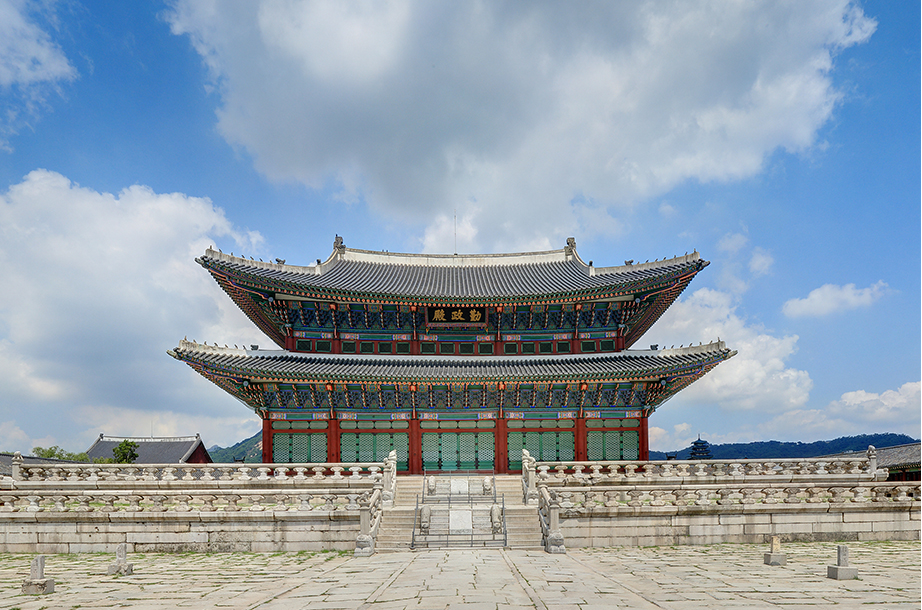
If you want to start your Seoul City Tour with traditional culture, we recommend the Gyeongbokgung Palace and Bukchon Hanok Village tour. Gyeongbokgung Palace is the flagship palace of the Joseon Dynasty and stands imposingly in front of Gwanghwamun Gate. Once inside, the palace is lined with stunningly named halls such as Geunjeongjeon, Sagjeongjeon, and Gyeonghoeru, and the tranquil scenery makes you feel like you’ve stepped back in time to the Joseon Dynasty.

After exploring Gyeongbokgung Palace, head outside the palace to Bukchon Hanok Village. The rows of hanok roofs in the alleyways are beautiful, and many foreigners use it as a photo spot for its traditional feel. Some of the hanoks are open for cultural activities, such as trying on hanbok or drinking tea. For first-time travellers, a half-day tour from Gyeongbokgung Palace to the National Folk Museum to Bukchon Hanok Village is an easy and rewarding route.

Transport and tipping

Take Exit 5 of Gyeongbokgung Station (Subway Line 3) and you’ll see Gwanghwamun right away. The entrance fee is 3,000 won for adults, but if you wear a hanbok, you can enter for free. If you sign up for the Gyeonghoeru Special Viewing Programme (held seasonally) in the morning, you can see the inside of Gyeonghoeru, which is normally off-limits. Bukchon Hanok Village is close to Anguk Station (Line 3) Exit 1, so after visiting Gyeongbokgung Palace, you can walk along the nearby road towards Anguk Station.
Seoul City Tour Recommendations


2) Myeongdong-Namsan Tower Course: The epitome of shopping and city views

Myeongdong Street, a shopping mecca

The second recommended course on our Seoul city tour is Myeongdong, Korea’s most famous shopping and gourmet street. It is lined with cosmetics road shops, fashion brand stores, and street food stalls, and is bustling with activity every day. Foreign tourists can browse Korean cosmetics and K-beauty brands to their heart’s content here, and many stores offer translation assistance. You can also find a variety of street food such as tteokbokki, sundae, and hotteok along the way, so you can quickly get a taste of Korea.

It’s also worth visiting Myeongdong Cathedral. This Gothic-style building gives Seoul a European feel, and is an iconic centre of Korean Catholicism. The interior is quaint and the surrounding area is a great place to sit and relax.

Nighttime trip to Namsan Tower (Seoul Tower)

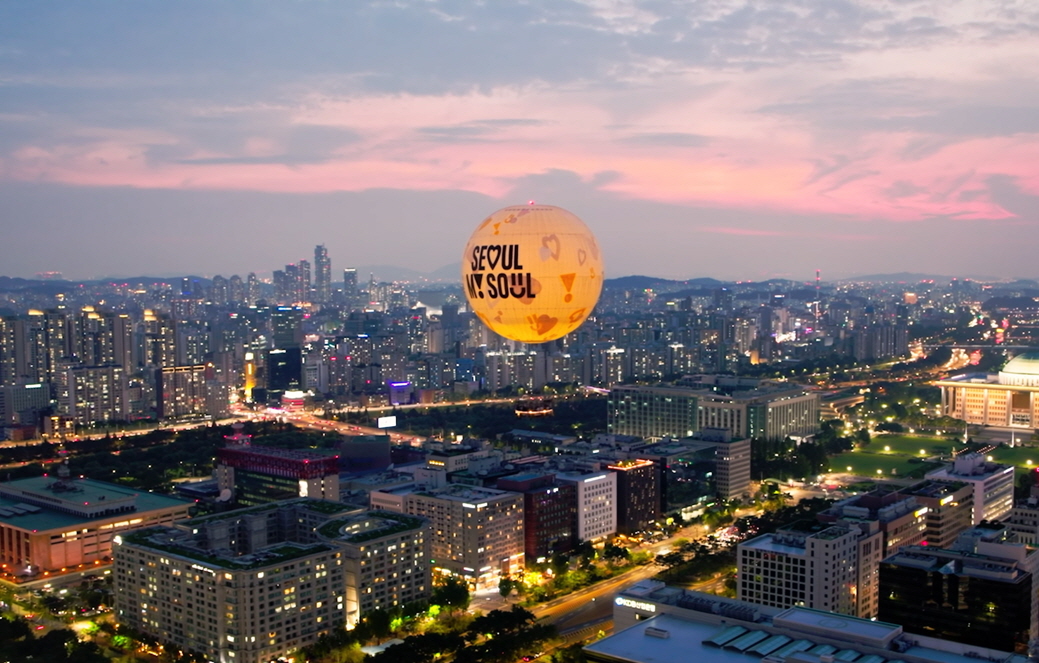
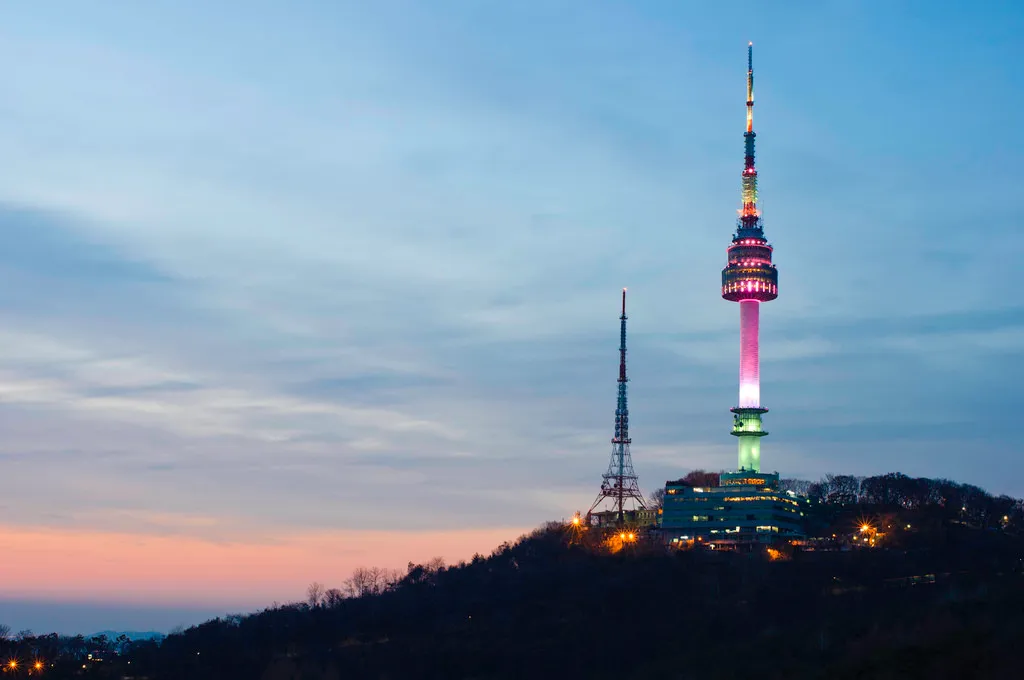
Once you’ve done some shopping in Myeongdong, take a 10-15 minute walk to the cable car boarding point and head up to Namsan Tower. It’s a unique experience to take a cable car up the mountain and admire the city skyline, and when you reach the top, the Seoul Tower observation deck awaits. If you go up in the evening, you’ll be rewarded with a spectacular night view of Seoul. Couples can also visit the ‘Lock of Love’ section.

Transport and tipping

The centre of Myeongdong shopping is near Exit 6 of Myeongdong Station (Subway Line 4). You can walk to the Namsan Cable Car boarding point from here, but it can be a steep climb. For convenience, you can also head towards Exit 3 of Myeongdong Station and take a circular bus (02, 05, etc.) or taxi to the cable car. Admission to the Namsan Tower Observatory costs around 10,000 won (for adults), and the cable car round-trip is similarly priced, so keep this in mind when planning your budget.
남산


3) Itaewon-Hangang Park Course: A blend of global culture and relaxation

Itaewon, multinational food and culture

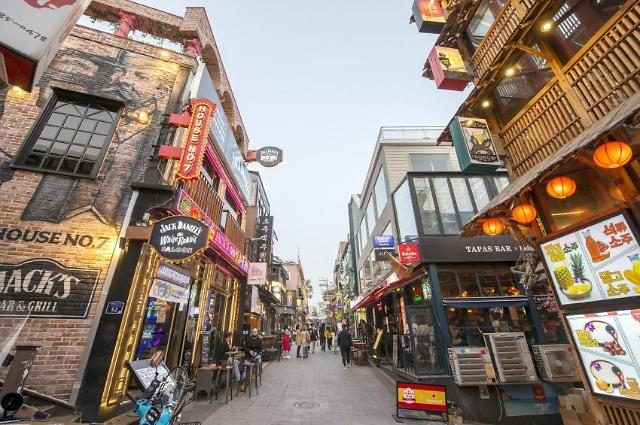
The third recommended course on our Seoul city tour is Itaewon, the most cosmopolitan neighbourhood in Seoul. Itaewon is home to many international restaurants, cafes, and bars, and the large number of foreign residents gives the neighbourhood a very exotic atmosphere. It’s not uncommon to find bars hosting live music or DJ parties on weekend evenings, and during the day you’ll find European-style cafes and exotic fashion shops in every alleyway. Even if you’re a novice traveller, you’ll feel relatively comfortable getting around thanks to the many English-language signs.

If you head towards Itaewon Gyeongridan-gil, you’ll find cute shops on the hill, and if you head up to Hwanghae Village, you’ll find cafes with great views. The area is quite hilly, so comfortable shoes are recommended.

Relaxing at Han River Park

After your Itaewon tour, head to one of the nearby Han River parks. For example, from Itaewon Station, it’s a 10-minute taxi ride to the banks of the Han River, and you can choose from Yeouido, Banpo, and Jamwon districts. I recommend Banpo Hangang Park for first-time travellers. You can see the famous Banpo Moonlight Rainbow Fountain (fountain show), grab a bite to eat at a convenience store or food truck, and sit by the river and enjoy the panoramic view of Seoul.

Transport and tipping

Itaewon Station (Subway Line 6) Exit 1 is near the centre of the shopping district. After eating here, it’s easy to get to Hangang Park by taxi or bus. Banpo Hangang Park is a 10-minute walk from Express Terminal Station (lines 3-7-9), or a 15-minute taxi ride from Itaewon. It’s relatively safe as it gets busy late at night, but make sure to check when public transport stops.
이태원

4) Hongdae-Hapjeong Course: A street full of youth and art

The free-spirited atmosphere of the streets in front of Hongdae

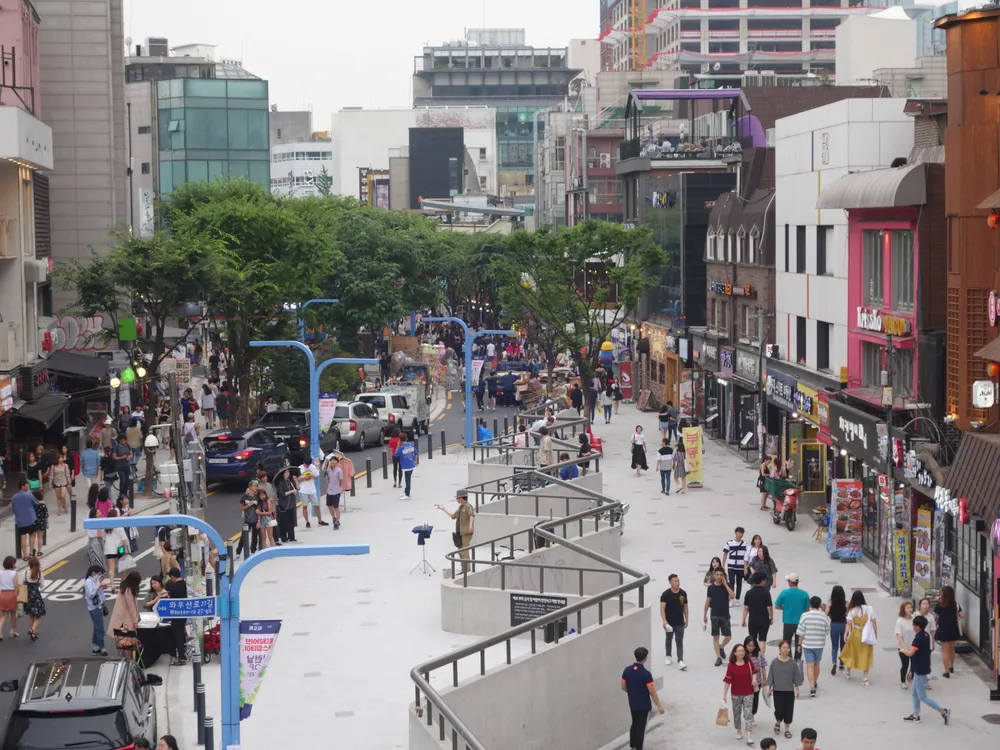
When it comes to Seoul city tour recommendations for younger travellers, Hongdae is the place to be. The area around Hongik University is always full of energy, with indie music and street performers, unique fashion shops, and quirky cafes. Busking and dance performances are often held on the streets, making for a lively nightlife experience.

Hongdae is also a great place to browse artistic knick-knack shops, second-hand bookshops and independent bookstores. You can spend your days strolling through the cute themed cafés and tree-lined streets, and your evenings at live clubs and parties. The large foreign population means that many places have English menus, and if you get lost, young people will be happy to show you the way.

Sums – exploration leading to constants

A short walk from Hongdae will take you to Hapjeong and the Sangsu Station area. This area is relatively quiet and has many restaurants and cafes with a sophisticated atmosphere, giving it a different flavour from the bustling centre of Hongdae. The area around Mapo Gyeongui Seon Forest Road Park is a popular date spot for young people, as it’s easy to walk and makes for great photos. Instead of shopping malls, it is recommended to visit small designer shops and workshops to find unique souvenirs.

Transport and tipping

Hongdae Entrance Area (Line 2, Gyeongui-Jungang Line, Airport Railway) Exit 9 is the easiest way to get to Hongdae Main Street. Visit during the day when it’s not crowded and take your time to explore, and in the evening, the street performances and nightlife become more active. You can also walk to Hapjeong Station (Line 2-6) or Sangsu Station (Line 6) and explore the alleyways to discover unexpected art spaces. Comfortable shoes and public transport are recommended.
홍대


5) Jongno-Changdeokgung-Iksun-dong Course: An alley where old meets new

Changdeokgung Palace and Biwon, a historical walk

Finally, if Gyeongbokgung Palace is too popular for you, try Changdeokgung Palace, another royal palace of the Joseon Dynasty. Designated as a UNESCO World Heritage Site, Changdeokgung is the best-preserved of the Joseon palaces and is renowned for the beauty of its pavilions. You can pre-book a tour of the backyard and walk through the secretive space, which is a combination of extensive forests, ponds, and pavilions.

After your tour of Changdeokgung Palace, take a stroll through Jongno neighbourhood to discover old bookstores, stationery shops, and traditional teahouses. Near Jongno 3-ga is Iksun-dong Hanok Street, which has become a hotspot in recent years for renovated hanok cafes, restaurants, and small shops. If you take a quiet stroll through the alleyways, you’ll find a mix of old hanok charm and modern design.

Iksun-dong Atmosphere

Iksun-dong is not a large neighbourhood, but it embodies the ‘hanok + retro sensibility’ with unique shops in every alley. There are fusion restaurants, traditional dessert cafes, and quirky general stores all housed in renovated hanoks. We recommend eating at Iksun-dong for lunch or dinner, and tasting makgeolli or traditional liquor. The atmosphere is tranquil and photogenic, so it’s perfect for travellers who love social media.
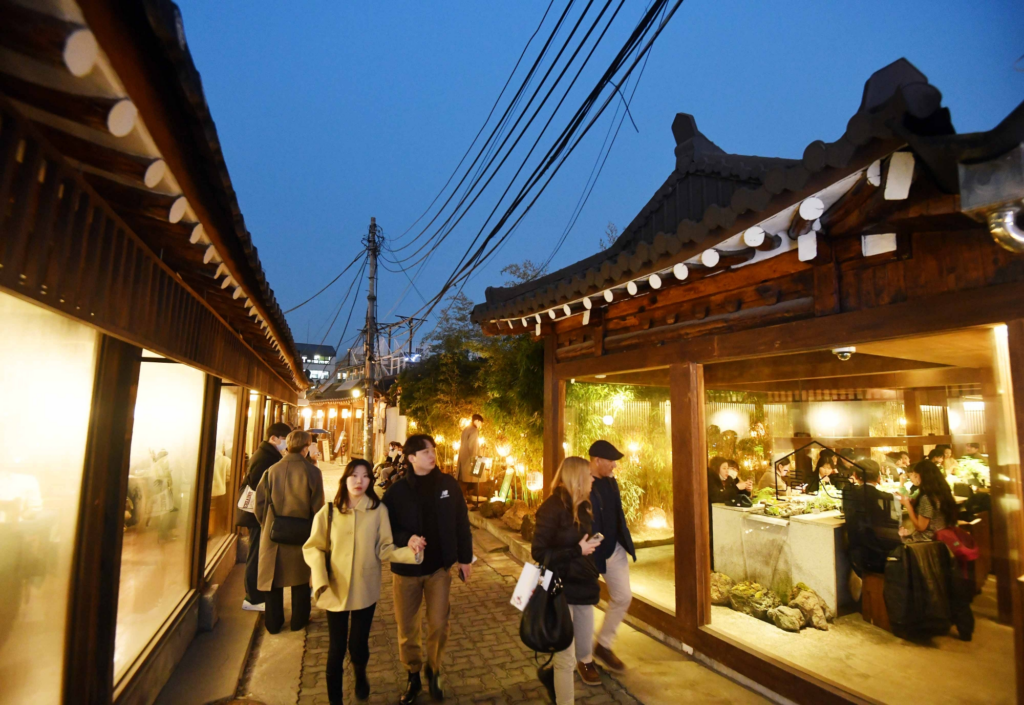
익선동

Transport and tips

There is no Changdeokgung Station, but the entrance to Changdeokgung Palace is a 5-minute walk from Exit 3 of Ankguk Station (Line 3). Admission is 3,000 won for adults (extra charge for patrons), and it’s best to book online. After seeing Changdeokgung Palace, walk towards Anguk Station or down Jongno 3-ga Station to Iksun-dong Street. Iksun-dong is a narrow alley with many buildings, and it gets crowded with visitors on weekends. There can be long queues at restaurants and cafes, so it’s best to plan your visit with plenty of time to spare.


Conclusion: Seoul city tour recommendations for first-time travellers

So, there you have it, our top 5 recommendations for the most basic and satisfying Seoul city tours. Each route – Gyeongbokgung Palace to Bukchon, Myeongdong to Namsan Tower, Itaewon to Hangang Park, Hongdae to Hapjeong, Jongno to Changdeokgung Palace, and Iksun-dong – has its own charms, and while it may be difficult to see them all in a single day, you can spread them out over two or three days to get the most out of your trip. For transport, we recommend using a mixture of subway and buses, and a good mix of taxis to avoid leg fatigue.

First-time travellers may be concerned about language and navigating, but Seoul is relatively well signposted in English and has plenty of tourist information centres. You can pick up a free brochure with a map at the tourist information centre near each course, and if you get stuck, you can ask a police officer or local citizen for help. You don’t need to be fluent in Korean to communicate, so don’t be afraid to explore.

Lastly, be sure to check the official website or social media for the latest information on each tourist attraction, as opening hours and closures may have changed since the pandemic. There’s so much more to see and do in Seoul, but these five courses are a great place to start and soak up the city’s atmosphere. The city’s combination of vitality, tradition, and modernity will make your visit more than just a sightseeing trip, but an unforgettable one.

Webring Newsletter

K-Name Studio: Create your perfect Korean name based on your personality and style.
What’s My K-Beauty Personal Color?
WeBring Service : Provides personalized services to foreigners living in Korea
Exclusive offer: Introducing foreign car rental in Korea, WeBring-SoCar
Foreigners Renting Cars in Korea: is it possible with an international driving licence?

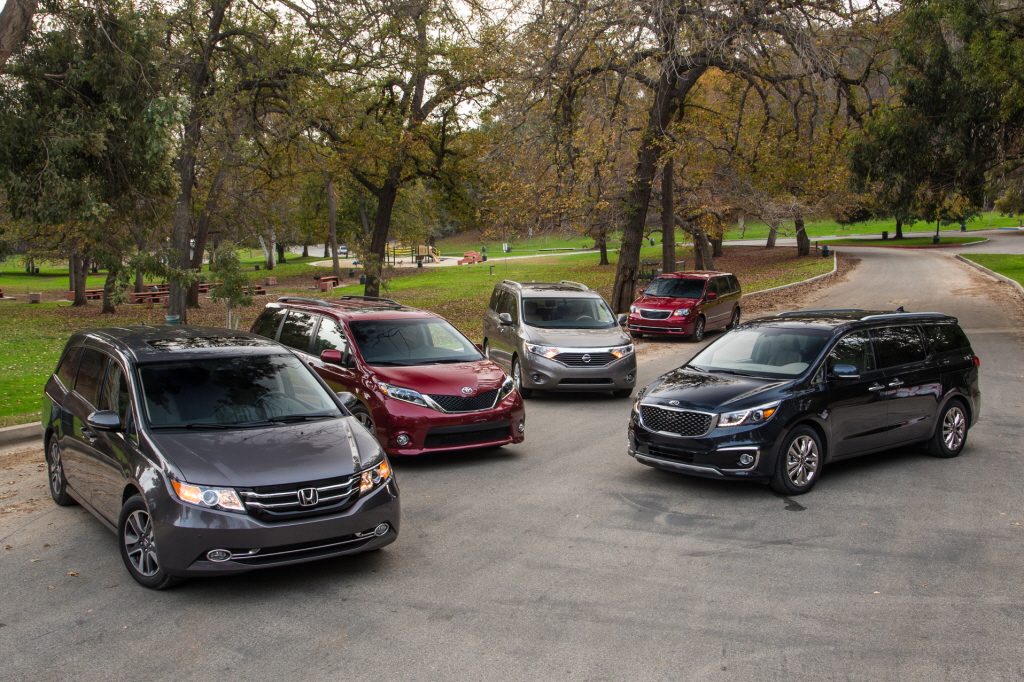
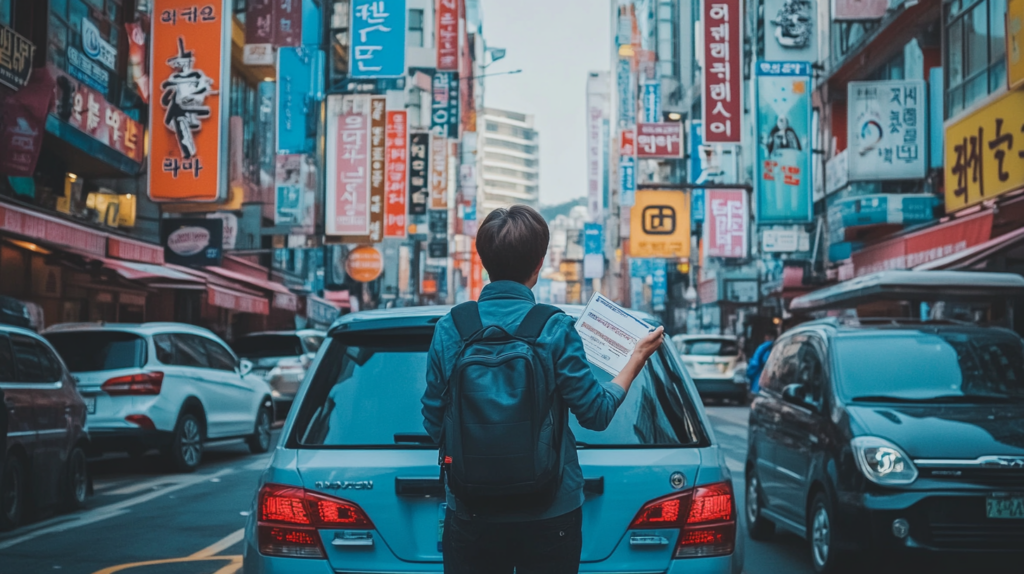
Many foreigners visiting Korea often need a private vehicle during their stay. For example, having a car can be very useful for exploring various regions while sightseeing or for convenient transportation during a short-term study program or business trip. One of the most common questions is, “Can foreigners renting cars in Korea with a foreign driver’s license?” In fact, in Korea, if you hold an international driving permit or a driver’s license from certain countries, you can rent a car relatively easily.

However, the process may seem complicated if you’re not familiar with it, and you need to consider issues such as insurance and safety, which require thorough preparation. This article will provide a detailed overview for those who wish to rent a car in Korea with a foreign driver’s license, including the differences between international and domestic licenses, basic conditions for renting a car, insurance coverage, and key precautions for short-term rentals.

Foreigners Renting Cars in Korea: International Driving Permit vs. Domestic License, Which One Do You Need?

To drive in Korea, there are two main options. The first is to use an “International Driving Permit” (IDP), and the second is to obtain a Korean “domestic driver’s license” or exchange your home country’s license for a Korean license.

Convenience and Limitations of an International Driving Permit

The simplest and most common method is to prepare an International Driving Permit (commonly referred to as an IDP) before arriving. An IDP can be easily issued by the traffic-related authorities in your home country (e.g., the DMV in the U.S. or administrative agencies in European countries). While the procedures differ slightly by country, it usually involves presenting your local driver’s license and paying a nominal fee, and it can typically be issued within a few days.

Korea is a member of the Geneva and Vienna Conventions, which recognize international permits issued by member countries. As such, an IDP issued by these countries is valid for short-term driving in Korea during its validity period, which is usually one year. However, an important point to note is that it is recognized only within one year from your date of entry into Korea. Therefore, if you plan to stay in Korea for an extended period (e.g., over a year), an IDP alone may not suffice.

Foreigners Renting Cars in Korea

Obtaining or Exchanging for a Domestic License

Even if you can drive with an IDP, those planning to stay in Korea long-term may consider obtaining a domestic license or exchanging their home country’s license for a Korean license. For certain countries, this exchange process can be done through a simple aptitude test (such as a vision test) at the Korean Road Traffic Authority. Once you have a domestic license, it becomes much easier to drive freely and simplifies the paperwork required for renting a car.

Foreigners Renting Cars in Korea: Essential Conditions for Renting with a Foreign Driver’s License

The basic requirements for short-term car rentals in Korea are simpler than you might think. Most rental companies in Korea require a “valid International Driving Permit” and the “original driver’s license from your home country.” You’ll also need other documents to verify your identity, such as your passport (or alien registration card) and a payment method (e.g., credit card). However, rental companies or insurance regulations may impose specific age or driving experience restrictions. For instance, some may require drivers to be at least 21 years old with over a year of driving experience. Therefore, it’s best to check with the rental company’s website or customer service in advance.

Additionally, if you have no prior experience driving in Korea, it is crucial to familiarize yourself with the basic traffic laws and driving culture. Korean roads have unique traffic features, such as signal systems that may differ by country, driving rules on expressways, and special lanes like dedicated bus lanes. To adapt to an unfamiliar traffic environment, it’s helpful to set up GPS before driving, learn about road signs, and understand how to use mobile navigation apps for safe driving.

Foreigners Renting Cars in Korea: Importance of Insurance for Short-Term Rentals

One of the most critical considerations when renting a car in Korea as a foreigner is “insurance coverage.” When renting a car, collision damage waiver (CDW) or third-party liability insurance is often included. However, not all companies offer the same coverage, so it is essential to review the insurance terms carefully.

For example, the basic car insurance included in the rental fee may provide limited coverage for vehicle damage. Rental companies often offer additional insurance options, where paying an extra daily fee of 10,000–20,000 KRW significantly expands the coverage. Since the cost of handling traffic accidents in Korea can be higher than expected, securing adequate insurance is advisable to prepare for any unforeseen accidents or damages.

Foreign drivers may feel a higher risk of accidents due to unfamiliar roads, signs, or traffic flow. Therefore, it is recommended to choose the highest level of insurance coverage for short-term rentals. If you are sensitive to road conditions or a novice driver, ensure that the insurance covers injury compensation and vehicle damage adequately.

Foreigners Renting Cars in Korea: The Actual Rental Process and Precautions

The process of renting a car in Korea with a foreign driver’s license is relatively straightforward. First, make a reservation through the website or app of the desired rental company (be it a large or local provider). Many companies offer English-language services, and some also support other languages, such as Chinese or Japanese. After selecting the rental date and time, pick-up and drop-off locations, and the type of vehicle, the rental company will confirm your reservation via email or text message.

When picking up the car, bring your International Driving Permit, the original driver’s license from your home country, your passport or alien registration card, and the credit card you’ll use for payment. Missing documents or discrepancies in reservation details may cause issues on-site, so double-check your reservation details in advance. During vehicle handover, thoroughly inspect the car’s exterior. Take photos of any existing scratches or damages to avoid unnecessary disputes later.

If you receive the car with a full fuel tank, it is standard practice to return it with a full tank as well. Failing to do so may result in additional charges after drop-off. Before starting your trip, familiarize yourself with the navigation system (especially mobile app-based navigation), and learn the car’s controls, such as the start button, parking brake, and gear shift.

Foreigners Renting Cars in Korea: Post-Return Checklist

After completing your short-term rental and returning the vehicle, there are a few final checks to make. Ensure no new damage or issues have been reported on the vehicle based on the inspection checklist. Check the car’s mileage and fuel level for final billing at the site. If you received any speeding tickets or parking violations, these might be billed later to the rental company’s registered vehicle information, so monitor notifications sent via text or email.

If your stay in Korea is extended or you need to travel to another region, consider re-renting or switching to a long-term rental plan. If a car is no longer necessary, familiarize yourself with other transportation options, such as public transit using transportation cards or car-sharing services.

Foreigners Renting Cars in Korea: Balancing Safety and Convenience

Foreigners renting cars in Korea is simpler than it may seem. Most rental companies accept international driving permits, and obtaining a domestic license offers additional convenience for long-term driving. However, unfamiliarity with traffic laws and road conditions can pose challenges, so thorough preparation, including studying the rules and obtaining sufficient insurance, is essential for safe driving. Enjoy the freedom and convenience of rental cars in a new environment while minimizing unexpected issues through careful planning.

WeBring Service, Exclusive offer: Introducing foreign car rental in Korea, WeBring-SoCar

Exclusive offer: Introducing foreign car rental in Korea, WeBring-SoCar

WeBring is your trusted partner for convenient and affordable car-sharing services in Korea, tailored exclusively for foreign residents. In collaboration with SoCar, WeBring ensures a smooth and enjoyable driving experience that’s perfect for your needs, whether you’re running errands, exploring the city, or embarking on a weekend getaway. Introducing WeBring-SoCar, an exclusive offer for foreign car rental in Korea.


Why Choose WeBring’s Car Sharing Service?

1. Designed for Foreign Car Rental in Korea

  • Eligibility:
    • Foreign residents in Korea
    • Drivers aged 21+ with a valid Korean or international driving license

2. Flexible Vehicle Options

Choose from a range of modern, well-maintained vehicles to suit your journey:

  • Compact cars: Morning Urban, Kia Ray
  • Sedans: New Avante CN7
  • SUVs: Kia Seltos, and more!
  • Don’t see your preferred vehicle? Contact us for additional options.
foreign car rental


Convenient Pick-Up Locations (foreign car rental)

Access your vehicle from two prime locations in Seoul:

  1. Hongdae Zone
    • Location: Hapjeong Station Youth Housing
    • Ideal for trendy areas like Hongdae, offering easy access for vibrant city exploration
  2. Seongsu Zone
    • Location: Seongsu Seoul Forest The Sharp
    • Perfect for those who prefer the creative and serene atmosphere of Seongsu

How It Works

  1. Reserve Your Car
    • Book easily through WeBring’s website or KakaoTalk channel.
  2. Pick Up Your Vehicle
    • Collect your car from the designated SoCar Zone.
  3. Return It Stress-Free
    • Drop off the car at the same location after your journey.

Affordable Promotional Rates (only foreign car rental)

Experience premium car-sharing at budget-friendly prices:

Rental DurationPrice
4 Hours28,000 KRW
8 Hours38,000 KRW
12 Hours48,000 KRW
24 Hours55,000 KRW

Included Perks:

  • Free fuel: Enjoy complimentary refueling with the in-car fuel card.
  • Additional charges: Applicable only for excess mileage.

Why WeBring is the Perfect Choice for Foreign Residents

  • User-Friendly Booking:
    Simplified reservations via KakaoTalk or website.
  • Convenient Locations:
    SoCar Zones strategically located in Hongdae and Seongsu for easy access.
  • Flexible Vehicle Options:
    A diverse range of cars to match your travel needs.
  • Transparent Pricing:
    Competitive rates with no hidden fees.
  • Tailored for Foreign Residents:
    Supports international driving licenses, ensuring hassle-free service.

Book Today and Drive with Confidence!

Explore Korea with the freedom and convenience you deserve. Whether it’s a short trip across town or a weekend adventure, WeBring’s car-sharing service is here to simplify your travels. Feel free to contact us on our KakaoTalk channel if you need to!

Related article :
Mastering Korea Car Rental as a Foreigner – Driving Tips and Top Destinations for Foreigners

For Foreigner KTX, Buses, and Flights – The Complete Guide to Travelling Between Cities in Korea

Hello, foreigners travelling to Korea! You want to explore all of Korea’s amazing cities, including Seoul, Busan, Jeju Island, and more. But you’re worried about getting around. With so many options – Foreigner KTX, intercity buses, and domestic flights – you’re probably confused, and you don’t know how to book tickets or make connections. But don’t worry, with this guide, getting between cities in Korea is easy.

From the fastest KTX to cheap buses to convenient domestic flights. From booking tips to routes, travel times, and discounts for each mode of transport, we’ve put it all together for you from a foreigner’s perspective. Follow our guide and have fun getting to your favourite cities. Korea is waiting for you! This article was originally published in Korea Travel Guide: 55 Tips for Getting to Know Korea for Foreigners series.

Foreigner KTX reservations, fast and convenient KTX rides for fun and convenience

KTX, SRT tickets, it’s easy!

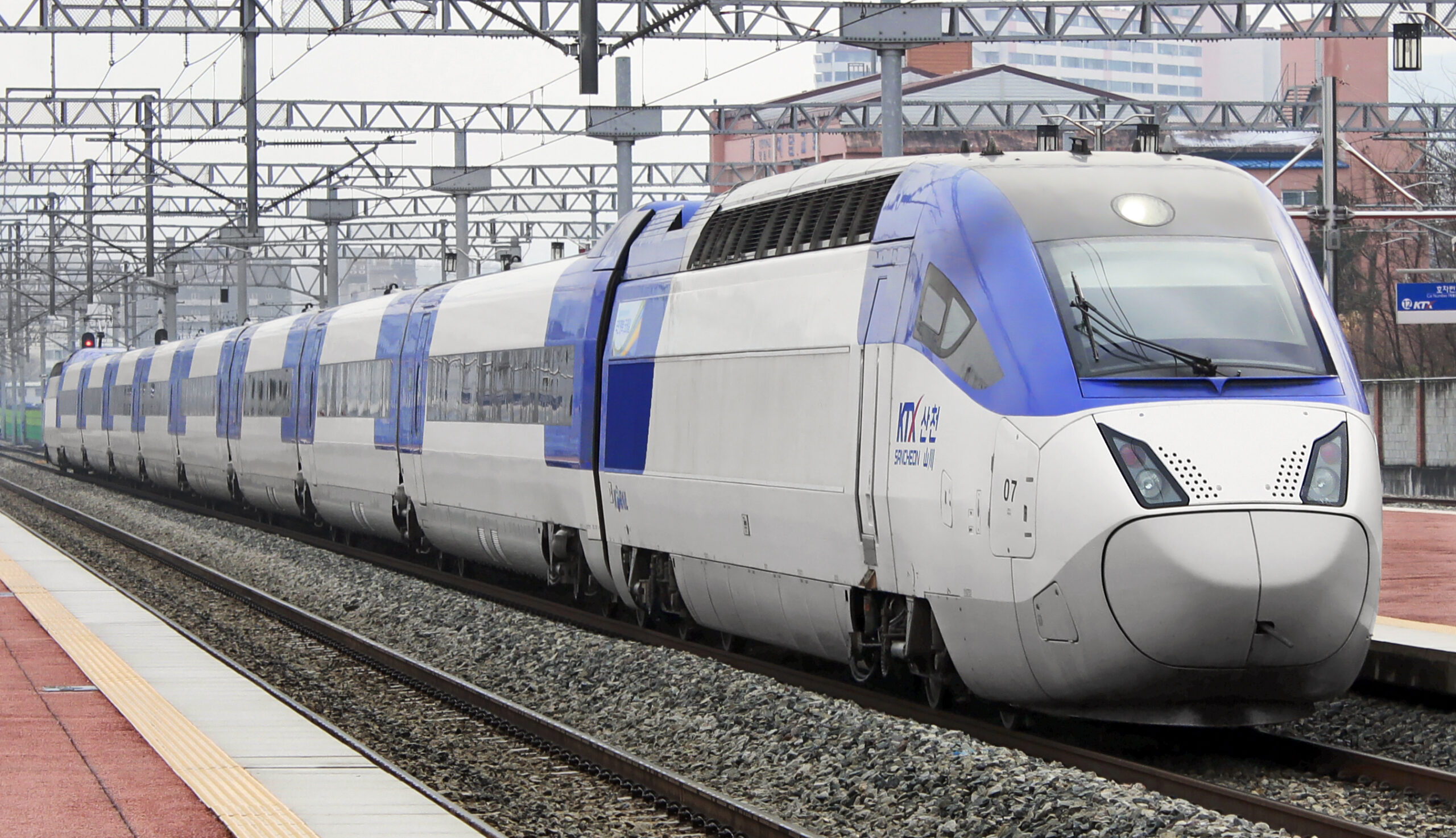
  • About KTX and SRT: Korea’s high-speed railways, KTX from Seoul Station and SRT from Suseo Station, quickly connect major cities across the country. At a top speed of 305km/h, the train can travel between Seoul and Busan in 2 hours and 15 minutes, and the spacious seats make for a comfortable journey.
  • How to book KTX tickets for foreigners: You can book on the Korail website or app, SRT website or app, in English, Chinese and Japanese, or on-site at train station ticket windows or vending machines.
  • Fares and discounts: Fares vary depending on the route, but Seoul to Busan is around 50,000 won, and foreign credit cards are accepted. Also, for KTX, foreigners can get a 10% discount on the fare for Koreans, so buy a KORAIL PASS at the station.
Foreigner KTX

KTX routes and stations

  • Main routes: KTX runs across the country, including the Gyeongbu Line (Seoul-Busan), Honam Line (Seoul-Mokpo), Jeolla Line (Iksan-Yeosu), and Gangneung Line (Seoul-Gangneung).
  • Major stops: Seoul Station, Yongsan Station, Gwangmyeong Station, and Gwangju Station. In the provinces, Busan Station, Dongdaegu Station, and Gwangju Songjeong Station are the main stations. Check the stops on the Korail website.
  • Transfer station information: Seoul Station and Yongsan Station are connected to the metropolitan train for easy transfers, Busan Station is connected to Subway Line 1, Dongdaegu Station is connected to Lines 1 and 2, and Iksan Station is convenient for bus transfers.
기차 노선도

Top tips for travelling on KTX

  • Advance seat selection: You can only select your seat at the station until 15 days after the train opens. If you have a preferred seat, such as a window or inside, book it at the station.
  • Arrive at the station: KTX departs on time, so arrive at the station with plenty of time to spare. At larger stations, it can take a while to get to the platform, so try to be there at least 20 minutes before departure.
  • Baggage policy: Each passenger is usually allowed up to the amount of luggage they can carry themselves. You can bring up to two suitcases.

Foreigner Bus, Take a leisurely ride on an inexpensive intercity/express bus

Reservations and fares for foreign express buses and intercity buses

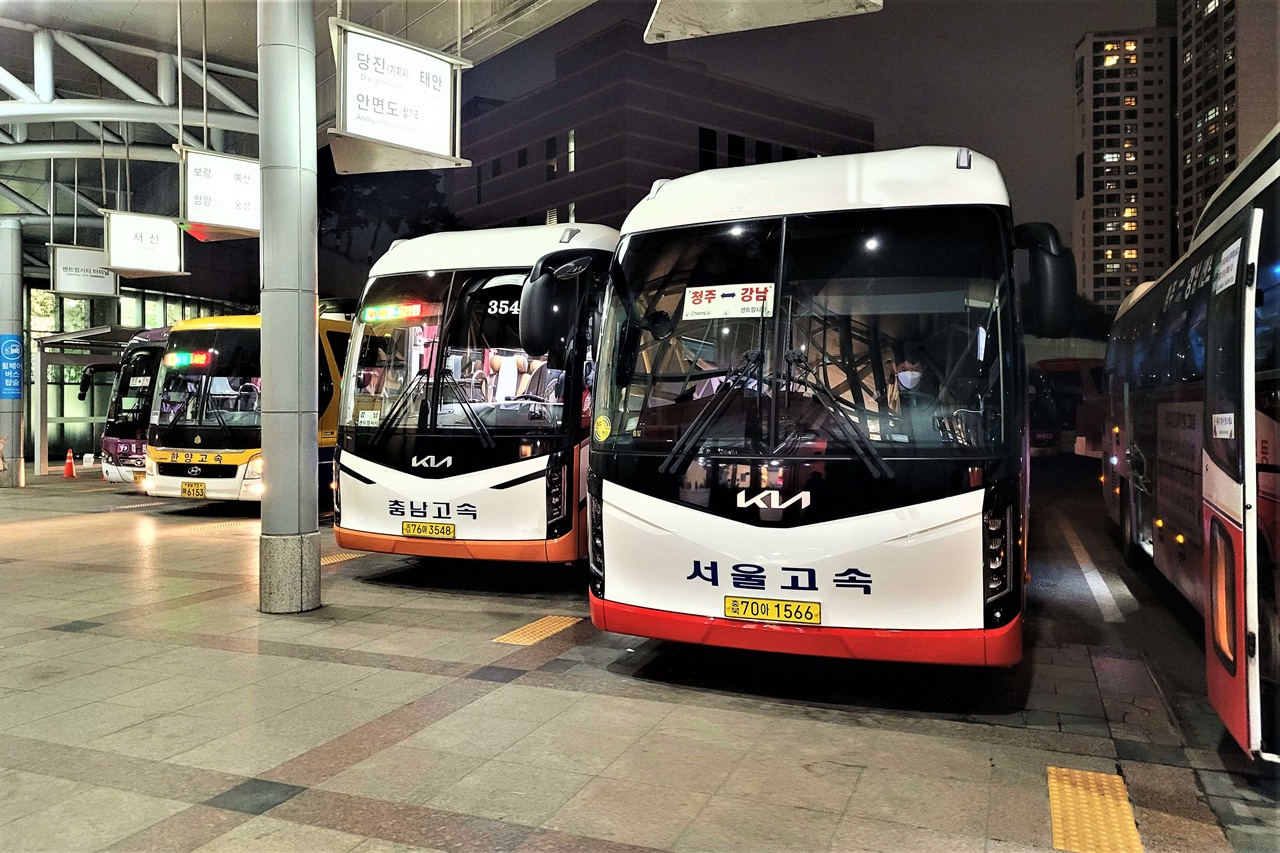
  • Tickets in person at the terminal: For intercity and express buses, tickets can be purchased at the bus terminal ticket window on the day of departure. English-speaking agents are available, just ask.
  • Online/mobile booking: You can book on the Kobus website and app. Search for “kobus” in the Google Play Store.
  • Fare information: Bus fares are based on distance: Seoul-Busan is in the $30-40,000 range, Seoul-Gwangju is in the $20,000 range, and late night and peak periods are surcharged. The more luxurious limousine buses(Woodeong Bus) cost a bit more. However, if you want to travel conveniently, I recommend using the limousine bus rather than a regular bus.
외국인 고속버스

Intercity/highway bus terminal information nationwide

  • Seoul terminals: Seoul Express Bus Terminal (Gyeongbu Line), Dong Seoul Bus Terminal (Yeongdong Line), and Sangbong Terminal (Gyeongui-Jungang Line), which are connected to the subway.
  • Major city terminals: Busan Bus Terminal, Daegu Express Bus Terminal, Gwangju Bus Terminal, etc. You can board at the intercity bus terminal in each city.
  • Smaller city terminals: In smaller cities without terminals, there are intercity bus stops. Check the location of the stop in advance and check the frequency of the bus.

Things to keep in mind when travelling by bus

  • Check your boarding time: Make sure to check your boarding time when booking. Unlike domestic flights, buses don’t have reserved seats, so it’s best to board at least 20 minutes before your departure time.
  • Stop at rest stops: Long-distance buses stop at rest stops for 15-20 minutes. Allow enough time for your arrival to rest, and you can buy some snacks.
  • Luggage note: You can carry your luggage in the boot of the bus, but leave valuables on your seat as they are at risk of breakage and you can’t see them.

Foreigner Airlines, take a convenient domestic flight to Jeju Island

Book a domestic flight

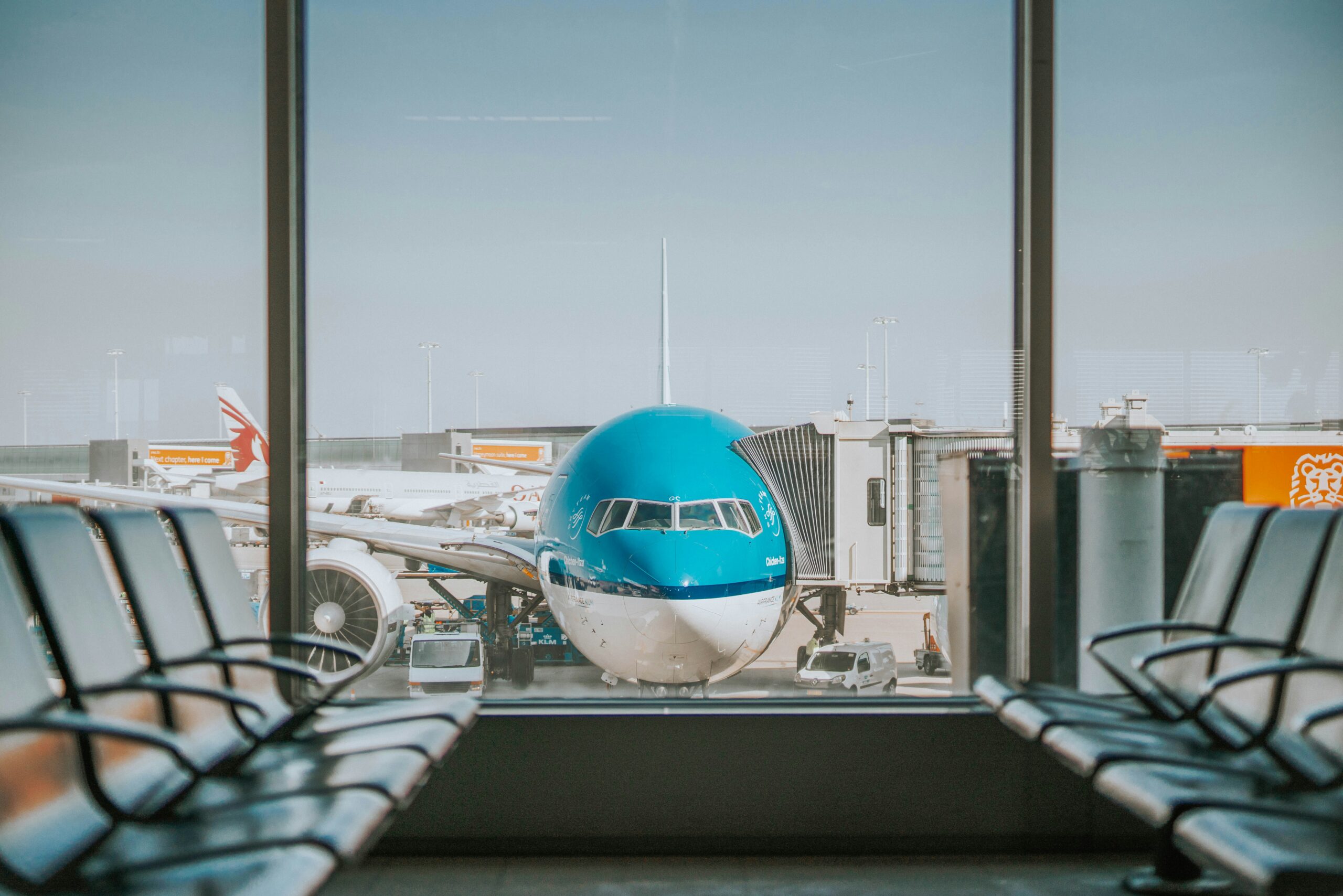
  • Choose an airline: Asiana, Korean Air, Jeju Air, Air Busan, Jin Air, and T’Way all fly domestic flights. Look out for low-cost airline deals.
  • Where to book: Search on price comparison sites like Skyscanner and Trip.com. You can also book directly on the airline’s website or app.
  • Compare fares: Fares vary by route and time of day, and can cost upwards of $100,000 during peak season. A return ticket can be cheaper.
한국 국내선 항공

Domestic airport tips

  • Airport locations: Gimpo International Airport, Gimhae International Airport, and Jeju International Airport are the main domestic hubs. Check the website for information on airport buses and platforms.
  • Boarding: Domestic flights are simple – all you need is your ID and boarding pass, and you can check in at a self-check-in machine or counter.
  • Baggage rules: Different airlines have different free baggage allowances, and you’ll have to pay extra if you go over. There are also size limits for hand luggage.

Travelling between cities in Korea isn’t as difficult as it sounds, right? KTX is fast and comfortable, so it’s perfect for long distances. Intercity/express buses can take you all over the country for a low price. If you’re travelling to Jeju Island, flying is the best option. Whatever mode of transport you choose, just remember these tips. Be prepared, be smart, and be well-informed.

Thanks to Korea’s fast transport network, you can be in a new city in a matter of hours. The scenery passing by outside the KTX window, the excitement of driving on the motorway, the beauty of Korea from the sky. Travelling is an experience in itself. Explore every corner of Korea and make unforgettable memories. We wish you the best of luck on your journey to Samcheonri Geumsugangsan Mountain!

Finally, if you’re interested in learning more about trains in Korea, including the KTX, SRT, and more, check out our post on all things train travel in Korea – from KTX to Mugunghwa.

Mastering Navigation in Korea: From GPS Devices to Map Apps

Hello, foreigners travelling to Korea! Are you afraid of getting lost in Korea? Do you want to master Navigation in Korea? It’s not easy to find your way around the country, especially with all the Korean place names and complex road networks. Even if you want to ask for directions, the language barrier can make you hesitate. But don’t worry, these days it’s really easy to find your way around with a navigation and map app.

Whether you’re taking public transport, driving, or walking, you’ll be able to get directions based on your situation. In this guide, I’ll show you how to navigate Korea from a foreigner’s perspective. From Google Maps to Kakao Maps to Naver Maps, I’ve gathered tips and tricks for using the apps. Start here, and conquer Korea! This article is part of the Korea Travel Guide: 55 Tips for Foreigners Getting to Know Korea series.

Navigation in Korea

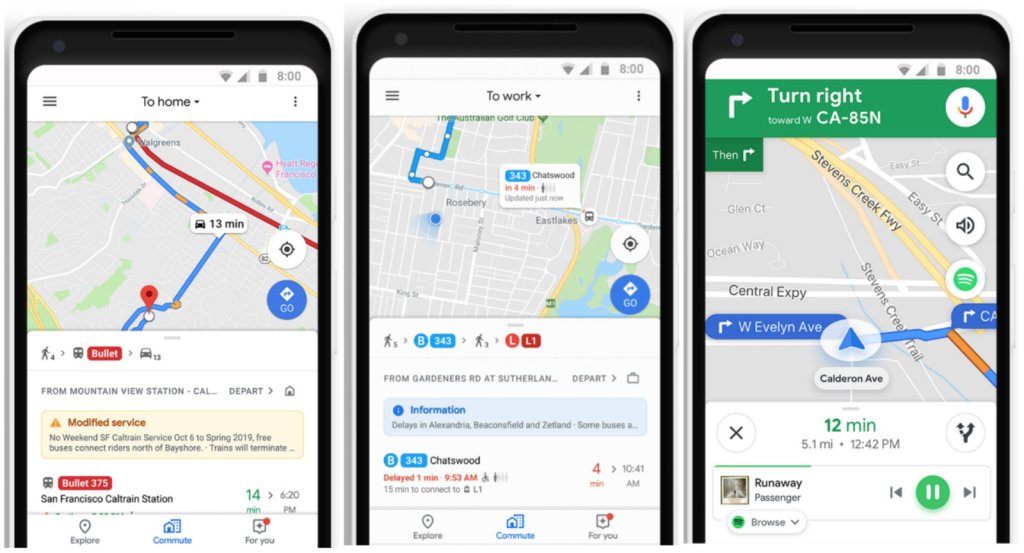
Navigation in Korea, Getting directions to Korea with Google Maps and Translator

Using public transport with Google Maps

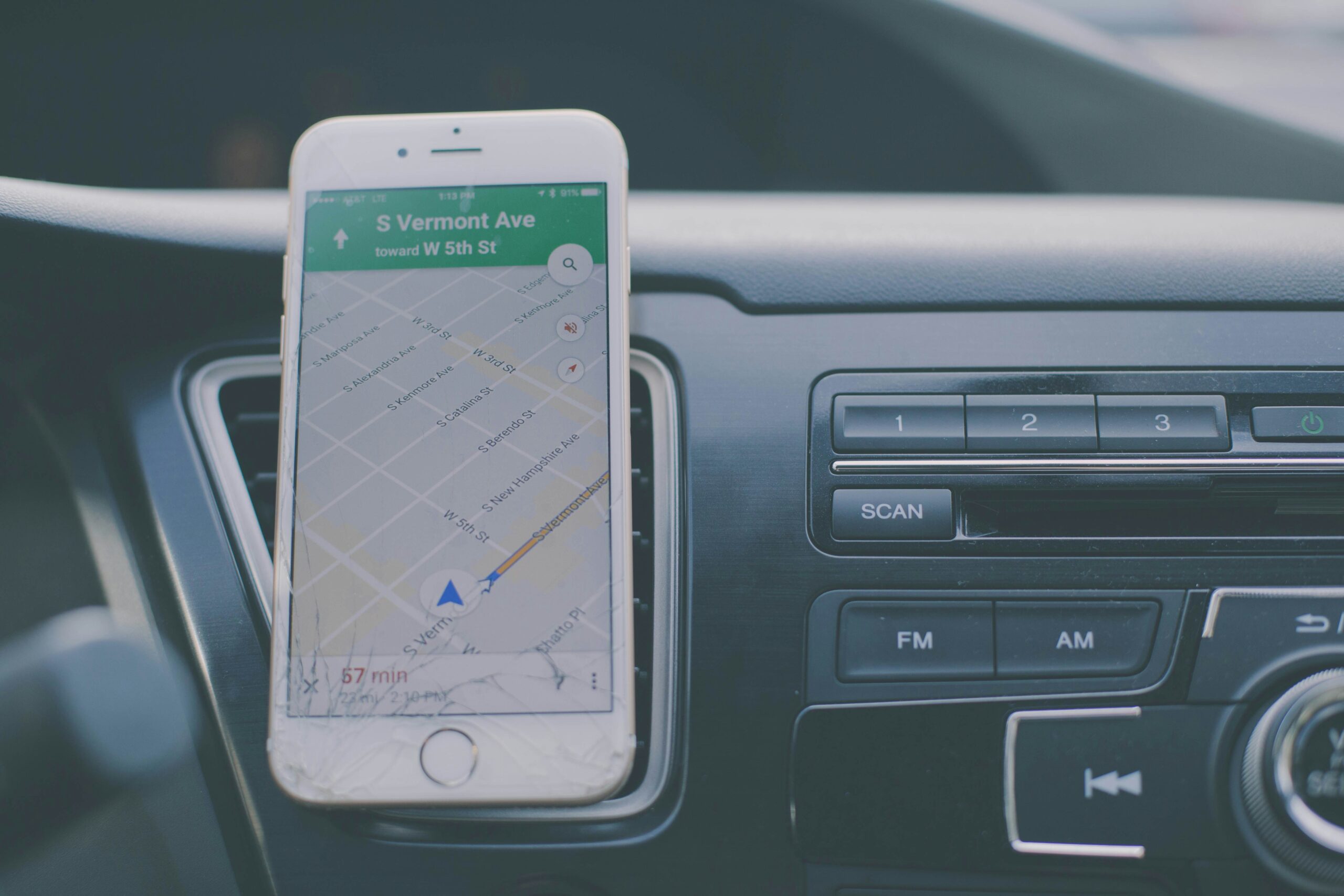
  • Google Maps route search: Google Maps is also available in Korea. Enter your starting point and destination to get directions to public transport, including subways and buses, and it’s accurate with real-time traffic information.
  • View subway maps: Tap the subway icon in Google Maps to see subway maps for major cities like Seoul, Busan, and Daegu, including transfer stations and travel times.
  • Check train station information: You can also search Google Maps for train stations, such as Seoul KTX and Suseo SRT. You’ll find information on train station facilities, as well as the location of nearby bus stops and taxi ranks.
구글 맵스

Travelling by car with Google Maps

  • Get real-time directions: With Google Maps Navigation, you can get voice-activated directions while you’re driving. It takes into account real-time traffic conditions and guides you to the best route.
  • Use turn-by-turn directions: In addition to the fastest route, you can choose options like free roads and avoiding motorways, which is great if you want to avoid tolls or take the scenic route.
  • Find car parks: Search for car parks near your destination so you know how many spaces are available, how much they cost, and when they’re open so you don’t have to worry about parking.

Using with Google Translate

  • Translate place names: Translate a place name in Korean with Google Translate and paste it into the Google Maps search bar. You’ll get a more accurate location search.
  • Translate public transport information: Copy bus or subway information from Google Maps into Google Translate and translate it. It’ll help you understand where you’re going and where you’re stopping.
  • Read reviews of places: Tap the name of a place to see user reviews, which you can translate into Google Translate. From restaurant menu recommendations to the atmosphere, you’ll find what locals are saying.

Navigation in Korea, Korea’s leading navigation apps, Kakao Maps and Naver Maps

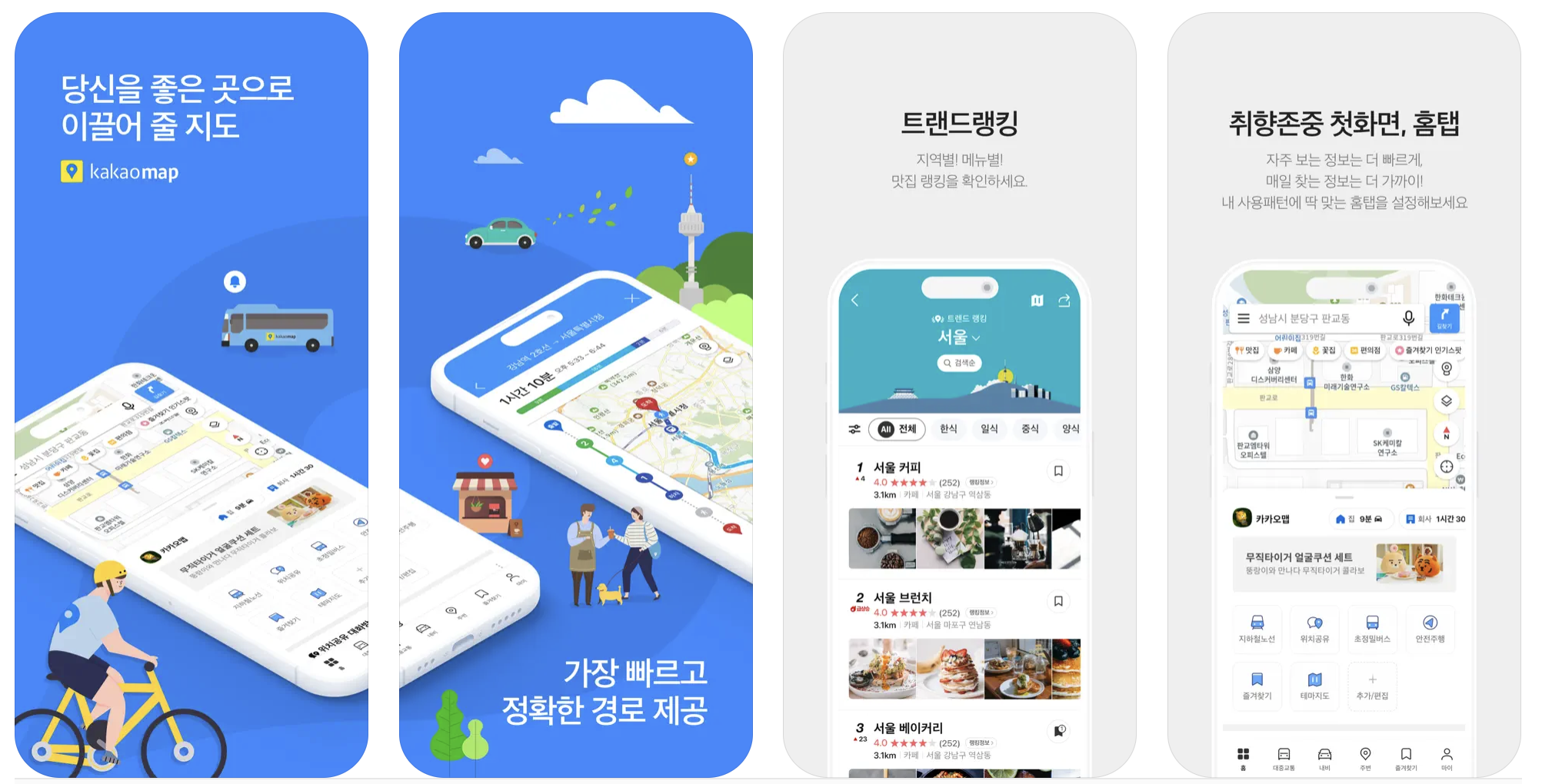
Tips for using the Kakao Maps app

  • KakaoMap features: KakaoMap is Korea’s flagship map app, with high map quality and accuracy and very detailed directions. It’s especially good for place search and directions.
  • Subway entrance finder: If you’re in a crowded subway station, use KakaoMap’s ‘subway exit’ feature to help you find your way around.
  • E-scooters and scooters in Kakao Maps: Kakao Maps shows real-time locations of electric scooters and public bicycle tricycles, as well as their rental locations. Use it to get around the city centre.
  • If you’re already familiar with Kakao Maps, there’s a dedicated Kakao Navi app for native users.
카카오 맵

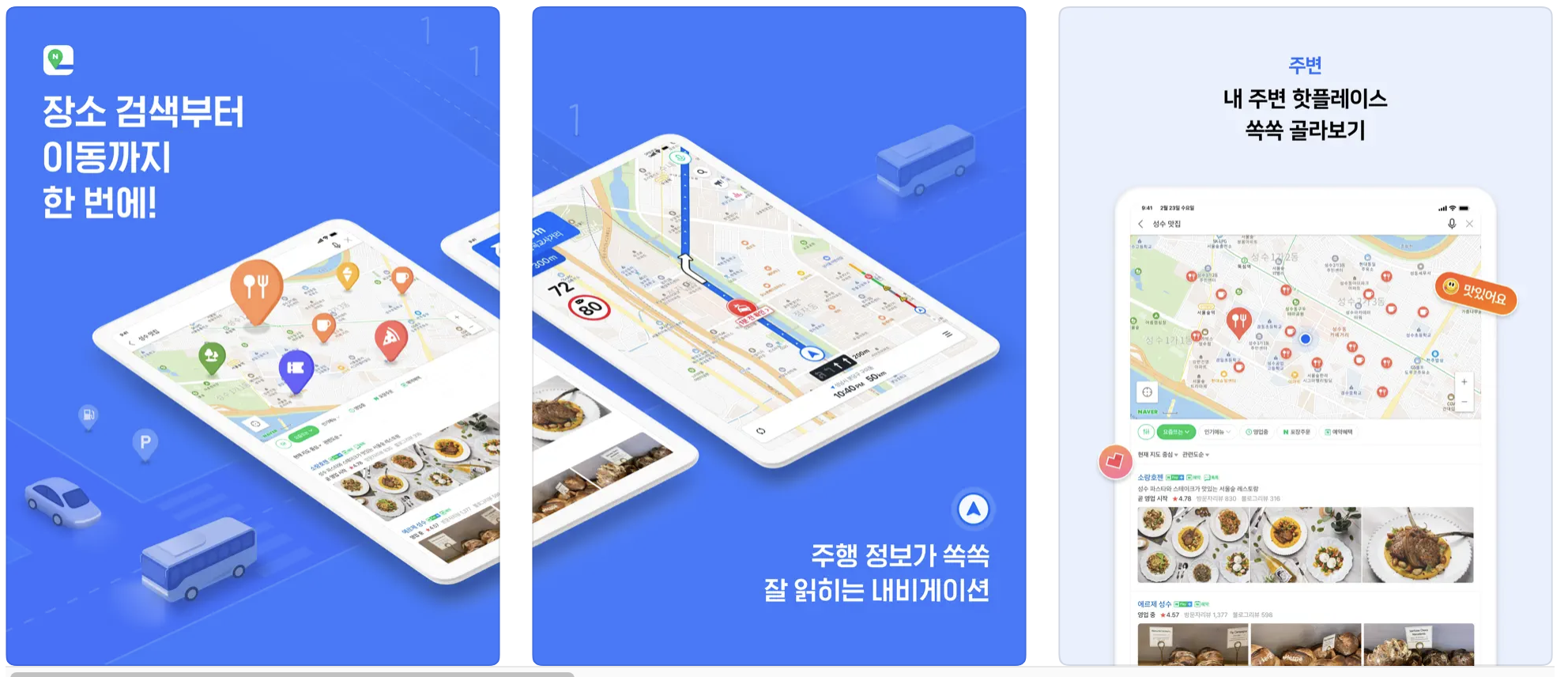
Tips for using the Naver Maps app

  • Features of Naver Maps: Naver Maps is a mapping service operated by Naver. You can see real buildings in 3D and the indoor maps are very detailed.
  • AI bus alerts: This is a unique feature of NAVER Maps that sends you push notifications of arrival before you board the bus, so you don’t miss your stop.
  • Search for nearby facilities: You can search for nearby convenience stores, pharmacies, petrol stations, and more by category, so you can quickly find what you need while travelling.
  • Local tour guides: Local tour guides provide information on restaurants and attractions near major tourist destinations, so you can plan your trip like a local.
네이버 맵

Can’t understand Korea? With Papago Translator!

  • Translate maps with Papago: Papago, a translator app run by Naver, offers a map translation feature. You can capture a screen shot of Naver Maps and upload it to Papago to translate Korean place names into English.
  • Chat with voice translation: Papago has a voice translation feature, so if you’re driving and don’t understand the navigation instructions, use it to ask for directions.
  • Understand building names with sign translation: Walking down the street and wondering about a sign? Snap a picture of it with the Papago app. It will translate the sign into English so you can understand what the building is about.

Tips for navigating safely and smartly in Korea

Take advantage of roaming services and Wi-Fi

  • Choose your data roaming option: If you want to use data roaming in Korea, check your carrier’s options beforehand. Choose an unlimited data option so you can navigate without breaking the bank.
  • Rent a roaming egg: A roaming egg, also known as a pocket wifi, is a device that allows you to use unlimited data for cheap in Korea. It’s convenient to rent one at the airport.
  • Use free Wi-Fi: Korea is well-equipped with public Wi-Fi. You can use it for free in government offices, subway stations, coffee shops, and more. If your navigation is slow to load, take advantage of the free Wi-Fi.

How to handle emergencies

  • Use the emergency number: Korea’s emergency number is 119. If you have an emergency, such as a car accident, dial 119. English-speaking operators are available.
  • Get your embassy contact details: Save the contact details of your home embassy in case of an emergency, such as losing your passport. They can help you report it lost and get a replacement.
  • Deal with roaming service issues: If you’re having trouble roaming data, find Wi-Fi and call your carrier from an international number. You can also visit a roaming egg rental shop.

Finding your way around an unfamiliar city can be intimidating, but if you’re prepared, it’s not a problem. Getting around Korea is easy enough with Google Maps and a translator, but don’t forget to use your local navigation app. Kakao Maps and Naver Maps are packed with tips and tricks that only locals know. Make sure you have good roaming and Wi-Fi so you don’t run out of data! Don’t forget to check out our safety tips.

Now you don’t have to be afraid of unfamiliar roads, just follow the friendly guidance of your navigation system to get wherever you want to go. You’ll have a lot of fun with your adventures, and don’t panic if you get lost – that’s part of the fun of travelling. Why not interact with the locals by asking for directions, and use your translator to communicate wittily? We’re sure you’ll be successful in finding your way around Korea. Have a great trip!