
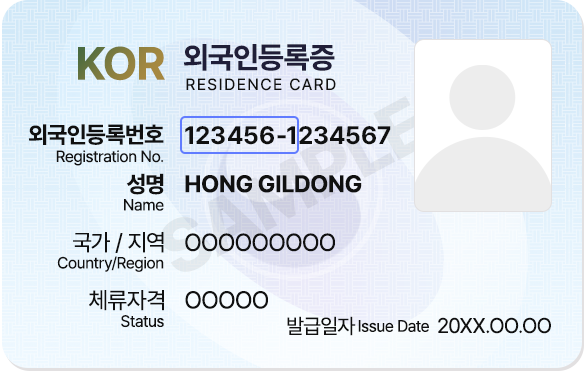
Alien Registration Card Korea: The Ultimate 2025 Guide to Application, Documents, and Avoiding Rejection
⚠️ Notice: Immigration policies and required documents can vary depending on an individual’s status of stay (visa) · jurisdiction office · timing. I organized this based on the basic principles in official guidance, but for the final confirmation, contact your competent immigration office/1345. (Immigration Service)
1) ARC (Alien Registration Card) Korea = Why it’s the “must-have ID” for life in Korea
The Alien Registration Card (often called an ARC) is an official ID under the Immigration Control Act, and it’s explained as having the same legal effect as a Korean resident registration card. (Immigration Service) That’s why, to do things like the following, it becomes almost a “must-have item.”
- Opening a bank account / financial transactions
- Getting a mobile phone line (postpaid plan)
- Signing a housing contract / address move-in-related administration
- Identity verification for civil services / hospitals / insurance, etc.
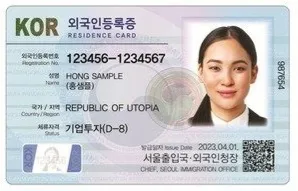
2) “By when?” ARC application deadline (this is where delays happen a lot)
Principle: A foreigner who intends to stay for more than 90 days from the date of entry must register as an alien within 90 days from the date of entry. (Immigration Service) Also, the guidance is to make an appointment first on HiKorea and then apply at the immigration office with jurisdiction over your place of stay. (Immigration Service)
3) ARC registration process A to Z (for first-timers)
A. Make a visit reservation on HiKorea
- There are really many cases of “going without a reservation and being sent back.”
- Your competent office is based on your current residence (place of stay). (Immigration Service)
B. Prepare documents (common + additional by status of stay)
- The common documents are mostly fixed, and
- The “additional documents” vary by visa/situation (student, worker, overseas Korean, family, etc.). (Immigration Service)
C. Submit in person + provide biometric data (fingerprints, etc.)
When registering as an alien, it may include providing biometric information such as fingerprints and face data, and there is guidance that refusal may limit permission to stay. (Easy Law)
D. Pay the fee
- As of January 1, 2025, the issuance fee for the Alien Registration Card increased to KRW 35,000 (issuance with an embedded IC chip, based on the mobile ARC). (Immigration Service)
- The payment method is stipulated by law as cash or a token/voucher proving cash payment, so “bringing cash” is the safest. (Law.go.kr)
E. Receive the receipt → receive the card
After submission, the time until you receive the physical card may vary depending on season/jurisdiction (longer during peak times).
4) ARC common required documents: the “4 essentials” (the basic backbone)
According to official guidance, the core basic submission documents are as follows. (Immigration Service)
✅ Common 1) Passport (original)
- If possible, bringing a copy of the passport bio page can speed up the intake process (may be requested depending on office/case).
✅ Common 2) Proof of residence (Residence proof)
- A lot of applications get rejected due to “address proof.” (More details in #5 below)
✅ Common 3) One photo (3.5cm × 4.5cm)
Photo requirements are strict. If you violate even one of the rules below, it’s the #1 on-site rejection reason. (Immigration Service)
✅ Common 4) Additional documents by status of stay (visa)
- Even in official guidance, it’s separated as “documents by status of stay (see attached file).” (Immigration Service)
5) Proof of residence (address verification) — the key rejection point
Residence verification can be summarized in one line like this.
“Objectively show that you actually live at this address right now.”
The most commonly used practical examples are as follows (schools/institutions usually guide the same combinations). (oia.cbnu.ac.kr)
1) Housing contract in your name (lease contract)
- The contract must show the address accurately, and
- Be sure to confirm your name (English/passport name) matches the contract
2) Dormitory residence confirmation (issued by a school/institution)
- For international students, this is the cleanest case. (oia.cbnu.ac.kr)
3) Accommodation provided by an acquaintance/company (Accommodation Provision Confirmation, etc.)
- Additional items such as a copy of the provider’s ID and supporting proof of residence may be required (varies by jurisdiction/case).
✅ Tip: If the “address notation (building/unit number/postal code)” is ambiguous, this is the most common point where the counter requests supplements.
6) (Reference) Common cases where additional documents are required by status of stay
From here on, it’s the area that “depends on your visa.” Still, understanding the general pattern of what gets added can reduce rejections.
● What is often required for international students (D-2/D-4, etc.)
Based on university international office notices, the following usually move as a set. (oia.cbnu.ac.kr)
- Integrated application form (template)
- Certificate of enrollment
- Proof of residence (dorm/contract, etc.)
- Fee KRW 35,000
● Cases like foreign workers (E-9/H-2, etc.) that include “medical check/proof”
In the Easy Law guidance example (worker case),
- (E-9) Business registration certificate + designated hospital drug test confirmation
- (H-2) Early Adjustment Program completion certificate + designated hospital health check report
are guided as additional documents. (Easy Law)
7) ARC registration: “Top 10 most common reasons for rejection” (plus fixes)
Here, “rejection” usually means cannot be accepted / request for supplementation. The really frustrating part is that you brought all the big documents, but end up making another visit due to small details. Just checking the 10 items below greatly reduces the chance you’ll need to come back.
Rejection TOP10 summary table
| Rank | Reason for rejection | How it blows up on-site | Fix (fastest) |
|---|---|---|---|
| 1 | Photo size/spec mismatch | “Please bring a new photo.” (white background/within 6 months/face ratio/retouching, etc.) | Retake per rules: 3.5×4.5, within 6 months, white background, no retouching/damage, etc. (Immigration Service) |
| 2 | Insufficient/unclear proof of residence | Your name not on the contract, or the address is ambiguous | Make address · your full name · type of residence clear on the contract/confirmation (for dorms, use the confirmation letter). (Immigration Service) |
| 3 | Visiting without a HiKorea reservation | “No reservation, no acceptance.” | Make a visit reservation first, then visit your competent office. (Immigration Service) |
| 4 | Application form (integrated form) not completed / completed incorrectly | Missing signature, missing date, incorrect contact info | Print and fill it out in advance + complete signature/date as well (match passport info exactly) |
| 5 | Passport info/name notation mismatch | Passport name differs from contract/enrollment documents | Standardize the English name on all documents (based on the passport) |
| 6 | Insufficient/near-expiry passport validity | May cause restrictions during stay permission/issuance process | Renew before expiry if possible (especially watch out when under 6 months remaining). (Immigration Service) |
| 7 | Fee not prepared (cash, etc.) | Panic if you can’t pay at the counter right away | Fee is regulated as cash or proof of cash payment → bring cash. (Law.go.kr) |
| 8 | Applicant not present (biometrics required) | Proxy submission limited due to fingerprint/face registration | Plan your schedule assuming you must visit in person (biometrics provision procedure). (Easy Law) |
| 9 | Missing additional documents by status of stay | “Additional documents” required depending on student/worker/overseas Korean, etc. | Check your status of stay → confirm additional documents via your jurisdiction/school notice/official guidance. (Immigration Service) |
| 10 | Confusion between “original vs. copy” for photos/documents | Original required but you brought only copies | Passport original required + prepare 1–2 extra copies of anything that might be needed. (Immigration Service) |
8) 1-minute “final check” checklist for the day before your visit
If you just put these in your bag, the chance of having to come back due to a mistake drops a lot.
- HiKorea visit reservation completed (confirm date/time/competent office) (Immigration Service)
- Passport original (+ extra copies of bio page) (Immigration Service)
- One photo: 3.5×4.5 / white background / within 6 months / no retouching · tinted glasses · hats (Immigration Service)
- Proof of residence (contract/dorm confirmation/accommodation provision confirmation, etc.) (Immigration Service)
- Integrated application form completed (including signature/date)
- Prepare the fee in cash: KRW 35,000 (increase effective 2025.1.1~) (Immigration Service)
- (If applicable) Additional documents by status of stay (enrollment/employment/medical check, etc.) (Immigration Service)
9) (Bonus) From 2025, a “Mobile Alien Registration Card” also became available
Starting January 10, 2025, issuance of a Mobile Alien Registration Card is guided for registered foreigners residing in Korea. (Immigration Service) The official mobile ID guidance also introduces it as “any ARC holder can apply” in terms of flow. (Mobile ID)
- IC (chip-based) ARCs are guided as a method that makes reissuance easier via tagging even after you change phones. (Mobile ID)
Wrap-up: The most realistic conclusion for preventing rejection
ARC registration doesn’t get rejected because “the documents are hard”—most people slip on the basics like photo · address · signature · reservation · fee. If you prepare exactly according to today’s checklist, your chances of being accepted on your first visit go up significantly.
FAQ
Q1. Do I have to register for an ARC after entering Korea?
If you intend to stay in Korea for more than 90 days, in principle you must register as an alien within 90 days from your date of entry. (Immigration Service)
Q2. How much is the ARC issuance fee?
As of January 1, 2025, guidance announced an increase to KRW 35,000 (issued with an embedded IC chip). (Immigration Service)
Q3. Can I pay the fee by card?
By law, the issuance/reissuance fee for an ARC must be paid in cash or proof of cash payment, so bringing cash is the safest. (Law.go.kr)
Q4. Can I use any ID photo?
No. Requirements are very specific, including 3.5×4.5, within 6 months, white background, no retouching/damage, face length (2.5–3.5cm), etc. (Immigration Service)
Q5. What exactly should I submit as proof of residence?
Common examples include a lease contract and a dormitory residence confirmation (additional requirements may apply depending on the case). (Immigration Service)
Q6. Can I go to the immigration office without a HiKorea reservation?
Official guidance is to apply at the competent immigration office after making a visit reservation on HiKorea. (Immigration Service)
Q7. Do I have to register my fingerprints?
ARC registration may include procedures to provide biometric information such as fingerprints and face data, and guidance notes there may be limitations on permission if you refuse. (Easy Law)
Q8. What additional documents do international students usually need?
Based on university international office guidance, typically a certificate of enrollment + proof of residence + fee are required together (may vary by school/jurisdiction). (oia.cbnu.ac.kr)
Q9. Can anyone get a Mobile ARC?
Starting January 10, 2025, issuance of a Mobile ARC is guided for registered foreigners, and the official Mobile ID site also provides the issuance flow. (Immigration Service)
Q10. If you had to pick just one most common rejection reason, what is it?
In practical terms, photo specifications and proof of residence compete for #1–#2. Photo rules are very specific in the official criteria, so matching them exactly is the best approach. (Immigration Service)
K-Name Studio: Create your perfect Korean name based on your personality and style.
What’s My K-Beauty Personal Color?
WeBring Service : Provides personalized services to foreigners living in Korea
Exclusive offer: Introducing foreign car rental in Korea, WeBring-SoCar
Don't let your visa expire
Check your remaining stay and extension deadline in 30 seconds with the WeBring visa calculator. Need help with the paperwork? Our experts speak your language.