
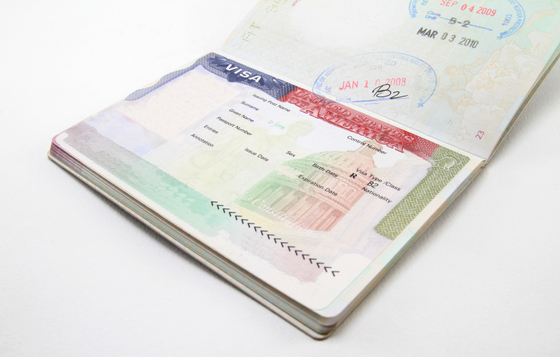
The most common reason for failure when preparing for a visa extension (permission to extend your stay) in Korea is simple: missing one required document (especially proof of residence), documents issued too long ago, or missing your appointment slot. (Korea Visa Extension Documents)
This guide is based on 2026 procedures and provides a practical “checklist” of required documents for those affiliated with an educational institution (international students / language trainees) or a company (employment / instructor / professional manpower). (Depending on individual circumstances, additional documents may be required, so make sure to check the official channels listed at the end.)
1) Five Basic Rules for Visa Extension (Applies to Everyone)
(1) When can I apply?
You can apply for an extension of stay up to 4 months before the expiration date, and you must apply no later than the expiry date (the day before if applying through the online civil service portal).
(2) Is the process available online?
Certain visa types allow you to apply for a stay extension via the Hi Korea e‑civil service portal without visiting in person, and there’s a 20% reduction in fees. (Immigration Service)
The Hi Korea e‑service operates on weekdays 07:00–22:00 (closed on weekends and holidays). (HiKorea)
(3) On‑site applications require an advance appointment
In principle, immigration‑related applications such as extension of stay require an online appointment. Specific exemptions (pregnant applicants, those aged 70+, etc.) are listed separately.
(4) You cannot apply while abroad
To apply for permission to stay (extension/change, etc.), you must be physically present in Korea. No proxy application is accepted while you are overseas.
(5) If your passport is close to expiring, the extension period may be shortened
According to current guidelines, your stay period may be limited by your passport’s validity. If your passport expires soon, it’s recommended to renew it first (and report the new passport afterward).

2) Common Required Documents (These Four Are Almost Always Needed)
The following four items frequently appear in the official list of documents required for a stay extension:
- Integrated Application Form (Form No. 34)
- Passport
- Alien Registration Card (ARC)
- Proof of Residence (Address Verification)
Additionally, documents issued abroad may require an Apostille or consular legalization. The immigration office may also add or waive certain documents during screening.
Application Fee (Reference)
According to Easy Law, the fee for permission to extend your stay is 60,000 KRW. (Easy Law)
(However, the final amount may vary depending on your personal circumstances, visa type, or whether you apply online. Always double‑check with Hi Korea or your local immigration office.)
3) School‑Affiliated Checklist (International Students / Language Trainees)
The following are the most common categories for foreigners affiliated with educational institutions.
A. Regular University / Graduate School Students (Usually D‑2)
[Essential Items] (According to official regulations)
- Passport
- Alien Registration Card (if applicable)
- Certificate of Enrollment
- Proof of Residence (Easy Law)
[Frequently Requested Additional Documents] (Based on university guidelines)
- Academic Transcript
- Tuition Payment Certificate
- Bank Balance Certificate (some schools waive this requirement) (dongguk.edu)
Pro Tip: Many universities allow you to issue “enrollment, transcript, and tuition payment” documents at once through the student or international portal. Request them at least 1–2 weeks in advance to avoid last‑minute delays.
B. Post‑Master’s/Doctoral Students Preparing a Thesis (Research / Thesis‑based Extension)
Some universities (e.g., Dongguk University) list separate requirements for students staying to prepare their thesis:
- Integrated Application Form
- Passport Copy, Alien Registration Card
- Certificate of Course Completion, Transcript
- Proof of Residence
- Advisor’s Recommendation Letter (must include research schedule, supervision details, and reason for recommendation) (dongguk.edu)
Official legal guidelines also indicate that a letter from your advisor may substitute a certificate of enrollment for thesis preparation cases. (Easy Law)
C. University‑Affiliated Language Institutes / Language Training (Usually D‑4‑1)
[Essential Items] (According to official regulations)
- Passport
- Alien Registration Card (if applicable)
- Certificate of Enrollment
- Proof of Residence (Easy Law)
[Frequently Requested Additional Documents] (Based on school guidelines)
- Academic Transcript
- Tuition Payment Certificate
- Financial Proof (bank balance, etc.)
- Study Plan / Program Description (for trainees)
- Proof of Residence (Lease Contract / Accommodation Confirmation) (dhu.ac.kr)
Some schools also specify minimum attendance rates (e.g., 80%) requiring submission of attendance certificates, tuition payment, and housing verification. (Sungshin Women’s University)
(Attendance criteria may vary by school or jurisdiction, so confirm with your institution.)
D. If the Student Is a Minor or Needs a Proxy Applicant
While visa extensions are typically filed by the student, minors under 17 may have applications submitted by a parent, guardian, sibling, or guarantor. (Easy Law)
4) Company‑Affiliated Checklist (Employment / Instructor / Professional Manpower)
For those employed by a company, required documents depend on your visa type (E‑series, etc.) and employment form (corporation / individual / dispatched). Fortunately, the official forms specify the required attachments for extension permits, so preparing according to the checklist below minimizes rejection risk.
Common Company‑Related Documents (Summary)
- Employment Contract
- Business Registration Certificate
- (For corporations) Certificate of Corporate Registration
Depending on your occupation, additional documents such as a “Guarantor Form,” “Tax Payment Certificate,” or “Certificate of Employment/Dispatch Order” may be required.
A. Native Speaking Instructor / Foreign Language Teaching (E‑2)
[Documents Required for Extension]
- Employment Contract
- Business Registration Certificate (and Corporate Registration if applicable)
Pro Tip: For E‑2 visas, if a “workplace change/addition” is involved, extra documents such as the hagwon establishment license are required. This article focuses on extensions only—different rules apply for job changes or multiple employers.
B. General Corporate Employment / Professional Workers (E‑7)
[Documents Required for Extension]
- Employment Contract
- Guarantor Form (if applicable to your job category)
- Tax Payment Certificate
- Business Registration Certificate (and Corporate Registration if applicable)
C. University / Research Institutions (E‑1 Professor, E‑3 Research, E‑4 Technology Transfer)
E‑1 (Professor) — Required for Extension
- Employment Contract
E‑3 (Research) — Required for Extension
- Employment Contract
- Business Registration Certificate (and Corporate Registration if applicable)
E‑4 (Technology Transfer) — Required for Extension
- Dispatch Order or Certificate of Employment
- Technology Introduction Contract / Supporting Documents (if applicable)
- Business Registration Certificate (and Corporate Registration if applicable)
D. Manufacturing / On‑Site Employment Permit System (E‑9 etc.)
E‑9 (Non‑Professional Employment) — Required for Extension
- Employment Permit
- Labor Contract
- Certificate of Extension of Employment Activity Period
- Guarantor Form
5) Proof of Residence — The Most Common Cause of Delays (Practical Examples)
“Proof of Residence (Address Verification)” is one of the most frequently requested supporting documents.
For students or trainees living off‑campus under someone else’s contract, extra paperwork is required.
According to Sungshin Women’s University guidelines:
- Dormitory Residents: Verification of Accommodation Provided (Form issued by the school)
- External Residence (Contract under your name): Copy of Lease Contract
- External Residence (Contract under someone else’s name): Lease Copy + Lessor’s ID (front & back) + Confirmation of Accommodation Provision (Sungshin Women’s University)
By getting this part right, you can avoid most follow‑up requests and extra trips to immigration.
6) Final Checklist Before Submitting (Avoid Rejection)
Use this checklist to catch common reasons for application denial:
- Confirm you are within the valid application window (from 4 months before expiry)
- If applying in person, ensure you’ve completed your Hi Korea appointment booking (and check if you qualify for exceptions)
- Verify passport validity (renew and report new passport if needed)
- Applications cannot be filed from abroad (plan your travel accordingly)
- Unpaid taxes or health insurance may block your extension (resolved payments required) (Immigration Service)
- For company documents, prepare according to business type (corporation vs. individual; include corporate registration if a corporation)
7) Conclusion: Decide Whether You’re School‑Affiliated or Company‑Affiliated—That Solves 80% of the Process
In the end, visa extension preparation boils down to this framework:
- Four Common Documents (Application Form / Passport / ARC / Proof of Residence)
- If you’re a student: Enrollment + Transcript + Tuition + (optional) Financial Proof (dongguk.edu)
- If you’re employed: Employment Contract + Business Registration (+ Corporate Certificate, if applicable) + Role‑Specific Documents
- If eligible, use Hi Korea online services to save time and reduce fees (Immigration Service)
Official Verification Channels (Double‑Check Before Submitting)
Since individual circumstances vary, these are the most reliable ways to confirm your final requirements:
- Check Hi Korea’s visa‑type specific guides (recommended in official notices)
- Consult the 1345 Immigration Contact Center (officially endorsed support line)
If you have further questions about visa extensions, feel free to contact us through our My We Bring channel.

K-Name Studio: Create your perfect Korean name based on your personality and style.
What’s My K-Beauty Personal Color?
WeBring Service : Provides personalized services to foreigners living in Korea
Exclusive offer: Introducing foreign car rental in Korea, WeBring-SoCar